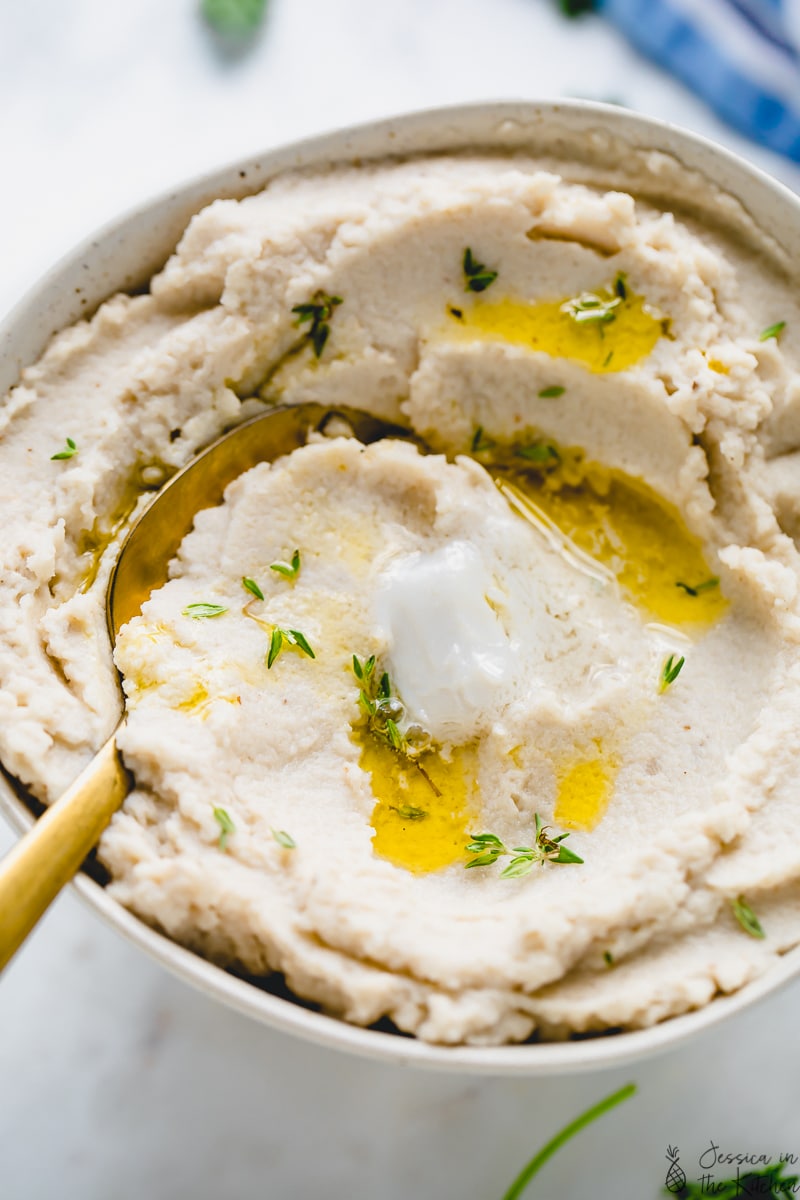
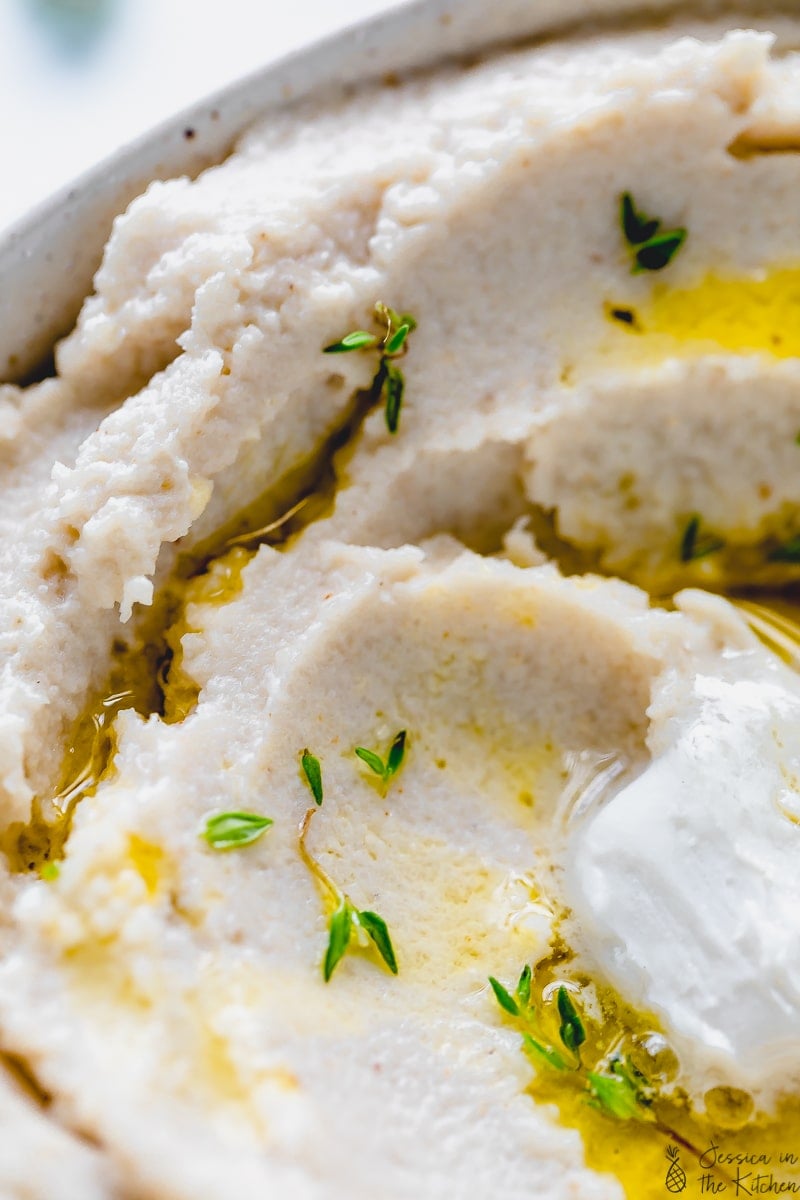
Vegan mashed cauliflower is buttery and creamy without dairy, and it’s a perfect low-carb side dish at the holiday table. Roasting fresh garlic with the cauliflower infuses this plant-based mash with rich, nutty, garlicky flavour. It also guarantees that it never turns out watery!
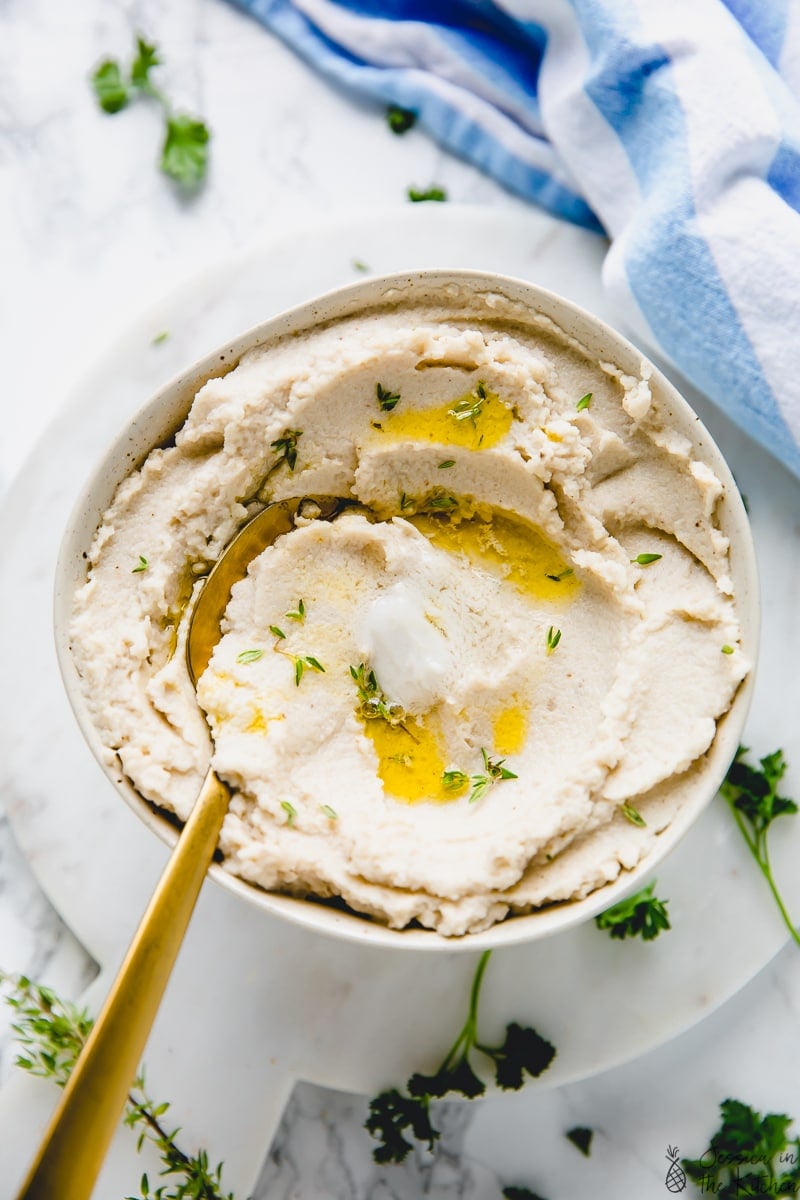
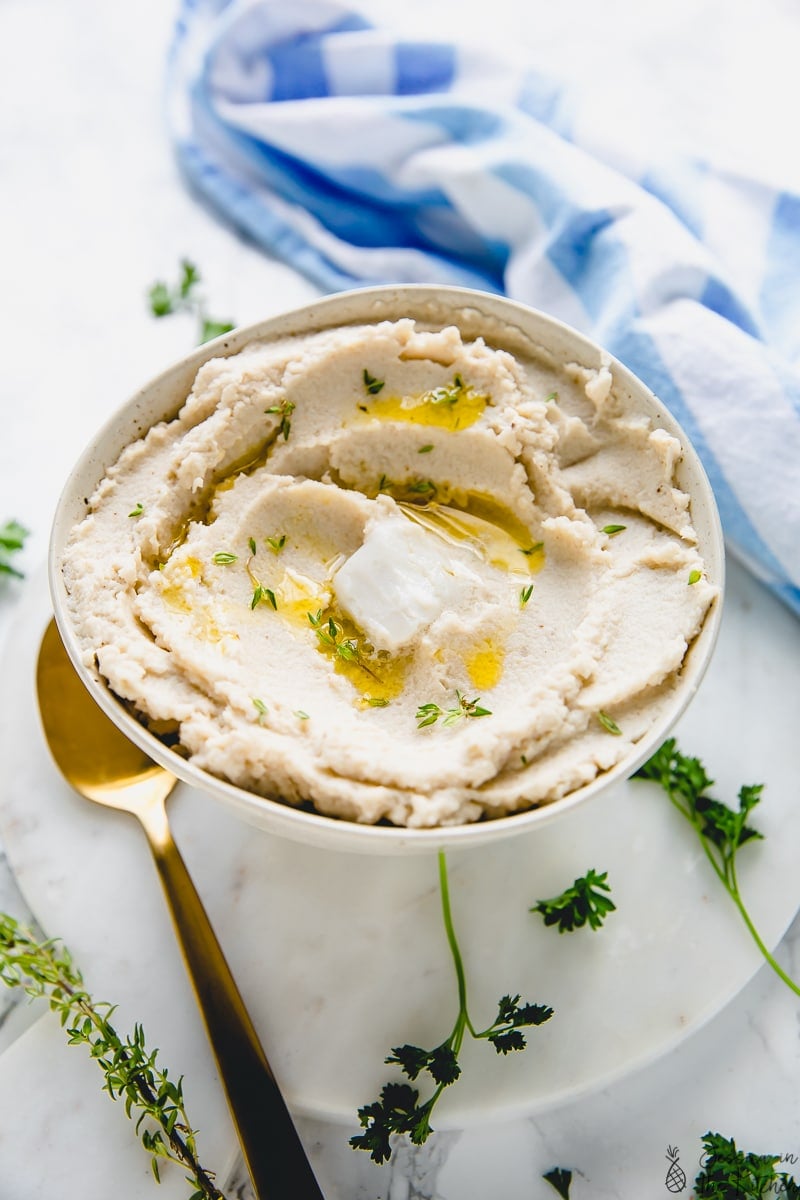
If you’re looking for a holiday side dish that’s dairy-free and lower in carbs, this vegan garlic mashed cauliflower is the best! It’s creamy, smooth, and light, with a subtle nuttiness from roasting. My favourite way to enjoy this recipe is with my vegan gravy . Serve it with a slice of vegan meatloaf for a homey, cozy plant-based meal or even Thanksgiving dinner!
What Makes This Creamy Garlic Mashed Cauliflower Recipe So Great
- Delicious and low-carb. Cauliflower is light and fluffy, and lower in carbs than mashed potatoes and similar Thanksgiving sides.
- Rich and garlicky. There’s plenty of flavour thanks to the addition of fragrant roasted garlic cloves.
- Creamy without dairy. Roasting the garlic and cauliflower not only deepens the flavours, but it also ensures that this cauliflower mash turns out fluffy and creamy, and never watery.
- Practically hands-free. The mash takes minutes to whip up in the food processor!
Notes on Ingredients
Please note that this is important information on the ingredients and instructions, and the FULL recipe with amounts and details can be found DOWN BELOW (scroll to it) in the recipe card.
- Cauliflower – You can buy a whole cauliflower and break it into florets, or save yourself time by buying a bag of pre-cut florets.
- Olive oil – Or a similar mild-flavored cooking oil, like avocado oil.
- Garlic – You’ll need fresh garlic cloves if you’re roasting them alongside the cauliflower. Otherwise, you can add jarred garlic to taste when you blend the mash afterward. You may need slightly less in this case, as jarred garlic is stronger in flavour.
- Vegan butter – Here’s how to make your own vegan butter . Otherwise, use your favourite brand of plant-based butter.
- Coconut milk – Use the canned variety, not refrigerated coconut milk. The richness in coconut milk makes this cauliflower mash ultra-smooth and creamy.
Optional Add-ins
The roasted garlic means this recipe is already full of flavour, but you can also try some of these additions to change things up:
- Fresh or dried herbs, like parsley, chives, rosemary, sage, or thyme
- Cracked black pepper
- Vegan shredded cheese
How to Make the Best Mashed Cauliflower
You could get a jump on this recipe by roasting the garlic and cauliflower in advance if you need to. However, similar to preparing mashed potatoes, I highly recommend blending the freshly roasted cauliflower while it’s still warm and serving it right away. It’ll be smoother and fluffier this way. Let’s get started:
- Roast the cauliflower and garlic together. Toss the cauliflower florets with olive oil and spread them out on a baking sheet. Then, smash whole garlic cloves and add them to the pan. Roast the cauliflower at 450ºF for 20 minutes, until golden. Afterward, peel the garlic and transfer everything to the food processor along with a pinch of sea salt.
- Warm the coconut milk and butter. Next, combine the vegan butter and coconut milk in a saucepan and heat until the butter melts. You could also do this in a microwave-safe bowl in the microwave. Pour the mixture into the food processor with the cauliflower.
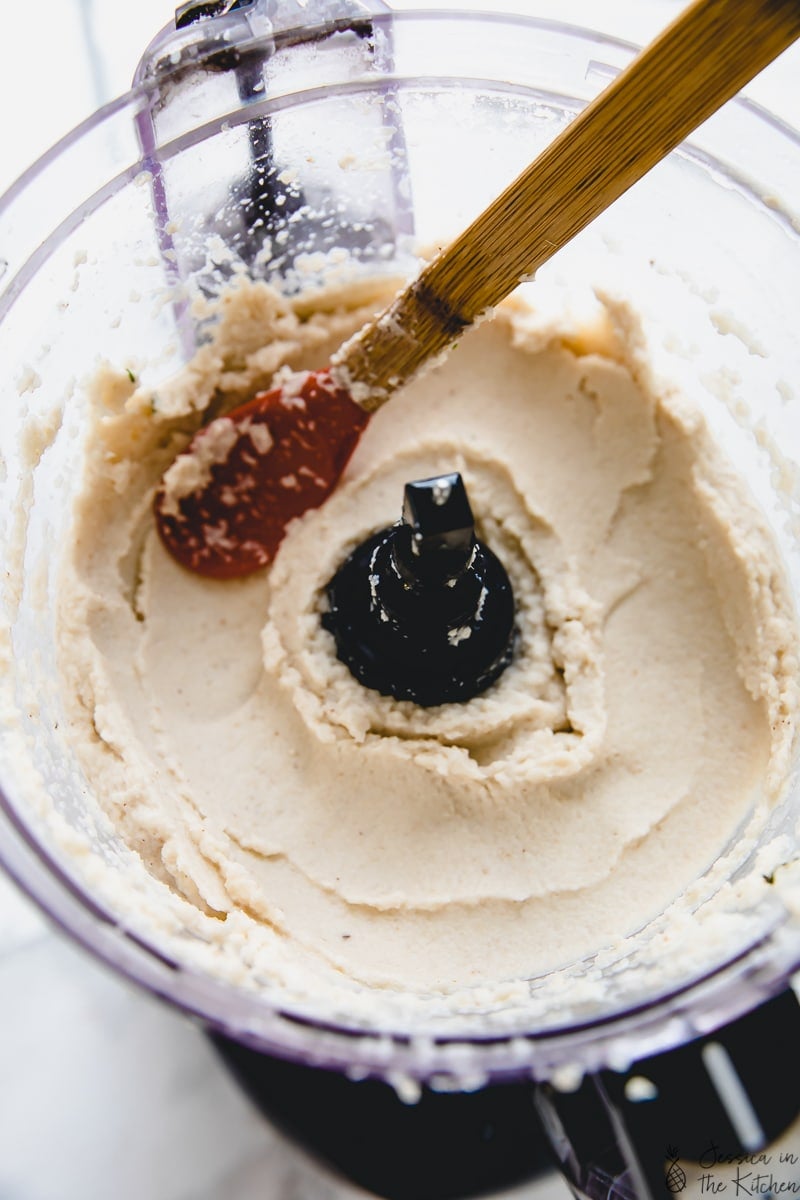
- Blend. Process the cauliflower on high for 3-4 minutes, until smooth. For a creamier texture, add an extra 1/4 cup of coconut milk. Afterward, season to taste, and serve warm.
Why Roasting the Cauliflower for Mash Matters
If you’ve tried mashed cauliflower and disliked it, I bet the recipe started with steamed cauliflower. That was my first introduction to mashed cauliflower, and let’s just say, it left me underwhelmed, too. If you want the BEST mashed cauliflower, you need to start with roasted cauliflower. It’s a game-changer!
Recipe Tips
- Don’t let it cool. Add the hot cauliflower, melted hot butter and hot coconut milk, and seasonings into your food processor and blend. Cauliflower can take on a bit of a funky flavour when refrigerated; if you like cauliflower, this might not be an issue for you, but I think this recipe tastes best when it doesn’t have a chance to cool before you serve it.
- Don’t skip the roasting. I really love this version of mashed cauliflower versus the kind that uses steamed or boiled cauliflower because it eliminates the potential for your cauliflower to be runny and bland.
- Don’t overmix. Process the cauliflower until it reaches the consistency you desire, and no longer.
Serving Suggestions
Serve this vegan mashed cauliflower at Thanksgiving or Christmas dinner with more holiday favourites like homemade cranberry sauce , candied yams , and air fryer green beans . It’s the perfect light side dish to a vegan turkey or vegan wellington .
Storing and Reheating Leftover Mash
- Refrigerate. Store leftover mashed cauliflower in an airtight container in the refrigerator for 2 to 3 days.
- Reheat. Reheat leftovers in the microwave or on the stovetop on low, adding a bit of coconut milk to thin it out.
- Can this be frozen? Yes. This vegan mashed cauliflower tastes best when it’s fresh, but you can freeze it in a pinch. Place the cauliflower mash in an airtight container and freeze for up to 3 months. You can warm mashed cauliflower in the microwave from frozen, or let it thaw in the refrigerator first.
More Easy Vegan Side Dishes
- Mashed Sweet Potato
- Whole Roasted Cauliflower
- Cabbage Steaks
- Hasselback Butternut Squash
- Maple Brussels Sprouts
Ingredients
- 3 to 4 cups of cauliflower florets , 1lb 11oz
- 2 teaspoons olive oil
- 4 cloves garlic , skins still on but slightly smashed
- 1 teaspoon sea salt
- 3 tablespoons vegan butter
- 3/4 cup to 1 cup coconut milk
- optional but delicious add ins: dried parsley , chives, black pepper
Instructions
- Preheat your oven to 450 F/230 C. Prepare a baking sheet by lining it with a silicone baking sheet or greased foil.
- Remove florets from the cauliflower (aka don’t use the stem). Drizzle the cauliflower with the olive oil and rub all over. Place on the lined baking sheet. Add the smashed garlic (skins still on) on the baking sheet. The skins help to prevent it burning; you’ll remove thee afterwards. Roast for 20 minutes in the oven.
- Remove the cauliflower and don’t let cool. Add the roasted cauliflower, the garlic (skins remove), and the sea salt into a food processor.
- In a microwave (or on stove top if you prefer), add the vegan butter to the coconut milk and microwave for about 45 seconds until both are hot and the butter is melted. Add it to the food processor.
- Turn on the food processor to high to blend everything together. Blend for about 3-4 minutes, stopping to scrape down all the sides. If you need it, add in the last 1/4 cup of the coconut milk to get the mashed cauliflower even creamier and smooth. Just watch it so it’s your desired texture.
- Your mashed cauliflower should be smooth and creamy when you’re done. Taste test and add more salt, depending on your taste. Blend again until all incorporated. Serve with veggies and crackers and enjoy!
Notes
- How to store: S tore leftover mashed cauliflower in an airtight container in the refrigerator for 2 to 3 days. Reheat it in the microwave or on the stovetop on low, adding a bit of coconut milk to thin it out.
- How to freeze: Place the mashed cauliflower in an airtight container and freeze for up to 3 months. You can warm it in the microwave from frozen, or let it thaw in the refrigerator and warm it on the stovetop or in the microwave.
Vegan Mashed Cauliflower
Ingredients
- 3 to 4 cups of cauliflower florets 1lb 11oz
- 2 teaspoons olive oil
- 4 cloves garlic skins still on but slightly smashed
- 1 teaspoon sea salt
- 3 tablespoons vegan butter
- 3/4 cup to 1 cup coconut milk
- optional but delicious add ins: dried parsley chives, black pepper
Instructions
- Preheat your oven to 450 F/230 C. Prepare a baking sheet by lining it with a silicone baking sheet or greased foil.
- Remove florets from the cauliflower (aka don’t use the stem). Drizzle the cauliflower with the olive oil and rub all over. Place on the lined baking sheet. Add the smashed garlic (skins still on) on the baking sheet. The skins help to prevent it burning; you’ll remove thee afterwards. Roast for 20 minutes in the oven.
- Remove the cauliflower and don’t let cool. Add the roasted cauliflower, the garlic (skins remove), and the sea salt into a food processor.
- In a microwave (or on stove top if you prefer), add the vegan butter to the coconut milk and microwave for about 45 seconds until both are hot and the butter is melted. Add it to the food processor.
- Turn on the food processor to high to blend everything together. Blend for about 3-4 minutes, stopping to scrape down all the sides. If you need it, add in the last 1/4 cup of the coconut milk to get the mashed cauliflower even creamier and smooth. Just watch it so it’s your desired texture.
- Your mashed cauliflower should be smooth and creamy when you’re done. Taste test and add more salt, depending on your taste. Blend again until all incorporated. Serve with veggies and crackers and enjoy!
Notes
- How to store: S tore leftover mashed cauliflower in an airtight container in the refrigerator for 2 to 3 days. Reheat it in the microwave or on the stovetop on low, adding a bit of coconut milk to thin it out.
- How to freeze: Place the mashed cauliflower in an airtight container and freeze for up to 3 months. You can warm it in the microwave from frozen, or let it thaw in the refrigerator and warm it on the stovetop or in the microwave.
Nutrition
Vegan Mashed Cauliflower https://jessicainthekitchen.com/vegan-mashed-cauliflower-buttery-low-carb/ December 11, 2021
These festive vegan sugar cookies are classic Christmas cookies, but you can make them for any holiday or occasion! This fail-proof recipe has the buttery, vanilla-scented dough you know and love, and it bakes up crisp on the edges and perfect for decorating.

Sugar cookies are a year-round treat, but if you’re like most people, you probably associate them with Christmas. No other cookie is so well-suited for cutting into Christmas trees, wreaths, and snowman shapes, or for decorating with colourful icing! If you’re on a plant-based diet, there’s no reason sugar cookies have to be off-limits; vegan sugar cookies have everything you love about the original, minus the eggs, butter, and milk.
Why This Vegan Sugar Cookie Dough Recipe Works
- Authentic sugar cookie flavor. Yep, you can even nail that buttery sugar cookie flavour by using a high-quality vegan butter. These cookies are sweet, crispy, and have the perfect texture for cut-outs.
- Easy to make. I’m sharing my never-fail vegan sugar cookie dough that’s ideal for cut-out cookies. It comes together with just a few pantry ingredients and minimal chilling time.
- Your ultimate blank canvas. I decorated my sugar cookies for the holidays. You can also cut them into rounds using the rim of a glass or cup and add a simple, colourful glaze, or use cookie cutters to make shapes for any holiday, occasion, or interest. Easter, Valentine’s Day, you name it.
Notes on Ingredients
Please note that this is important information on the ingredients and instructions, and the FULL recipe with amounts and details can be found DOWN BELOW (scroll to it) in the recipe card.
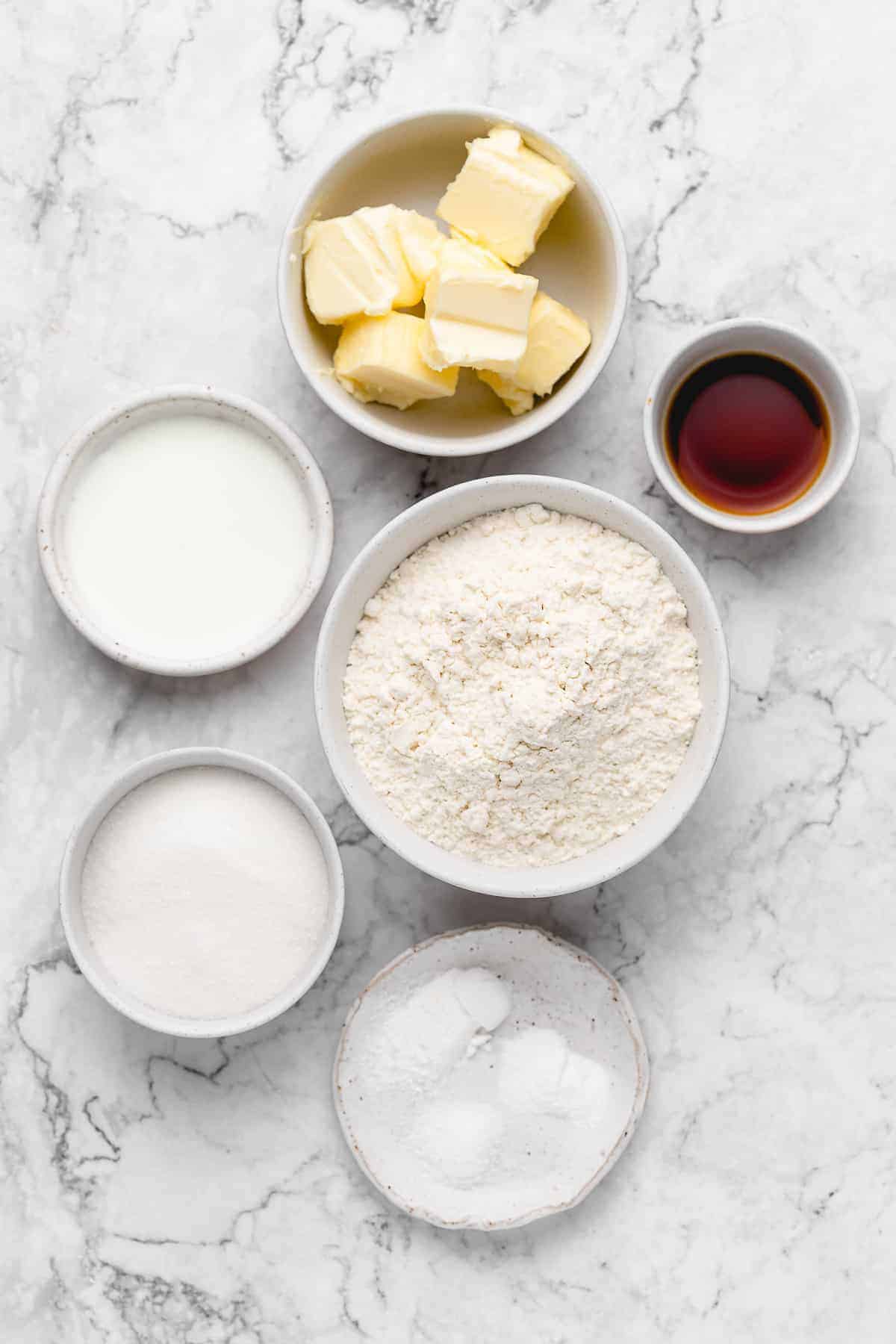
- Vegan butter – You can make vegan butter from scratch if you’re not able to find it at the grocery store. If using store-bought (like I usually do), I recommend Earth Balance Sticks for this or Miyokos butter. Quality counts, since we’re after that authentic buttery flavor.
- Organic white granulated sugar – White sugar is a classic choice for sugar cookies, though you can also make brown sugar cookies if you’d like.
- Vanilla extract – The vanilla flavour really shines through in sugar cookies, so choose a high-quality extract or an equal amount of real vanilla paste.
- Vegan milk – Use an unflavoured non-dairy milk like soy, oat, almond, or whichever kind you like or have on hand.
- Dry ingredients – These are your baking staples, like all-purpose flour, baking powder, baking soda, and sea salt. Check the expiration dates on your leavening agents to make sure they’re fresh.
Vegan Sugar Cookie Icing
The vegan icing for these frosted sugar cookies couldn’t be easier. All you need is powdered sugar (confectioner’s sugar), non-dairy milk, and lemon juice. I like to use lemon juice in my icing as it brightens up the flavour and adds a hint of tanginess, reminiscent of cream cheese frosting . You can add vanilla extract if you prefer. I recommend sifting the powdered sugar before you make the icing, so it’s free from lumps.
To make the icing, combine the ingredients in a small bowl and stir until the mixture is smooth. That’s it! You can do this in advance of making your cookies or whip up the icing while the cookies bake. It’s up to you.

Let’s Make Vegan Sugar Cookie Dough
If you don’t have a large block of time to make and frost the cookies, you can bake the cookies a day or two in advance and frost them later. The sugar cookie dough also stores well for 2-3 days in the fridge if you wrap it tightly with plastic wrap.
- Prepare a baking sheet. Line a baking sheet with parchment paper or a silicone mat and dust it with flour. Unlike traditional cookie dough that gets shaped into discs for chilling, you’ll roll this vegan dough out flat before you refrigerate it. Vegan cookie dough can be a bit stickier than traditional cookie dough, so the extra flour makes rolling and handling the dough much easier.
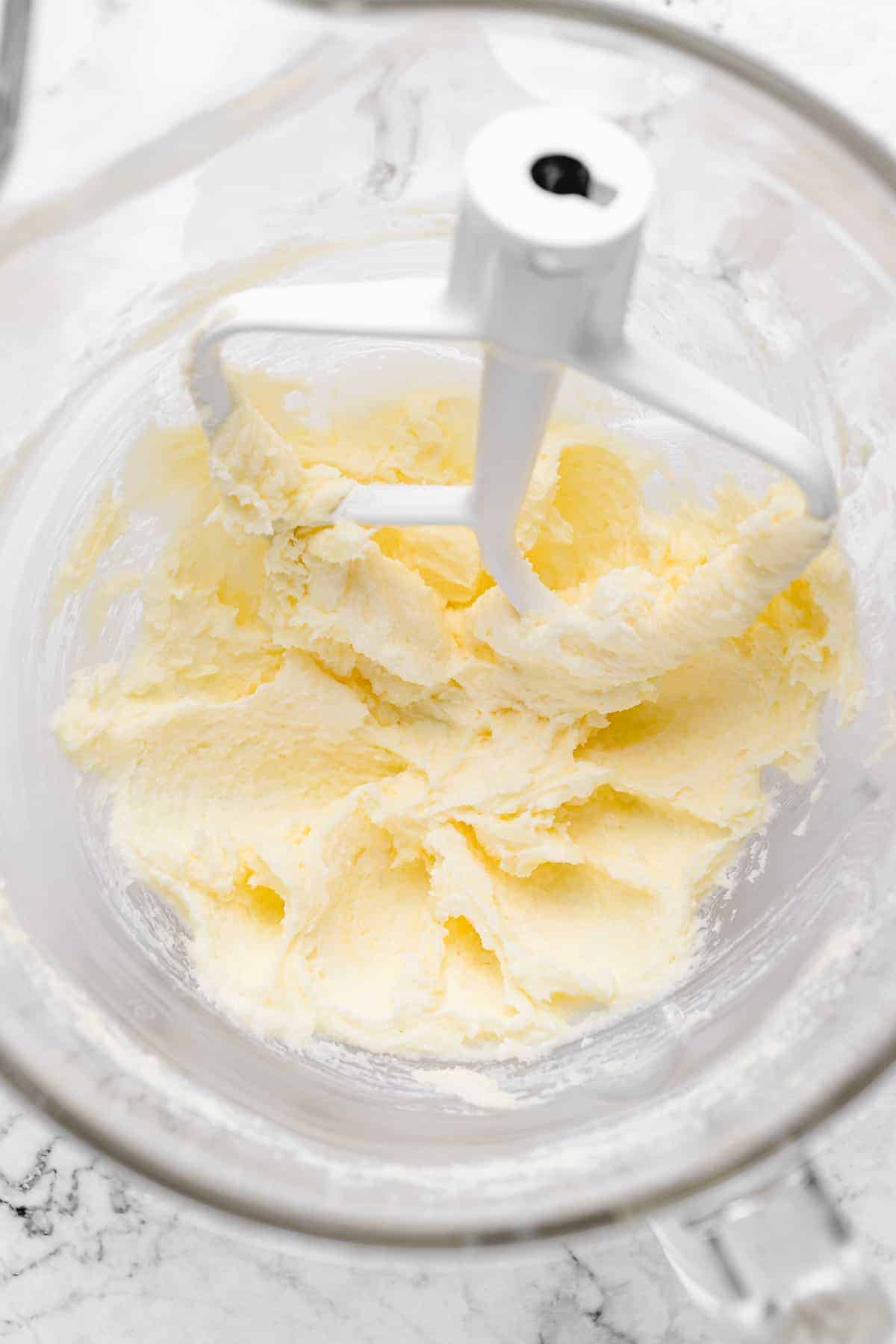
Cream the btuter and sugar.
- Next, mix the wet ingredients. In the bowl of a stand mixer, cream the butter and sugar for about 3 minutes on medium-low speed. Then, beat in the vanilla and milk for about 30 seconds.
- Add the dry ingredients. Sift the flour, baking powder, baking soda, and sea salt into a separate small bowl, and whisk to combine. Now, add the flour mixture to the wet ingredients. Beat slowly, then increase the speed to fully incorporate the flour; this should take about 2 minutes at most. The dough will be slightly sticky to the touch.
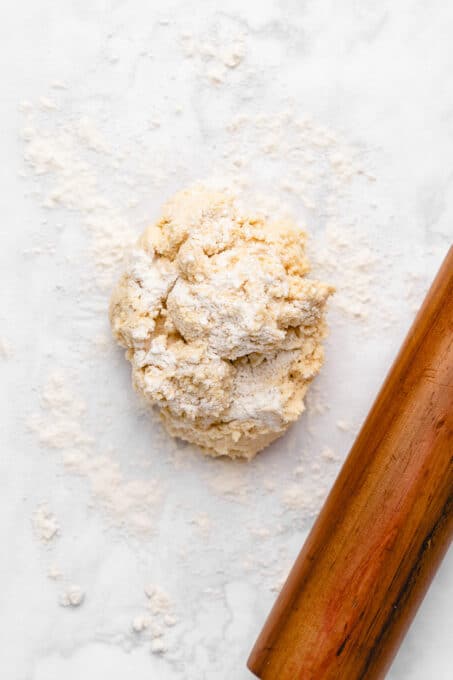
Turn the dough out into a ball.
- Roll out the dough. Use your hands to shape the dough into a ball, and turn it out onto your prepared baking sheet. Using a floured rolling pin , roll out the dough to about ¼-inch thickness. Lightly dust the top of the dough with additional flour, and place another piece of parchment paper on top.
- Chill the dough. Place the baking sheet with the rolled out dough in the refrigerator. The sugar cookie dough needs to chill for at least an hour, or up to overnight, before you cut out and bake your cookies.
How to Cut Out and Bake Sugar Cookies
- Get your sugar cookie dough ready . Start preheating your oven to 350ºF. Meanwhile, take out your chilled cookie dough and peel away the top layer of parchment paper.
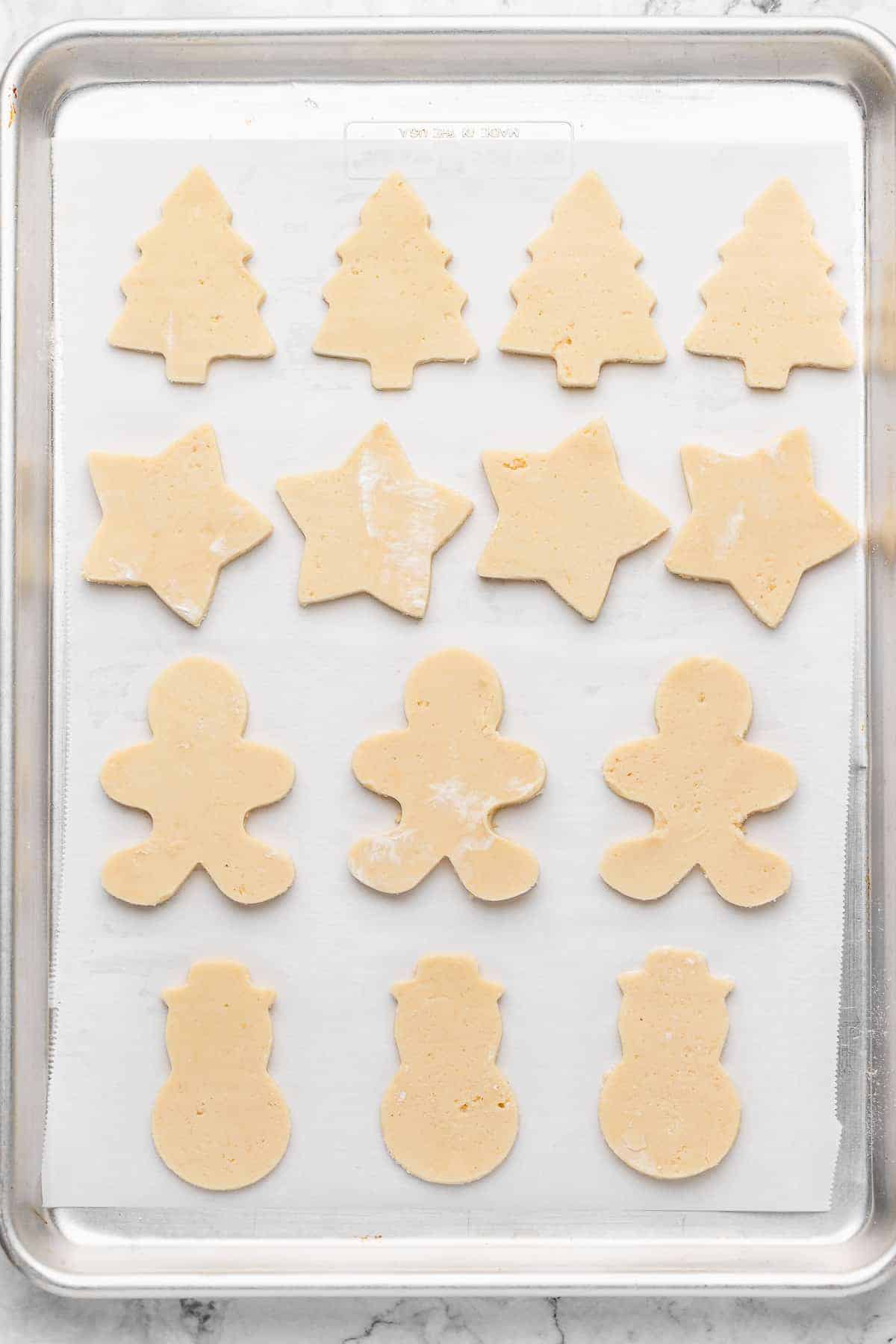
Cut out the cookies.
- Cut out the cookies. Next, use your choice of cookie cutters to cut the sugar cookie dough into shapes. Collect the scraps, roll them out again, cut, and repeat until you have no more dough left. Leave the cut cookies on the parchment-lined baking sheet, arranging them so there’s at least an inch of space between each cookie.
- Bake the cookies. Place the baking sheet in the oven and bake the cookies for about 10 minutes. Cool on the sheet, then transfer to a wire rack to finish cooling completely.

How to Decorate Sugar Cookies
Mix and colour the icing, if desired, and use it to decorate your cookies. You can be as simple or as creative as you’d like. Check out the photos for some Christmas cookie inspiration, and there are so many fun tutorials that you can follow online. These are some quick tips:
- Get the right consistency for the icing. You can add the lemon juice a drop at a time and adjust its thickness by adding more powdered sugar or thinning with additional milk or lemon juice. If you’re adding liquid food colouring , I suggest starting with a thicker icing and adding a little less milk and lemon juice.
- Use a Ziploc bag. If you don’t have piping bags or piping tips for the details, don’t worry. Simply add the icing to a small Ziploc bag and snip off the corner. You’ll be decorating like a pro in no time!
- Can I use frosting? Yes. If you’d prefer to frost these cookies with buttercream instead, try my easy vegan buttercream frosting recipe that’s just as perfect for decorating cookies as it is for frosting cakes and cupcakes.

Tips for Perfect Sugar Cookies
To avoid thin, misshapen sugar cookies, keep the following in mind:
- Don’t over-beat the butter and sugar. Too much air in the butter mixture causes the cookies to spread.
- Chill the cookie dough. Very important! The dough and the butter inside it need to be chilled before it goes in the oven. Without this step, the butter will melt immediately, deflating your cookies.
- Keep it cold. If the dough warms up when you’re cutting the cookies, you can refrigerate it for another 15 minutes.
- Prevent the dough from sticking. If you need to, you can sprinkle additional flour on top of the dough before rolling it out.

Proper Storage
Vegan sugar cookies can be stored just like traditional sugar cookies, in an airtight container at room temperature for 3 to 4 days. To keep the icing perfect, you can place parchment paper between the layers.
How to Freeze Sugar Cookies
Or, you can freeze the baked and frosted cookies, or you can freeze the sugar cookie dough before baking. This way, it’s on hand whenever you’re ready to bake.
- To freeze the frosted sugar cookies, store them in an airtight container or freezer bag for up to 3 months. Thaw at room temperature before serving.
- To freeze the cookie dough, wrap the dough tightly in a double layer of plastic wrap. Freeze for up to 2 months, and thaw the dough completely before rolling it out on the baking sheet as directed. Chill the dough and proceed to cut it out and bake as directed.
Ingredients
- ½ cup vegan butter , 112g, room temperature
- ½ cup organic white granulated sugar , 100g
- 1 teaspoon vanilla extract
- 2 tablespoons vegan milk
- 1 ½ cups flour of choice regular all-purpose flour , 180g
- 1 teaspoon baking powder
- ¼ teaspoon baking soda
- ¼ teaspoon sea salt
- For the Sugar Cooking Icing:
- 1 cup powdered sugar , sifted
- 1 tablespoon vegan milk
- 1 teaspoon lemon Juice , fresh or processed
Instructions
- In a bowl of a stand mixer, cream together the butter and sugar for about 3 minutes on medium low speed until creamy and incorporated. You don’t want to over beat and incorporate too much air which can cause the cookies to spread.
- Add in the vanilla extract and vegan milk and blend for another 30 seconds until incorporated.
- In a small separate bowl, sift together your flour, baking powder, baking soda and sea salt until thoroughly combined.
- Add in your flour mixture into the wet mix. Start slowly then slightly increase speed to mix in the flour thoroughly into the dough, about 2 minutes max on medium low speed to thoroughly incorporate. Dough should be slightly sticky to the touch.
- Roll/mold your dough together into a ball.
- On a baking sheet, on a piece of floured parchment paper or a flour silicone mat, place the dough. Feel free to dust with a little bit of extra sifted flour on top. Using a floured rolling pin, roll out the dough to about ¼ inch thickness and no thinner than that. This helps so much when cutting out the chilled dough so you don’t over warm it trying to shape it properly. Dust with a little bit more flour, then cover the top with another layer of parchment paper.
- Place the rolled out dough on the baking sheet in your fridge for at least 1 hour. You can also chill overnight if needed.
- Remove the top layer of parchment paper. Cut out shapes with your cookie cutters. Re-roll the scraps and repeat the process to use up all of the dough. You want to ensure your dough stays cold during the process, otherwise refrigerate for another 15 minutes again.
- Preheat your oven to 180°C/350°F.
- Bake for 10 minutes (the cookies will continue to cook as they cool – you don’t want to overbake them as they brown quickly if overbaked). Bake cookies of the same size together to prevent under or over baking.
- Allow the cookies to cool for about 5 minutes on the baking sheet, then move to a wire rack to cool completely.
- Once completely cooled, decorate as desired.
- To make the sugar cooking icing:
- Mix together the powdered sugar, vegan milk and lemon juice until fully combined (about a drop at a time). Feel free to thicken if desired with more powdered sugar or thin out with more milk or lemon juice depending on which flavor you prefer.
- My top tip would be to outline your cookies first with a slightly thicker icing, then you can add a bit more milk for the inside to fill in the outline.
- If you are using food coloring, definitely add a little less milk since liquid food colours can make the frosting more runny. If you’re using a gel food colouring you can usually leave your milk quantity as the same.
- Use this icing recipe to decorate your cookies.
