Make this vegan malai kofta and you’ll think you’re enjoying a meal at your favourite Indian restaurant! We swap the paneer for tofu in these dumplings, then cook them to perfection in a creamy tomato sauce. Yum!
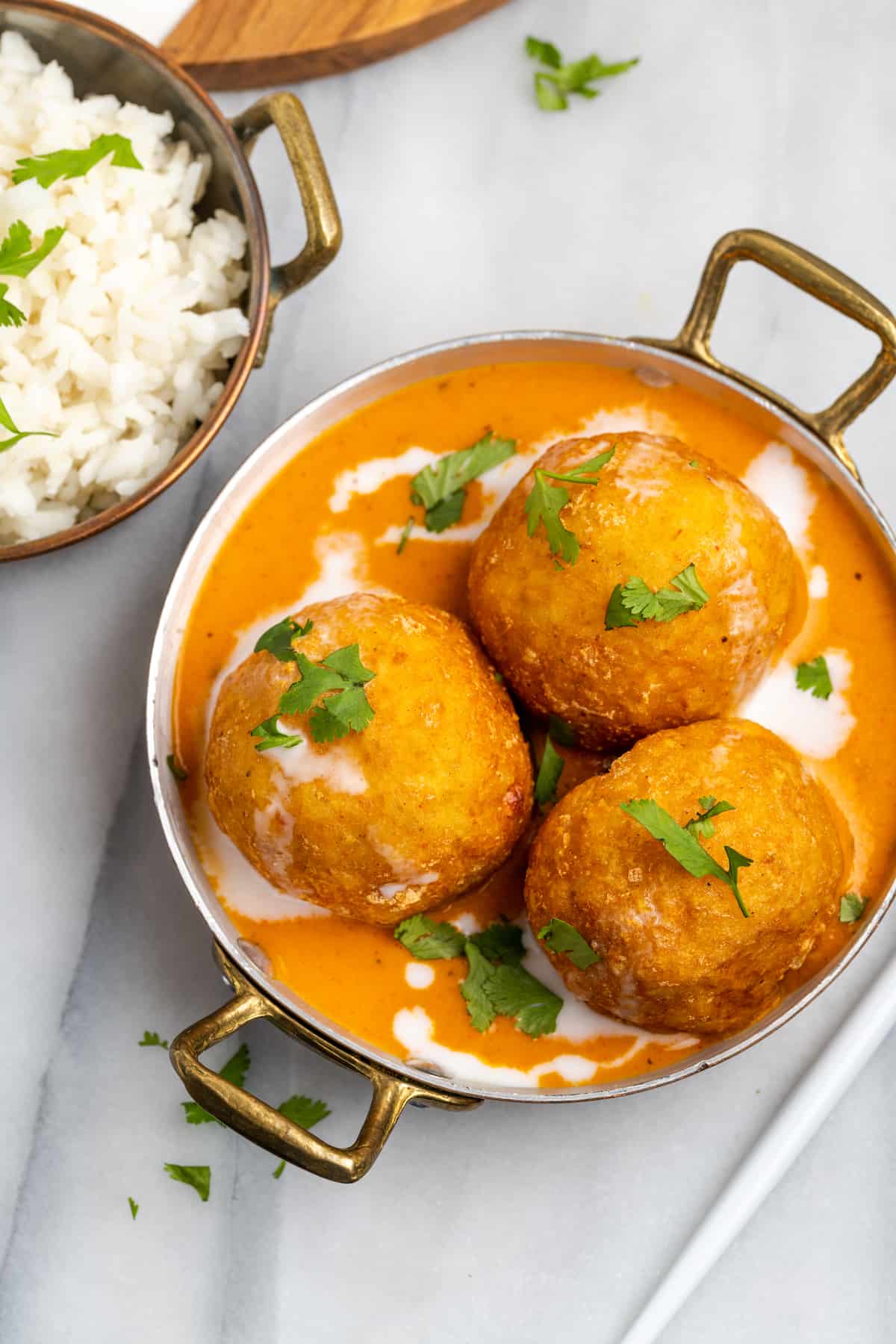
Before I went vegan, I always loved ordering malai kofta at Indian restaurants. The tender dumplings, the rich, creamy sauce—it’s pretty much irresistible, but because it’s made with cheese and cream, it’s off-limits if you’re living a vegan lifestyle. But if you make it at home? Well, then you can make a vegan version with a few easy swaps!
What Is Malai Kofta?
Not to be confused with my Middle Eastern-style vegan kofta , malai kofta is an Indian dish consisting of fried dumplings that are made with a combination of paneer (cheese), potatoes, and lots of spices. The dumplings are then cooked in a creamy tomato-based sauce. Like many Indian dishes, malai kofta is typically served with either naan or basmati rice, making it a filling meal.
While malai kofta originated in North India, it’s popular throughout the subcontinent, and, of course, at Indian restaurants around the world! To make vegan malai kofta, we first swap the paneer for extra-firm tofu, which has a mild flavour and similar texture to paneer. Then, trade the heavy cream in the sauce for coconut milk. Easy!
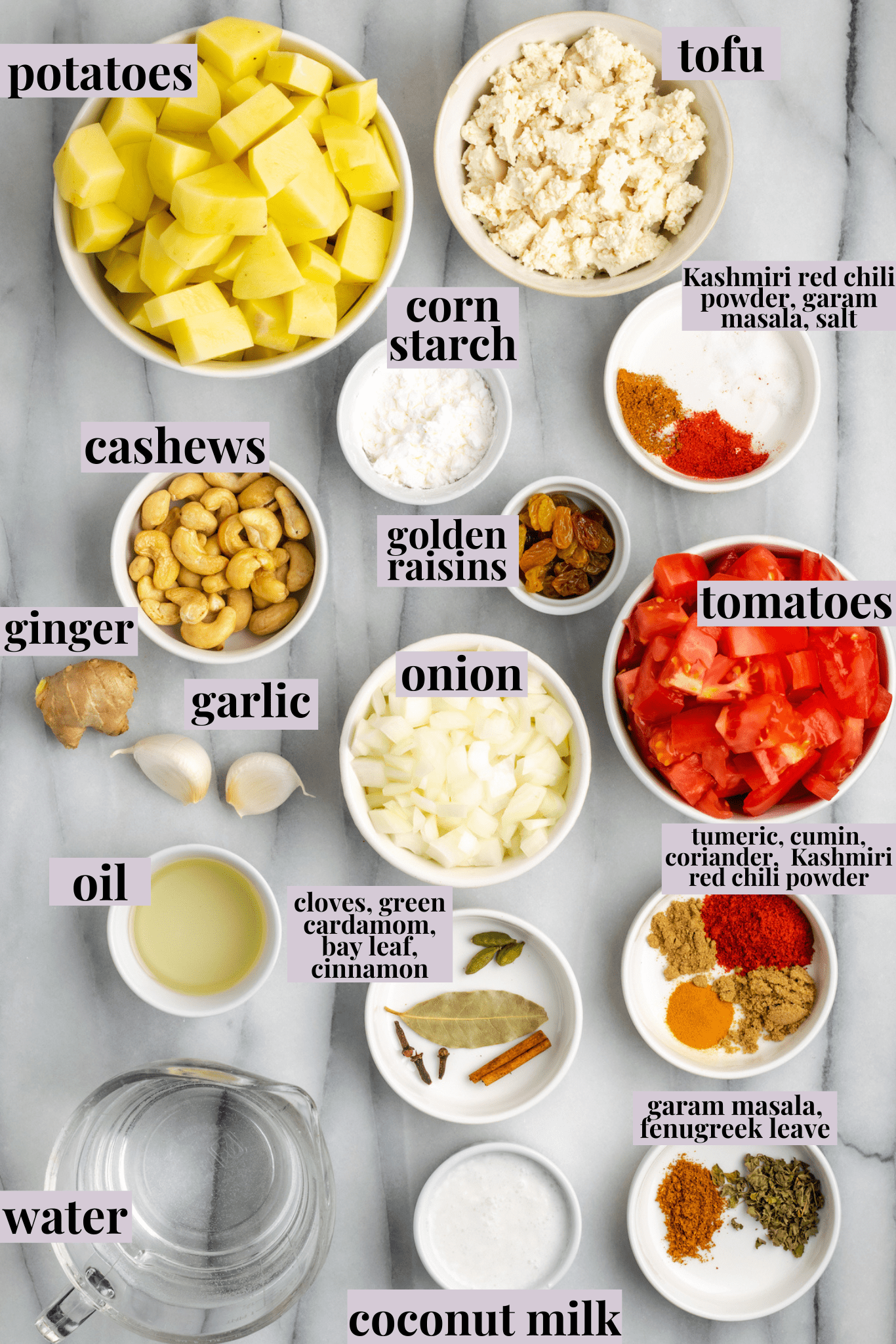
Notes on Ingredients
Scroll down to the recipe card to find the ingredient quantities and recipe instructions.
- Raw cashews – Don’t use roasted or salted cashews; you’ll need raw.
- Potatoes – Russet potatoes are fine, or you can use red potatoes or Yukon gold.
- Extra-firm tofu – Learn more: How To Cook Tofu 101 + Best Tips on Making the Most Delicious Tofu
- Cornstarch
- Kashmiri red chili powder
- Garam masala
- Salt
- Golden raisins – These add just a little bit of sweetness that works well in this vegan malai kofta recipe.
- Onion – Yellow or white onion are best.
- Fresh ginger
- Garlic
- Tomatoes
- Oil – Any oil you like or have on hand for cooking.
- Cloves
- Green cardamom
- Cinnamon stick
- Bay leaf
- Turmeric
- Cumin
- Coriander
- Water
- Fenugreek
- Full-fat coconut milk – This replaces the heavy cream, so you want to use full-fat and not lite coconut milk, which isn’t nearly as creamy.
- Cilantro – For garnish.
Is Kashmiri Chili Powder the Same as Chili Powder?
No, Kashmiri chili powder is a type of mild red chili powder that is used in Indian cuisine. It’s different from regular chili powder, which is more of a Tex-Mex flavor and typically contains more heat and smokiness. It’s important to note that the two are not interchangeable, so make sure you use the correct type when making this vegan malai kofta recipe.
How to Make Vegan Malai Kofta
This isn’t the kind of meal you can whip up for a busy weeknight dinner, but trust me that it is so worth the effort.
Start the Dumplings:
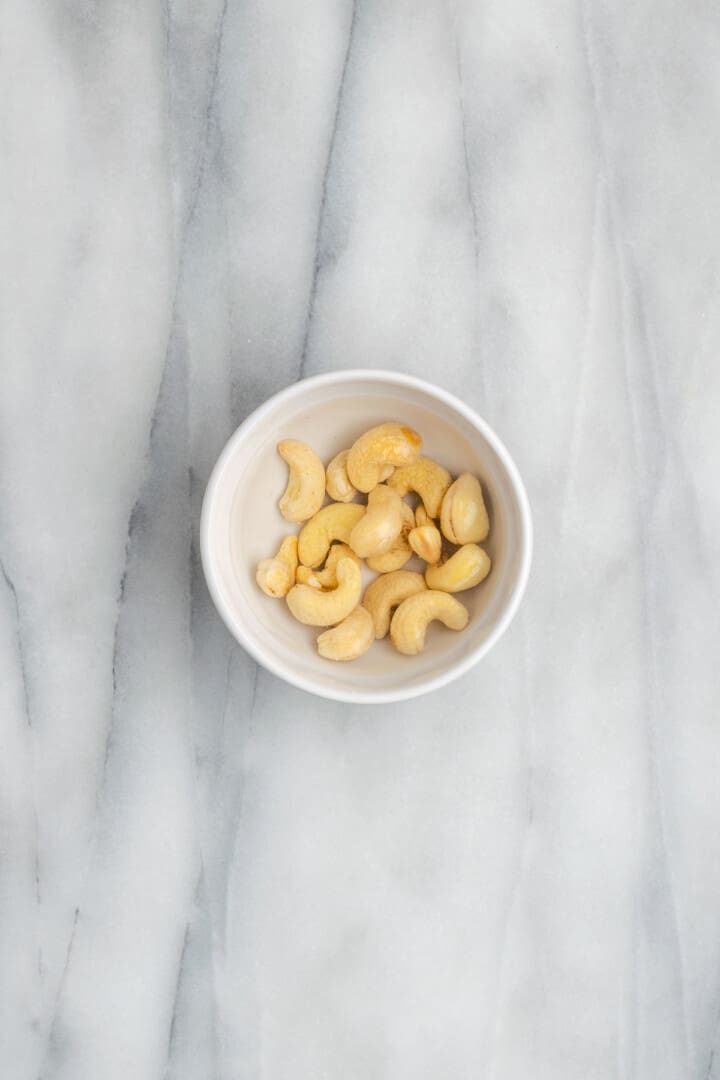
- Soak the cashews. Place 15 raw cashews in a bowl with enough water to cover them. Soak for 30 minutes.
- Cook the potatoes. Place the potatoes into a pot and cover them with cold water. Bring to a boil and cook for about 15 minutes, or until the potatoes can be easily pierced with a fork. Cool for 10 minutes.
- Prep the unsoaked cashews and raisins. Finely chop the remaining 12 cashews, then chop the raisins and combine them in a small bowl.
- Make the dumpling mixture. Use a potato ricer to mash the potatoes into a large bowl. Stir in the crumbled tofu, cornstarch, 1/4 teaspoon of Kashmiri red chili powder, 1/4 teaspoon of garam masala, and 1/2 teaspoon of salt.
- Form the dumplings. Divide the potato mixture into 8 equal balls, then press each ball into a thick patty. Place 1 1/2 teaspoon of the cashew-raisin mixture in the center, then form the dumpling mixture into a ball again around the filling. Chill the dumplings for 30 minutes.
Make the Sauce:
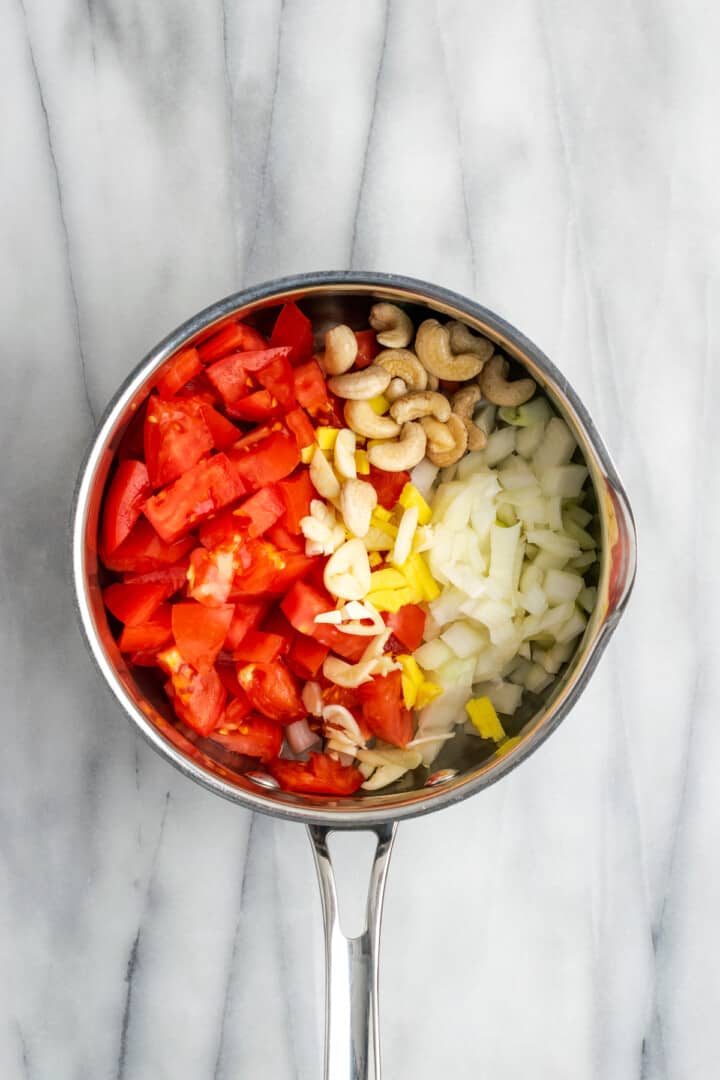
- Start the sauce. Drain the soaking cashews. Add the onion, ginger, garlic, tomatoes, and soaked cashews to a pot over set medium heat. Bring the mixture to a simmer and cook for 15 minutes, stirring occasionally.
- Puree the tomato mixture. Remove the tomato mixture from the heat and let it cool slightly. Then, pour the tomato mixture into a blender and puree until smooth.
- Cook the whole spices. In another pot, combine the oil, cloves, cardamom, cinnamon stick, and bay leaf. Sauté over medium heat for 1 minute.
- Simmer the sauce. Carefully pour the tomato puree into the hot oil. Stir and reduce the heat to medium-low. Cover the pot and simmer for 7 minutes, stirring occasionally. Add 1/2 teaspoon of salt, along with the turmeric, cumin, Kashmiri red chili powder, coriander, and 1 cup of water to the sauce and continue to simmer for 5 minutes, or until it thickens slightly.
- Finish the sauce. Stir in 1/4 teaspoon garam masala, fenugreek leaves, and coconut milk, then cover and remove from the heat.
Cook the Dumplings and Serve:
- Start the oil. Heat 2 inches of oil in a deep skillet until it reaches 360ºF.
- Fry the dumplings. Carefully place the kofta in the hot oil, frying 2 to 3 at a time for about 5 minutes, turning every minute or so until they’re golden brown all over. Transfer to a wire rack.
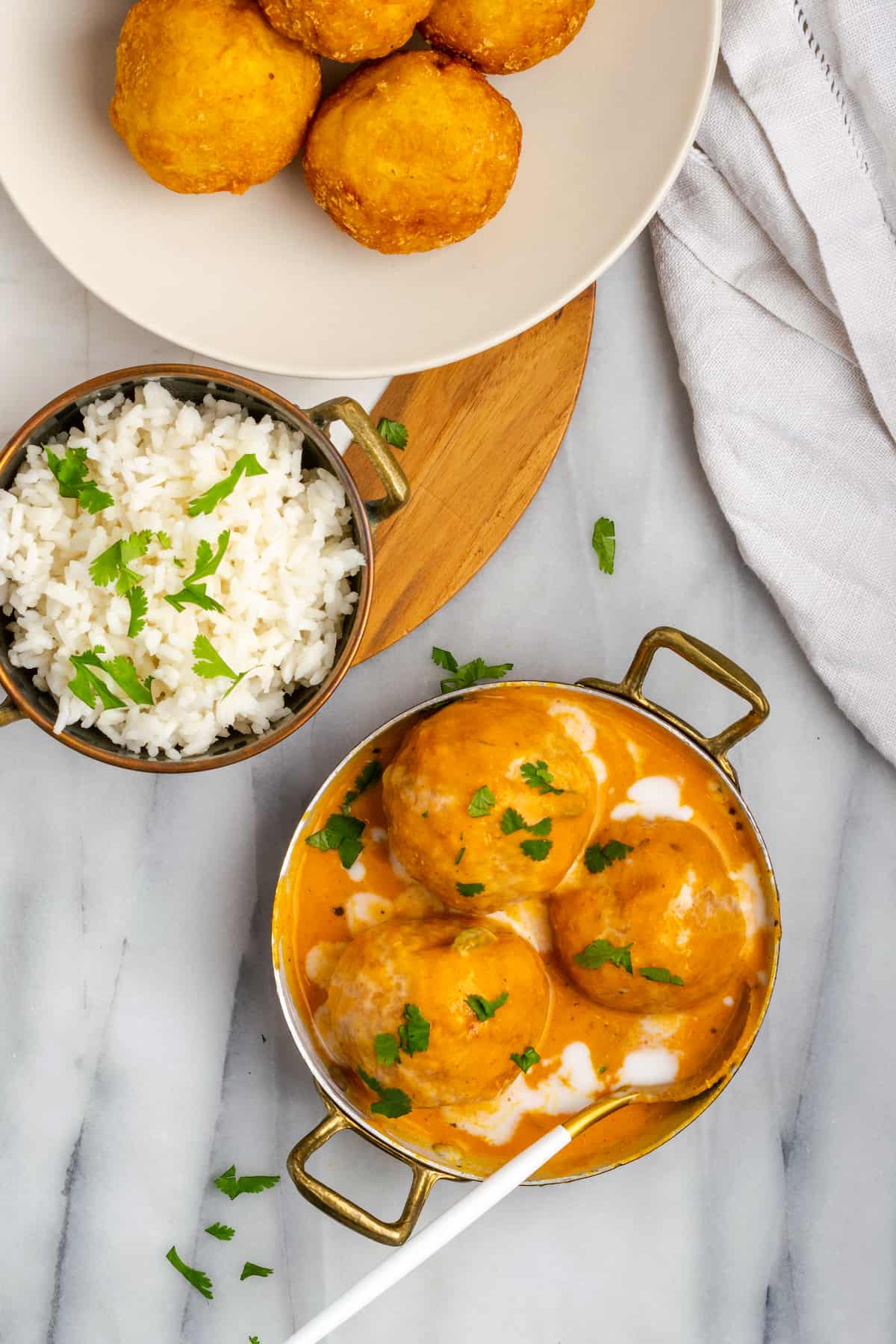
- Serve. Pour the sauce into a dish and set the kofta in the sauce. Drizzle additional coconut milk over the top and sprinkle with the cilantro.
Tips for Success
These tips will help you make sure your vegan malai kofta turns out perfect!
- Soak the cashews. This will help them blend into a smooth, creamy sauce.
- Don’t overcook the potatoes. They should be just soft enough to pierce with a fork. If they’re too mushy, it will be difficult to form your dumplings.
- Use a thermometer for the oil. That way, you’ll be sure you’re frying the kofta at the perfect temperature. If the oil is too cool, the dumplings will end up greasy; too hot and they’ll be over-done on the outside, but not cooked all the way through.

Serving Suggestions
Malai kofta makes a delicious vegan meal when served with steamed basmati rice, vegan naan (or garlic naan !), or other Indian breads. Although it’s not exactly authentic, you can also serve this dish with cauliflower rice or quinoa .
How to Store Leftovers
If you have leftover malai kofta, it’s best to store the kofta and sauce separately. Place them in separate containers and store in the refrigerator for up to 3 days. Reheat them separately in the microwave, then add the dumplings into the sauce before serving.

Can This Recipe Be Frozen?
This malai kofta can be frozen, but again: the sauce and dumplings should be stored separately. This will help keep the kofta from getting mushy! Let them thaw in the refrigerator, then reheat according to the instructions above.
More Indian-Inspired Vegan Recipes
- Vegan Coconut Curry Lentil Soup
- Vegan Mulligatawny Soup
- Easy Lentil Soup (Vegan & Spiced)
- Vegan Butter Chicken (With Tofu!)

Ingredients
- 27 Raw Cashews , 43 grams, divided
- 2 Potatoes 600 grams , cut into 1 inch cubes 600 grams
- 1 Cup extra firm tofu , crumbled 163 grams
- 3 Tablespoons Cornstarch , 24 grams
- 1 ¼ teaspoon Kashmiri Red Chili Powder , divided
- ½ teaspoon Garam Masala , divided
- 1 teaspoon Salt , divided
- 1 Tablespoon Golden Raisins , finely chopped 10 grams
- 1 Cup Onion , chopped 113 grams
- 1 ½ teaspoon Fresh Ginger , peeled and sliced 15 grams
- 2 cloves Garlic , sliced
- 2 Tomatoes , 300 grams, cut into chunks
- 3 Tablespoons Oil
- 3 Cloves
- 2-3 Green Cardamom
- 1 inch Cinnamon Stick
- 1 Bay Leaf
- ¼ teaspoon Turmeric
- ¼ teaspoon Cumin
- 1 teaspoon Coriander
- 1 Cup Water
- ¼ teaspoon Garam Masala
- 1 teaspoon Fenugreek Leave , crushed
- ¼ cup Full Fat Coconut Milk , plus more for drizzling 60 ml
- Cilantro for garnish , optional
Instructions
- Place 15 raw cashews in a bowl with enough water to cover it. Allow them to soak for 30 minutes.
- Place the potatoes into a pot and cover with cold water. Bring to a boil and cook until just soft enough to pierce with a fork, about 15 minutes. Do not cook until mushy or they will be too wet to form balls.
- Remove the potatoes from heat and set aside to cool for 10 minutes.
- While the potatoes are cooling, finely chop the remaining 12 cashews and the raisins and mix together.
- Use a potato ricer to mash the potatoes. Add the crumbled tofu, cornstarch, 1⁄4 teaspoon
- Kashmiri Red Chili Powder, 1⁄4 teaspoon Garam Masala and 1⁄2 teaspoon Salt. Mix well.
- Divide the potato mixture into 8 equal balls.
- Press each ball into a thick patty and place 1 1⁄2 teaspoon of the cashew-raisin mixture in the center. Form the potatoes into a ball around the filling.
- Place the balls on a plate and refrigerate for 30 minutes.
- While the kofta are chilling, prepare the curry sauce.
- Pour the water off of the soaking cashews.
- Add onion, ginger, garlic, tomatoes and soaked cashews to a pot over medium heat.
- Bring to a simmer and cook for 15 minutes, stirring occasionally.
- Pour the tomato mixture into a blender and puree until smooth. Set aside.
- In a clean pot, add oil, cloves, cardamom, cinnamon stick and bay leaf. Saute over medium heat for 1 minute.
- Pour the tomato puree into the hot oil. Be careful, it will pop and splatter. Stir well.
- Reduce the heat to medium low. Cover the pot and simmer for 7 minutes, stirring occasionally.
- Add 1⁄2 teaspoon salt, turmeric, cumin, kashmiri red chili powder, coriander and 1 cup of water to the tomato puree. Continue to simmer for 5 minutes. It will thicken slightly.
- Stir in 1⁄4 teaspoon garam masala, fenugreek leaves and coconut milk.
- Cover and remove from heat.
- Heat 2 inches of oil to 360 degrees in a deep skillet.
- Fry the kofta 2-3 at a time for about 5 minutes each or until golden brown. Turn them about every minute to achieve and even color.
- Remove to drain on a wire rack.
- Pour the curry sauce into a dish and place the kofta in the sauce. Drizzle with additional coconut milk and sprinkle with chopped cilantro.
Notes

Vegan Malai Kofta
Ingredients
- 27 Raw Cashews 43 grams, divided
- 2 Potatoes 600 grams cut into 1 inch cubes 600 grams
- 1 Cup extra firm tofu crumbled 163 grams
- 3 Tablespoons Cornstarch 24 grams
- 1 ¼ teaspoon Kashmiri Red Chili Powder divided
- ½ teaspoon Garam Masala divided
- 1 teaspoon Salt divided
- 1 Tablespoon Golden Raisins finely chopped 10 grams
- 1 Cup Onion chopped 113 grams
- 1 ½ teaspoon Fresh Ginger peeled and sliced 15 grams
- 2 cloves Garlic sliced
- 2 Tomatoes 300 grams, cut into chunks
- 3 Tablespoons Oil
- 3 Cloves
- 2-3 Green Cardamom
- 1 inch Cinnamon Stick
- 1 Bay Leaf
- ¼ teaspoon Turmeric
- ¼ teaspoon Cumin
- 1 teaspoon Coriander
- 1 Cup Water
- ¼ teaspoon Garam Masala
- 1 teaspoon Fenugreek Leave crushed
- ¼ cup Full Fat Coconut Milk plus more for drizzling 60 ml
- Cilantro for garnish optional
Instructions
- Place 15 raw cashews in a bowl with enough water to cover it. Allow them to soak for 30 minutes.
- Place the potatoes into a pot and cover with cold water. Bring to a boil and cook until just soft enough to pierce with a fork, about 15 minutes. Do not cook until mushy or they will be too wet to form balls.
- Remove the potatoes from heat and set aside to cool for 10 minutes.
- While the potatoes are cooling, finely chop the remaining 12 cashews and the raisins and mix together.
- Use a potato ricer to mash the potatoes. Add the crumbled tofu, cornstarch, 1⁄4 teaspoon
- Kashmiri Red Chili Powder, 1⁄4 teaspoon Garam Masala and 1⁄2 teaspoon Salt. Mix well.
- Divide the potato mixture into 8 equal balls.
- Press each ball into a thick patty and place 1 1⁄2 teaspoon of the cashew-raisin mixture in the center. Form the potatoes into a ball around the filling.
- Place the balls on a plate and refrigerate for 30 minutes.
- While the kofta are chilling, prepare the curry sauce.
- Pour the water off of the soaking cashews.
- Add onion, ginger, garlic, tomatoes and soaked cashews to a pot over medium heat.
- Bring to a simmer and cook for 15 minutes, stirring occasionally.
- Pour the tomato mixture into a blender and puree until smooth. Set aside.
- In a clean pot, add oil, cloves, cardamom, cinnamon stick and bay leaf. Saute over medium heat for 1 minute.
- Pour the tomato puree into the hot oil. Be careful, it will pop and splatter. Stir well.
- Reduce the heat to medium low. Cover the pot and simmer for 7 minutes, stirring occasionally.
- Add 1⁄2 teaspoon salt, turmeric, cumin, kashmiri red chili powder, coriander and 1 cup of water to the tomato puree. Continue to simmer for 5 minutes. It will thicken slightly.
- Stir in 1⁄4 teaspoon garam masala, fenugreek leaves and coconut milk.
- Cover and remove from heat.
- Heat 2 inches of oil to 360 degrees in a deep skillet.
- Fry the kofta 2-3 at a time for about 5 minutes each or until golden brown. Turn them about every minute to achieve and even color.
- Remove to drain on a wire rack.
- Pour the curry sauce into a dish and place the kofta in the sauce. Drizzle with additional coconut milk and sprinkle with chopped cilantro.
Notes
Nutrition
Vegan Malai Kofta https://jessicainthekitchen.com/vegan-malai-kofta/ April 26, 2023
A perfect crudité platter is a feast for the eyes, with a rainbow of colours and an assortment of shapes and textures. This easy tutorial will show you how to make a crudité platter that’s sure to impress your guests!
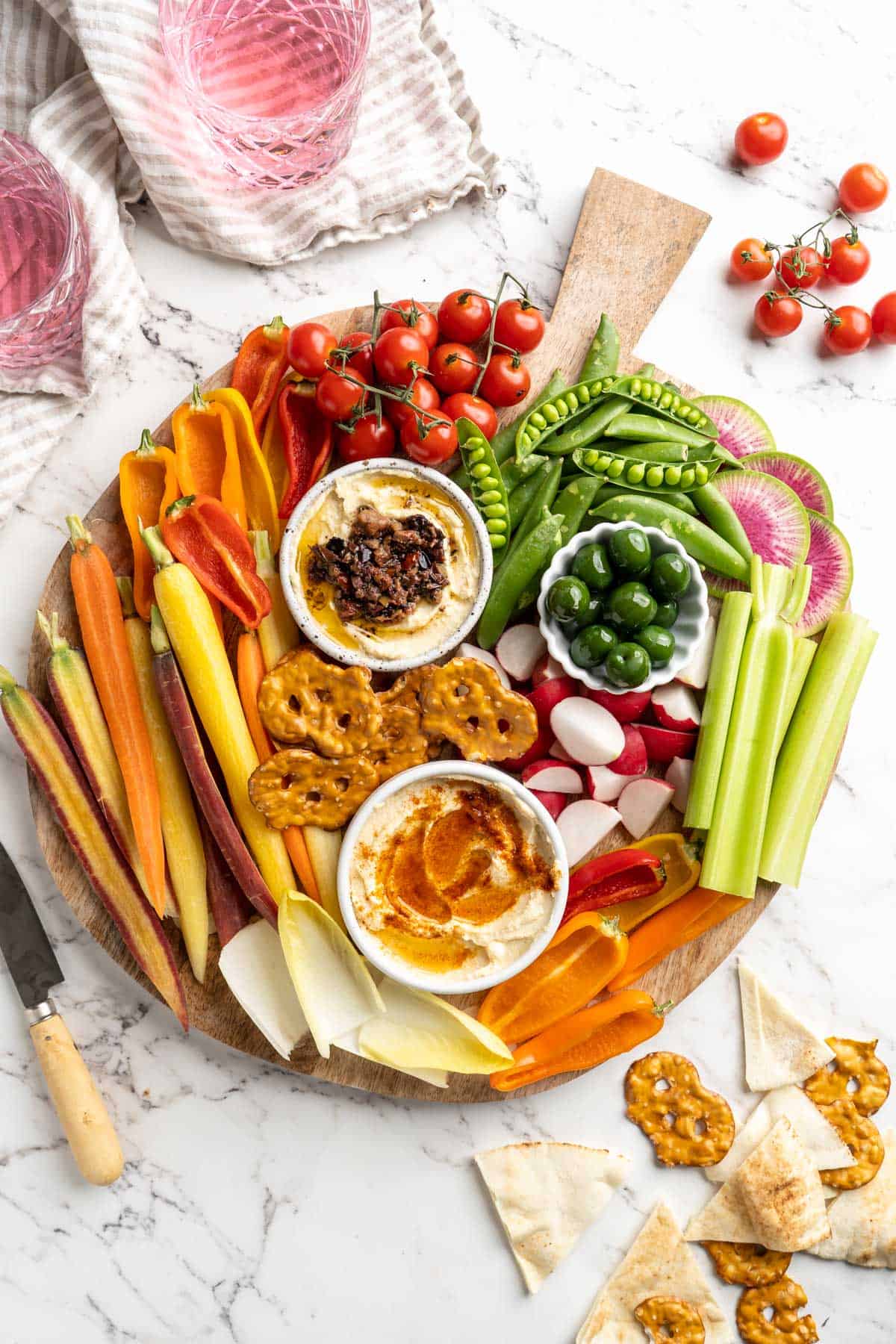
There was a time when the crudité platter was the most ho-hum snack option at any party. Some sliced cucumbers, maybe a handful of limp celery and baby carrots, and a plastic tub of dip plopped in the centre— yawn .
Well, friends, times have changed and now crudité platters are worth getting excited about. The colours! The textures! All the dips and spreads!
Best of all, making a crudité platter is one of those things that takes very little effort, but it looks super impressive. Make one for a party and your guests will ooh and ahh, but only you will know that the whole tray took you just a few minutes to assemble.
Best Vegetables for a Crudité Platter
Making the perfect crudité platter requires thought and planning to ensure that the colours, textures, and flavours of the vegetables are balanced.
When choosing vegetables for a crudité platter, choose a mixture of different colours and shapes. A variety of crunchy, juicy, and mild-flavoured veggies, as well as some strongly flavoured veggies, should be included to ensure that there is something for everyone’s taste preferences. And it goes without saying that when you’re shopping for your veggies, you want them to look perfect . Now’s not the time for bruises, browning, or any vegetable that looks past its prime.
Some of the best vegetables to include on a crudité platter are:
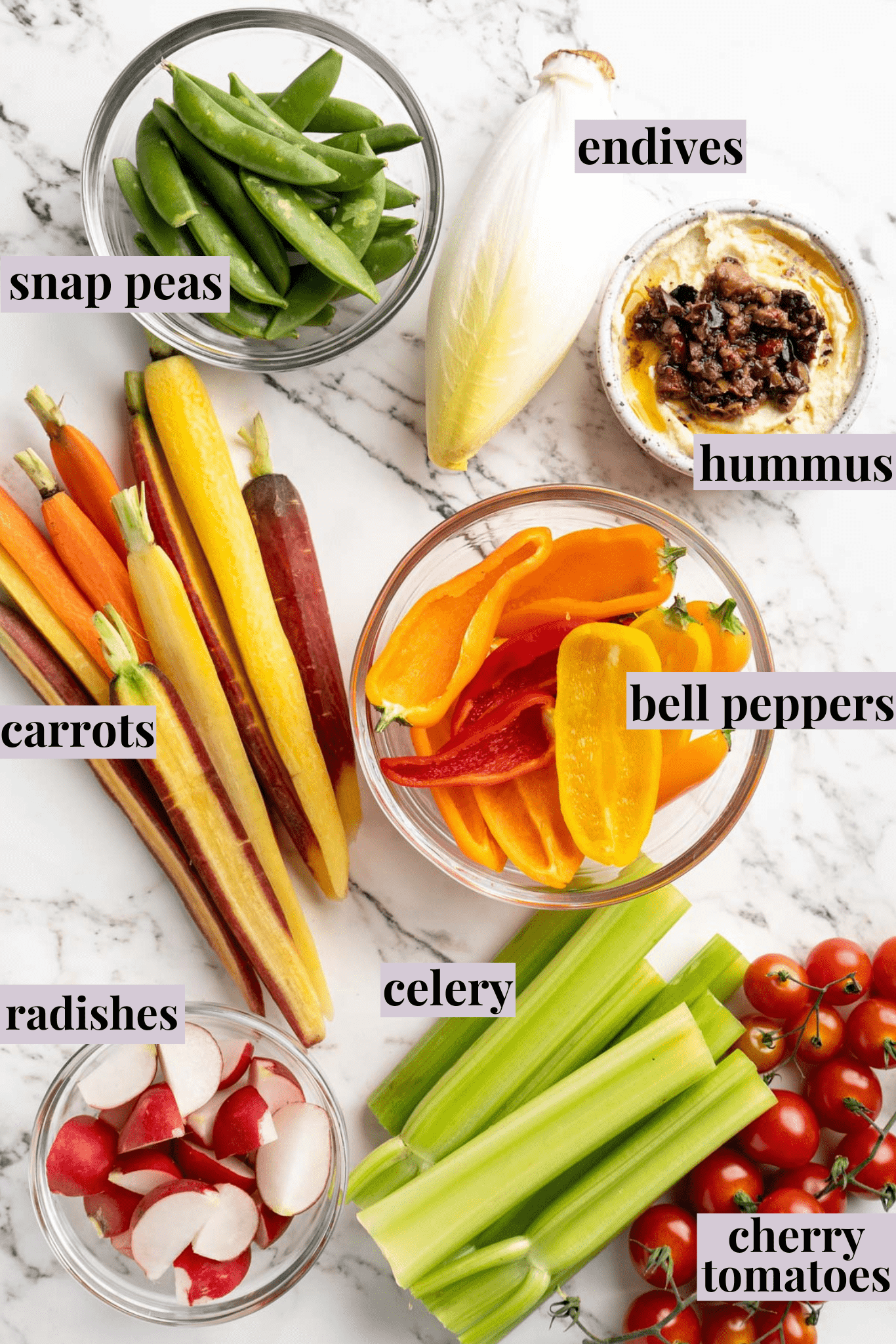
- Carrots – I think larger carrots look better on a crudité platter than baby carrots.
- Celery
- Endives
- Bell peppers – I like using baby bell peppers in an array of colours.
- Radishes – Large radishes can be thinly sliced for dipping like chips (as I did with the watermelon radishes pictured), small radishes can be left whole, and medium radishes can be halved or quartered.
- Broccoli and cauliflower florets – I prefer these blanched, but if you don’t mind raw, that works too!
- Snap peas – I opened some up and left others whole.
- Asparagus spears – Blanch these to soften them just a bit.
- Green beans – These can be served raw or blanched.
- Jicama slices
- Cherry tomatoes – Leave them on the vine for a pretty look.
- Artichoke hearts
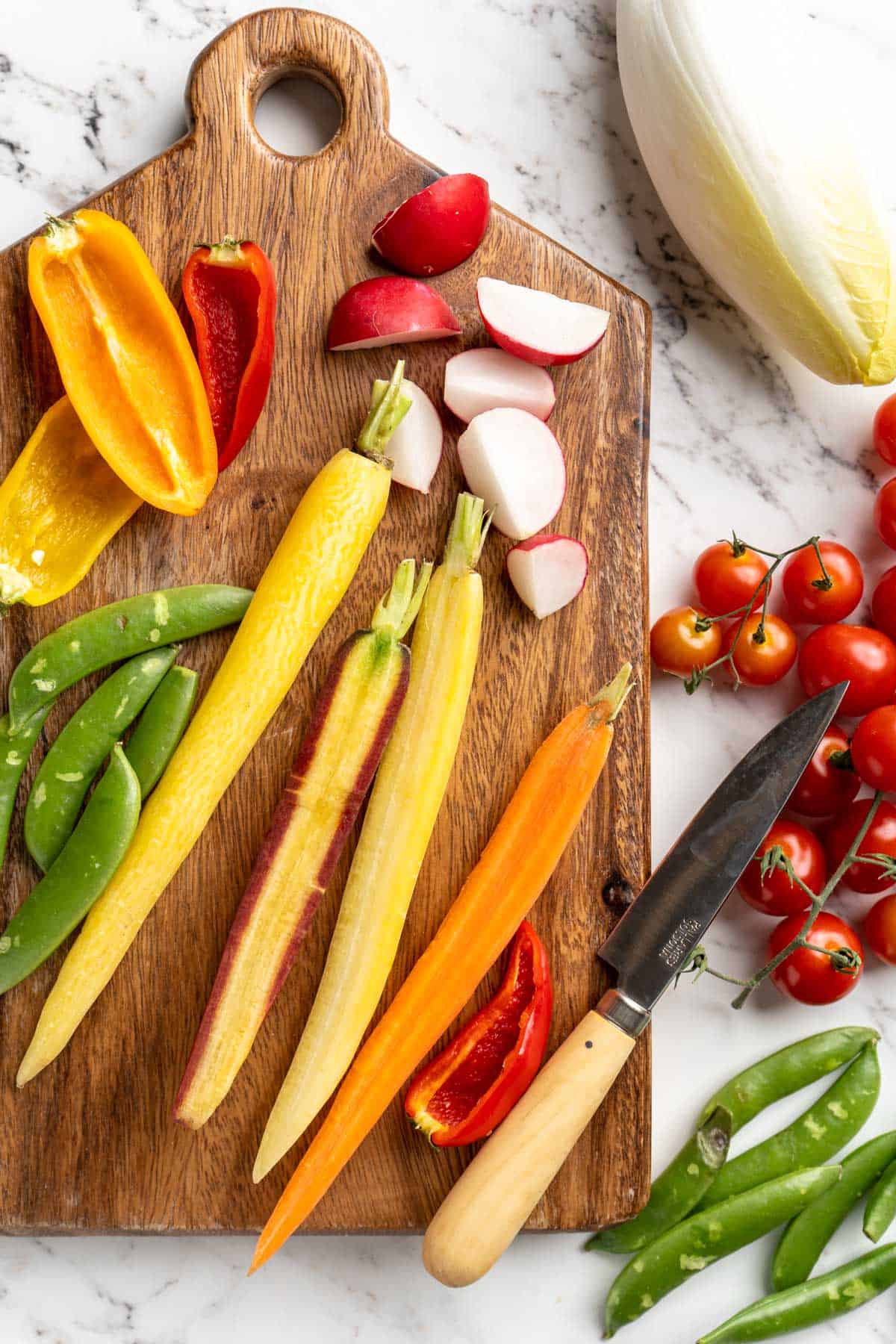
Once you have chosen your vegetables, it’s time to prepare them for the platter. Most vegetables should be washed and cut into pieces that are easy to dip; some you’ll want to blanch (as noted above) to soften them a bit.
Dips and Spreads
When it comes to creating a perfect crudité platter, the dip is just as important as the vegetables. I think the best crudité platters have options, so be sure to include at least two different dips so your guests have choices.
Creamy dips like ranch dressing or hummus are perfect alongside some of the crunchier veggies, or for a unique twist, you can also offer spreads such as pesto or guacamole . These options are perfect for adding variety to the platter without outshining the vegetables.
Here are some dips and spreads to consider:
- Store-bought hummus – You can dress it up with a drizzle of olive oil and sumac or olive tapenade on top. If you have time, you can make homemade hummus instead—try my Perfect Homemade Hummus , Roasted Cauliflower Hummus , or Spicy Roasted Red Pepper Hummus .
- Vegan Whipped Feta Dip
- Roasted Garlic White Bean Dip
- Vegan Ranch Dressing – You can add a little less liquid to make it thicker for dipping.
Other Snacks and Garnishes to Add
In addition to vegetables, crudité platters can be jazzed up with other snacks to add to their visual appeal. Crackers, pita chips , nuts, and olives are all great options for adding flavour and texture to the platter, but don’t go overboard—remember, crudité boards are all about the veggies! Use other snacks as an accent.
Another option is to add some sprigs of fresh herbs to your board. The leafy texture contrasts nicely with the vegetables, and they also add some extra flavour to your crudité platter too. You can’t go wrong with fresh basil and tomatoes or a sprinkle of dill in homemade ranch dip!
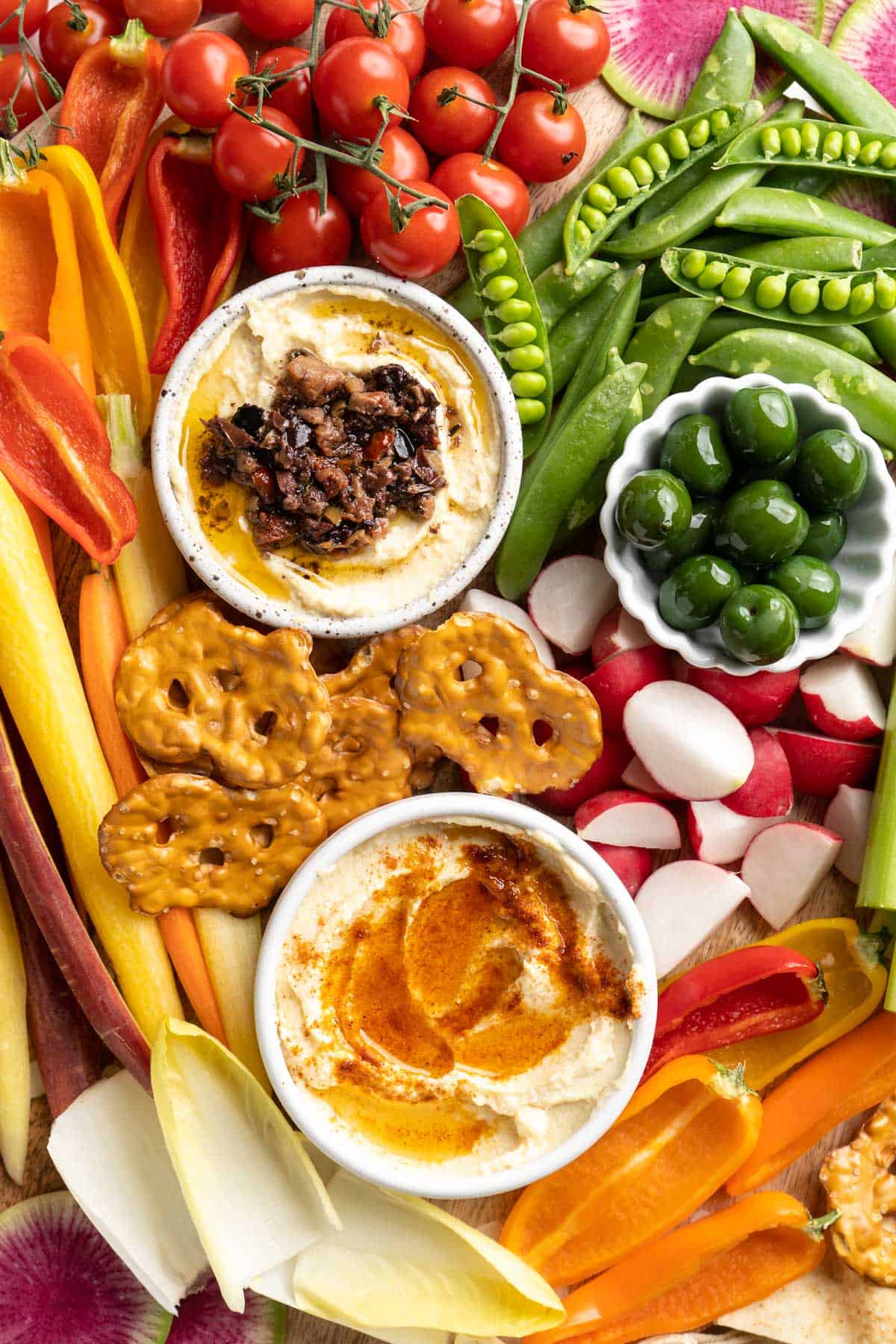
How to Arrange a Beautiful Crudité Platter
When it comes to creating a beautiful crudité platter, presentation is key. Use a wood, marble, or stone board or platter that’s big, but not too big—you want a look of abundance and using a huge board for a smaller amount of food will make your board look sparse and uninteresting.
Here are the three simple steps to making the perfect crudité platter for a party:
1. Add the Bowls
Start by placing bowls of dip and small foods (like olives or nuts) on the board; using three bowls and placing them in a triangle works well visually. Don’t leave store-bought dips in the container you bought them in—transferring them to a bowl will look much more appetizing!
2. Arrange the Large Veggies
To arrange the vegetables, begin with the largest veggies and work with the shape of your board. With the round board pictured here, I’ve placed the large, long vegetables like carrots and celery along the perimeter; for a rectangular board, try placing the large vegetables at different angles for visual interest.
If you have a very large board, you can place groupings of the same vegetable in two or three different places; for a smaller board, keep all of the same veggies together for a cohesive look.
3. Fill in the Gaps
Next, fill in the gaps with smaller vegetables like radishes and tomatoes. Add some crackers and chips in between the vegetables to give the platter a bit of texture.
Keep in mind that if you finish and you don’t like the way your platter looks, you can start over again and re-arrange things!
Serving and Storing Your Crudité Platter
Once your crudité platter is assembled, it should be kept cold until you’re ready to serve it. You can assemble your board and wrap it tightly in plastic wrap before refrigerating it, or prep the vegetables and dip, then assemble everything right before serving. (If you have time, assembling just before serving is your best bet because everything will look a little bit fresher.)
Any leftovers can be stored in an airtight container and refrigerated for up to 3 days.
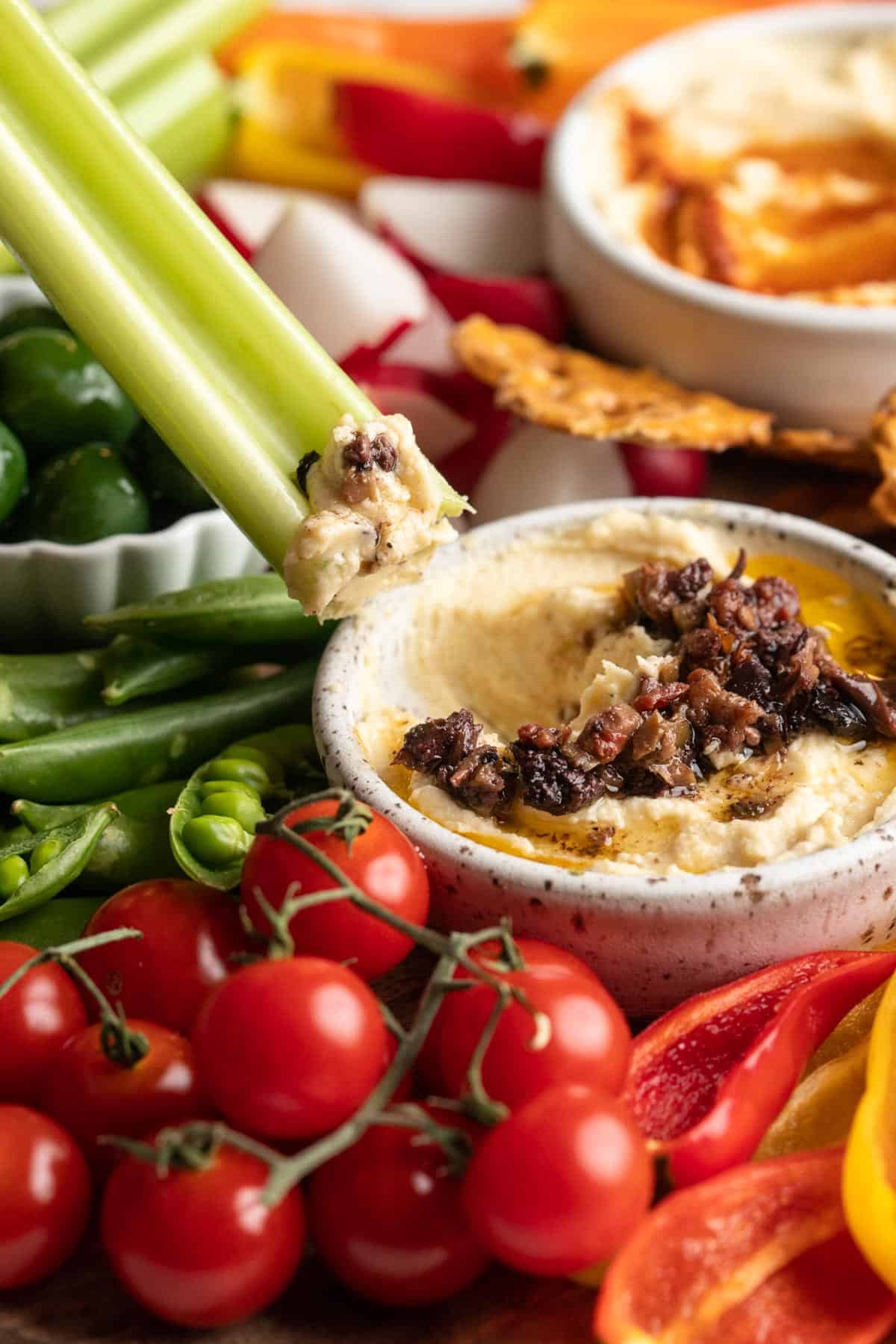
Ingredients
- Radishes
- Snap peas
- Bell peppers
- Celery
- Cherry Tomatoes
- Endives
- Carrots
- Roasted Garlic Hummus , 10 oz.
- Beet Hummus , 10 oz.
- OPTIONAL: Breads , pita chips, crackers, pretzels
Instructions
- Wash, dry and cut all the vegetables to your desired sizes (I don’t cut the tomatoes since they’re so small and juicy).
- Serve in an attractive manner (like in the photos) around the the Roasted Garlic Hummus and Beet Hummus. Serve with optional breads, pita chips, crackers and pretzels if you like.
- Serve and enjoy!
Notes
- I recommend cutting the vegetables on the same day that you’ll be serving them so that they are still bright and fresh.
- If you plan to be using broccoli for this platter, I would recommend blanching it first.
- Feel free to substitute your own favourite dips and vegetables.
