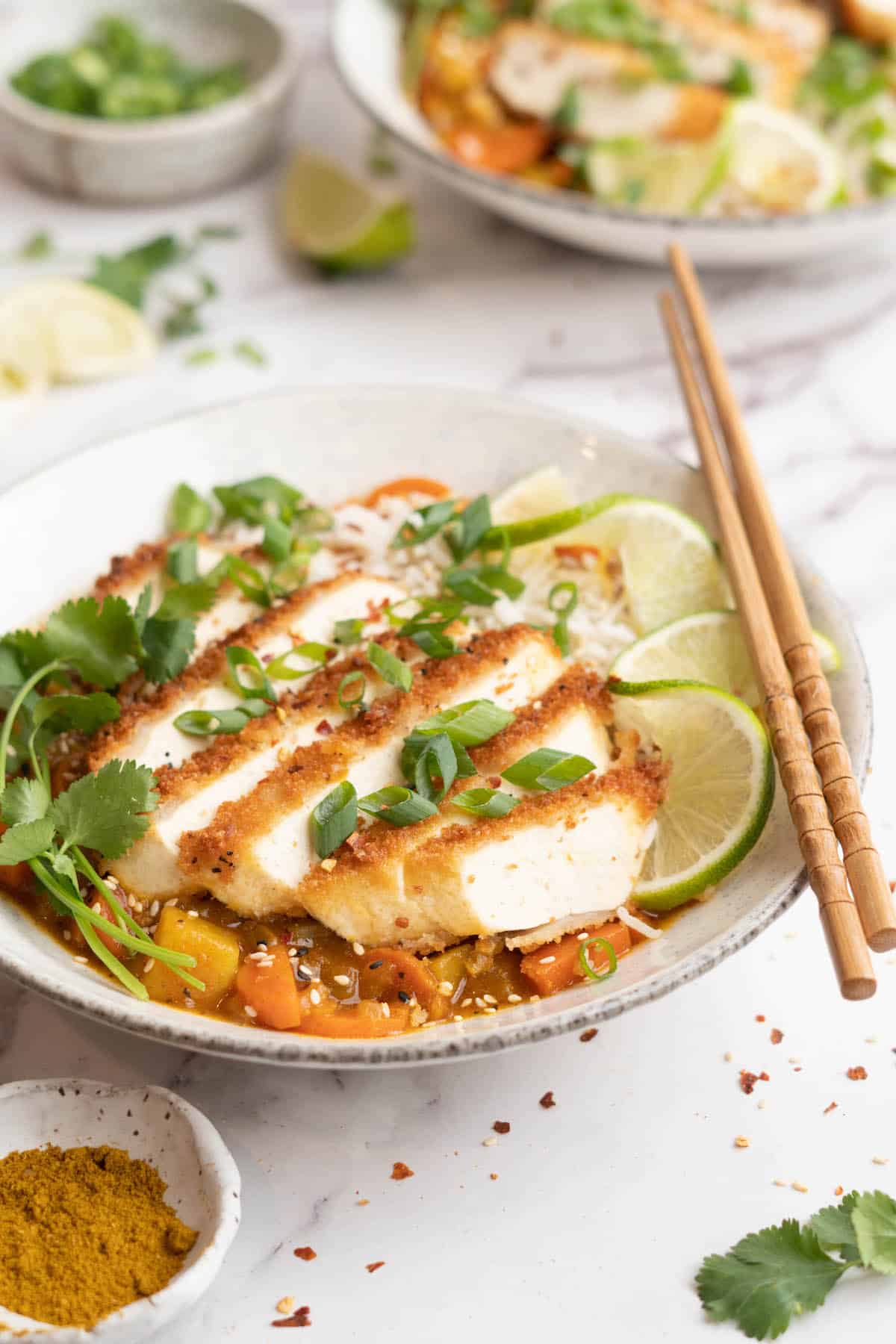
This vegan katsu curry is sweet, savory, and satisfying! It’s a hearty Japanese curry loaded with tender potatoes and carrots , then topped with crispy panko-coated tofu.
Food, culture, and history are closely intertwined, and one of the things I love most about cooking is seeing how a dish from one locale can be tweaked and transformed to create something entirely different in another place.
Curry is a great example—it’s a dish that originated in India (see: Aloo Gobi Masala ), but you’ll find spins on it throughout Southeast Asia (like Thai Red Curry ), here in the Caribbean, and even in Europe. One of the most unique forms of curry I’ve tried is Japanese katsu curry.
What Is Katsu Curry?
Katsu curry can be traced back to Meiji-era Japan, when English merchants brought Indian curry powder to Japanese port cities as they passed through. It’s thick and stew-like, with a combination of sweet and savory flavors, and it’s usually served with a fried panko-coated pork cutlet (or katsu) on top, along with white rice.
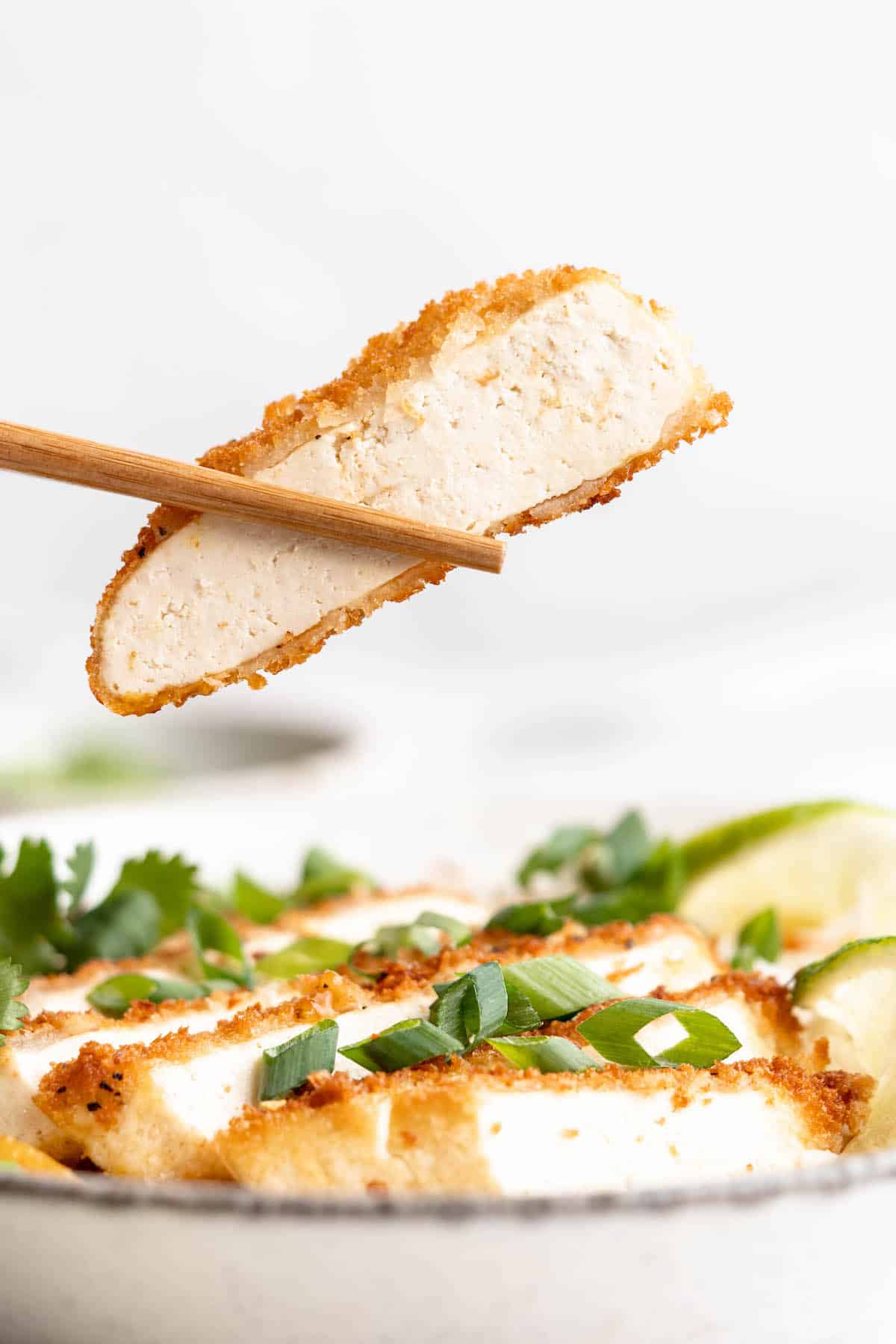
This vegan katsu curry has all of the flavor of the original, but instead of being served with a pork cutlet, it’s topped with a crispy slab of tofu.
Notes on Ingredients
Please note that this is important information on the ingredients and instructions and the FULL recipe with amounts and details can be found DOWN BELOW (scroll to it) in the recipe card.
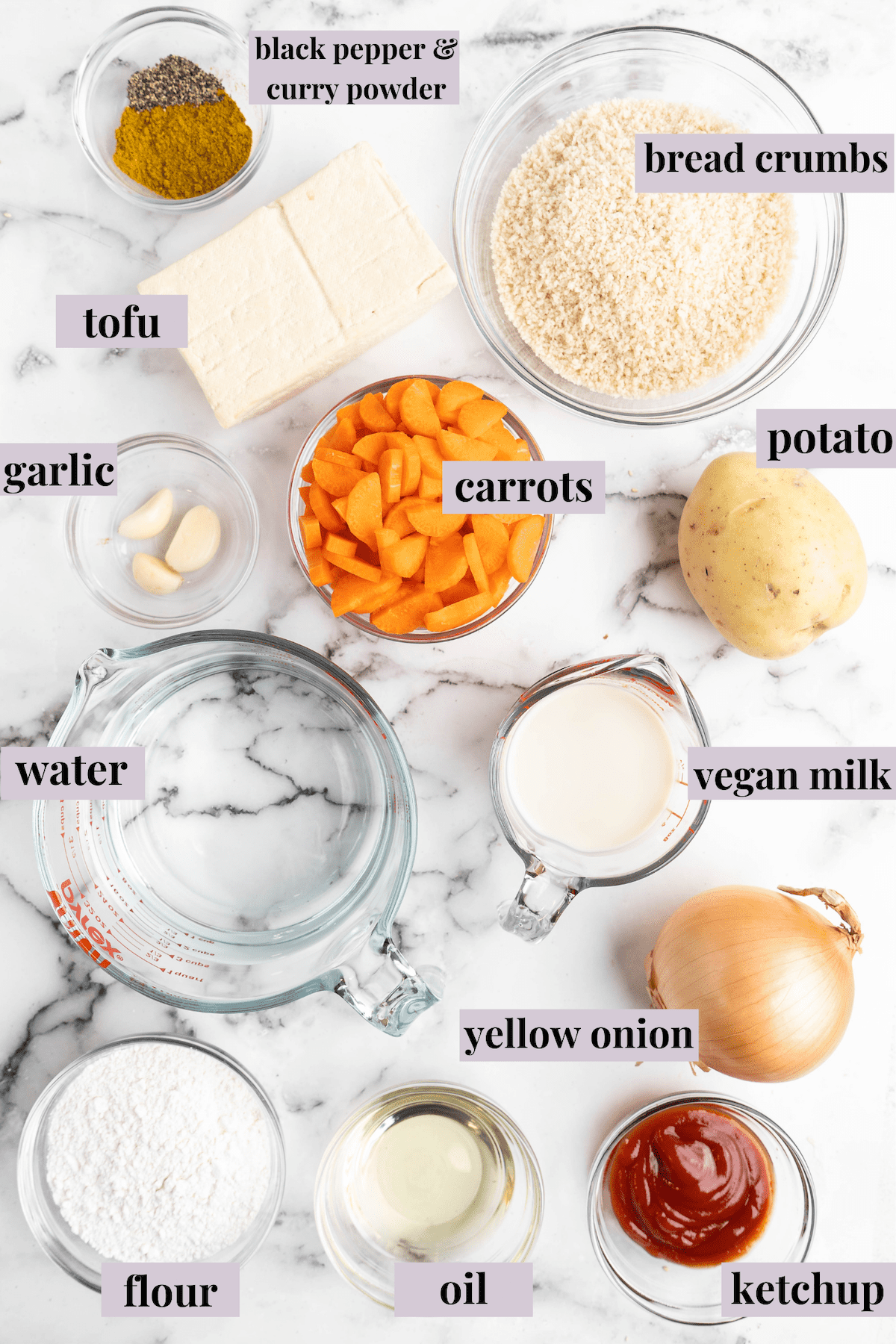
- Firm tofu – Learn more: How To Cook Tofu 101 + Best Tips on Making the Most Delicious Tofu
- Vegan butter or oil – You can use homemade vegan butter or store-bought.
- Yellow onion
- Potato
- Carrots
- Garlic
- Curry powder or Japanese curry cubes – I really recommend the Japanese curry cubes for added thickness and deeper more authentic flavour,
- Water
- Ground black pepper
- Ketchup – This is optional, but it will add that signature sweetness that katsu curry is known for.
- Soy sauce or sea salt – For seasoning.
- Panko breadcrumbs
- Flour
- Vegan milk – Use an unsweetened, unflavored variety.
- White rice
- Sesame seeds
- Scallions
What Is the Difference Between Japanese Curry Powder and Indian Curry Powder?
Japanese curry powder has a more mild, umami flavour than Indian curry powder, which is full of bold spices. Japanese curry powder typically contains turmeric, coriander, fenugreek, cumin, pepper, cinnamon, star anise, and cloves, among other ingredients. The most well-known brand of Japanese curry powder is S&B, which you can purchase online or in many Asian grocery stores.
How to Make Vegan Katsu Curry
Ready for the coziest curry you’ve ever had? Here’s how to make katsu curry with tofu!
Sauté the onion . Heat the butter or oil in a pan set over medium heat. Add the onions and cook for about 5 minutes, or until they’re softened and translucent.
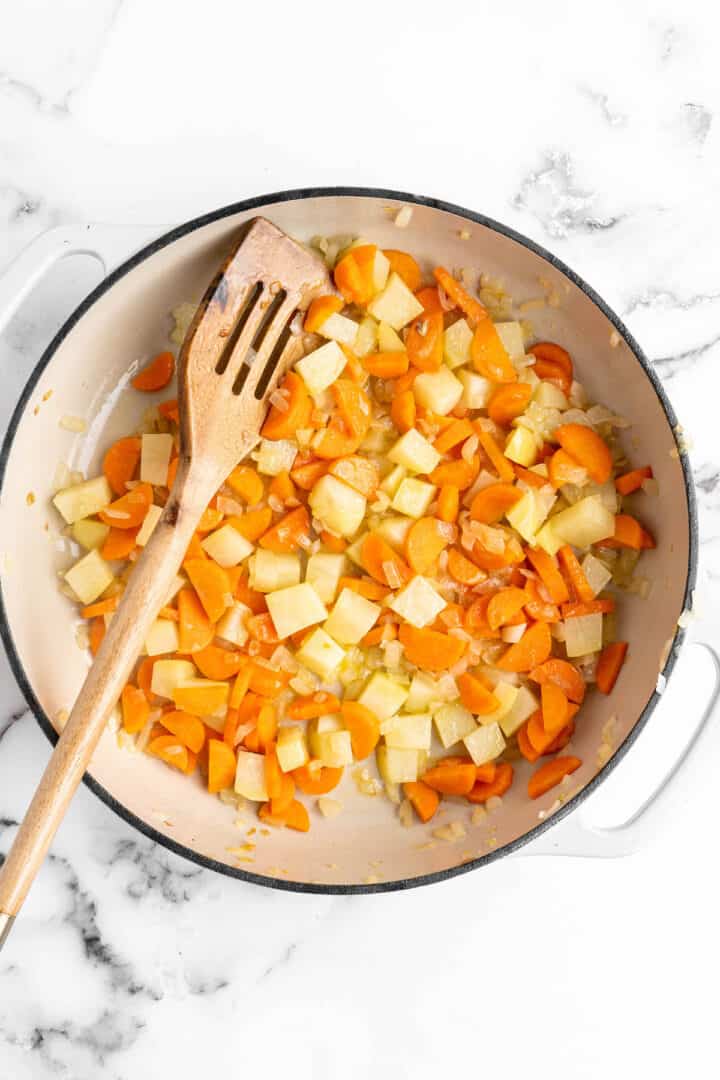
Add the veggies . Stir in the potato, carrots, and garlic. Cook for 5 minutes, then stir in the curry powder. (If you’re using curry cubes, hold off! You’ll add those in the next step.)
Simmer . Pour the water into the curry and add the curry cubes, black pepper, and ketchup. Bring the mixture to a boil, then reduce to a simmer over medium-low heat. Cook for 15 to 20 minutes with the lid off, or until the vegetables are tender and the curry cubes are dissolved.
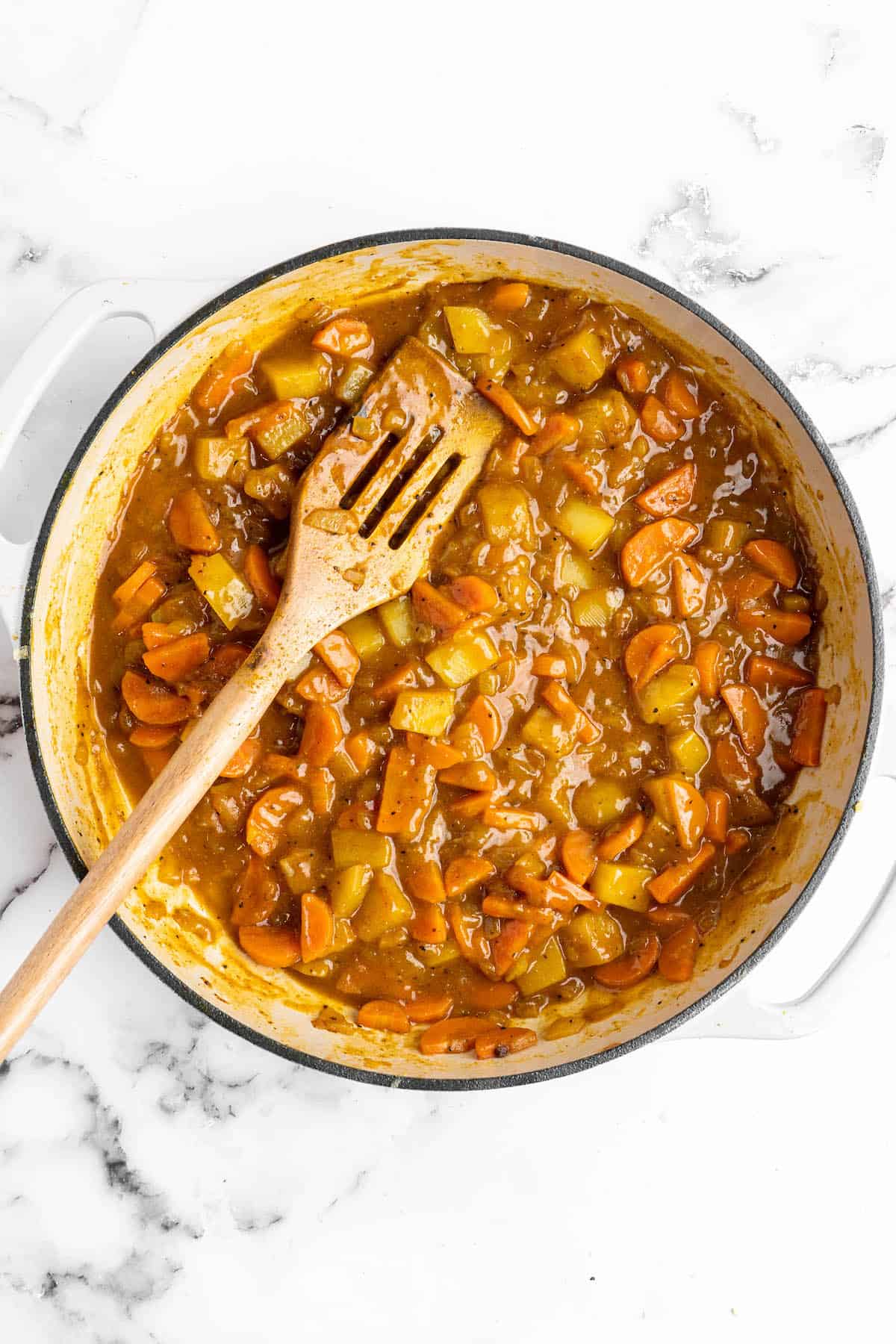
Finish the curry . Stir and add more water to thin out the sauce (note that katsu curry should have a nice, thick sauce, so you don’t want to thin it too much), then taste and adjust the seasonings as desired.
Make the tofu:
Create a dredging station . Whisk the flour and milk in one wide shallow bowl, and pour the panko into a second bowl; season the panko with salt and pepper.
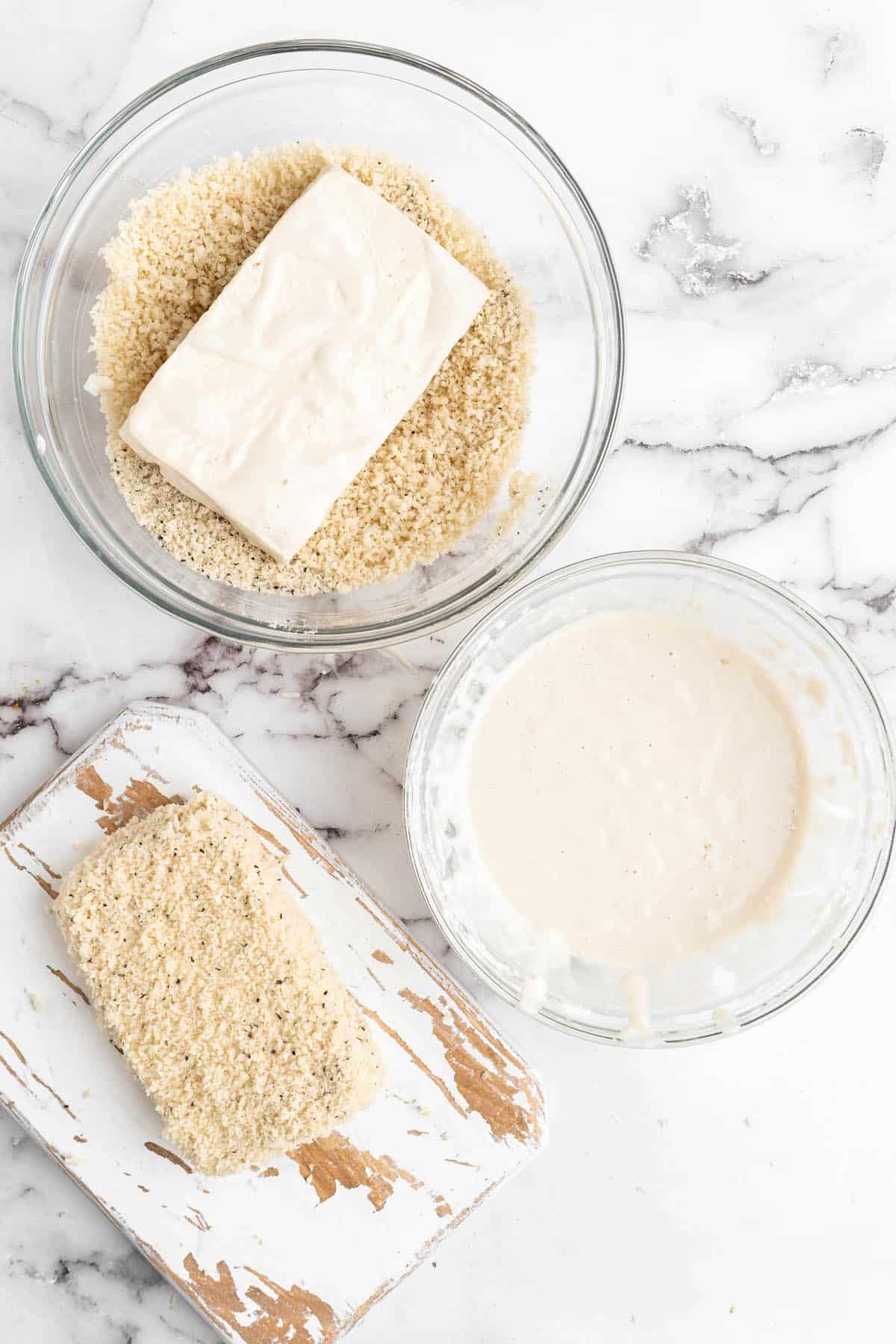
Dredge the tofu . Cut the tofu into two pieces. Dip it in the milk mixture, then press it into the panko, making sure it’s well-coated on all sides.
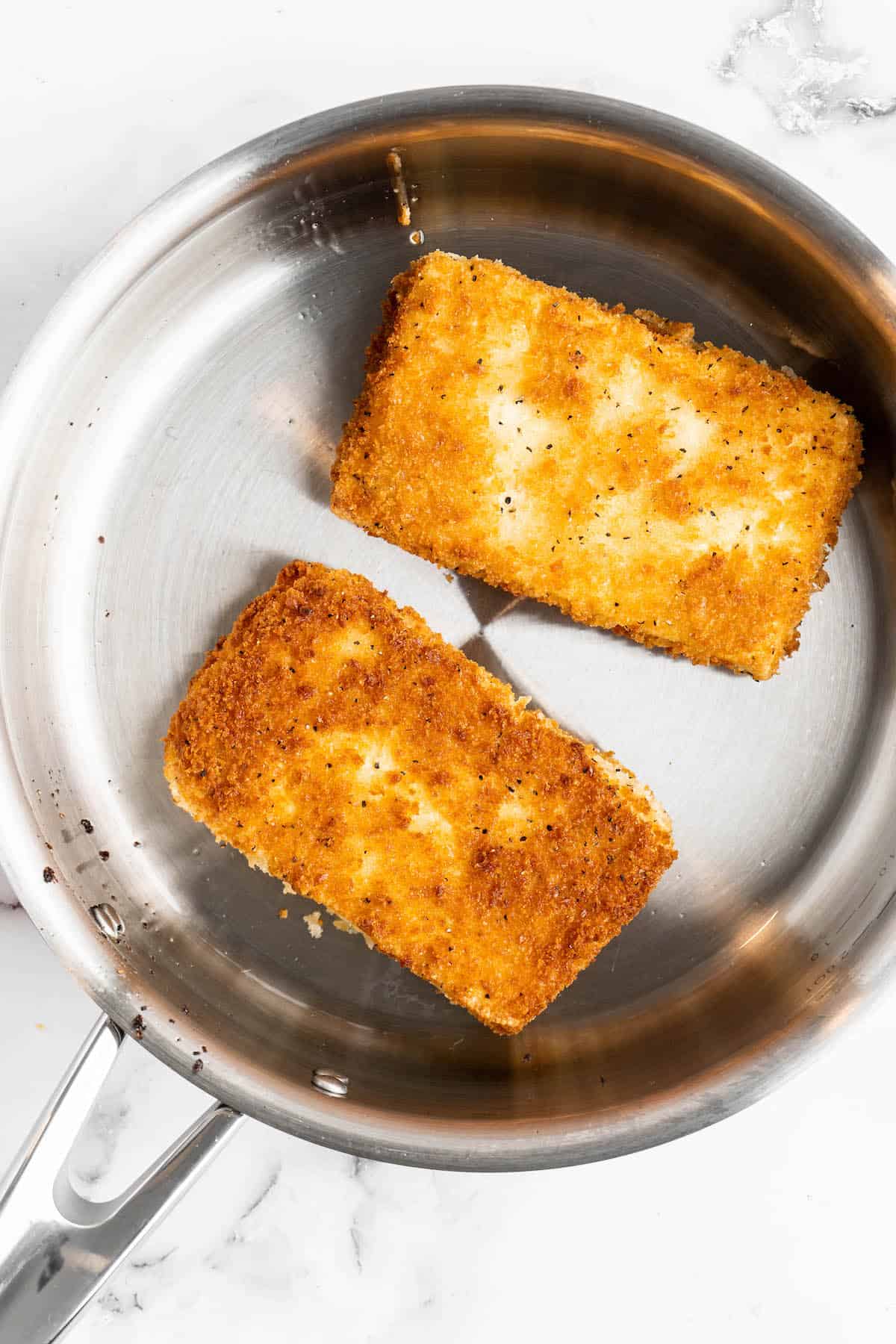
Pan-fry the tofu cutlets . Heat 2 to 4 tablespoons of oil in a pan set over medium-high heat. Add the tofu cutlets and fry them until they’re nicely browned, about 2 to 3 minutes on each side. Transfer the tofu to a paper towel to absorb any excess oil.
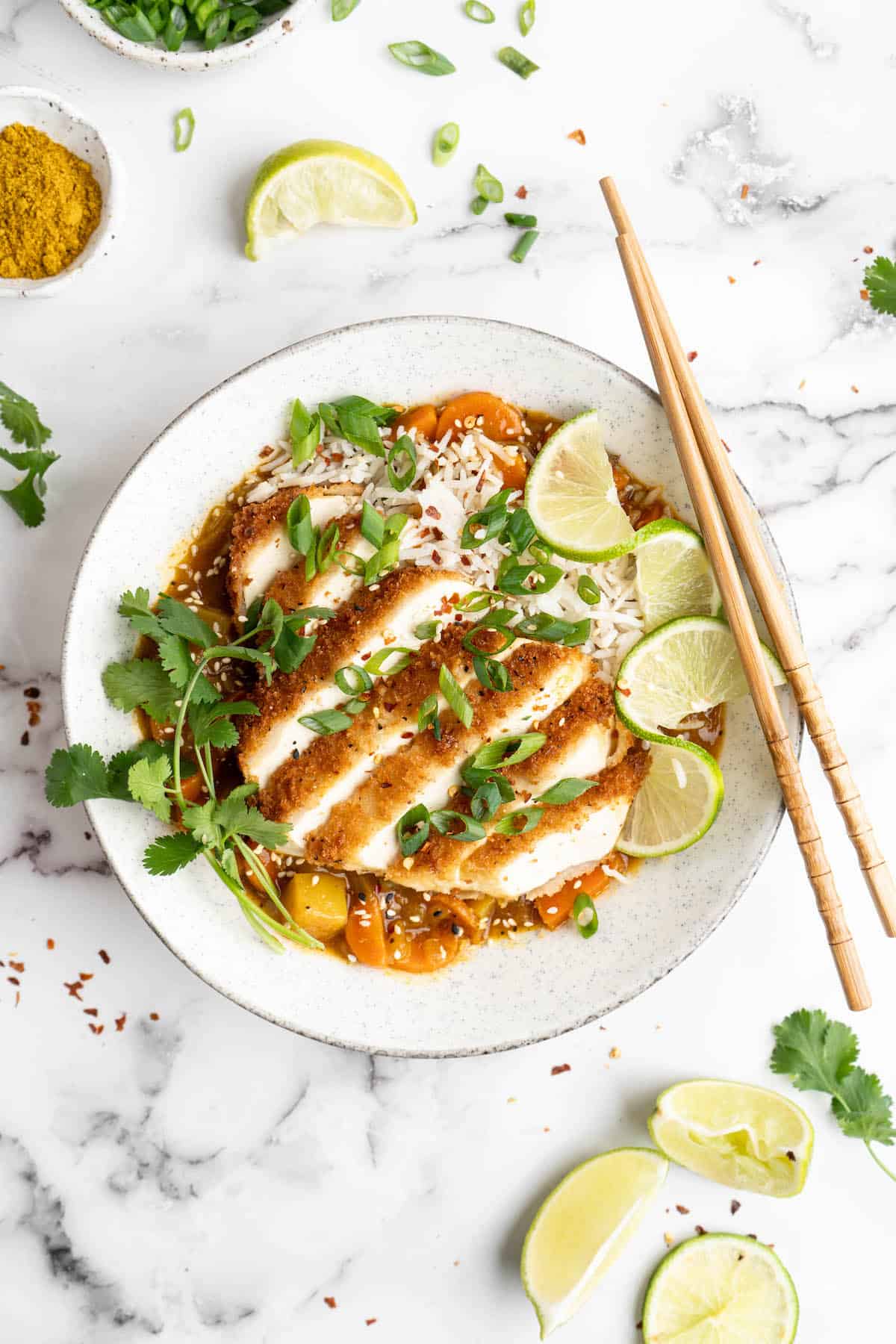
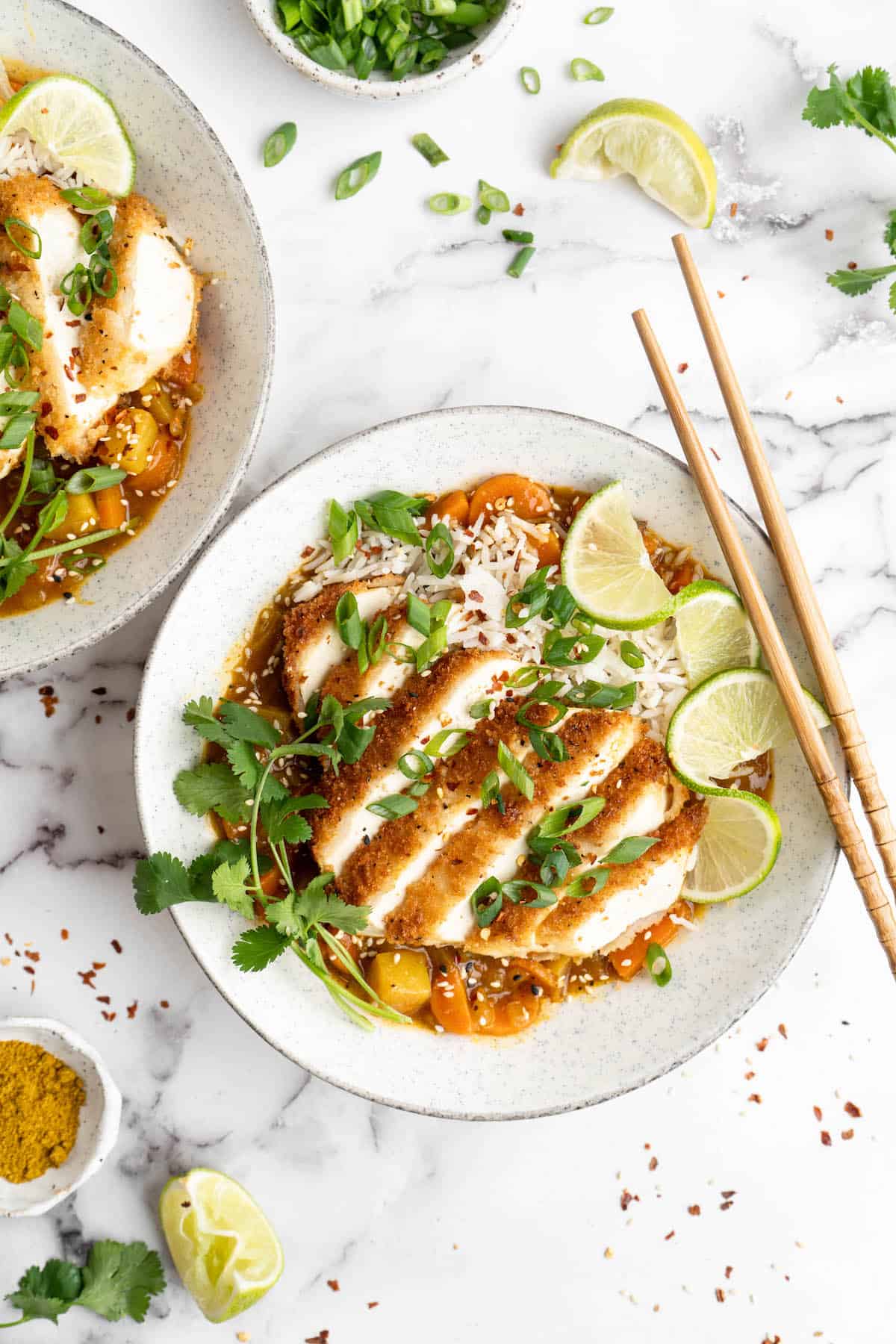
Assemble . Slice the tofu into strips. Add rice to one half of the bowl, and fill the other half with the curry. Top this with the sliced tofu and garnish with sesame seeds and scallions.
What Is Traditionally Served With Katsu Curry?
Shredded cabbage, short-grain white rice, and tonkatsu sauce are the traditional pairings with katsu curry. Tonkatsu sauce is often vegan, as it’s usually made with a combination of vinegar and fruit and vegetable purees, so if you want to give that a try, go for it!
Tips for Success
These hints and tips will help you make perfect vegan katsu curry—and give you ideas for making it your own!
- Use Japanese curry powder . While you can use Indian curry powder in this recipe, I highly suggest using Japanese curry powder.
- Swap out the protein . A seitan “chicken” cutlet can be used instead of tofu if you’d like. You won’t need to press it, but you’ll still bread it, pan-fry it, and slice it.
- Switch things up . Diced mangoes and apples can be added to katsu curry to play up its sweetness. For a subtle heat, add minced or sliced ginger root, and for a bit of a crunch, serve your curry bowls with a handful of thinly sliced raw cabbage.
How to Store and Reheat Leftovers
While the curry itself stores and reheats beautifully, the tofu cutlets in this recipe are best eaten fresh, when they’re perfectly crispy. If you need to store leftovers, I suggest keeping the tofu and curry in separate containers (or in a storage container with separate compartments) to keep the cutlets from getting soggy.
The curry can be reheated in the microwave or on the stovetop. The tofu can also be microwaved, but the best way to restore some its crispiness is to pan-fry it in a splash of oil or warm it up in a 350ºF oven.
Can This Recipe Be Frozen?
I don’t recommend freezing the tofu, but the curry can be frozen in an airtight storage container for up to 3 months. You can reheat it from frozen, or let it thaw in the refrigerator before reheating.
Ingredients
- 1 lb block firm tofu , pressed for 30 minutes – to press tofu, use a tofu press , or wrap in kitchen towels and stack a heavy pan or books on top to squeeze out excess liquid
- 2 tablespoons vegan butter or oil
- 1 medium yellow onion , chopped
- 1 medium potato , peeled and cut into ½ inch equal cubes
- 1 cup peeled and chopped carrots
- 3 cloves garlic , minced
- 3 to 4 Japanese curry cubes , or 1 tablespoon curry powder
- 3 cups water
- ½ teaspoon freshly ground black pepper
- 2 tablespoons ketchup , optional, but I love adding it
- optional: soy sauce or sea salt
Ingredients for dredging station:
- Panko breadcrumbs
- Salt and pepper , to taste
- Flour
- Vegan milk
Instructions
- In a pan over medium heat, melt the vegan butter or heat the oil.
- Once hot, add in the onions and cook for about 5 minutes until softened and translucent.
- Add in the potato, carrots and the garlic. Stir to combine and allow to cook for another 5 minutes until fragrant.
- If using curry powder, add in now and stir into the vegetables.
- Add in the water, stir to combine, and then add in the curry cubes using that instead, the ground black pepper and the ketchup (optional). Bring to a boil, then lower to a simmer (with the lid off) over medium low heat.
- Cook for 15-20 minutes with the lid off until the veggies are soft and the curry cubes are completely dissolved.
- Stir to combine and feel free to add more water if you want your sauce slightly thinner. The sauce should be nice and thick.
- Taste test and adjust seasonings if necessary.
- Allow to cool
- Serve with rice, tofu, scallion, sesame seeds
- Cook and prepare rice separately
PREP THE TOFU:
- Remove the pressed tofu. Cut the tofu in half in the middle of the block (along the depth of the tofu) for two pieces. Season with your favorite seasonings (I love adding some soy sauce too to get into the actual block). I love using garlic, onion powder, and pepper alongside the soy sauce.
- Prepare a dredging station: one bowl with panko breadcrumbs (seasoned lightly with sea salt and black pepper), and the other with 1/2 flour and 1/2 vegan milk to create a thick batter. In the batter add in ½ teaspoon of each: salt, black pepper, garlic powder, onion powder and Korean chill pepper IF you have it (optional).
- Bread the tofu in flour milk seasoned mix, then seasoned breadcrumbs, pressing the breadcrumbs on very firmly.
- Heat 2-4 tablespoons of oil in a cast iron pan over medium high heat. Then fry in a pan until both sides are evenly browned, about 2-3 minutes per side.
- Remove tofu and allow it to rest on a paper towel to absorb excess oil and to cool slightly.
- Using a very sharp knife, cut the tofu diagonally into strips.
PREP YOUR BOWL:
- To serve your bowl, add your rice into one half of the bowl. Add the Katsu curry with veggies into the other half. Top with the tofu, and then with sesame seeds and green scallions on top. Serve and enjoy!
Notes

Vegan Katsu Curry
Ingredients
- 1 lb block firm tofu pressed for 30 minutes - to press tofu, use a tofu press, or wrap in kitchen towels and stack a heavy pan or books on top to squeeze out excess liquid
- 2 tablespoons vegan butter or oil
- 1 medium yellow onion chopped
- 1 medium potato peeled and cut into ½ inch equal cubes
- 1 cup peeled and chopped carrots
- 3 cloves garlic minced
- 3 to 4 Japanese curry cubes or 1 tablespoon curry powder
- 3 cups water
- ½ teaspoon freshly ground black pepper
- 2 tablespoons ketchup optional, but I love adding it
- optional: soy sauce or sea salt
Ingredients for dredging station:
- Panko breadcrumbs
- Salt and pepper to taste
- Flour
- Vegan milk
Instructions
- In a pan over medium heat, melt the vegan butter or heat the oil.
- Once hot, add in the onions and cook for about 5 minutes until softened and translucent.
- Add in the potato, carrots and the garlic. Stir to combine and allow to cook for another 5 minutes until fragrant.
- If using curry powder, add in now and stir into the vegetables.
- Add in the water, stir to combine, and then add in the curry cubes using that instead, the ground black pepper and the ketchup (optional). Bring to a boil, then lower to a simmer (with the lid off) over medium low heat.
- Cook for 15-20 minutes with the lid off until the veggies are soft and the curry cubes are completely dissolved.
- Stir to combine and feel free to add more water if you want your sauce slightly thinner. The sauce should be nice and thick.
- Taste test and adjust seasonings if necessary.
- Allow to cool
- Serve with rice, tofu, scallion, sesame seeds
- Cook and prepare rice separately
PREP THE TOFU:
- Remove the pressed tofu. Cut the tofu in half in the middle of the block (along the depth of the tofu) for two pieces. Season with your favorite seasonings (I love adding some soy sauce too to get into the actual block). I love using garlic, onion powder, and pepper alongside the soy sauce.
- Prepare a dredging station: one bowl with panko breadcrumbs (seasoned lightly with sea salt and black pepper), and the other with 1/2 flour and 1/2 vegan milk to create a thick batter. In the batter add in ½ teaspoon of each: salt, black pepper, garlic powder, onion powder and Korean chill pepper IF you have it (optional).
- Bread the tofu in flour milk seasoned mix, then seasoned breadcrumbs, pressing the breadcrumbs on very firmly.
- Heat 2-4 tablespoons of oil in a cast iron pan over medium high heat. Then fry in a pan until both sides are evenly browned, about 2-3 minutes per side.
- Remove tofu and allow it to rest on a paper towel to absorb excess oil and to cool slightly.
- Using a very sharp knife, cut the tofu diagonally into strips.
PREP YOUR BOWL:
- To serve your bowl, add your rice into one half of the bowl. Add the Katsu curry with veggies into the other half. Top with the tofu, and then with sesame seeds and green scallions on top. Serve and enjoy!
Video
Notes
Nutrition
Vegan Katsu Curry https://jessicainthekitchen.com/vegan-katsu-curry/ June 1, 2022
Soft, warm, and encased in a sugary glaze, these vegan donuts are like a plant-based version of Krispy Kreme! They’re the perfect breakfast treat for a special occasion—or just because!

I’ve shared so many yummy breakfast ideas over the years on Jessica in the Kitchen— Banana Oatmeal Breakfast Cookies , Strawberry Coconut Overnight Oats , Coconut Kiwi Green Smoothie Bowls —but today it’s time to share something a little more indulgent. These vegan donuts are just like the ones you get from your favourite donut shop, minus the eggs and dairy!
They’re puffy and soft, with a crispy exterior and sweet, shimmery glaze. They’re practically melt-in-your-mouth tender, and they pack a little bit of nostalgia in every bite. Let’s be real: donuts are fun , and pretty much impossible to resist. Especially when they’re vegan donuts !
Because these are yeast donuts, they take a bit of time to make, but trust me when I say they are so worth it. There’s nothing like biting into a warm, freshly glazed homemade donut!

Is It Better to Bake or Fry Donuts?
When it comes to yeast donuts, deep frying is best. It’s the only way to get that slightly crispy exterior and the soft, pillowy interior.
Now, if you’re nervous about deep frying, I get it! But it’s easier than you think, and if, like me, you take an everything-in-moderation approach to eating, it’s really not a big deal to have a deep fried donut or two as a special treat on occasion.
It’s also important to note that when you make sure your oil is at the right temperature, the food you fry won’t be over-loaded with oil. Instead, the oil quickly sears the outside, forming a barrier that keeps the frying oil from soaking in. If the oil isn’t hot enough, it will seep into your donuts, making them oily and giving them a weird texture.
Notes on Ingredients
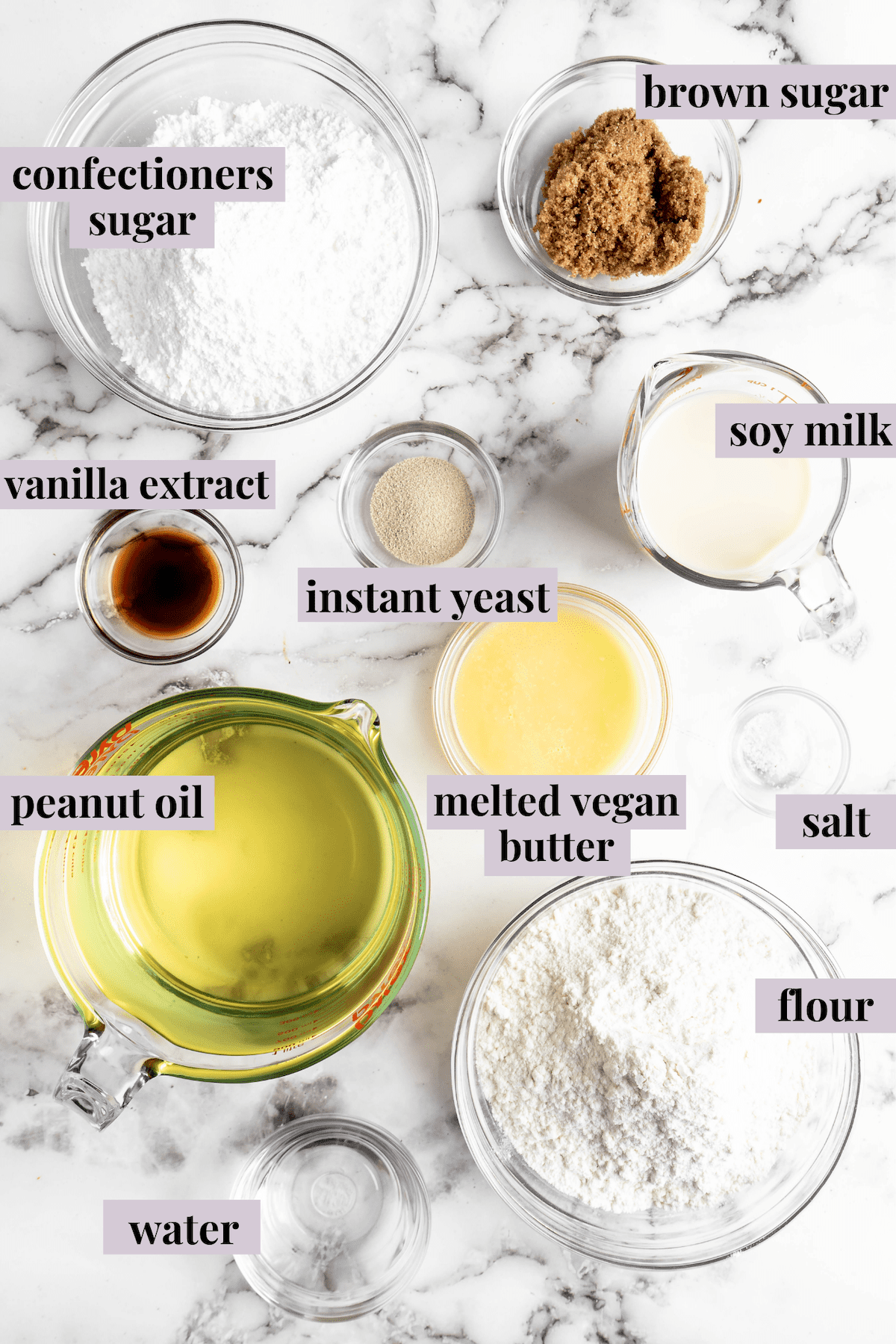
Please note that this is important information on the ingredients and instructions and the FULL recipe with amounts and details can be found DOWN BELOW (scroll to it) in the recipe card.
For the tangzhong:
- All-purpose flour
- Soy milk
- Water
For the vegan donuts:
- All-purpose flour
- Brown sugar
- Instant yeast – Be sure to use instant yeast and not another variety. (Also see: How to Test Yeast to see if it’s still Good )
- Sea salt
- Vegan milk – Soy milk is my preference; it should be warm to touch, ranging between 110°F to 120°F.
- Vegan butter – Melt this in the microwave or in a small saucepan on the stove.
- Vanilla extract or almond extract – Vanilla will give you the classic donut shop flavour, while almond extract is a bit more unexpected!
- Peanut oil – Or another oil suitable for deep-frying.
For the glaze:
- Confectioners’ sugar – Sift this first to make sure there aren’t any lumps in your glaze!
- Vegan milk
- Vanilla extract or almond extract
Special equipment:
- Deep fry/candy thermometer
- Large, deep, heavy skillet
- Donut or biscuit cutters
How to Make Vegan Donuts
Like my vegan cinnamon rolls and Japanese milk bread , this vegan donut recipe starts with tangzhong, which is a cooked milk, flour, and water mixture.
Make the tangzhong:
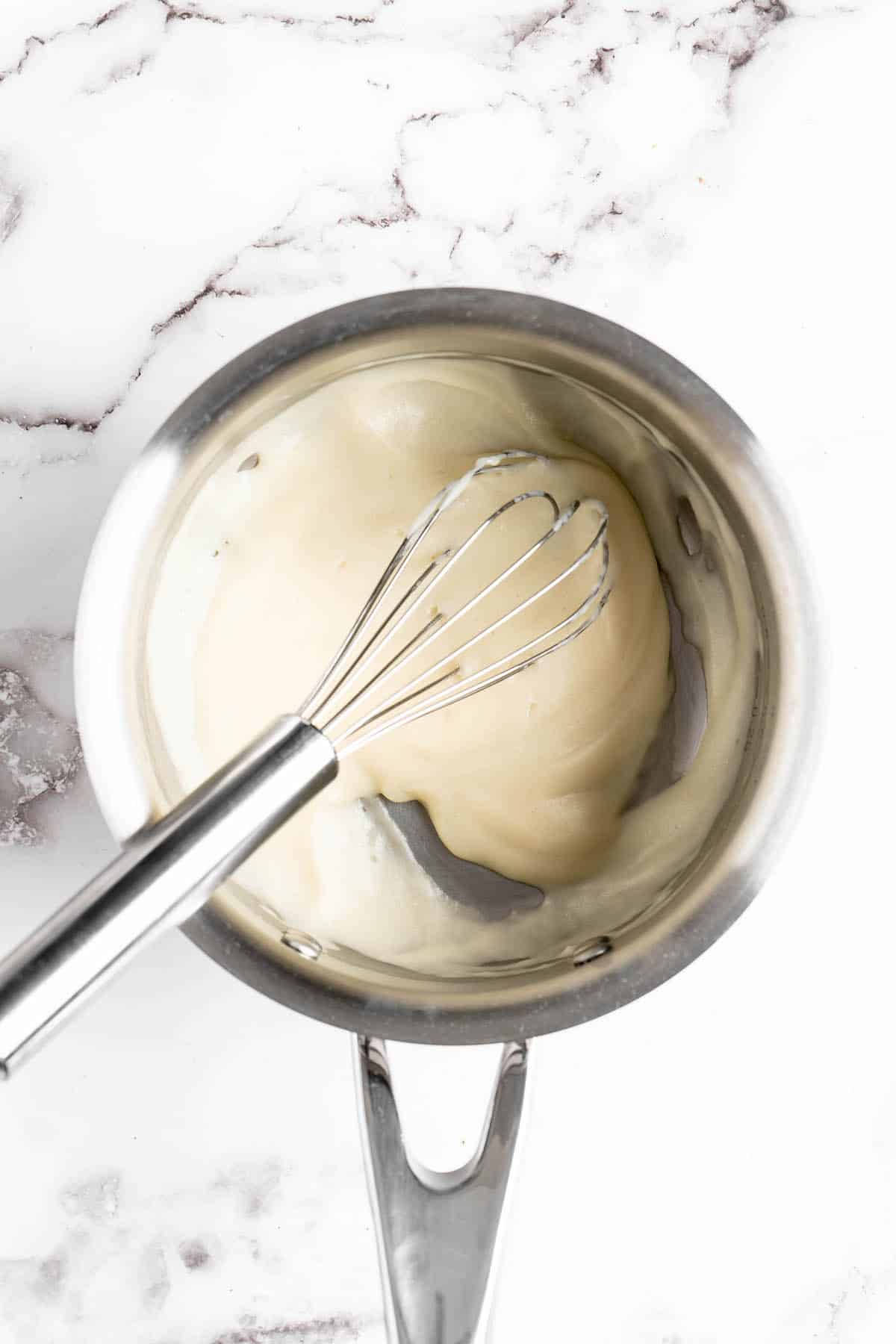
Warm the ingredients . In a small pan set over medium-high heat, whisk the flour, vegan milk, and water until smooth. Continue to stir until the mixture thickens to a pudding-like consistency.
Chill . Remove the pan from the heat and pour the tangzhong into a small bowl. Refrigerate for 10 minutes.
Make the vegan donuts:
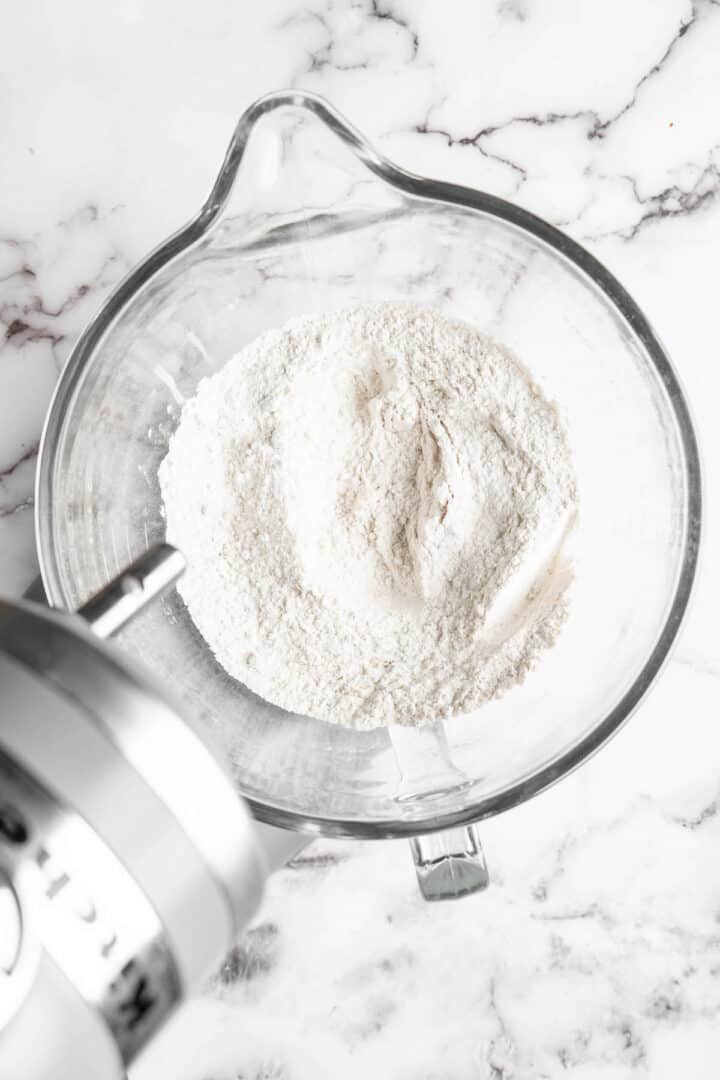
Start the dough . Whisk the dry ingredients in a large mixing bowl or the bowl of your stand mixer. In a second, smaller bowl, whisk the tangzhong, milk, vegan butter, and vanilla extract. Pour the wet ingredients into the dry ingredients, then knead by hand or with the dough hook of your mixer until a soft dough forms.
Rest . Cover the mixing bowl with a kitchen towel and let the dough rest for 10 minutes.
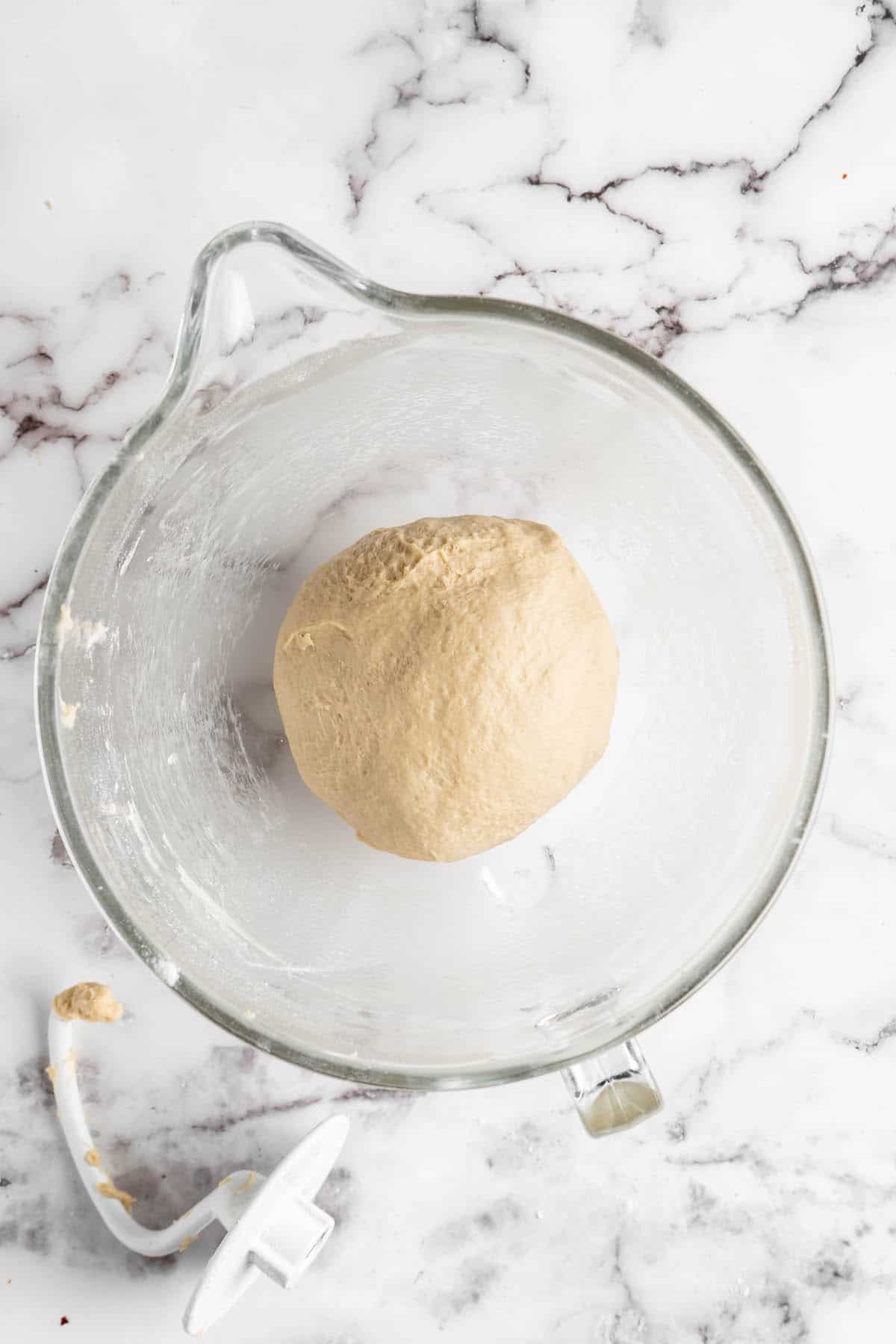
Knead . Now, knead the dough for 6 to 8 minutes using the dough hook or your hands. If you’re kneading by hand, you can simply reach in the bowl and knead it in there. The dough should be smooth, soft, and just a bit sticky, but if needed, you can add up to 2 tablespoons of flour while kneading.
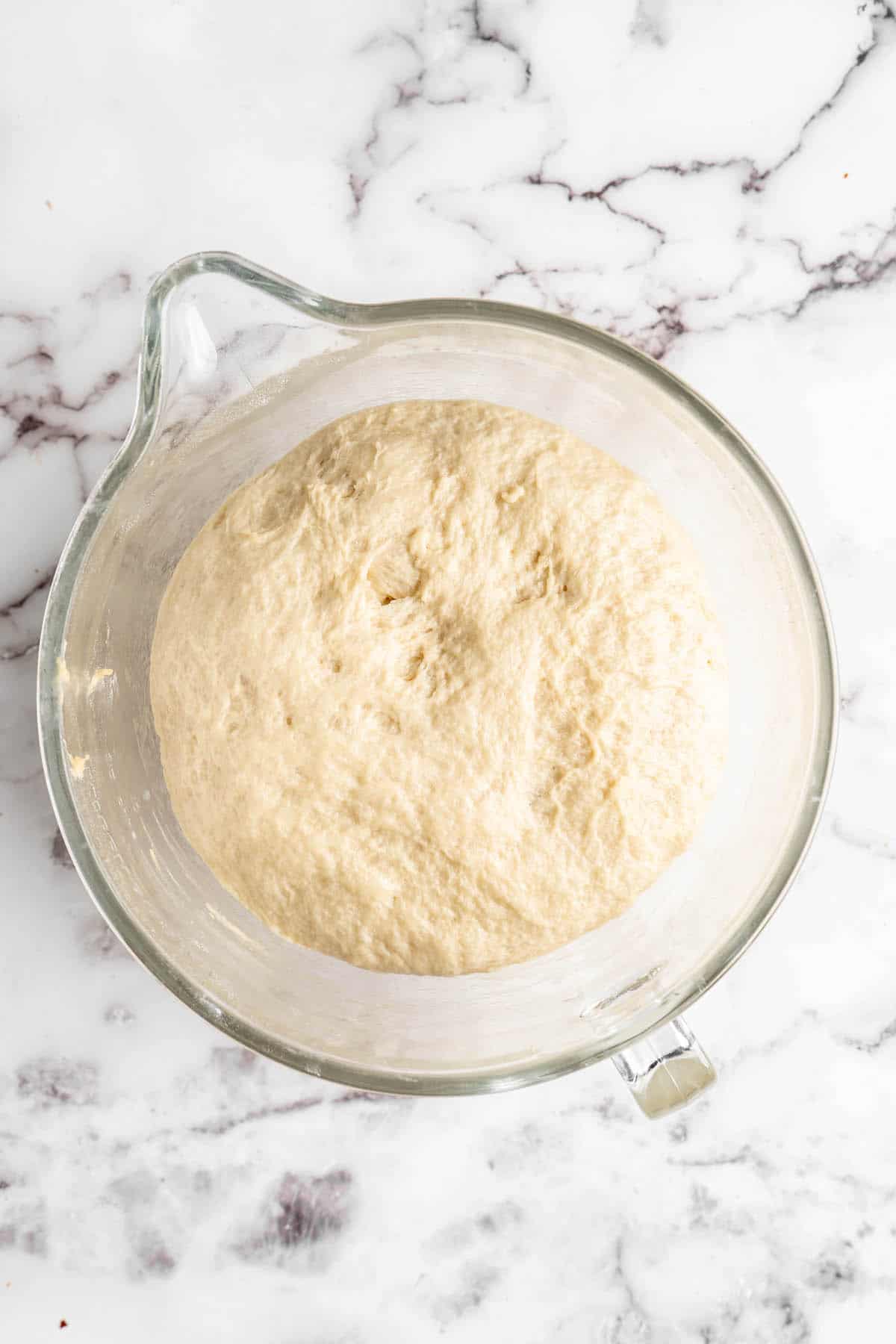
Let the dough rise . Transfer the dough to a large bowl lightly greased with oil. Cover the bowl with the kitchen towel and place it in a warm spot in your kitchen, away from any drafts. Allow the dough to rise for about 2 hours, or until it has doubled in bulk.
Roll out the dough . Gently punch down the dough in the bowl, then turn it out onto a lightly floured work surface. Pat or roll the dough into a rectangle between 1/4- and 1/2-inch thick. If the dough feels too sticky to work with, add a touch more flour, but be conservative here; too much flour will yield tough donuts.
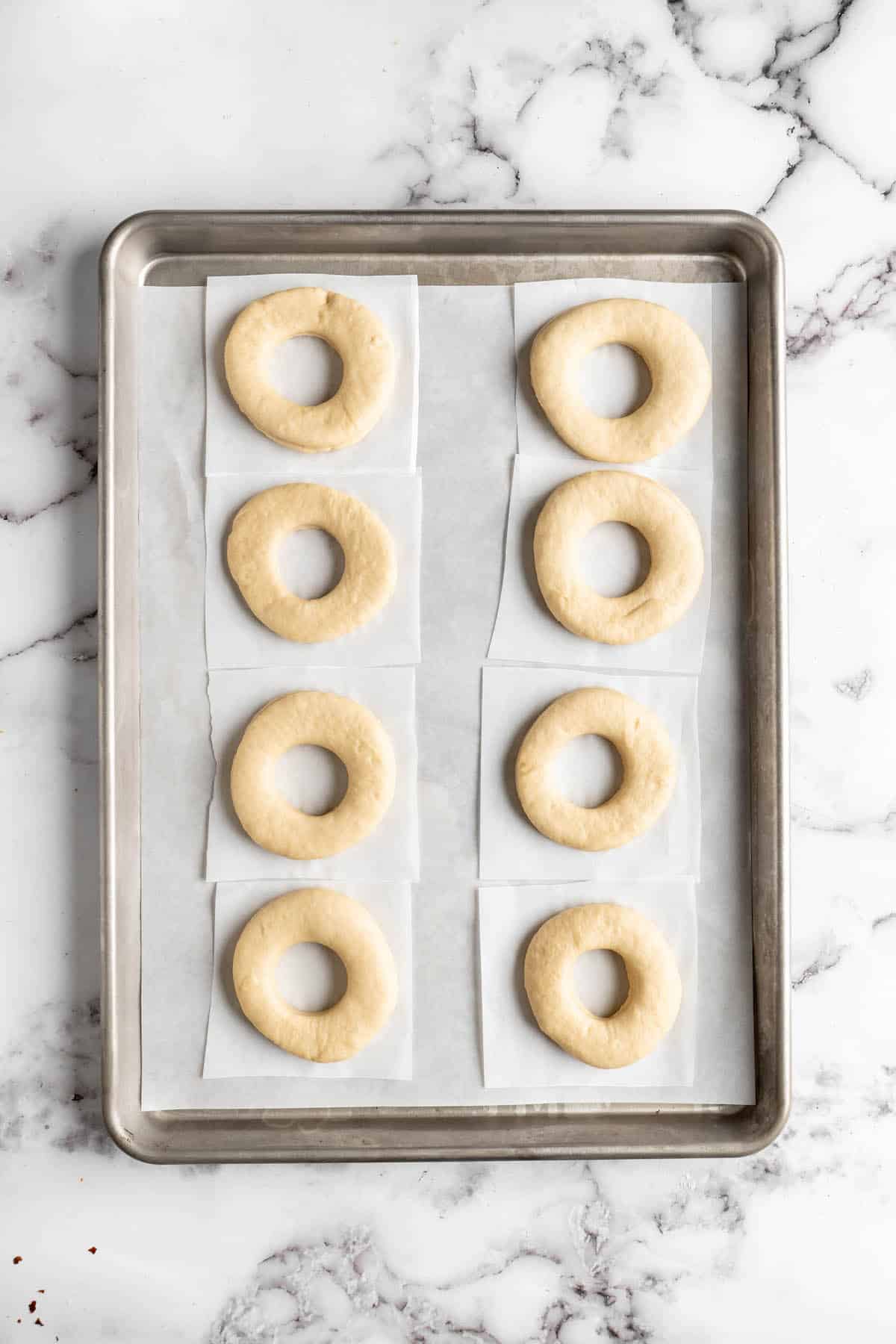
Cut the donuts. Use a donut cutter, a large and small biscuit cutter, or the lip of a cup to cut the doughnuts. Press together the scraps, re-roll them, and cut donuts from those too. (Rather than discarding or re-rolling the donut holes, you can fry them separately. They’re good for testing the oil before you add the bigger donuts!)
Let the donuts rise . Cover the donuts with greased plastic wrap and let them rise again until they’re about doubled in size, about 45 minutes to an hour.
Prepare . Heat the oil in a deep, heavy skillet to 350ºF/180ºC and line a large baking sheet with paper towels.
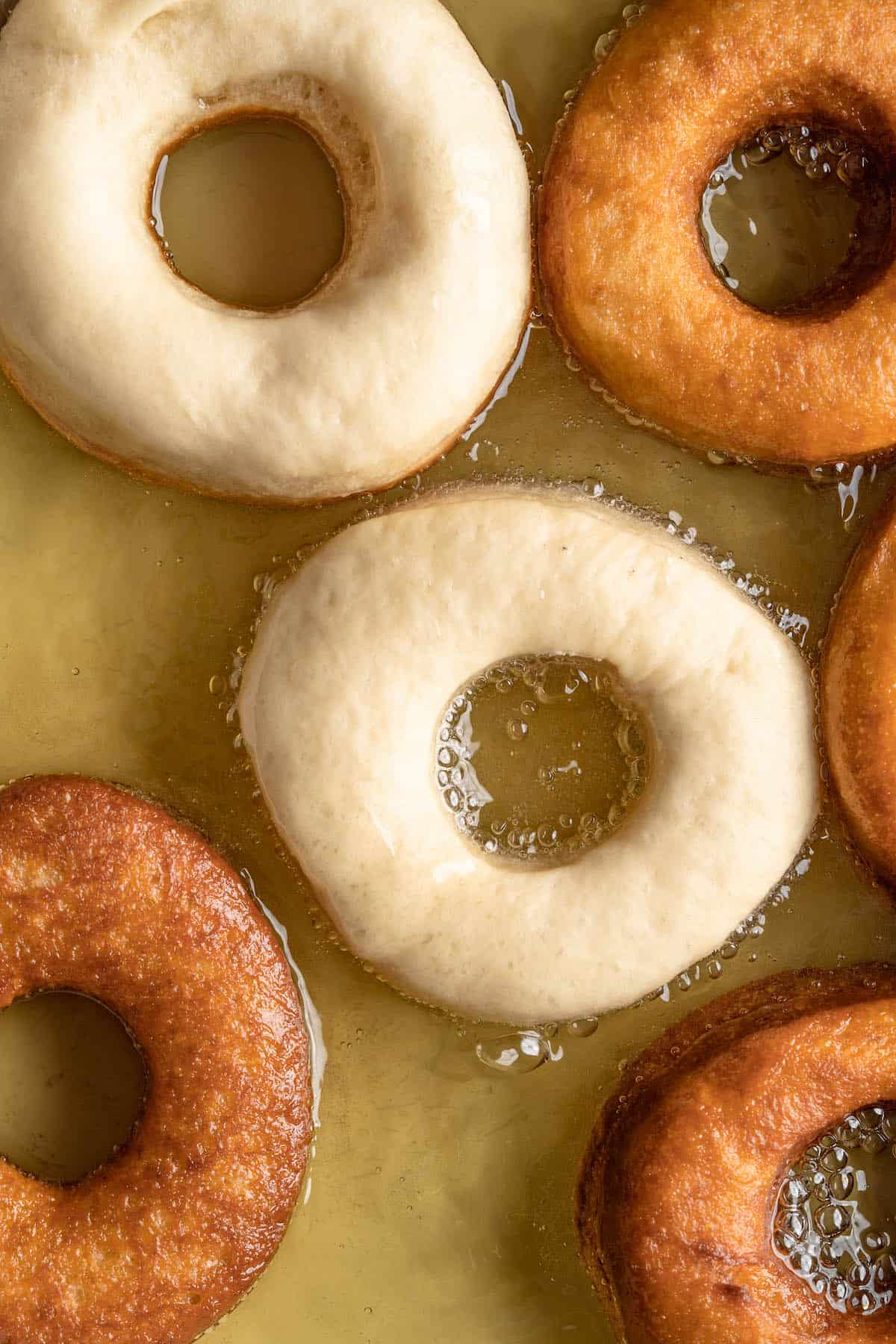
Fry the donuts . Slide a lightly floured bench scraper or metal spatula under a donut and drop it into the oil. Repeat with one or two more donuts, being careful not to crowd them. Fry the donuts until they’re golden brown on the bottom, then flip them and cook the other side. Use a slotted spoon to remove them and transfer them to the prepared baking sheet to let any excess oil drain off.
Glaze the donuts:
Prepare . Place a large wire cooling rack on a baking sheet lined with foil. This helps make cleanup easier!
Make the glaze . Whisk the confectioners’ sugar, warm milk, and extract in a large bowl until the glaze is smooth.
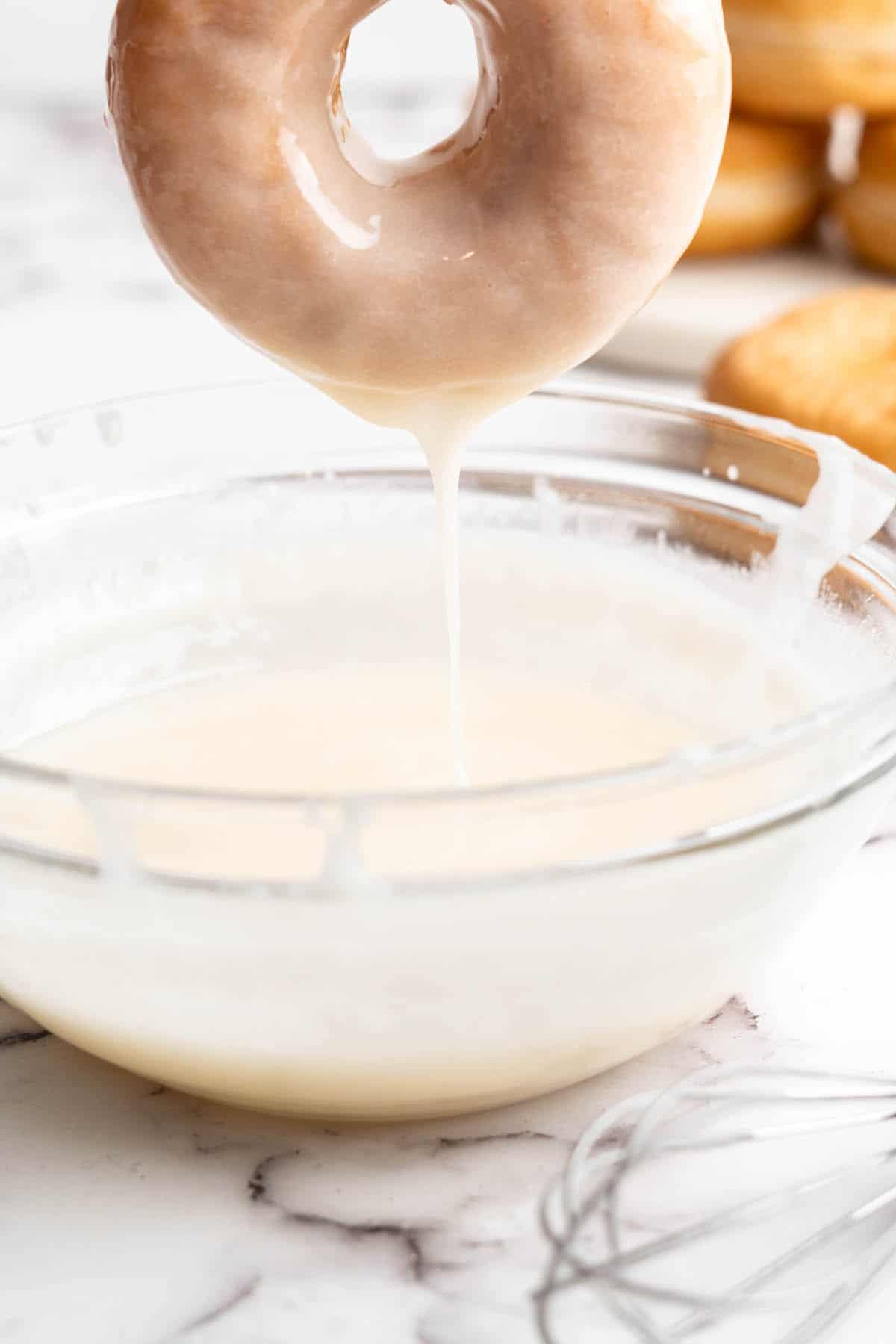
Glaze the donuts. Dip the vegan donuts in the glaze while they’re still warm, but not hot. (If you also fried the donut holes, you can reserve those for the end; put them all in the bowl at the same time, and toss them to coat.)

Finish . Place the glazed donuts on the wire rack to let the excess glaze drip off before serving.
Variations
You can glaze and decorate these vegan donuts however you like! If you let the glaze cool and thicken a bit, you can stir in food colouring . Cocoa powder can be added for a chocolate glaze, and you can sprinkle your freshly-glazed donuts with sprinkles to add a pop of colour and crunch.
Another option is to cut the donuts into circles and use a piping bag to fill them with jam, a vegan custard or mousse, or even vegan whipped cream . (If you’re filling your donuts, they’ll need to be cooled completely first!)

Tips for Success
Here are some pointers for perfect vegan donuts!
- Keeping the dough from sticking . You can place the cut donuts on parchment paper to make it easier to remove them before placing them into the hot oil.
- Use chopsticks . Some people like to use chopsticks with deep frying; you can use them to pick up the donuts and place them into the oil and also to flip them and take them out when they’re finished cooking.
- Watch the oil temperature . When you add the donuts, the temperature will fall; as you work through the recipe, the temperature is likely to slowly climb. Adjust the heat as needed to make sure the oil is always right around the 350º mark.
- Glazing tips . Warm donuts and warm glaze will yield the best results here! As the glaze cools, it will thicken and turn white, so if you want that Krispy Kreme look, both the glaze and donuts should be warm.

How to Store
These donuts are best eaten right away, but they will keep up to a day in an airtight container. I don’t recommend freezing this recipe, but if you’re looking for a vegan donut recipe that freezes well, try a baked donut instead, like my Baked Chocolate Cake S’mores Donuts .
Ingredients
For the tangzhong:
- 2 tablespoons all purpose flour , 15g
- ¼ cup non-dairy milk , 60mL – preferably a high protein milk like soy milk but anyone should work
- 2 tablespoons water , 30mL
For the donuts:
- 3 cups all-purpose flour + up to 2 tablespoons more for kneading , 360g
- ¼ cup brown sugar , 50g
- 2 ¼ teaspoons instant yeast
- ½ teaspoon sea salt
- ¾ cup non-dairy milk , warm to touch ranging between 110°F to 120°F (180mL) – preferably a high protein milk like soy milk but anyone should work
- ⅓ cup melted vegan butter , 69g
- 1 teaspoon vanilla extract or almond extract
- 6 cups peanut oil , or other frying oil
For the glaze:
- 2 cups confectioners’ sugar , sifted
- ¼ cup non-dairy milk , warmed
- 1 teaspoon vanilla extract or almond extract
Equipment
- Deep fry/candy thermometer
- Large, deep, heavy skillet
- Donut or biscuit cutters
Instructions
To make the tangzhong:
- In a small pan, whisk together the AP flour, non-dairy milk and water until mixed together. Add the pan to the stove over medium high and stir until the mixture thickens up which will happen quickly, within 1 minute or 2. It’ll look thick, almost like a pudding or a slurry. Remove from heat and pour into a small bowl and allow it to cool for about 10 minutes in the fridge. I like to do this first while I’m assembling the rest of the ingredients.
To make the donuts:
- Whisk the flour, sugar, yeast, and salt in a large mixing bowl or the bowl of your stand mixer. In a second, smaller bowl, whisk the tangzhong mixture, non-dairy milk, vegan butter, and vanilla extract.
- Pour the wet ingredients into the dry ingredients. Knead by hand or with the dough hook on your mixer until a soft dough forms. Cover the bowl with a kitchen towel and let the dough rest for 10 minutes.
- After the dough has rested, knead it for 6 to 8 minutes. If you’re doing this by hand, you can simply reach in the bowl and knead it in there—no need to transfer it to a work surface at this point. You can knead in up to 2 tablespoons of flour while kneading. The dough will be smooth, soft, and just a bit sticky.
- Transfer the dough to a large greased bowl. Cover the bowl with the kitchen towel and place it in a warm spot, away from drafts. Let it rise for about 2 hours, or until it has doubled in bulk.
- Gently punch down the dough in the bowl, then transfer it to a floured work surface. Gently pat or roll the dough into a rectangle between 1/4- and 1/2-inch thick. (1/4 inch is too thin, but ½ inch is too thick, so it really should be just in the middle.) If the dough feels too sticky to work with, you can add a bit more flour, but don’t overdo it—too much flour will give you tough donuts!
- Use a donut cutter, a large and small biscuit cutter, or the lip of a cup to cut the doughnuts.
- Piece together any scraps, re-roll them, and cut donuts from that too. Rather than discarding or re-rolling the donut holes, you can fry them separately—they’re great for testing your oil, especially if this is your first time deep-frying.
- I found splitting them onto 16 parchment pieces made frying them so much easier!
- Cover the donuts with greased plastic wrap and let them rise until they’re about doubled in size—this should take 45 minutes to an hour.
- Heat the oil in a deep, heavy skillet to 350F/180C and line a large baking sheet with paper towels.
- Keep a close eye on the temperature the whole time you’re frying and adjust the heat as
- needed to keep it right around the 350 mark. Slide a lightly floured bench scraper or metal spatula under a donut and carefully drop it into the oil. (If you’re good with chopsticks, you can use those instead for both dropping the dough into the pan and taking the fried donuts out.)
- Depending on the size of your skillet, you should be able to fry 2 to 3 donuts at a time.
- Fry the donuts until they’re golden brown on the bottom, then flip them and fry the other side.
- This should take about a minute per side. Use a slotted spoon to remove the donuts from the oil and transfer them to the paper-towel-lined baking sheet.
To glaze the donuts:
- Place a large wire rack on a baking sheet lined with foil.
- Whisk together the confectioners’ sugar, warm milk, and extract in a large bowl. Dip the donuts in the glaze while they’re still warm, but not hot. If you also fried the donut holes, you can reserve those for the end; put them all in the bowl at the same time, and toss them to coat.
- Place the glazed donuts on the wire rack to let the excess glaze drip off before serving. These donuts are best eaten right away, but they will keep up to a day.
