When you go vegan, one of the first things you may think about is how to make sure you’re getting enough protein. Luckily, there are tons of sources of plant-based proteins that you can easily incorporate into your diet! I’ll break down the best sources for vegan protein, including nuts, seeds, legumes, grains, and soy and explain what you need to consider when choosing a protein source.
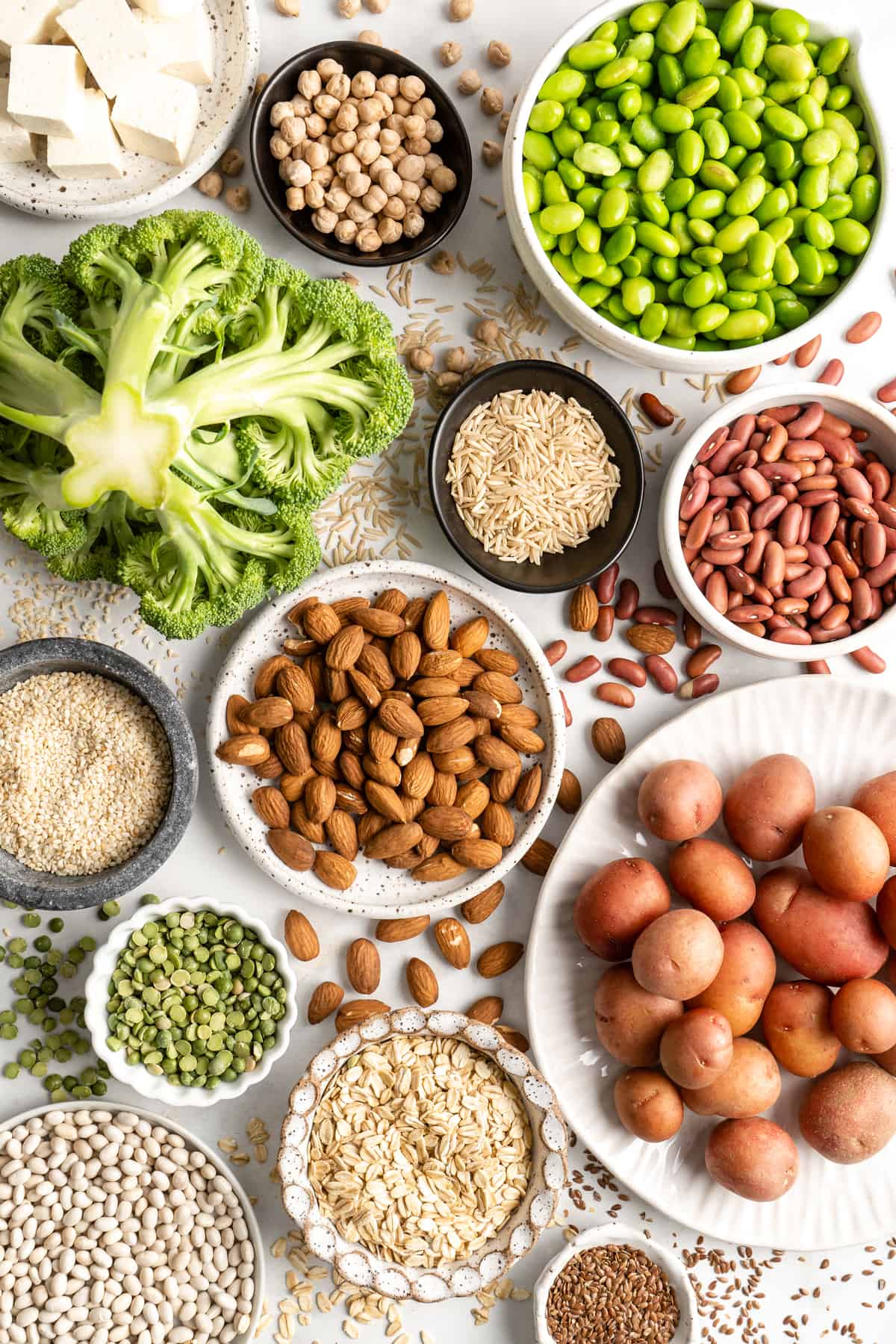
If you’re reading this in January, Happy Veganuary! Maybe you’re new to veganism or just want to incorporate more plant protein into your life and want the low down In this article, I’ll break down the best sources for vegan protein, including nuts, seeds, legumes, grains, and soy and explain what you need to consider when choosing a protein source.
Why is protein important?
Protein is an important building block for your bones, muscles, skin, red blood cells, and more. This is why you often hear of people increasing their protein intake when they are trying to build muscle! Protein is also essential to helping your body repair tissue, regulate hormones, and create enzymes to digest your food
How much protein do you need?
The FDA recommends that adults consume 50 grams of protein per day as part of a 2,000 calorie diet. For a more precise number, you can use the minimum Recommended Dietary Allowance (RDA), which is 0.8 grams of protein per kilogram of body weight.
Are all proteins equal?
One thing to consider about plant-based proteins is that not all of them are complete proteins. A complete protein contains all 9 essential amino acids, which are amino acids that the body cannot produce on its own, while an incomplete protein may be missing one or more essential amino acids.
Just because a protein isn’t complete doesn’t mean it is less than though, you can ensure you get the complete spectrum of essential amino acids by varying your protein sources. Animal protein contains all 9 essential amino acids, so this may not be something you’re used to considering when you first switch to a vegan diet, but it is simpler than it seems! For example, rice and beans are great to pair together because beans are low in the essential acid methionine and high in lysine, while rice is low in lysine and high in methionine.
The Best Vegan Protein Sources
Nuts
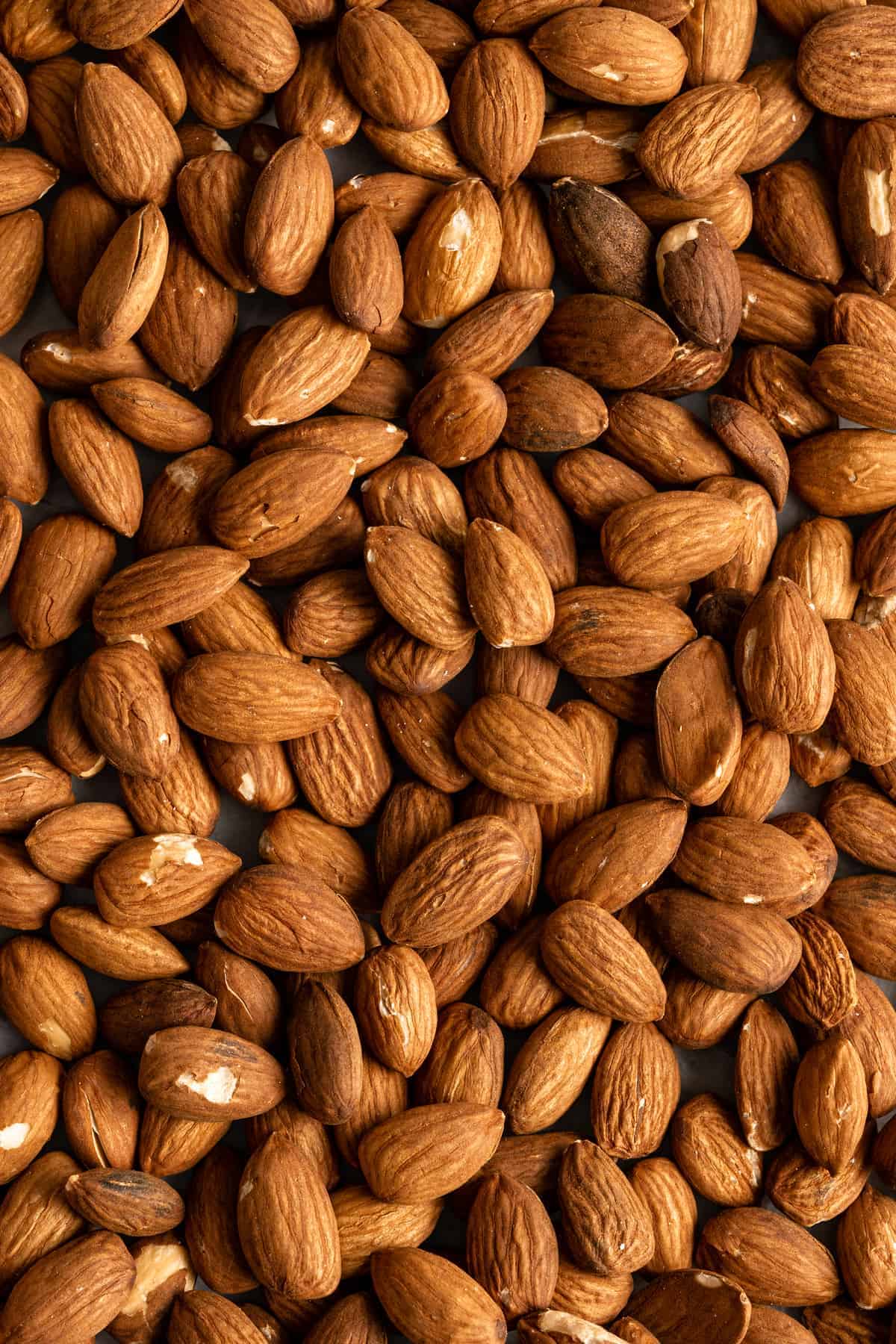
Nuts are a great source of vegan and vegetarian protein whether eaten as-is, as nut butter or even ground into flour. Below is the protein breakdown for a few of my favorite nuts:
- Almonds – 6 grams protein per ounce
- Cashews – 5 grams protein per ounce
- Walnuts – 4.3 grams protein per ounce
Seeds
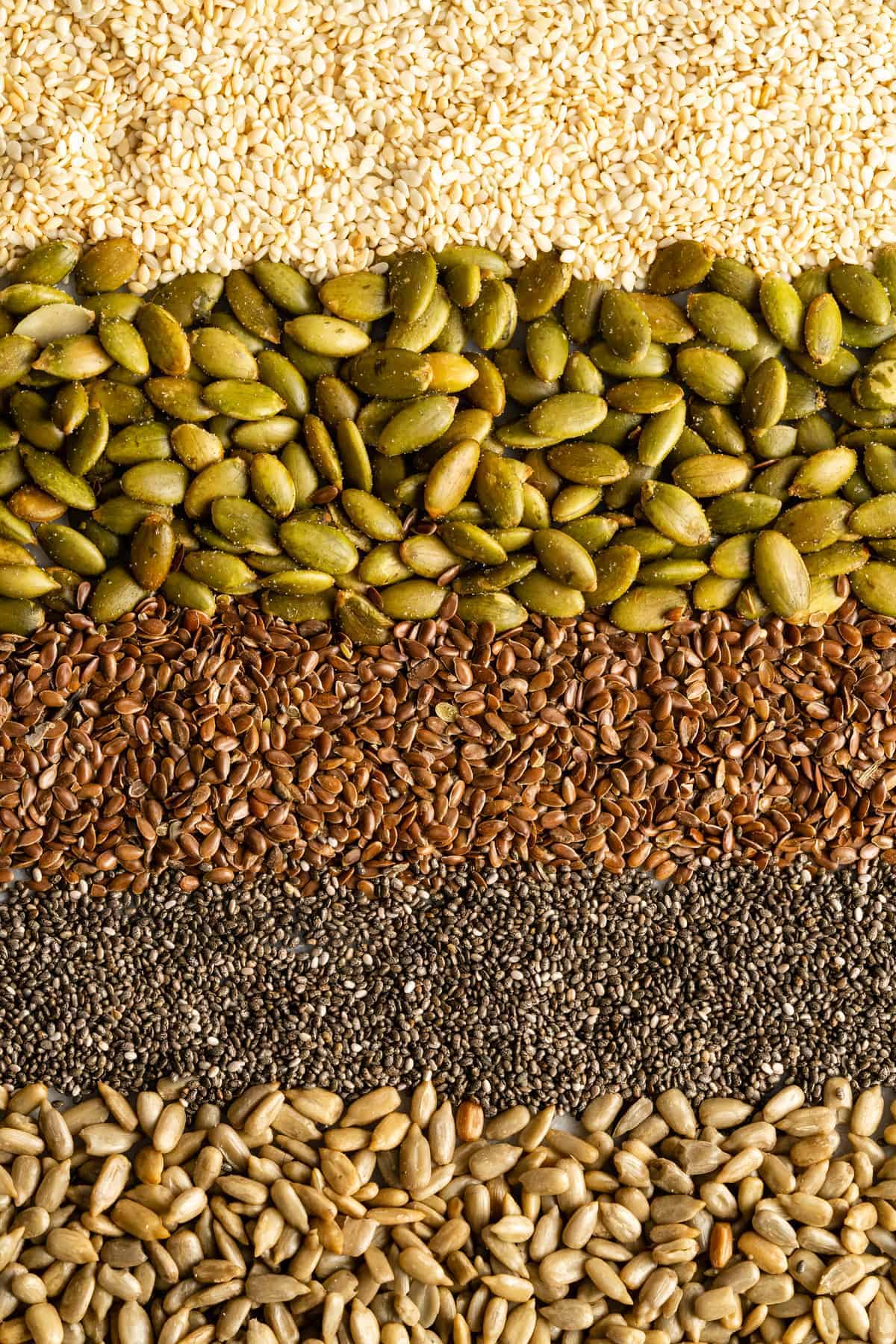
From chia seeds to sunflower seeds, seeds are a great plant-based protein option. Here are a few of the best high-protein seeds:
- Chia Seeds – 4.7 grams protein per ounce
- Flaxseeds – 5.2 grams protein per ounce
- Hemp Seeds – 8.8 grams protein per ounce
- Peanuts – 7 grams protein per ounce
- Pumpkin Seeds – 5 grams protein per ounce
- Sunflower Seeds – 6 grams protein per ounce
Legumes
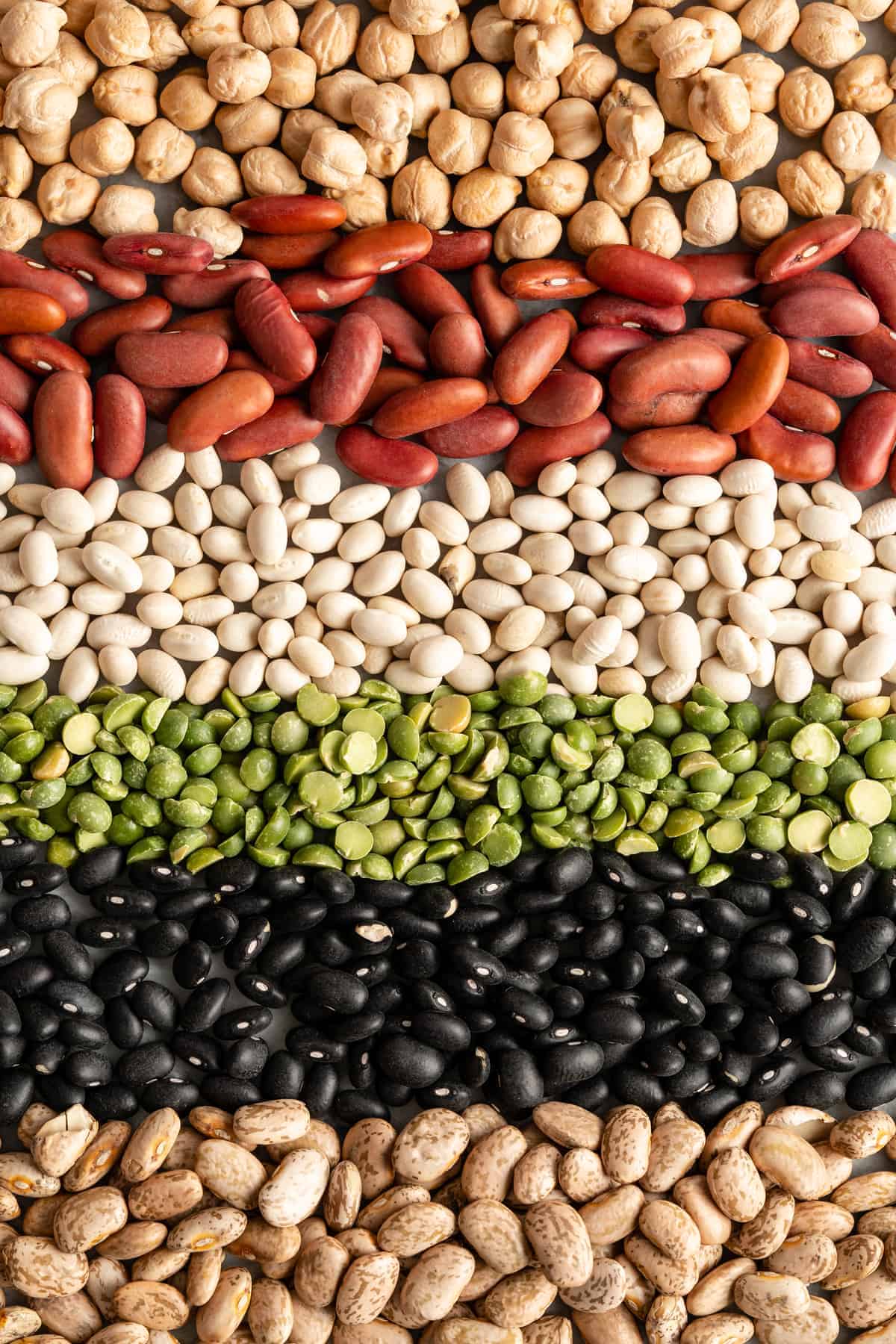
Legumes are one of the most commonly thought of vegan protein sources, and for good reason! S ome examples of legumes include beans, lentils, and peas. Below you’ll find the protein content for some of the most common legumes:
- Black Beans – 15.2 grams protein per cup (cooked)
- Chickpeas – 14.5 grams protein per cup (cooked)
- Kidney Beans – 15 grams protein per cup (cooked)
- Lentils – 18 grams protein per cup (cooked)
- Lima Beans – 15 grams protein per cup (cooked)
- Peas – 8 grams protein per cup
- Pinto Beans – 15 grams protein per cup (cooked)
Soy-Based Vegan Protein Sources
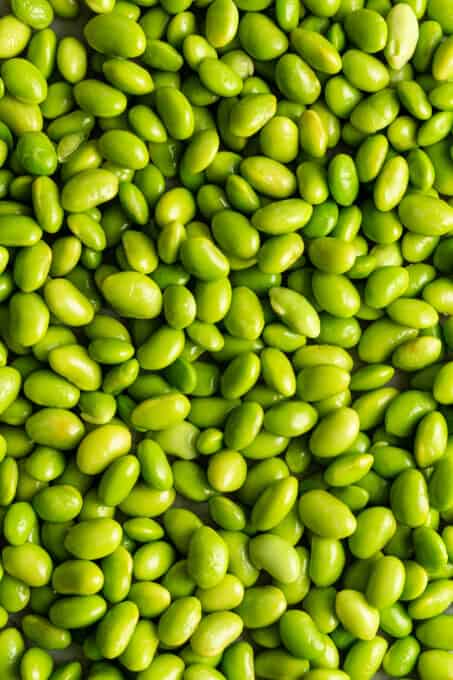
Soy is a popular source of vegan protein because it can be used in so many different ways, and it is one of few plant-based proteins that contains all 9 essential amino acids – meaning it is a complete protein! Whether you’re drinking soy milk or eating fresh edamame, soy is a great addition to a vegan diet. Below is the protein content of some of the most popular soy-based foods:
- Edamame – 17 g protein per cup (cooked)
- Soybeans – 29 g protein per cup (cooked)
- Soy Milk – 8 g protein per cup
- Tofu – 20 g protein per cup
High Protein Grains
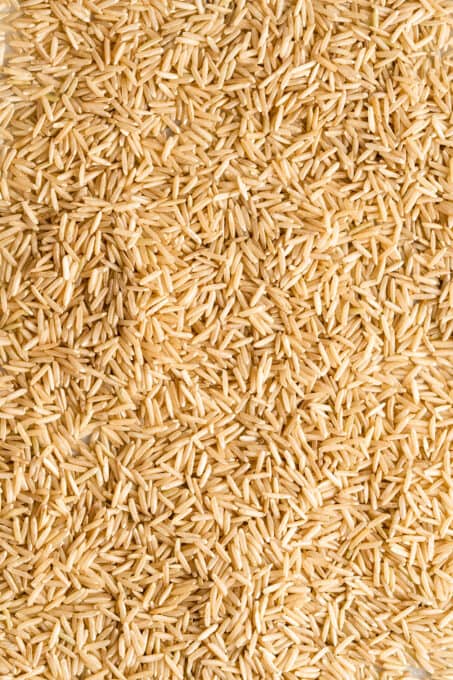
When we think of grains, carbs are often the first thing that comes to mind, but did you know that many whole grains are also a great source of protein? Below you’ll find some of the best high-protein whole grains.
- Brown Rice – 5 g protein per cup (cooked)
- Bulgur – 6 g protein per cup (cooked)
- Farro – 8 g protein per cup (cooked)
- Oats – 5 g protein per cup (cooked)
- Quinoa – 8 g protein per cup (cooked)
- Teff – 9.8 g protein per cup ( cooked)
Vegan Meat Substitutes
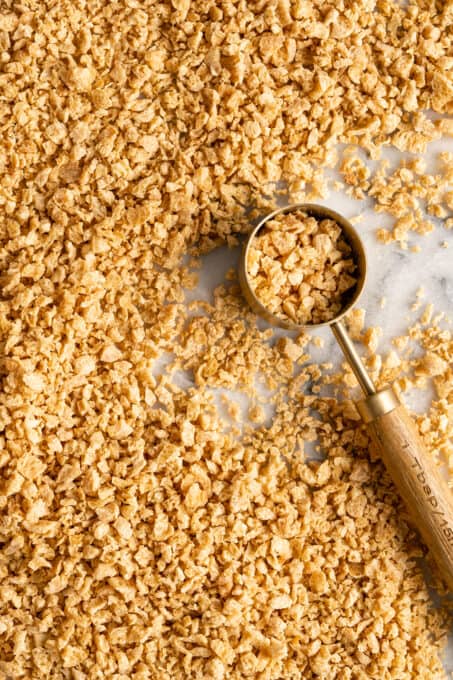
In addition to naturally occurring plant-based proteins like nuts, seeds, and grains, there are also a number of vegan meat substitutes designed specifically to replace animal protein. These options pack a big protein punch. Below are a few of the most common options!
- Beyond Meat Vegan Ground Beef – 20 g protein per (4-ounce) serving
- Impossible Burger – 19 g protein per (4-ounce) serving
- Seitan (Vital Wheat Protein) – 46 g per (½ cup) serving
- Tempeh – 31 g protein per (1 cup) serving
- Textured Vegetable Protein – 18 grams per (½ cup) serving
Nutritional Yeast
Nutritional yeast is a cousin to the brewer’s and baker’s yeast that has a cheesy taste. 2 tablespoons of nutritional yeast will provide you with 8 grams of plant-based protein.
Vegetables That Are High in Protein
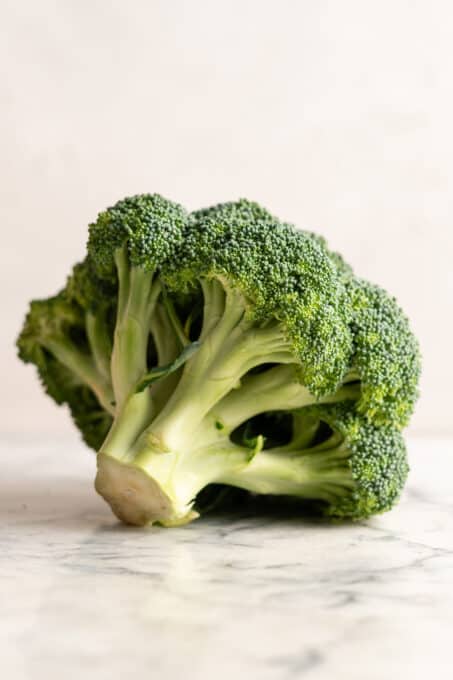
While typically not as high as the other options listed in this article, vegetables can also be a great source of vegan protein! Below are the highest protein vegetable sources:
- Broccoli – 2.5 grams per cup
- Brussels Sprouts – 5.64 grams protein per cup
- Corn – 4.3 grams protein per cup
- Potatoes – 4.55 grams per medium potato
- Spinach – 5.3 g per cup (cooked)
- Sweet Potatoes – 2 grams per medium sweet potato
High Protein Vegan Meals
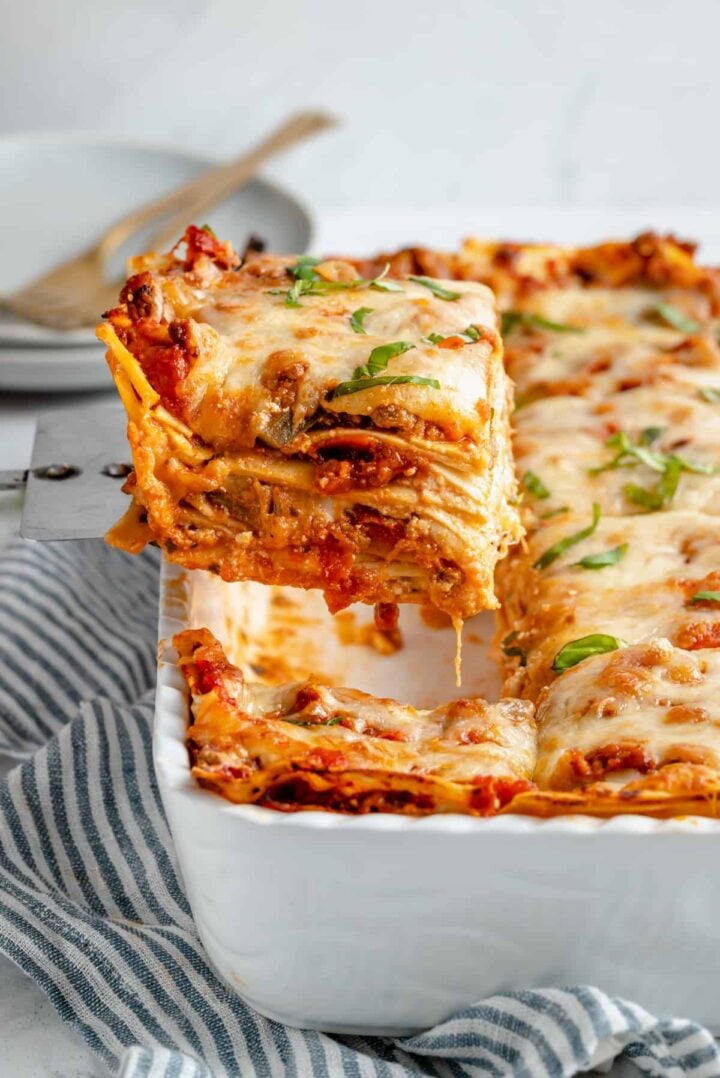
Below are a few of my favorite vegan dishes that are high in protein!
- Vegan Fajita Bowls
- Crispy Teriyaki Tofu
- Coconut Chickpea Curry
- Best Vegan Lasagna
- Quinoa Burgers
(please note that health professionals were consulted to confirm the validity of these statements. Although jessicainthekitchen.com attempts to provide accurate nutritional information, kindly note that these are only estimates. Nutritional information may be affected based on the product type, the brand that was purchased, and in other unforeseeable ways. Jessicainthekitchen.com will not be held liable for any loss or damage resulting for your reliance on nutritional information. If you need to follow a specific caloric regimen, please consult your doctor first. )
This vegan Caesar salad is perfect for a crowd-pleasing dinner side or light lunch! I’ll show you how to make this classic salad with a tangy, creamy vegan Caesar dressing, crunchy croutons, and crisp romaine lettuce.
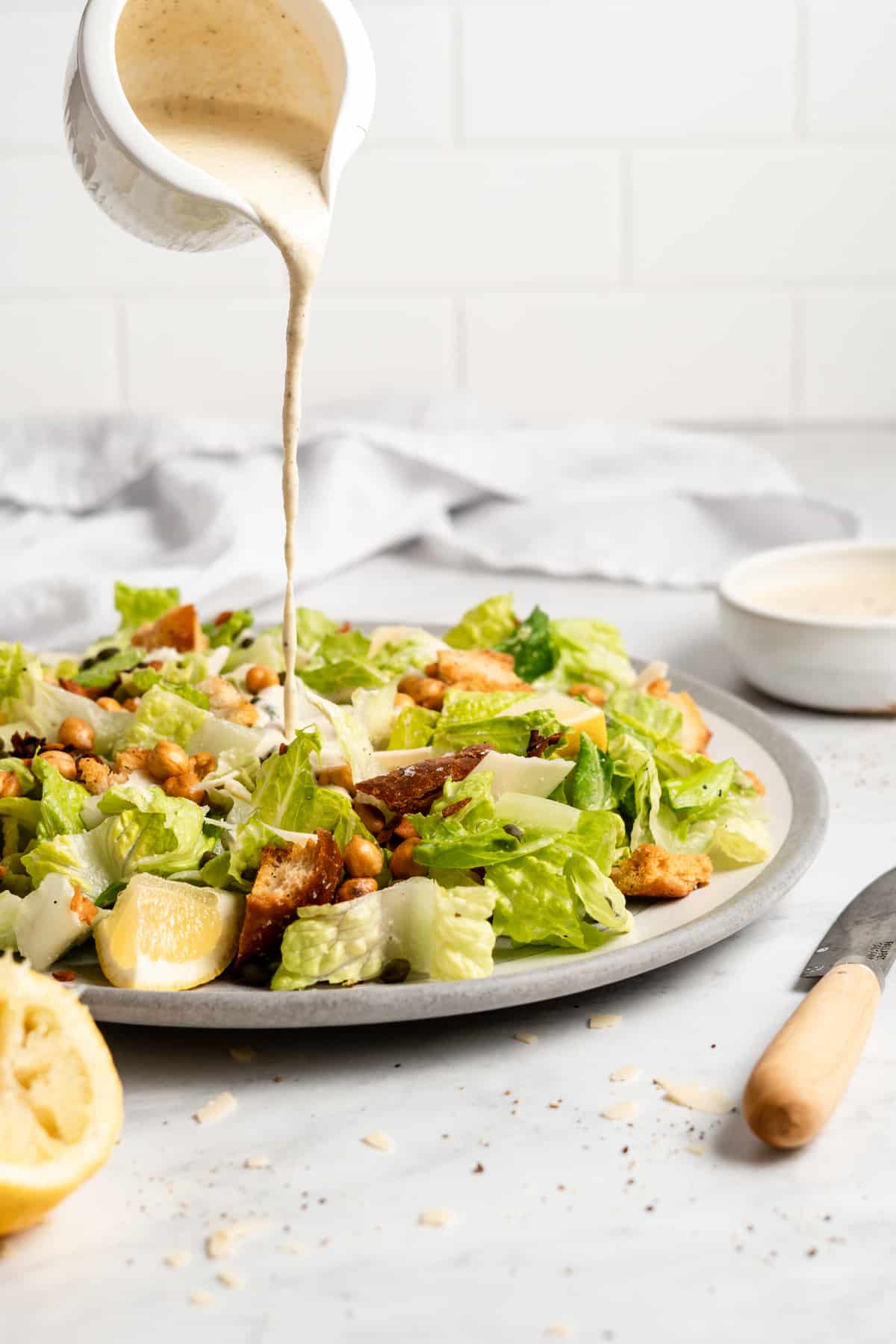
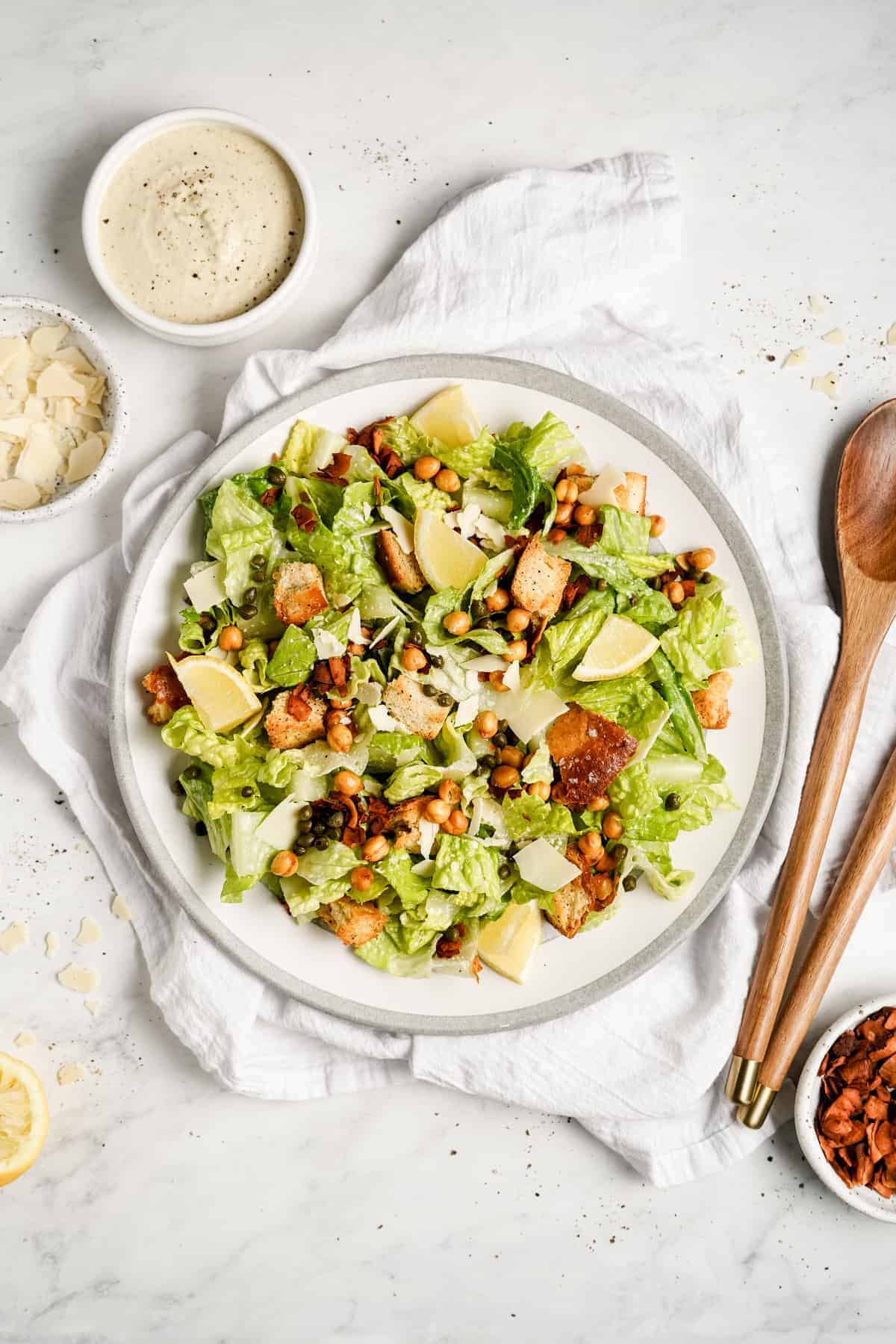
This vegan Caesar salad recipe is light but so, SO flavorful. It starts with a crisp bed of lettuce, Parmesan cheese, and a handful of salty coconut bacon bits. Top all that off with a few crunchy homemade croutons and some tangy vegan Caesar salad dressing, and voila. You will not believe the treat your taste buds are experiencing!
So… while lasagna and pizza are still my all-time favorite Italian dinners, vegan Caesar salad is about to make plenty of appearances at my table. I thought you all might want in on the goodness!
All About This Vegan Caesar Salad Recipe
- Authentic flavours. If you find yourself yearning for an absolutely spot-on vegan version of a classic Caesar salad, you’ve found your match. I’ll show you how to make my favorite easy vegan Caesar dressing that tastes even better than the original with anchovies!
- Classic ingredients, made vegan. I love the traditional combo of crunchy croutons, savory “bacon” bits, and garlicky, creamy Caesar dressing. Paired with fresh, crisp lettuce, it’s the best. I’ve done my best to recreate the original in this plant-based recipe.
- Perfect for sharing. Make a BIG Caesar salad and serve it as a sharing plate at your next party, holiday, or weeknight meal. There’s nothing better than a refreshing salad to lighten up a pasta dinner or pair with a side of garlic bread.
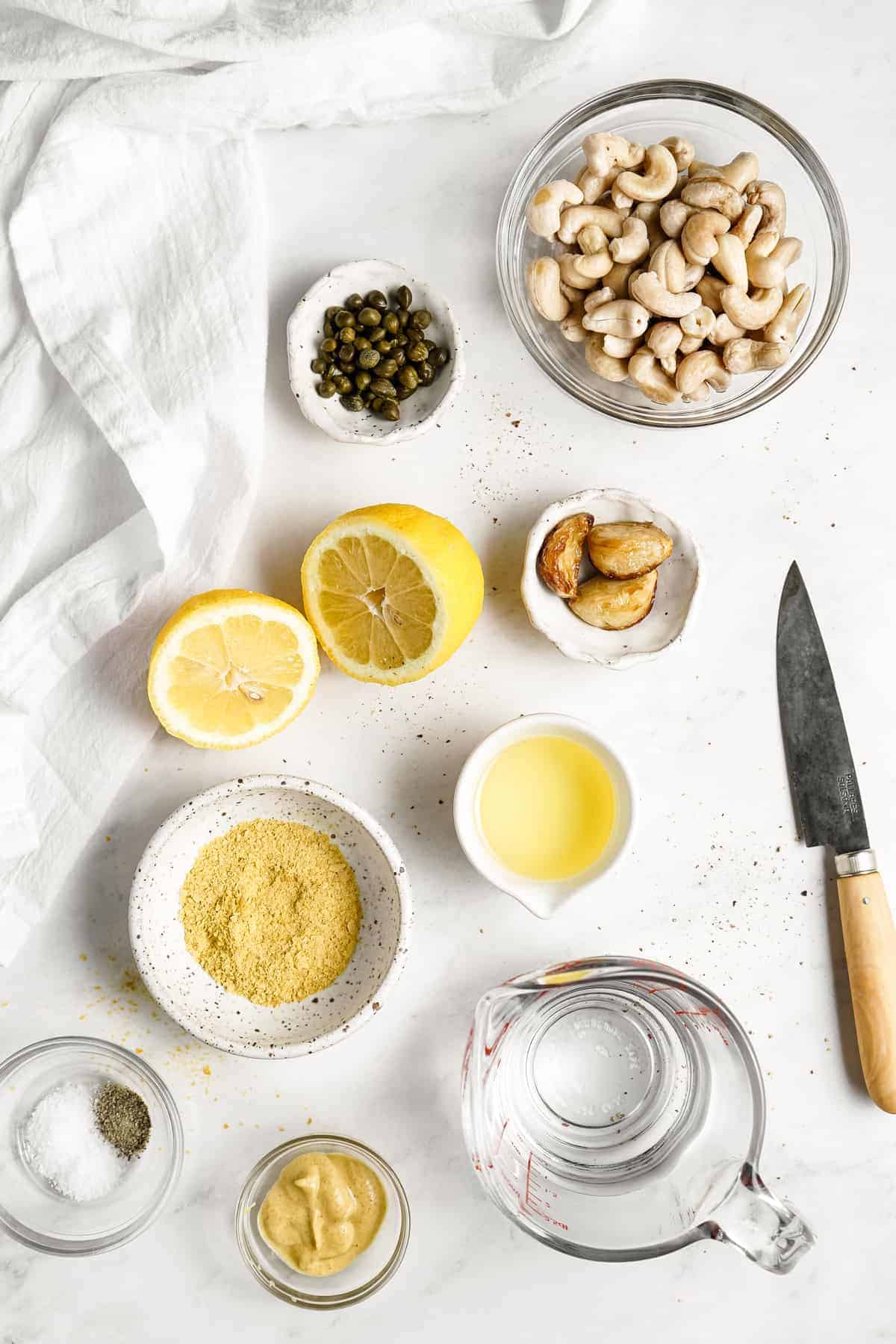
Notes on Ingredients
Every time I make a vegan version of a classic, I aim to make it as close as possible to the original flavor-wise. While there have been some ingredient switch-ups, most of this should look familiar. Your classic Caesar salad consists of the following:
- Lettuce – Crispy romaine lettuce is the traditional choice for a Caesar salad. However, you can use just about any salad greens you’d like, even spinach, arugula, or kale. Try a mix of greens for a little variety.
- Parmesan Cheese – I’m happy to report that vegan parmesan cheese adds another layer of beautiful brine and tanginess to this salad. I have a recipe that you can whip up, or you can buy your own – either in block form or sprinkle form.
- Vegan Coconut Bacon – You can do store-bought or homemade coconut bacon here, too.
- Croutons – Another staple. I share my super simple recipe for homemade croutons below (I’m always turning our stale or day-old bread into croutons!). You can also pick up a package of your preferred store-bought vegan croutons if you don’t have the time to make them from scratch.
- Dressing – This salad is famous largely because of the dressing! While traditional Caesar salad dressing includes ingredients like anchovies, egg yolks, and Parmesan cheese, I’ll show you how to make my easy vegan version.
How to Make Your Own Croutons
When making homemade croutons, I like to use a crusty vegan sourdough bread , torn into 1 inch pieces. Tearing the pieces creates rough edges that grab the dressing better. Alternatively, you can chop the bread into even-sized cubes. To turn your bread into croutons:

Tear the bread into pieces.
- Prepare the bread for baking. Arrange your torn bread pieces on a lined baking sheet.
- Then, add your seasonings. Drizzle the bread lightly with cooking oil (I use Thrive algae oil, but olive oil or avocado oil are also good options). An oil spray also works well here. After, sprinkle the croutons with salt and pepper, and toss them gently to coat.
- Bake. Bake the croutons at 400°F/200°C for about 5 minutes. Leave them to cool outside of the oven afterward until it’s time to assemble the salad.
Vegan Caesar Salad Dressing
This homemade Caesar dressing has common ingredients with the traditional recipe, including olive oil, plenty of fresh or roasted garlic , Dijon mustard, and lemon juice. Of course, to make it vegan-friendly, a few simple swaps were needed. The key ingredients in this vegan dressing are:
- Tahini or Soaked Cashews – Once blended, cashews thicken the dressing and make it creamy. You could also use jarred or homemade tahini . Essentially, these are the substitute for the egg yolks. If you’re using cashews, it’s important to soak the raw cashews beforehand so that they soften and are easier to digest (see how to soak cashews in my vegan heavy cream recipe).
- Capers – Capers lend their salty, savory, briny flavour to this Caesar dressing in place of anchovies.
- Nutritional Yeast – My easy replacement for grated Parmesan. Nutritional yeast has a rich, cheesy, umami flavor. You could also go one step further and use homemade vegan Parmesan cheese .
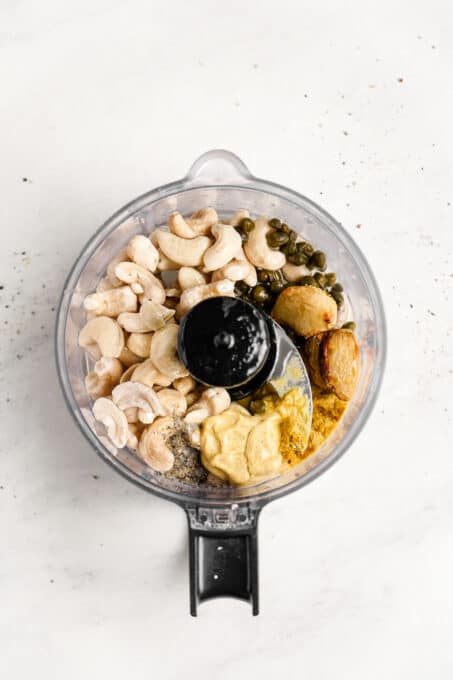
Combine the ingredients.
- To make the Caesar salad dressing, add all of the ingredients to a blender or food processor. Blend until the dressing is smooth and creamy. This generally takes about 2 minutes to ensure that the cashews are throughly blended down. You may need to stop to scrape down the sides of the blender as you go.
Let’s Assemble This Vegan Caesar Salad
Vegan Caesar salad is quickly becoming one of my favorite dishes to whip up because it takes under 30 minutes to make. All I have to do is prep the croutons and bake them while I blend the salad dressing, and arrange everything in a bowl. Easy!
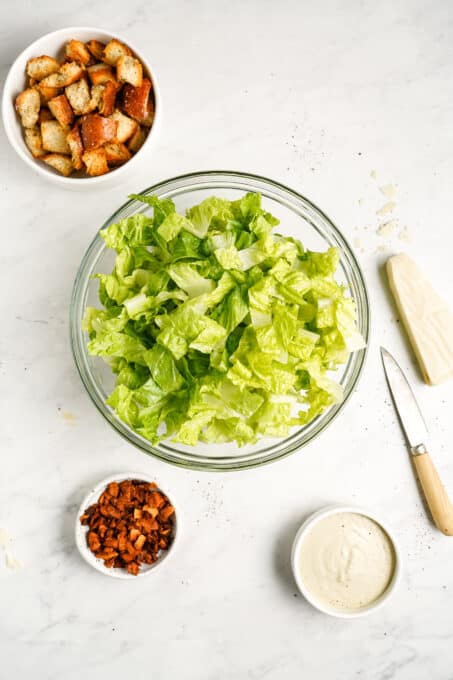
Add the lettuce.
- Start with the greens. In a large mixing bowl, add the chopped lettuce. Drizzle a good amount of dressing (as much or as little as you’d like) over the lettuce and toss to combine.
- Layer on the ingredients. Add in the croutons, coconut bacon, and the vegan parmesan cheese. Toss until combined.
- Enjoy! Serve with extra coconut bacon and vegan parmesan and dressing on the side.
Tips and Variations
- Soak the cashews. This is important for easy digestion, and also because you want the dressing to come out nice and creamy. If you don’t have time to soak the cashews, you can speed up the process by boiling raw cashews for 5 minutes on the stovetop.
- Get the croutons in the oven first. This way, you can prepare the homemade Caesar dressing and any other salad ingredients while the croutons bake. It’s a huge timesaver!
- Use gluten-free bread. Gluten-free croutons converts this salad into an easy gluten-free dinner option!
- Make it your own. Feel free to make this salad to your own taste. You can use as much or as little dressing on the salad as you want. You can add more coconut bacon or less vegan parmesan (let’s be real – you’ll never add less vegan parmesan cheese!).
What Else Can I Add To a Caesar Salad?
While we’re on the topic of customization, feel free to switch up what you add into this simple Caesar salad, too! Take a look at some of these variation ideas:
- Chickpeas. While I’m a big fan of crunchy croutons, know that you could also swap them for crispy roasted chickpeas if you wanted to add some extra protein into this dish.
- Rice paper. If coconut bacon isn’t your thing, you can try rice paper instead, or even chop or crumble tofu bacon over the salad.
- More veggies. You can add avocado, cucumbers, bell peppers, etc. Whatever you think fits!
- Protein. Toss in vegan chicken pieces , marinated tofu , or baked tofu .
Serving Suggestions
Want to serve this vegan caesar salad on the side of another main course? Great! I’ve got a few suggestions for you, though practically any meal will work:
- Italian. Pair this classic salad with vegan chicken parmesan or have it on the side with eggplant rollatini for a restaurant-worthy meal.
- Pasta. Caesar salad goes great with easy pasta dinners like baked vegan mac and cheese !
- Soup. Soup and salad, anyone? Serve your salad alongside a filling soup like this vegan coconut curry lentil soup !
- Veggie burgers. I love a side of Caesar salad to go with one of my quinoa black bean burgers .
How to Store
- Refrigerate leftovers. Because this is a dressed salad, it tastes best fresh. If you have leftovers, you’re going to want to store them in an airtight container in your fridge for about 3 days.
- Make-ahead. If you want to meal prep this salad, I highly recommend storing the lettuce separate, the dressing separate, and making the croutons fresh. Then you can assemble a small portion for yourself when you need it. That way it’ll last for a while in your fridge (up to a week for the dressing).
- Freeze the Caesar salad dressing. You can freeze the dressing for up to 2 months in a tightly sealed jar or airtight container.
Enjoy, friends!
More Easy Salad Recipes
- Curried Chickpea Salad
- Kale Salad with Sesame Tahini Dressing
- Mediterranean Chickpea Salad
- Vegan Pasta Salad
- Strawberry Panzanella Salad with Balsamic Glaze
Ingredients
Croutons
- 2 cups crusty vegan sourdough bread , torn into 1 inch pieces (tearing the pieces means that they grab the sauce better)
- 1 teaspoon oil , (any oil is fine)
- Salt and pepper to taste
Vegan Caesar Dressing
2 tablespoons oil , (any oil is fine)
¼ cup tahini , Or ½ cup raw cashews boiled for 5 minutes
3 cloves of garlic , minced (roasted also works here, finely diced)
2 teaspoons capers
1 tablespoon nutritional yeast
1 teaspoon dijon mustard
1-2 tablespoons lime or lemon juice
½ teaspoon sea salt
¼ teaspoon ground black pepper
¼ cup water , up to ½ cup, start with ¼ cup*
2 heads of crispy romaine lettuce , washed, dried and chopped
¼ cup vegan Parmesan cheese , store-bought or homemade
¼ cup vegan coconut bacon , store-bought or homemade
Instructions
Croutons:
- Preheat oven to 400°F/200°C. Add the bread cubes to a silicone mat on a baking sheet or a baking sheet prepared with parchment paper or foil.
- Drizzle the oil over the cubes, and sprinkle with salt and pepper. Toss gently with hands to coat. Bake for 5 minutes. Remove from oven and set aside to cool.
Vegan Caesar Dressing:
While the croutons are baking, you can make the dressing.
Add all of the ingredients to a jar and mix – either by shaking the jar or with a whisk or immersion blender until combined and creamy. If using cashews, blend for about 2 minutes to ensure the cashews are throughly blended down. Blend until smooth, stopping to scrape down the sides of the blender if necessary. Add more water to thin if desired, but I always start with ¼ cup water, since the runniness of your tahini can affect the entire dressing. Taste and adjust seasonings if desired.
In a large mixing bowl, add the chopped lettuce. Drizzle a good amount of dressing (as much or as little as you’d like) over the lettuce and toss to combine.
Add in toasted bread, coconut bacon and the vegan parmesan cheese. Toss until combined.
Serve with extra coconut bacon and vegan parmesan and dressing on the side. Enjoy!
Notes
- Soak Your Cashews: This is important for easy digestion, and also because you want the dressing to come out nice and creamy. Or boil for 5 minutes! You can easily boil your cashews with just enough water covering them for 5 minutes. Drain, let cool, and proceed! This way you can make the recipe the same day.
- Make the Croutons First: That way you can prepare the homemade caesar dressing while they bake – it’s a huge timesaver!
- Customize It: Feel free to make this salad to your own taste. You can use as much or as little dressing on the salad as you want. You can add more coconut bacon or less vegan parmesan (let’s be real – you’ll never add less vegan parmesan cheese!).
- Storage: If you have leftovers, you’re going to want to store them in an airtight container in your fridge for about 3 days. If you want to meal prep this salad, I highly recommend making the lettuce separate, the dressing separate, and the croutons fresh.
