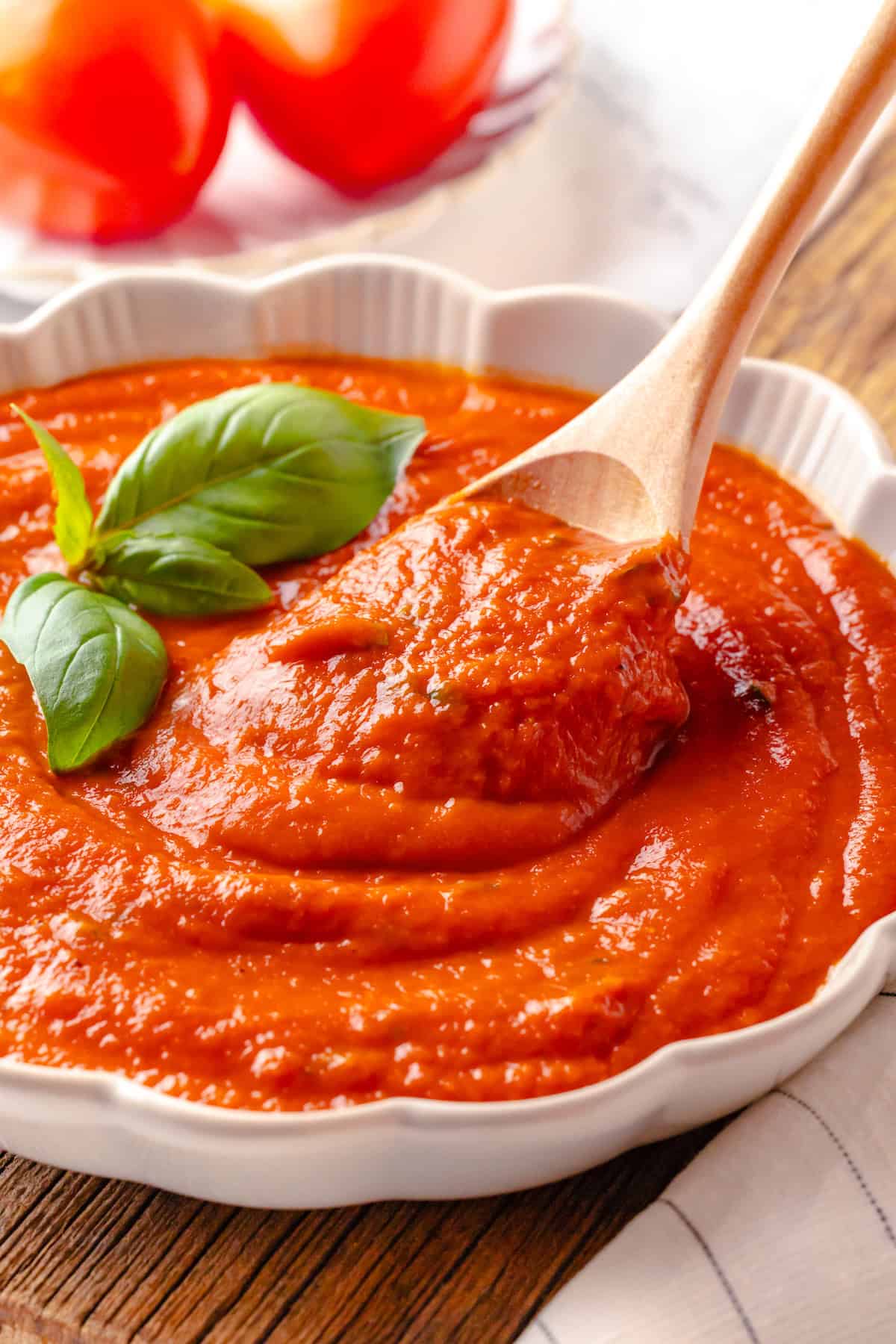
This homemade pomodoro sauce recipe takes a short list of simple ingredients and transforms them into a fresh, vibrant pasta sauce. It’s easy to make and excellent for meal prep!
What Is Pomodoro Sauce?
Pomodoro sauce is a classic Italian tomato sauce like marinara sauce and arrabbiata sauce , and as you might have guessed, it’s the sauce used to make pasta al pomodoro. This isn’t the kind of homemade pasta sauce that has a lot of ingredients or requires an all-day cooking time—instead, it relies on simple ingredients and a relatively short time on the stovetop for a more fresh, vibrant flavour. Pomodoro sauce is an authentic Italian pasta sauce that’s still doable for a weeknight dinner!
Why You’ll Love this Pomodoro Sauce Recipe
- So much better than store-bought . Homemade pasta sauce is always better than the kind that comes in a jar, and pomodoro sauce is no exception. The freshness of the ingredients comes through in every bite!
- Versatile . Pomodoro sauce isn’t just for pasta! There are a lot of ways to put it to use, so you’ll want to keep it on hand in your freezer.
- Simple ingredients, complex flavour . While this pomodoro sauce recipe may seem like a basic tomato sauce on the surface, don’t be fooled by its simplicity. Use high-quality ingredients, and you’ll get lots of complexity.
Notes on Ingredients
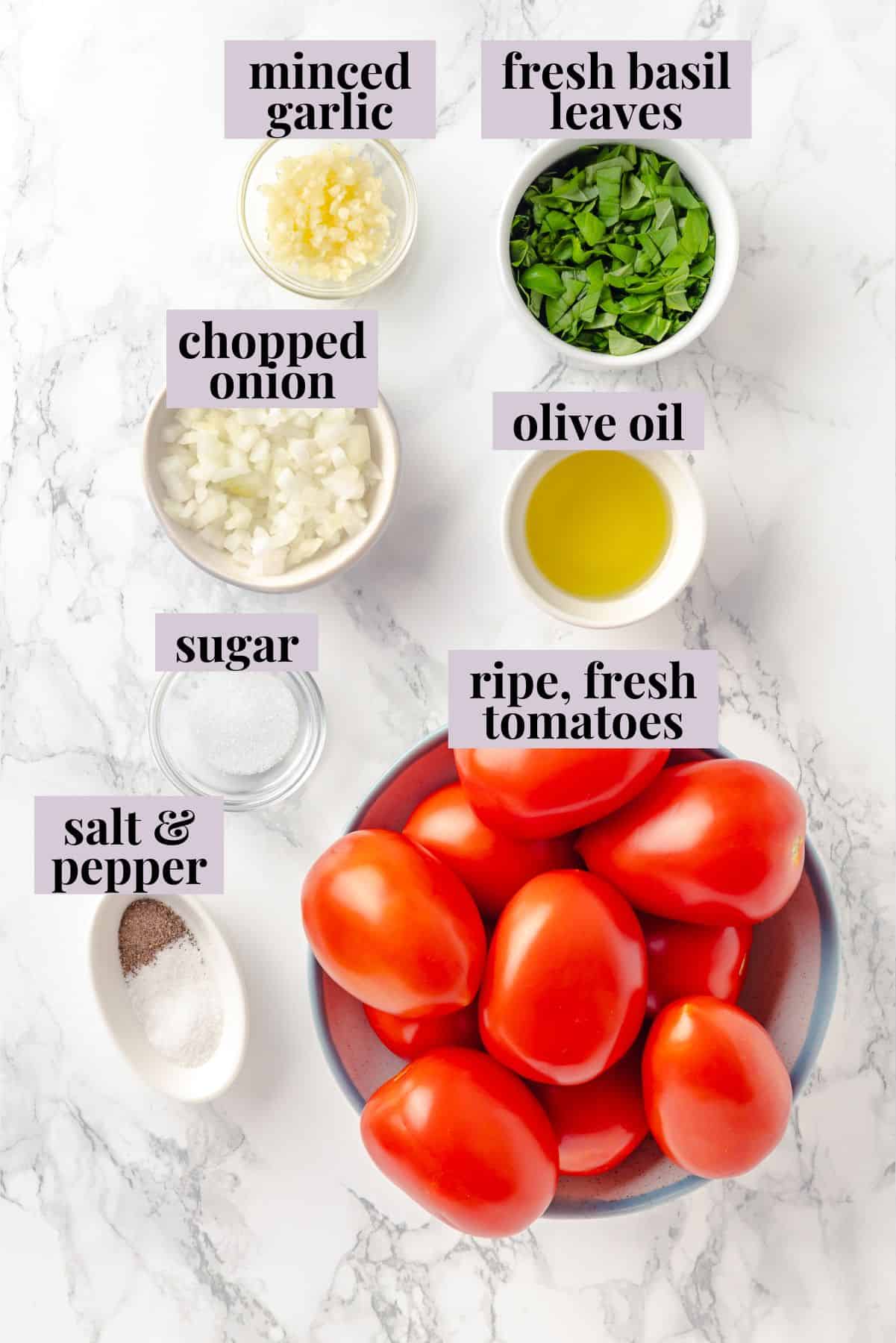
Scroll down to the recipe card to find the ingredient quantities and recipe instructions.
- Tomatoes – I love using either fresh Roma tomatoes or canned San Marzano tomatoes , which are imported from Italy.
- Olive oil
- Onion – A yellow or white onion is perfect.
- Garlic – You can add extra if you’d like!
- Salt and ground black pepper
- Sugar – Just a bit to cut the acidity of the tomatoes.
- Fresh basil leaves – Dried basil just doesn’t compare to fresh!
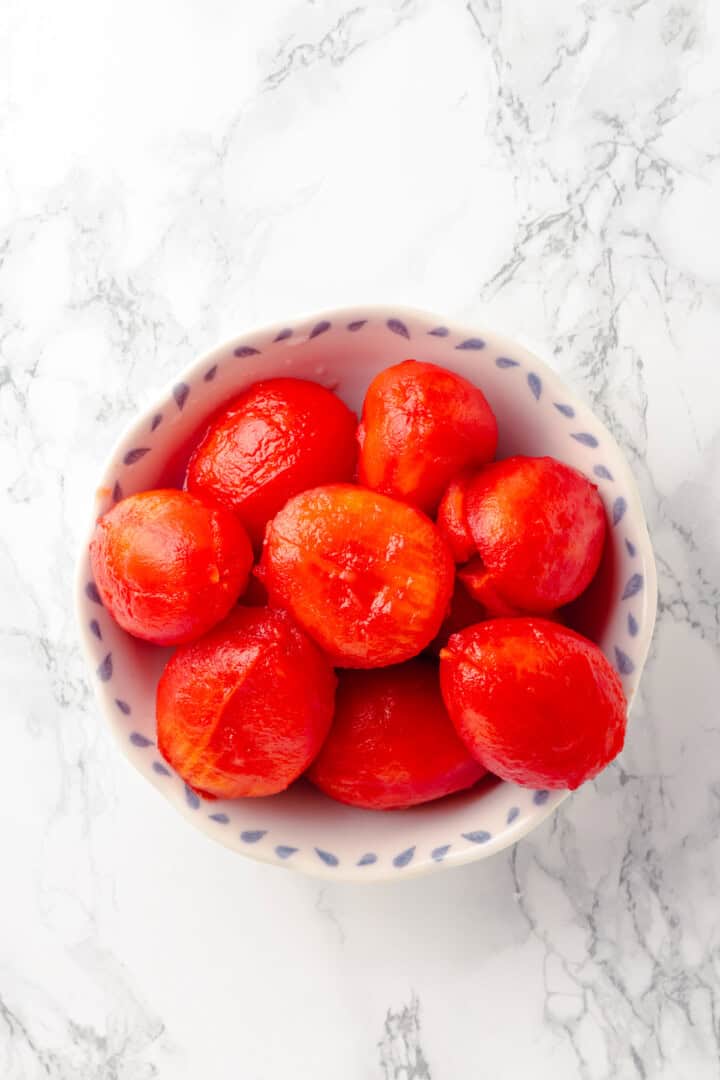
Blanch tomatoes.
How to Make Pomodoro Sauce
- Prep the tomatoes . If you’re using fresh tomatoes, you’ll need to blanch, peel, and chop them.
- Sauté the onion and garlic . Warm the olive oil in a pan set over medium heat. Add the onion and cook until it’s softened, then add the garlic and cook a minute or two more, until fragrant.
- Add the tomatoes . Stir them into the onions and cook for 10 to 15 minutes, or until they start breaking down.
- Simmer . Season with salt and pepper, then add the sugar. Reduce the heat to low and simmer for 20 minutes.
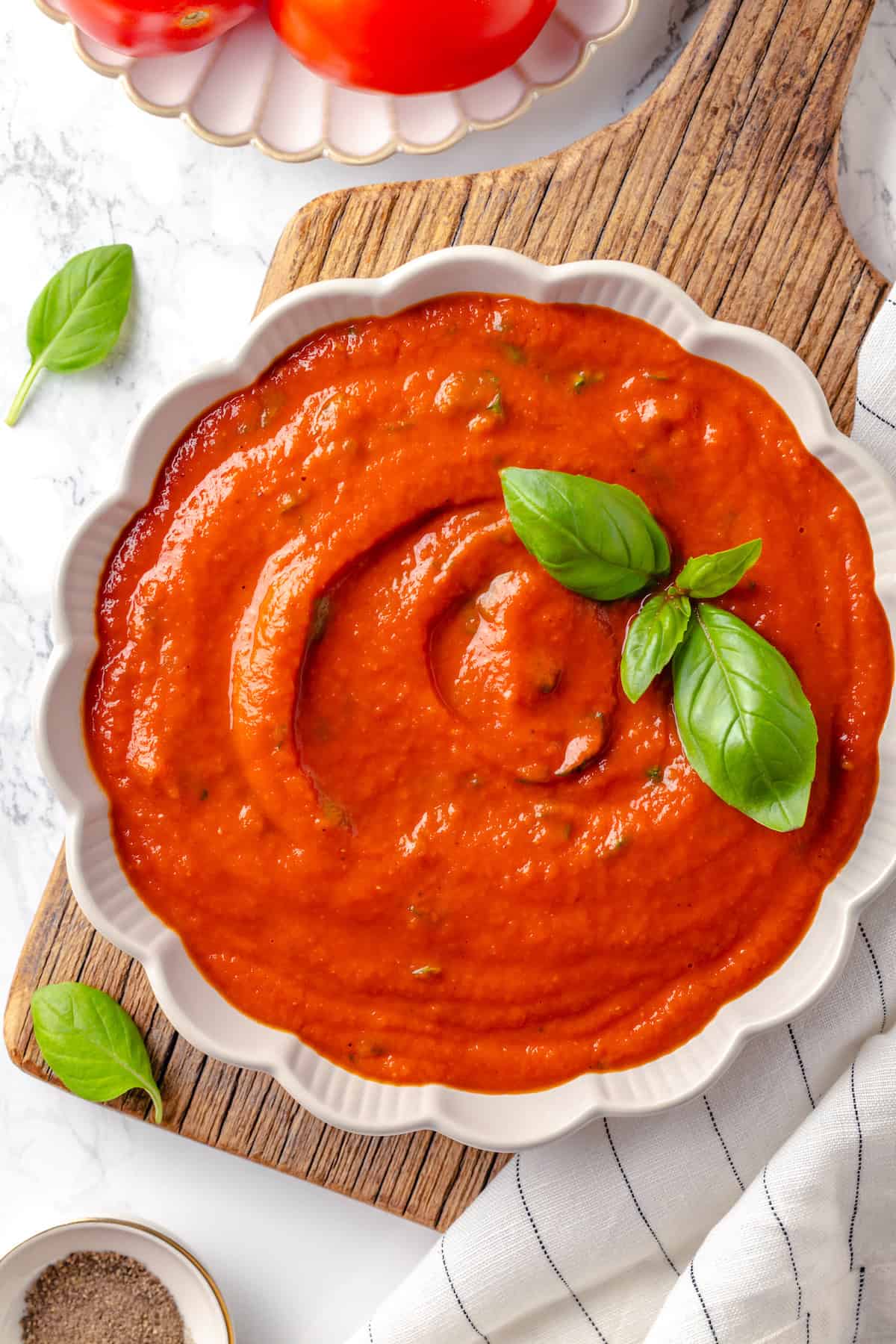
- Puree . Use an immersion blender to puree the sauce until it reaches your desired consistency.
- Finish . Stir in the basil, cook for a few minutes to allow the flavours to come together, then serve.
Tips for Success
- Simmer longer if you’d like . Many homemade pasta sauce recipes have you simmer them on the stovetop for hours; while that’s not necessary for pomodoro sauce, which is meant to have a lighter flavour, you can simmer it for longer than 20 minutes if you want to add more depth and let the tomatoes break down more on their own.
- Use high-quality tomatoes . The quality of the tomatoes you use will significantly impact the taste of your pomodoro sauce. Opt for ripe, in-season fresh tomatoes or canned San Marzano tomatoes for the best results.
- Adjust the seasoning . Taste your sauce as it simmers and feel free to adjust the seasoning to your preference. Sometimes, a bit more salt, pepper, or sugar can balance the flavours perfectly.
- Don’t skip the fresh basil . Fresh basil brings a vibrant aroma and flavour that dried basil simply can’t match. Add it towards the end to preserve its freshness.
Ways to Use Pomodoro Sauce
- Pasta . The classic option! This sauce is great for making vegan spaghetti and meatballs , or just ladled over your favourite pasta shape.
- Dipping . Use pomodoro sauce for dipping crusty bread , garlic knots, fried polenta , or even pizza crust .
- Lasagnas and more . Use pomodoro sauce instead of marinara in recipes like vegan lasagna , eggplant rollatini , and vegan manicotti .

How to Store Homemade Pasta Sauce
Transfer your pomodoro sauce to an airtight container and store in the refrigerator for up to 5 days. Reheat it in a saucepan over medium heat, stirring occasionally.
Can I Freeze This Recipe?
For longer storage, freeze pomodoro sauce in a freezer-safe container or heavy-duty freezer bag. It can be frozen for up to 3 months. To use, thaw in the refrigerator overnight before reheating or, if you’ve frozen it in a freezer bag, thaw it in a bowl of hot water and then reheat it.

More Vegan Sauce Recipes
- Scotch Bonnet Pepper Hot Sauce
- Homemade Tomato Sauce
- Vegan Alfredo Sauce + 5 Ways to Use it
- Thai Peanut Sauce
- Easy 10-Minute Basil Pesto Recipe
Ingredients
- 2 pounds ripe fresh tomatoes (Roma or vine-ripened) , 900 g or 1 can (28 ounces) whole peeled tomatoes (preferably San Marzano )
- 2 tablespoons olive oil
- 1 medium onion , finely chopped
- 3-4 cloves garlic , minced
- salt , to taste
- freshly ground black pepper , to taste
- 1 teaspoon sugar
- ¼ cup fresh basil leaves , chopped
Instructions
- If using fresh tomatoes: Bring a large pot of water to a boil. Score the bottom of each tomato with an “X” and blanch them in boiling water for about 30 seconds. Remove them and immediately place them in an ice bath. Once cooled, peel off the skins, and roughly chop the tomatoes in about 3-4 parts each. You can skip this step if you don’t mind the tomato peel in the sauce, but I recommend it for a better texture.
- In a large skillet or saucepan, heat the olive oil over medium heat.
- Add the chopped onion and sauté until translucent, about 5-7 minutes. Then, add the minced garlic and cook for an additional 1-2 minutes until fragrant.
- Add the chopped fresh or canned tomatoes to the skillet. Cook for about 10-15 minutes until the tomatoes break down and release their juices.
- Add salt and pepper to taste. Sprinkle in the sugar to balance the acidity.
- Reduce the heat to low and let the sauce simmer for about 20 minutes, stirring occasionally.
- Blend the sauce with an immersion blender until smooth.
- Stir in the chopped basil leaves and cook for another few minutes.
- Toss the pomodoro sauce with your favorite pasta, or use it as a base for other dishes.
Notes
Pomodoro Sauce
Ingredients
- 2 pounds ripe fresh tomatoes (Roma or vine-ripened) 900 g or 1 can (28 ounces) whole peeled tomatoes (preferably San Marzano )
- 2 tablespoons olive oil
- 1 medium onion finely chopped
- 3-4 cloves garlic minced
- salt to taste
- freshly ground black pepper to taste
- 1 teaspoon sugar
- ¼ cup fresh basil leaves chopped
Instructions
- If using fresh tomatoes: Bring a large pot of water to a boil. Score the bottom of each tomato with an “X” and blanch them in boiling water for about 30 seconds. Remove them and immediately place them in an ice bath. Once cooled, peel off the skins, and roughly chop the tomatoes in about 3-4 parts each. You can skip this step if you don’t mind the tomato peel in the sauce, but I recommend it for a better texture.
- In a large skillet or saucepan, heat the olive oil over medium heat.
- Add the chopped onion and sauté until translucent, about 5-7 minutes. Then, add the minced garlic and cook for an additional 1-2 minutes until fragrant.
- Add the chopped fresh or canned tomatoes to the skillet. Cook for about 10-15 minutes until the tomatoes break down and release their juices.
- Add salt and pepper to taste. Sprinkle in the sugar to balance the acidity.
- Reduce the heat to low and let the sauce simmer for about 20 minutes, stirring occasionally.
- Blend the sauce with an immersion blender until smooth.
- Stir in the chopped basil leaves and cook for another few minutes.
- Toss the pomodoro sauce with your favorite pasta, or use it as a base for other dishes.
Notes
Nutrition
Pomodoro Sauce https://jessicainthekitchen.com/pomodoro-sauce/ October 9, 2024
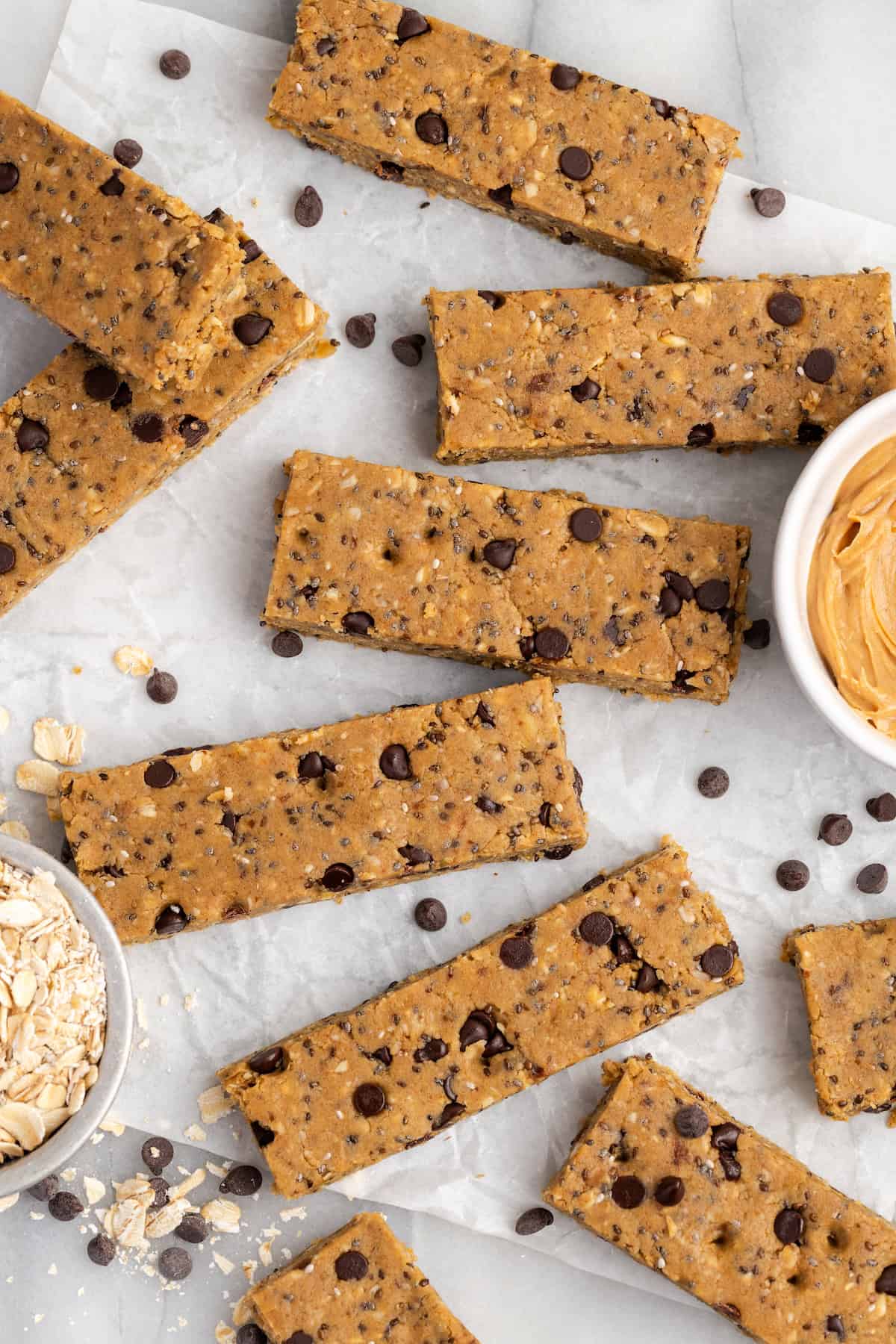
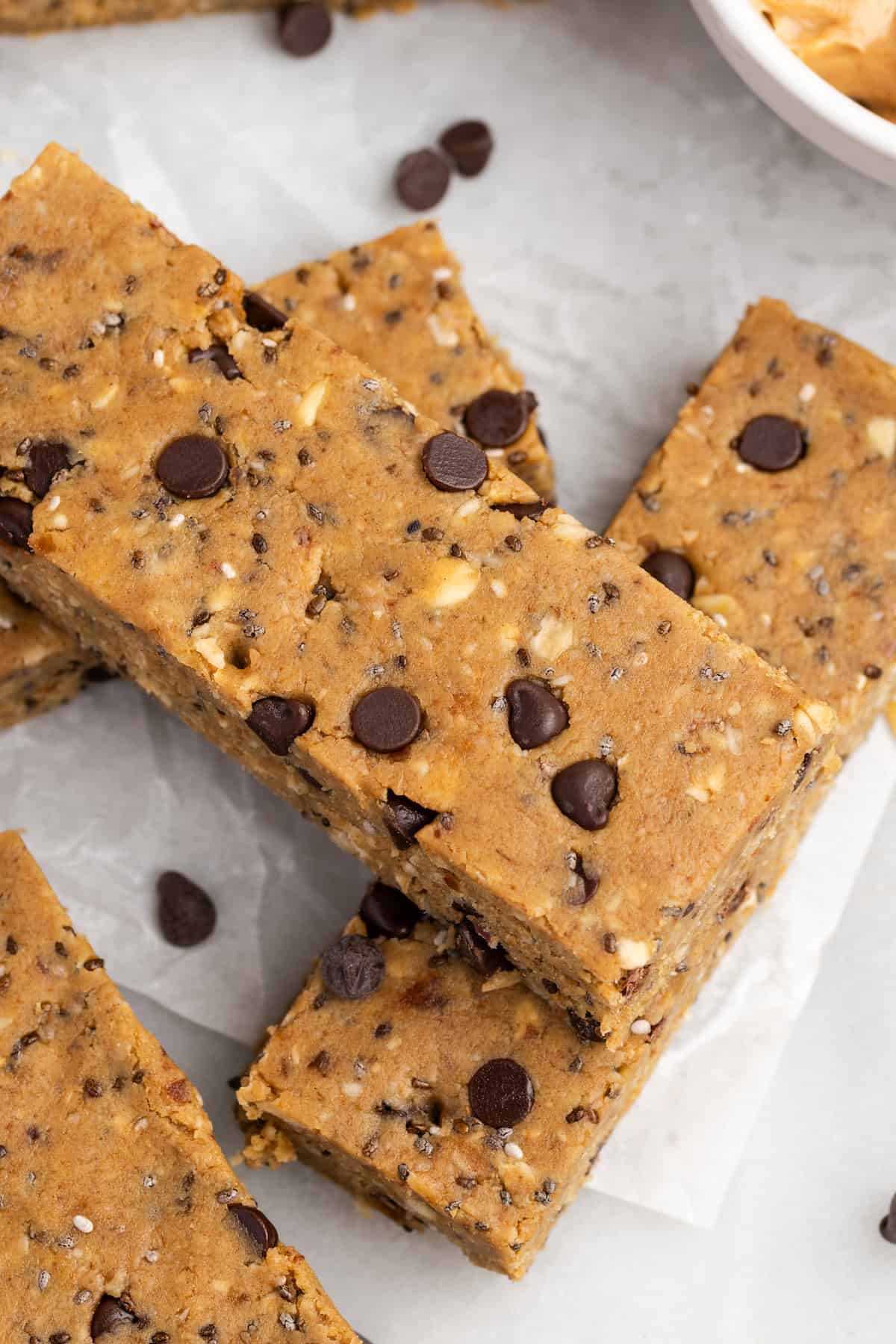
Homemade vegan protein bars take minutes to make, and they’re so much tastier than the ones you buy at the store! Customise them with your favourite mix-ins, and you’ve got a healthy snack stocked in the fridge whenever you need a boost.
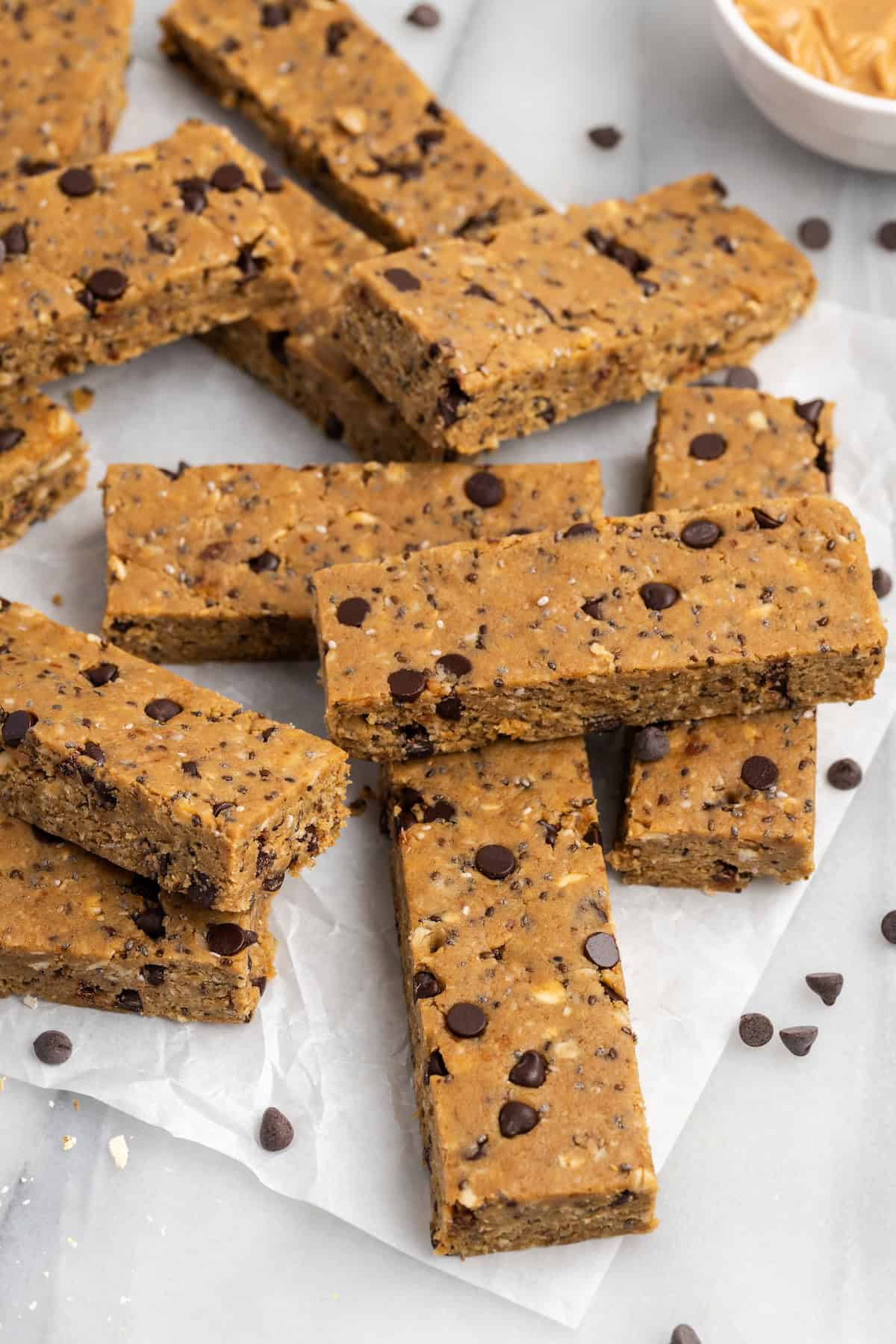
With so many vegan protein bars available at the grocery store and online these days, you may be wondering why you should bother making your own. Isn’t it a lot of work? Surprisingly, no! These homemade protein bars take minutes to make, and they’re much more budget-friendly than the store-bought version. They have become a staple in my home, and I know you will love them, too!
Why You’ll Love These Homemade Protein Bars
- Customizable . This recipe is a great base for creating your own unique protein bars. Add in your favourite mix-ins or switch up the flavour of the base by using different protein powders.
- No baking required . Since these are no-bake protein bars, you can make them easily without even turning on the oven! They just need an hour of chilling time in the fridge to be ready to eat.
- A healthier alternative . Many store-bought protein bars are loaded with artificial sugars, flavours, and all kinds of unpronounceable ingredients. By making your own protein bars at home, you’re in complete control of the ingredients.
Notes on Ingredients
Scroll down to the recipe card to find the ingredient quantities and recipe instructions.
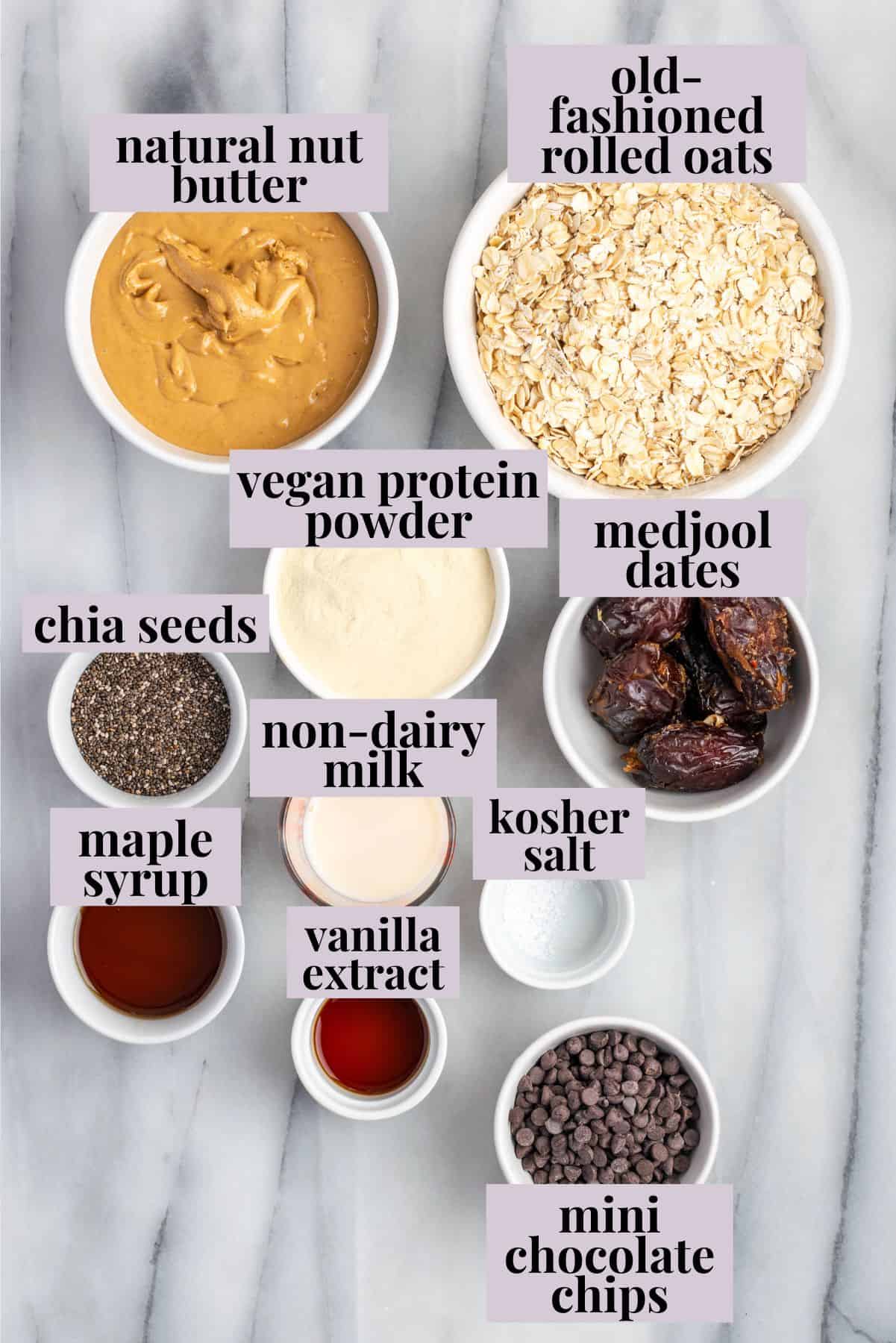
- Old-fashioned rolled oats
- Natural nut butter – You can use any type you like, or use one of my recipes for homemade peanut butter , almond butter , or pecan butter .
- Medjool dates – Remove the pits before starting the recipe.
- Vegan protein powder – Any type you like or have on hand, flavoured or plain.
- Non-dairy milk – Again, whatever you have in the fridge is fine. If you use a flavoured non-dairy milk, make sure it pairs well with the flavour of your protein powder.
- Chia seeds – These add protein, fiber, and healthy fats to your protein bars.
- Maple syrup – Date syrup is another option.
- Vanilla extract
- Kosher salt
- Mini chocolate chips – Using mini chips instead of regular chips helps your bars hold together better.
Process first ingredients.
How to Make Protein Bars
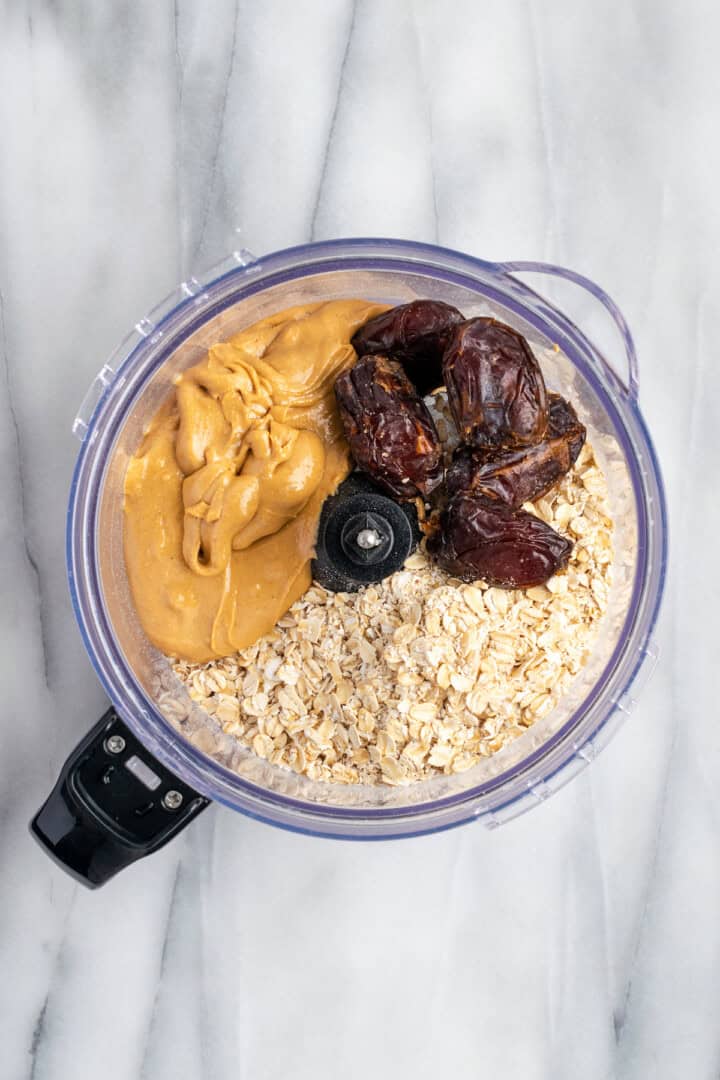
- Combine the first 3 ingredients . Process the oats, nut butter, and dates in a food processor until they form a rough dough.
- Finish the protein bar mixture . Add the protein powder, milk, chia seeds, maple syrup, vanilla, and salt. Pulse to combine.
- Add the chocolate . Scoop the mixture into a bowl. Add the chocolate chips and fold them in.
- Chill . Spread the mixture into a square pan lined with parchment paper. Press into an even layer, cover, and refrigerate for an hour before slicing and serving or storing.
Tips for Success
- Adjust the texture . If you prefer finer oats, you can process them alone until they form a powder before adding the nut butter and dates. This will result in a smoother texture.
- Choose your protein powder wisely . Different brands and types of vegan protein powders may affect the texture and taste of your bars. That being said, these bars are a good way to use protein powders that may not taste good alone because all the ingredients in the bars help to camouflage the taste of the powder.
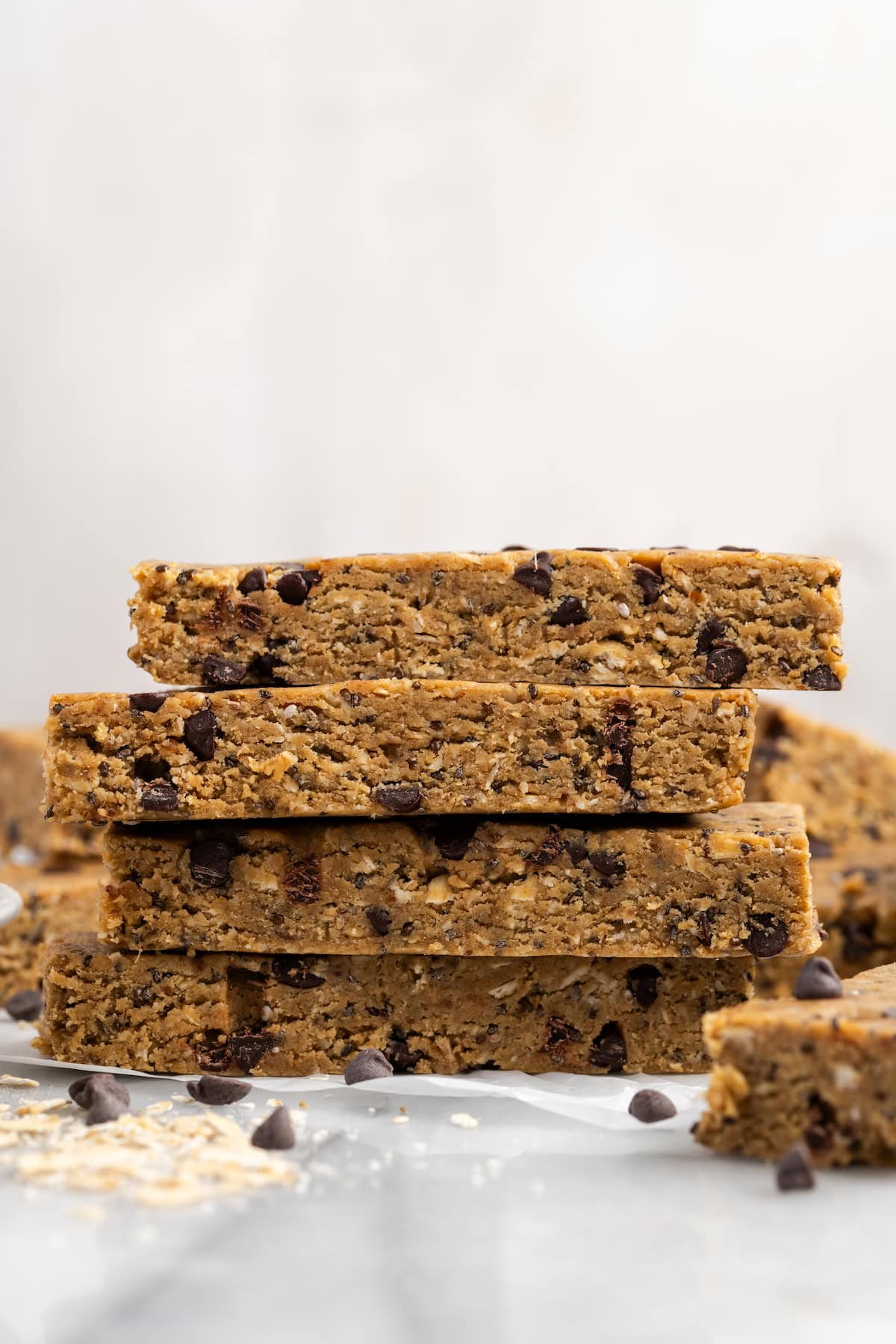
- Press the bars into the pan . The more you press, the chewier your bars will be and the more they’ll stick together when you cut them.
Variations
- Swap out the mini chocolate chips . You can swap out the chips for nuts or seeds to add extra protein. You can also replace them with dried fruit. Or, mix and match your add-ins–just be sure not to add more than 1/4 cup of add-ins all together.
- Leave out the vanilla extract . If you use vanilla protein powder, reduce or eliminate the vanilla extract.
- Add spices . Add cinnamon or pumpkin spice for cozy flavour.
- Give them a dip or drizzle . Pop the bars in the freezer so they’re very cold, then dip them in melted dark chocolate, or drizzle dark chocolate over the tops.
How to Store Homemade Protein Bars
Your homemade protein bars can be stored in an airtight container in the refrigerator for up to 2 weeks.
Can I Freeze This Recipe?
Freezing is a great option if you want to make a large batch of protein bars and keep them longer. Slice them and wrap each bar separately in parchment paper or plastic wrap to prevent them from sticking together. Place them in an airtight container or freezer bag and freeze for up to 3 months. When you’re ready to enjoy one, remove it from the freezer and let it thaw for a few minutes at room temperature.
More High Protein Recipes
- Protein Pancakes Recipe
- Vegan Fajita Bowls – 10 Min Prep, High Protein
- Protein Pudding
- High-Protein Overnight Oats
- Protein Cookie Dough
Ingredients
- 1 ½ cups old-fashioned rolled oats , 136 g
- 1 cup natural nut butter , any type, 240 g
- 5 medjool dates , pits removed
- ½ cup vegan protein powder , 50 g
- ¼ cup non-dairy milk , 58 g
- 3 tablespoons chia seeds , 33 g
- 3 tablespoons maple syrup , 36 g
- 1 teaspoon vanilla extract
- ¼ teaspoon kosher salt
- ¼ cup mini chocolate chips , 55 g
Instructions
- Line an 8×8 pan with parchment paper and set aside.
- Combine the oats, nut butter and dates in a food processor and process until clumping together almost like a dough.
- Add the protein powder, milk, chia seeds, maple syrup, vanilla and salt. Continue to pulse until everything is mixed together. It will be processed enough when you can squeeze a small bit of the mixture and it stays clumped together.
- Transfer the mixture to a bowl and add the mini chocolate chips. Mix together by hand.
- Spread the mixture into the prepared pan in an even layer. Use a flat bottomed measuring cup to press it into an even layer.
- Cover and refrigerate for at least one hour before slicing into 12 equal bars.
- Store leftover protein bars in the refrigerator in an airtight container until ready to consume.
Notes
- If you prefer finer oats, you can process the oats alone until they are powder before adding the nut butter and dates.
- Feel free to add nuts or seeds to customize the flavor of these bars.
- If you use vanilla protein powder, reduce or eliminate the vanilla extract.
- To store : Your homemade protein bars can be stored in an airtight container in the refrigerator for up to 2 weeks.
- To freeze : Wrap each bar separately in parchment paper or plastic wrap to prevent them from sticking together. Place them in an airtight container or freezer bag and freeze for up to 3 months. When you’re ready to enjoy one, remove it from the freezer and let it thaw for a few minutes at room temperature.
