This vegan kaju katli is rich, creamy, and nutty. Swapping the ghee for coconut oil makes this cashew fudge recipe dairy-free!
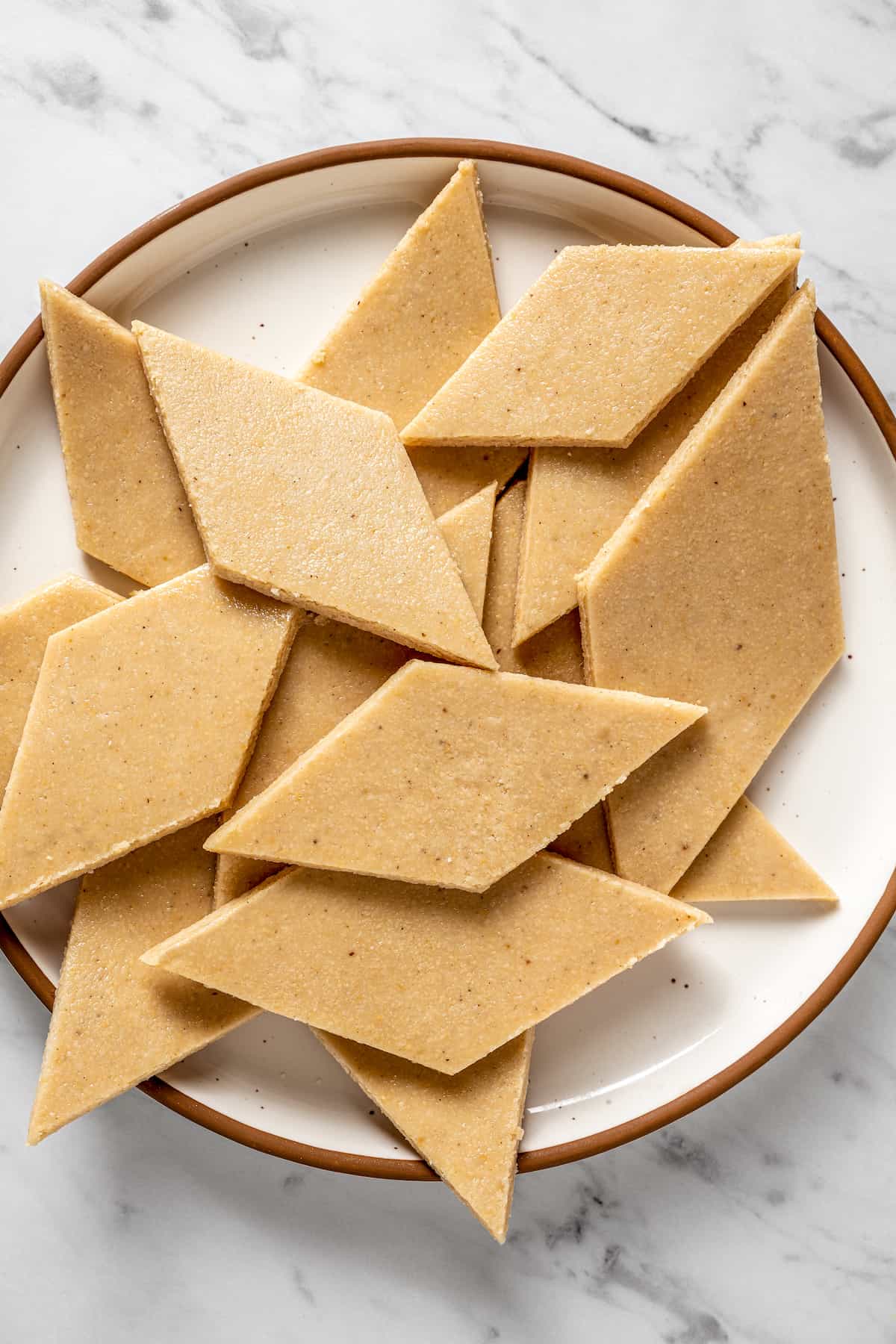
I love traveling, but when I can’t travel, sometimes trying sweets and treats from around the world is a good substitute. This past year I’ve made Tahô and Haupia , and now we’re traveling (virtually!) to India to enjoy kaju katli!
What Is Kaju Katli?
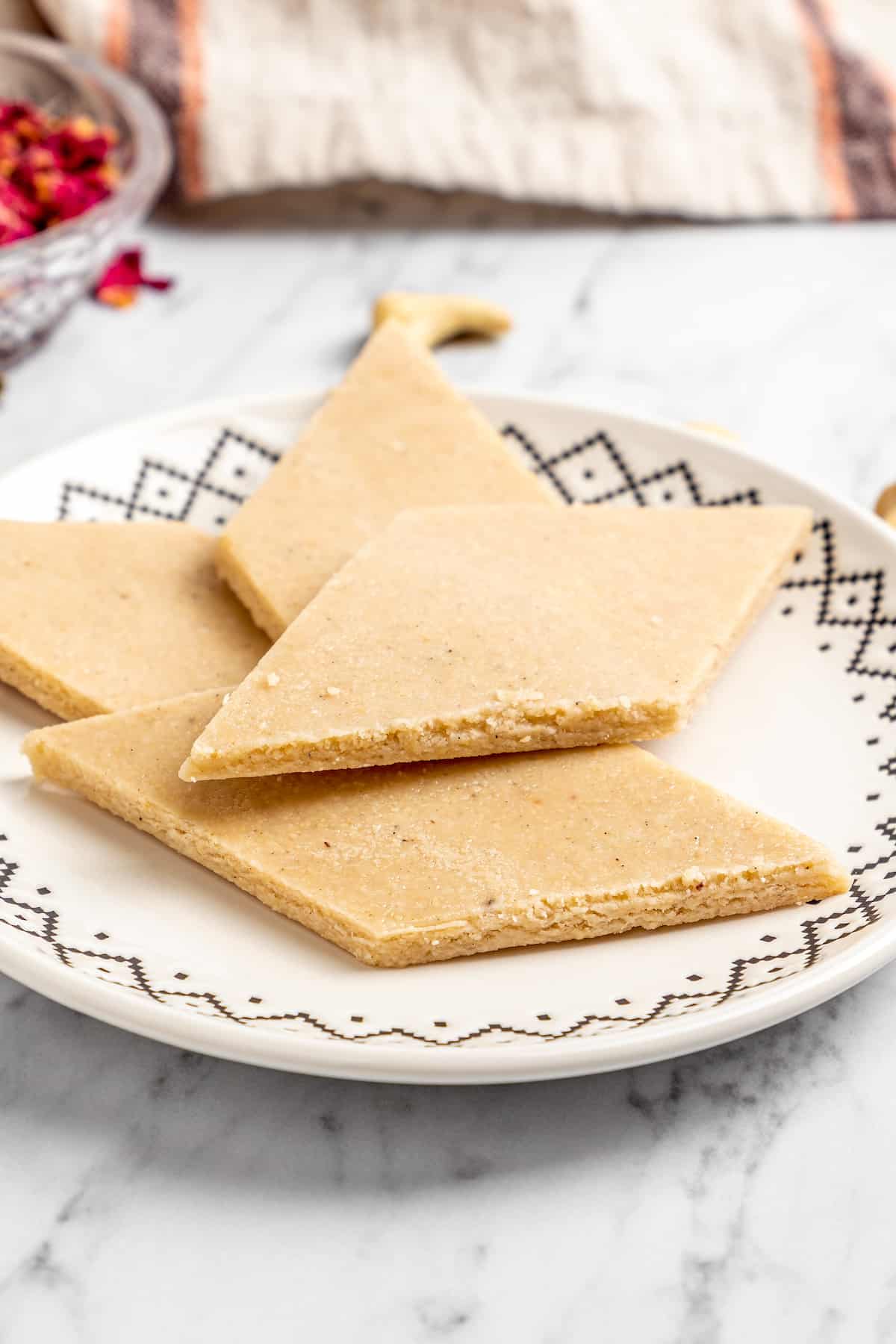
Kaju katli is a popular Indian sweet made with ground cashews, sugar, and ghee. (My vegan version substitutes the ghee for coconut oil.) The name itself translates to “cashew slice” in Hindi, and it’s commonly cut into diamond-shaped pieces. It has an absolutely irresistible melt-in-your-mouth texture, a little bit like chocolate fudge—which is probably why it’s often referred to as cashew fudge.
Sometimes also known as kaju barfi, kaju katli dates back hundreds of years and is believed to have been brought to India by Persians, who first introduced the sweet to Mughal courts. It was traditionally made on special occasions like Diwali, weddings, and other festivals. Today, kaju katli has become a popular treat throughout India and the Indian diaspora.
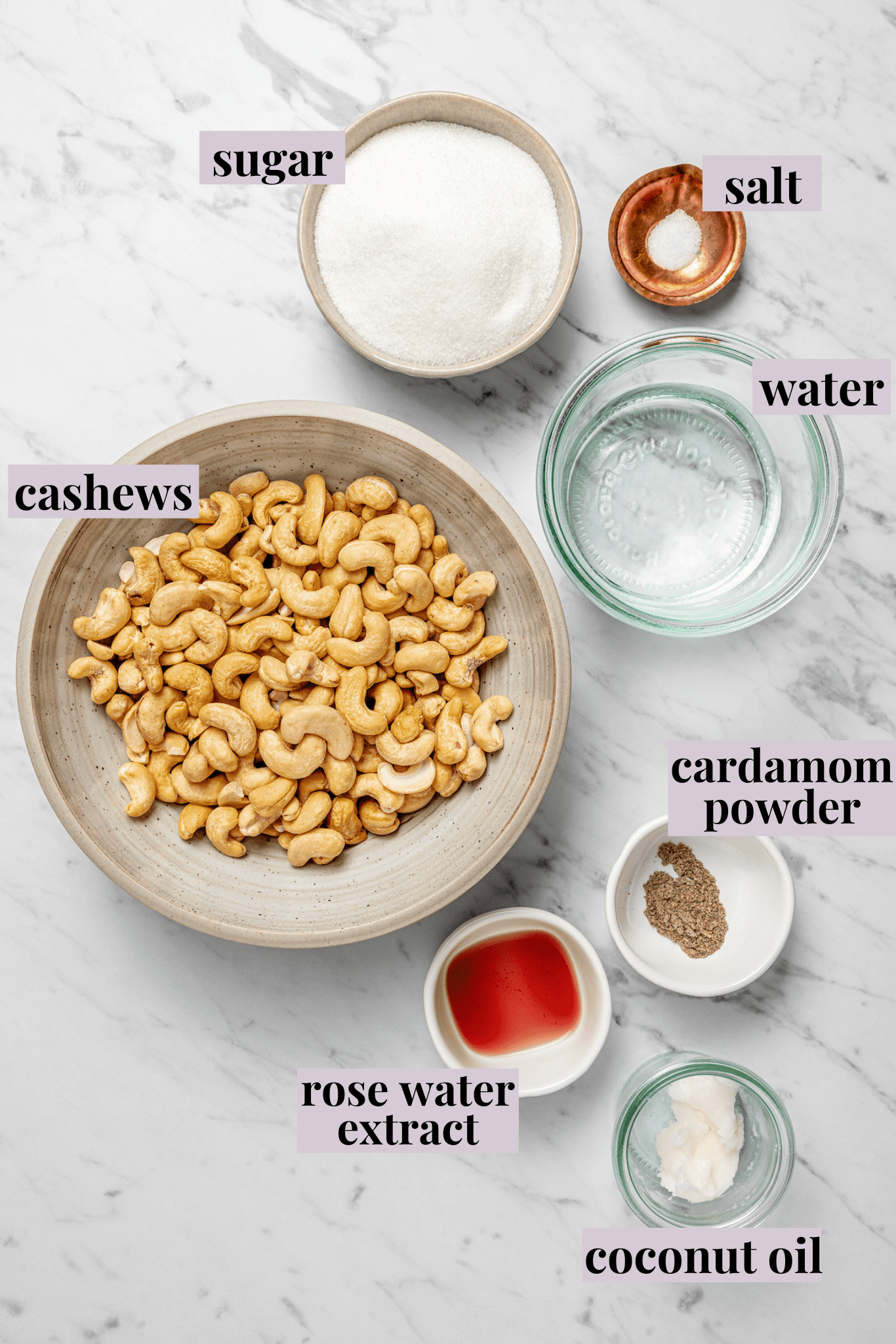
Notes on Ingredients
Scroll down to the recipe card to find the ingredient quantities and recipe instructions.
- Whole raw cashews – Buy these in the bulk section of the grocery store for the best price.
- Granulated sugar – Be sure to use vegan sugar; some granulated sugar is refined with bone char.
- Water
- Coconut oil – This replaces the ghee. It’s important to use coconut oil and not another oil, as it is solid at room temperature.
- Salt
Optional Flavour Additives:
- Rose water extract
- Cardamom powder
What Is Rose Water Extract?
Rose water extract is a fragrant liquid made by steeping rose petals in water. It has been used in Indian cuisine for centuries and adds a delicate floral aroma and flavour to desserts. If you can’t find it locally, feel free to omit it or substitute with almond or orange extract.

How to Make Vegan Kaju Katli
Making Indian cashew fudge is easier than you think! Here’s what you’ll need to do.
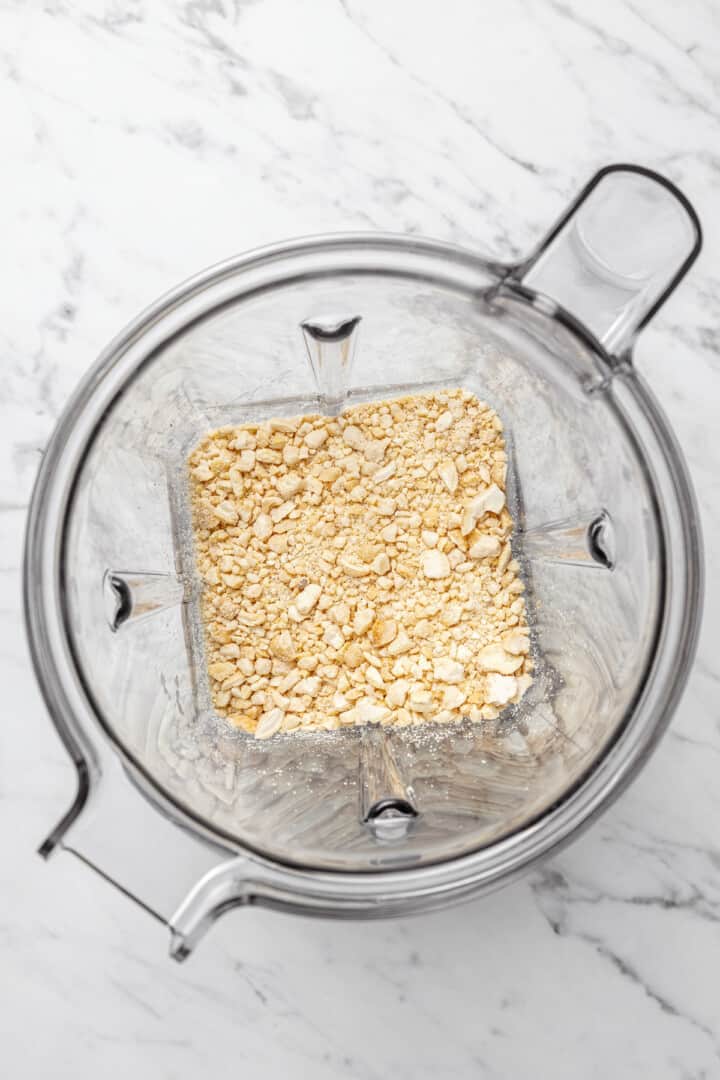
Process the cashews. Place the cashews in a blender and blend them into a powder.
Strain the cashews. Set a fine mesh strainer over a bowl and pour the cashew powder into it. Shake and scrape the sides of the strainer to separate the larger pieces from the fine powder.
Repeat. Return the large pieces back to the blender, then blend and strain again. Continue to repeat until all of the cashews are blended into a fine powder.
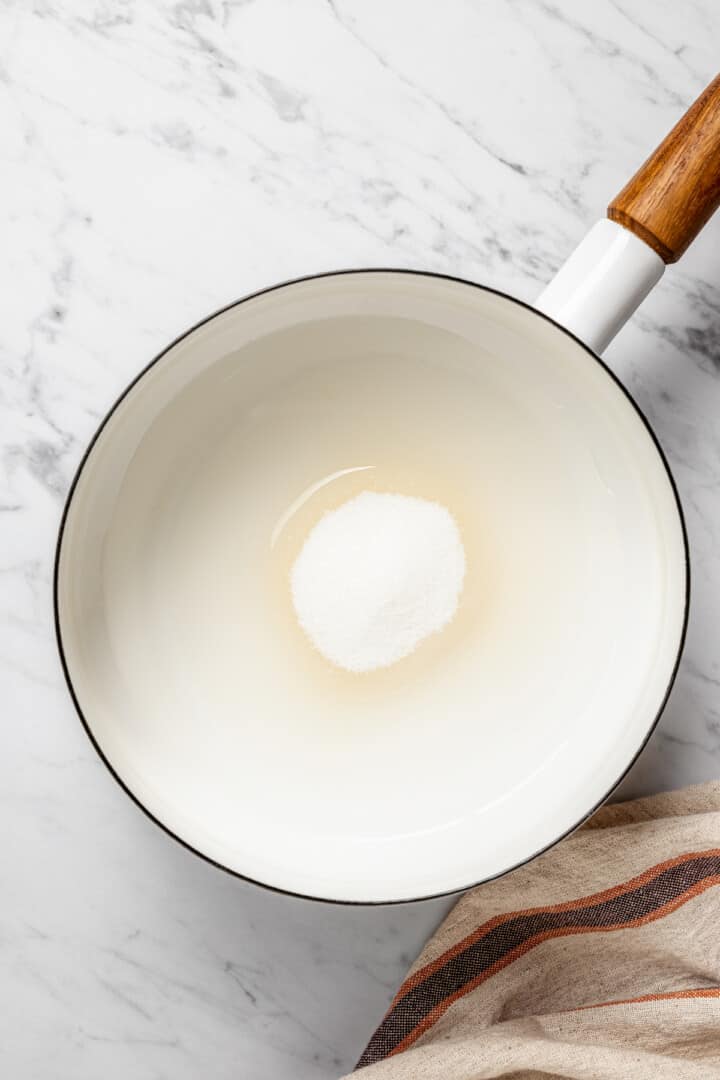
Heat the water and sugar. In a medium saucepan, stir together the water and sugar until the sugar dissolves. Bring the mixture to a boil and keep boiling, whisking often, for approximately 4 minutes.
Add the remaining ingredients. Remove the pan from the heat, then stir in the cashew powder until the mixture thickens. Add the coconut oil, along with any flavour additives you’re using, and stir to combine; the mixture should resemble a firm cookie dough.
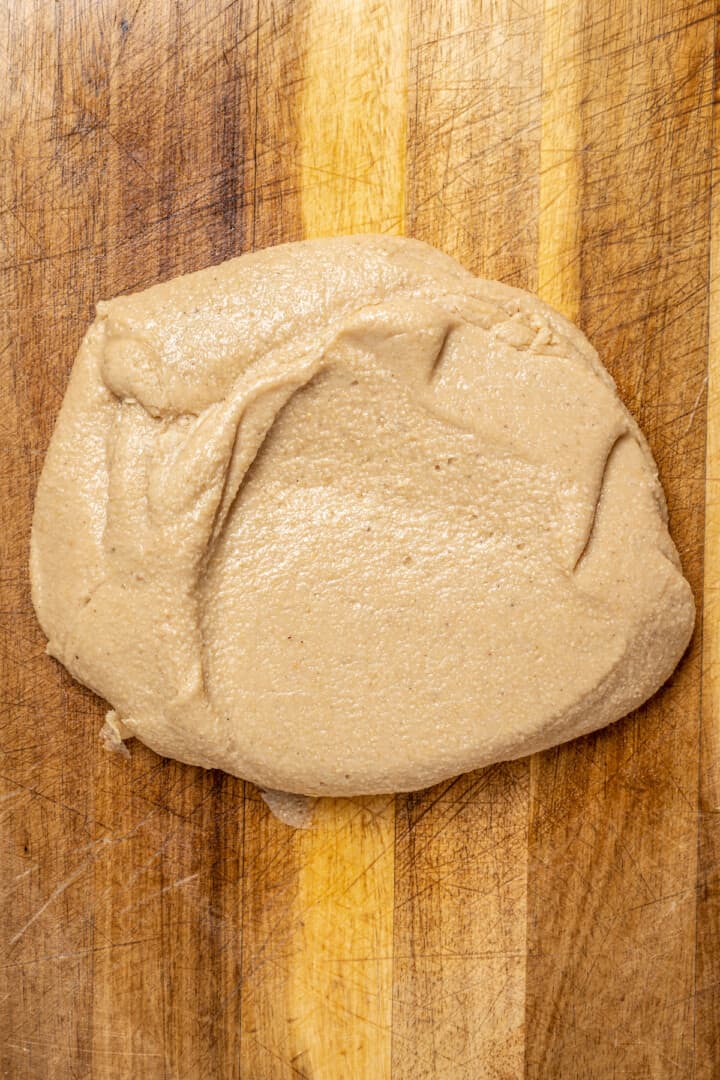
Roll out the cashew fudge. Generously grease a cutting board with coconut oil and turn out the kaju katli onto it. Place a piece of parchment paper over the dough and use a rolling pin to roll it out until it’s about 1/4-inch thick.
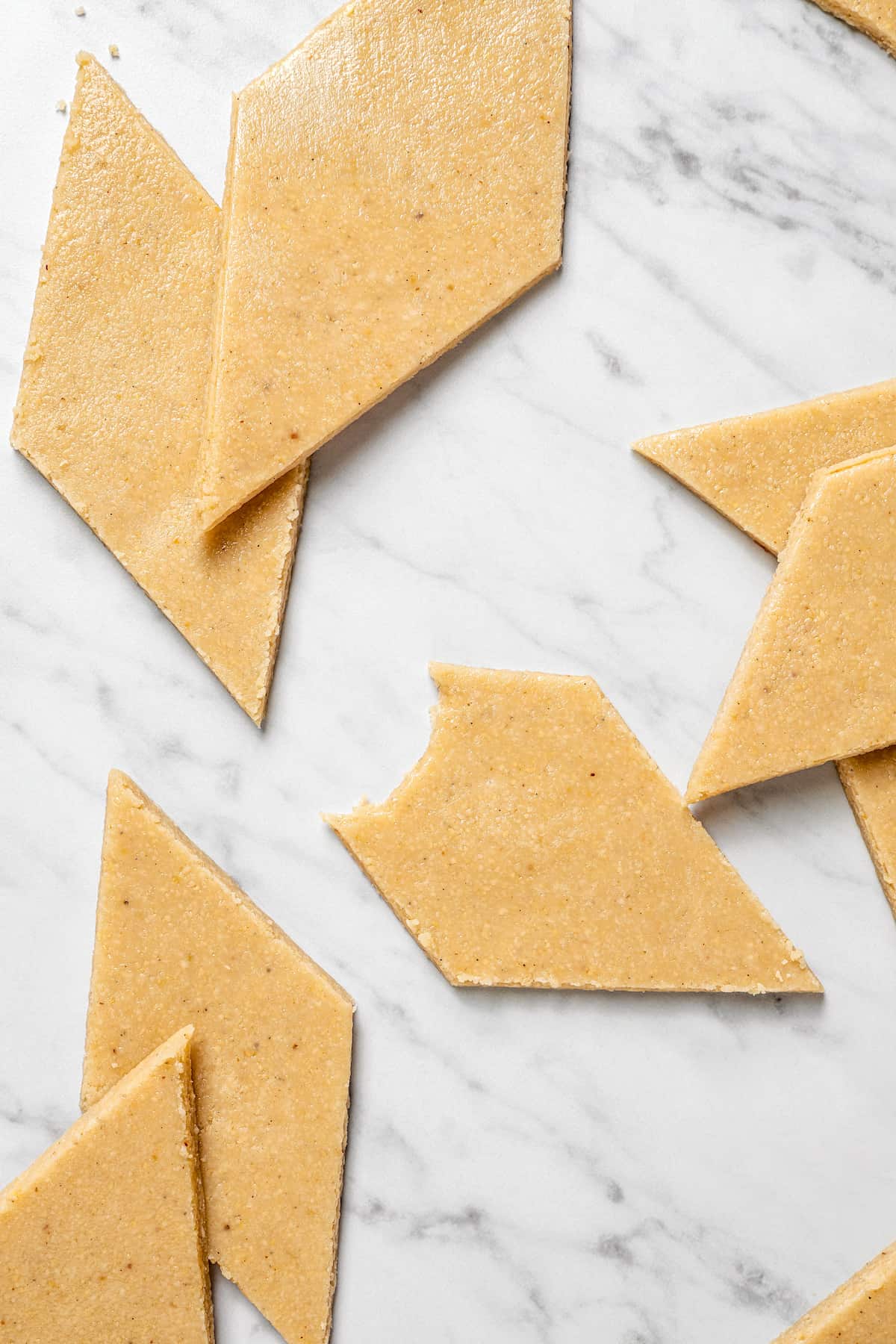
Cool and cut. Let the cashew fudge cool slightly, but not completely, then cut it into diamond shapes with a large, sharp knife.
Tips for Success
These simple tips will help you make perfect kaju katli:
- Don’t over-blend. If you blend too much, the oil from the cashews will start to release and create a wet, sandy texture.
- Be careful when boiling the water and sugar. If you overcook it, the fudge will be too hard. Be sure to cook just until it reaches a syrup stage.
- Adjust as needed. The finished kaju katli mixture should not be dry and crumbly, nor should it be wet and sticky. If the dough is crumbly, add more coconut oil a teaspoon at a time until the texture improves. If the dough is too sticky and doesn’t hold its shape, place the pan back on the stovetop over low heat and cook, stirring often, for 1 to 2 minutes, until the dough thickens.
Variations
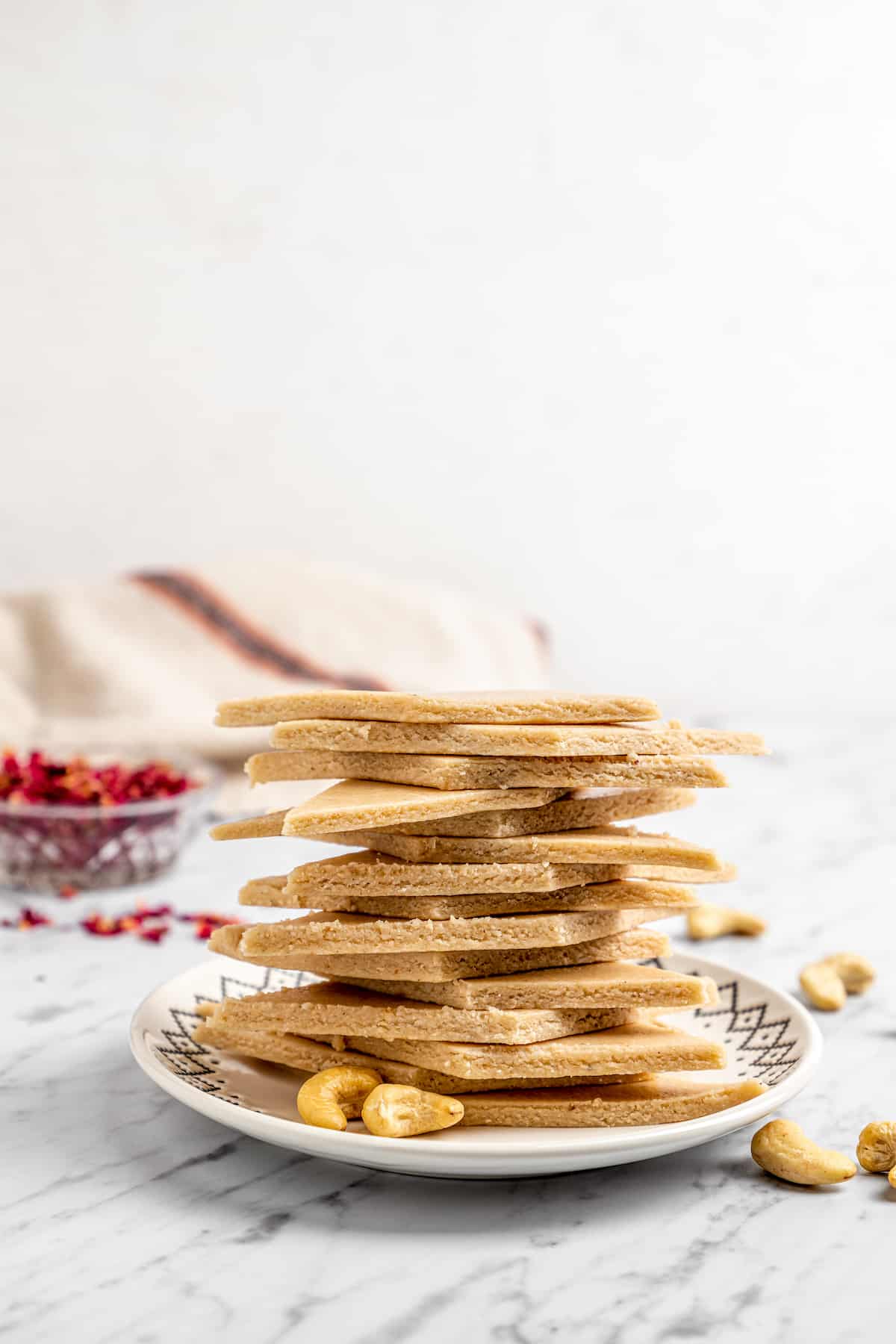
While the fudge is still warm and not quite set, you can gently press cashews, pistachios, saffron threads and/or dried rose petals into the top for some extra flavour and a decorative touch. Edible silver leaf, or varak, is another popular embellishment for kaju katli.
How to Store
Store kaju katli in an airtight container in the refrigerator, where it will stay fresh for up to 1 week.
Can This Recipe Be Frozen?
Yes, you can freeze kaju katli for up to 3 months. Allow the fudge to cool completely before freezing it in an airtight container or zip-top bag. Thaw the fudge in the refrigerator before serving.
More Vegan Sweets and Treats
- Air Fryer Chocolate Chip Cookies
- Vegan Mug Brownie
- Vegan Apple Pie Recipe
- Chocolate Avocado Ice Cream
Ingredients
- 2 cups whole raw cashews , 280 grams
- ¾ cup granulated sugar , 150 grams
- ½ cup water , 185 grams
- 1 tablespoon coconut oil , 12 grams
- ⅛ teaspoon salt , 285 milligrams
Optional flavor additives:
- 1 teaspoon rose water extract , 4 grams
- ¼ teaspoon cardamom powder , 0.5 grams
Instructions
- Add the cashews to a blender and blend into a powder. Do not blend too much or the oils from the cashews will start to release and form a type of wet sandy texture.
- Place a fine mesh strainer over a bowl and dump the cashew powder into the strainer. Shake and scrape the sides of the strainer to strain all of the fine cashew powder into the bowl. Add any large cashew pieces that won’t go through the strainer back to the blender and pulse into a powder. Return the contents of the blender to the strainer and shake again to release the cashew powder into the bowl. Repeat this process until all cashews are blended into a fine powder.
- In a medium saucepan, add the water and sugar and stir to dissolve. Bring the mixture to a boil and keep boiling, whisking often, for approximately 4 minutes.
- Remove the pan from the heat. Add the cashew powder and stir to combine. The mixture will quickly start to thicken.
- Add the coconut oil, and any flavor additives if preferred and stir to combine.
- The cashew fudge is done when the dough mixture resembles a firm cookie dough. It should not be dry and crumbly at all and it also shouldn’t be too wet and sticky. You should be able to scoop it with a spoon and have it hold its shape without breaking into crumbly pieces. If the dough is crumbly, add more coconut oil, 1 teaspoon at a time, and mix until combined and the dough is the right texture. If the dough is too sticky and doesn’t hold its shape, add the pan back to the stovetop over low heat and cook, stirring often, for about 1 – 2 minutes until the dough is slightly thickened.
- Generously grease a cutting board with coconut oil and place the dough on it. Place a piece of parchment paper over the dough and use a rolling pin to roll it out until it is 1⁄4 inch in thickness.
- Allow the cashew fudge to cool slightly, but not completely, before cutting it angled into diamond shapes. I recommend using a large knife for easier cutting. Store the cooled fudge in an airtight container in the fridge for up to 1 week.

Vegan Kaju Katli (Cashew Fudge)
Ingredients
- 2 cups whole raw cashews 280 grams
- ¾ cup granulated sugar 150 grams
- ½ cup water 185 grams
- 1 tablespoon coconut oil 12 grams
- ⅛ teaspoon salt 285 milligrams
Optional flavor additives:
- 1 teaspoon rose water extract 4 grams
- ¼ teaspoon cardamom powder 0.5 grams
Instructions
- Add the cashews to a blender and blend into a powder. Do not blend too much or the oils from the cashews will start to release and form a type of wet sandy texture.
- Place a fine mesh strainer over a bowl and dump the cashew powder into the strainer. Shake and scrape the sides of the strainer to strain all of the fine cashew powder into the bowl. Add any large cashew pieces that won’t go through the strainer back to the blender and pulse into a powder. Return the contents of the blender to the strainer and shake again to release the cashew powder into the bowl. Repeat this process until all cashews are blended into a fine powder.
- In a medium saucepan, add the water and sugar and stir to dissolve. Bring the mixture to a boil and keep boiling, whisking often, for approximately 4 minutes.
- Remove the pan from the heat. Add the cashew powder and stir to combine. The mixture will quickly start to thicken.
- Add the coconut oil, and any flavor additives if preferred and stir to combine.
- The cashew fudge is done when the dough mixture resembles a firm cookie dough. It should not be dry and crumbly at all and it also shouldn’t be too wet and sticky. You should be able to scoop it with a spoon and have it hold its shape without breaking into crumbly pieces. If the dough is crumbly, add more coconut oil, 1 teaspoon at a time, and mix until combined and the dough is the right texture. If the dough is too sticky and doesn’t hold its shape, add the pan back to the stovetop over low heat and cook, stirring often, for about 1 - 2 minutes until the dough is slightly thickened.
- Generously grease a cutting board with coconut oil and place the dough on it. Place a piece of parchment paper over the dough and use a rolling pin to roll it out until it is 1⁄4 inch in thickness.
- Allow the cashew fudge to cool slightly, but not completely, before cutting it angled into diamond shapes. I recommend using a large knife for easier cutting. Store the cooled fudge in an airtight container in the fridge for up to 1 week.
Nutrition
Vegan Kaju Katli (Cashew Fudge) https://jessicainthekitchen.com/kaju-katli-cashew-fudge/ May 15, 2023
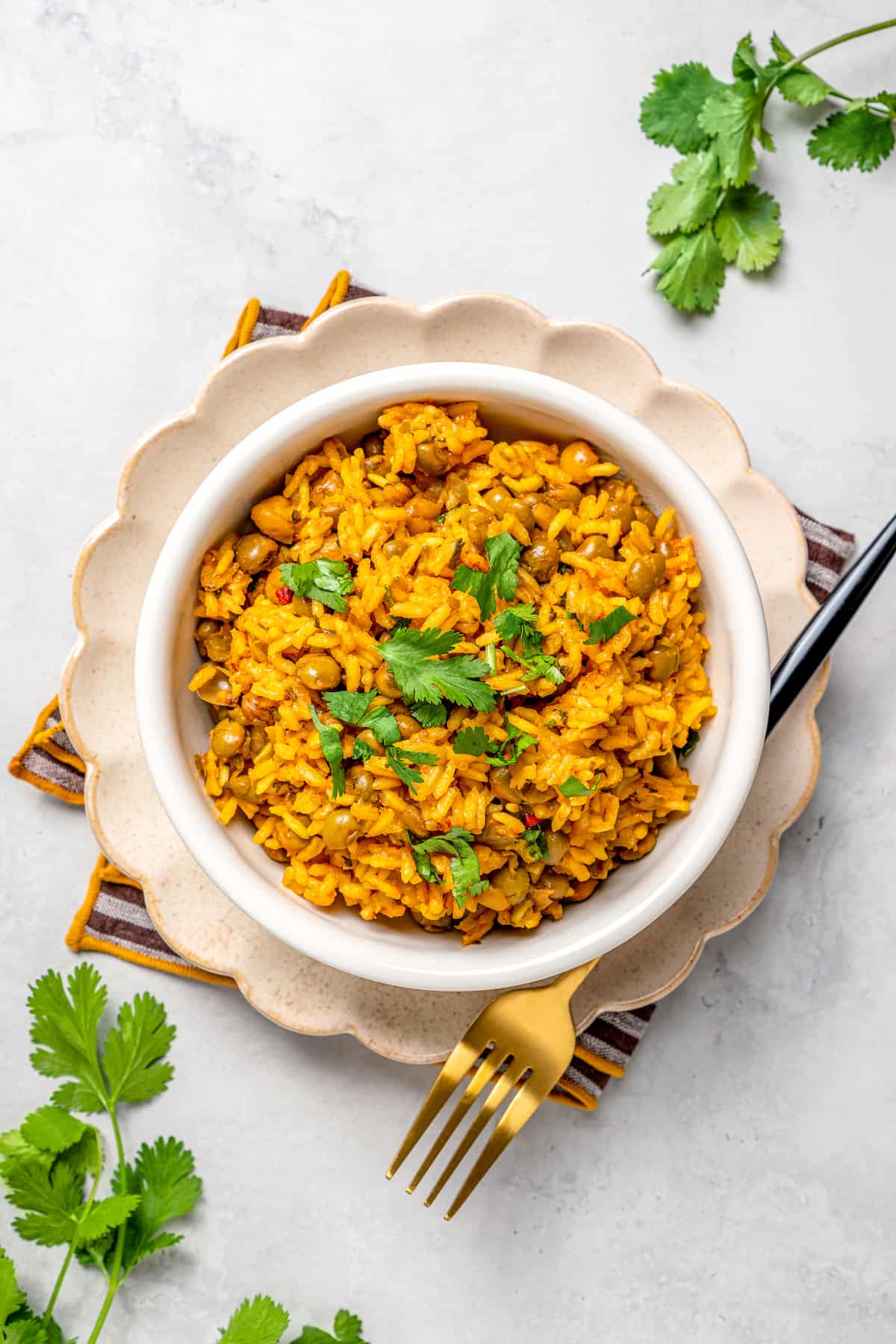
This recipe for vegan Puerto Rican rice and beans works as a side dish or a filling meal on its own! Each bite is full of flavour thanks to a blend of authentic Caribbean spices.
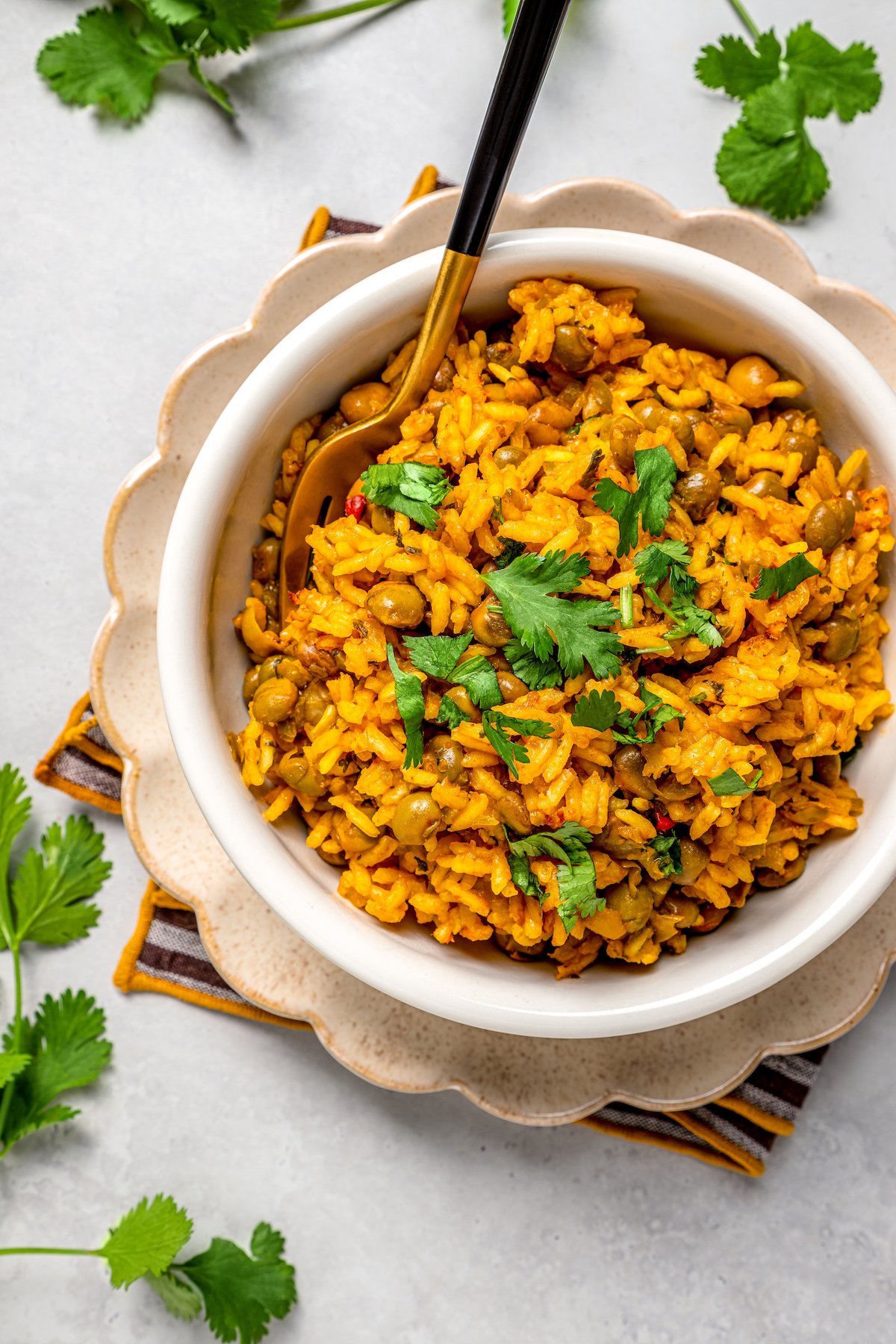
Rice and beans is a common dish found all over the world. There’s congri from Cuba, Jamaican rice and peas , and Indian food often pairs beans and lentils with rice too, like in kitchari .
Puerto Rican rice and beans adds some Caribbean flair to the classic rice and beans formula. The rice is usually cooked with some kind of sofrito, which is a flavourful mix of spices, herbs, peppers, onions, garlic, and tomatoes. (You may recognize sofrito from my Chipotle sofritas recipe too!) Then, instead of pinto or black beans, gandules (green pigeon peas) are added for protein.
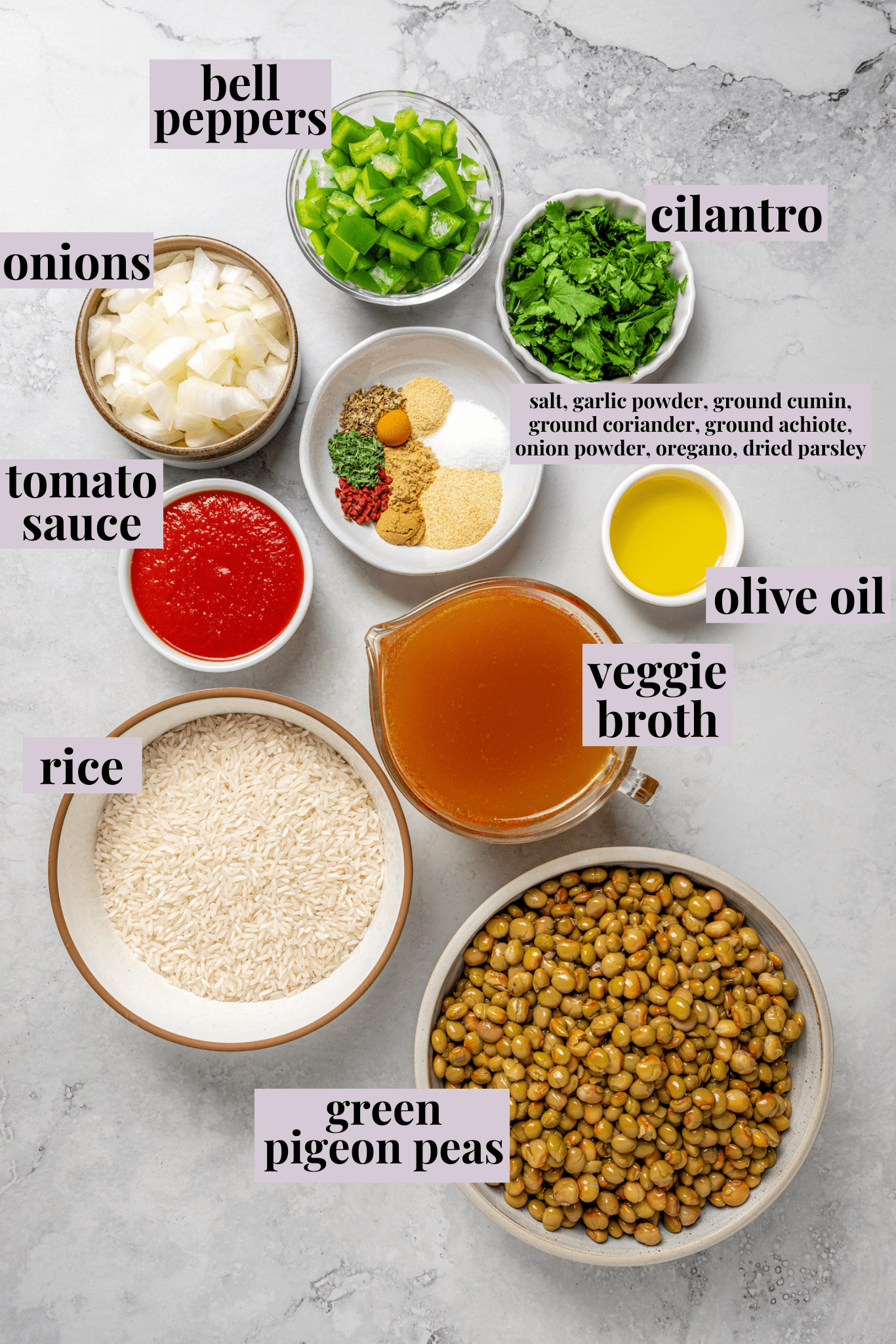
Notes on Ingredients
Scroll down to the recipe card to find the ingredient quantities and recipe instructions.
- Olive oil
- Yellow onion – White onion works too.
- Green bell pepper
- Cilantro – In Puerto Rico, culantro is more commonly used—and nope, that’s not a typo! Culantro has a similar flavour to cilantro, but much stronger. If you happen to find culantro locally, you can use that in this Puerto Rican rice and beans for more authenticity, but be sure to use a little bit less to account for the more assertive flavour.
- Tomato sauce
- Salt
- Garlic powder
- Ground cumin
- Ground coriander
- Ground achiote – Also known as annatto seeds. If you can’t find achiote, you can substitute all the dry seasonings here for some Sazon Culantro y Achiote.
- Onion powder
- Oregano
- Dried parsley
- Turmeric
- Green pigeon peas – Also known as gandules.
- Vegetable broth or water – I like using my homemade vegetable broth for extra flavour.
- Long-grain white rice – Long-grain rice cooks up fluffier and drier than short-grain rice.
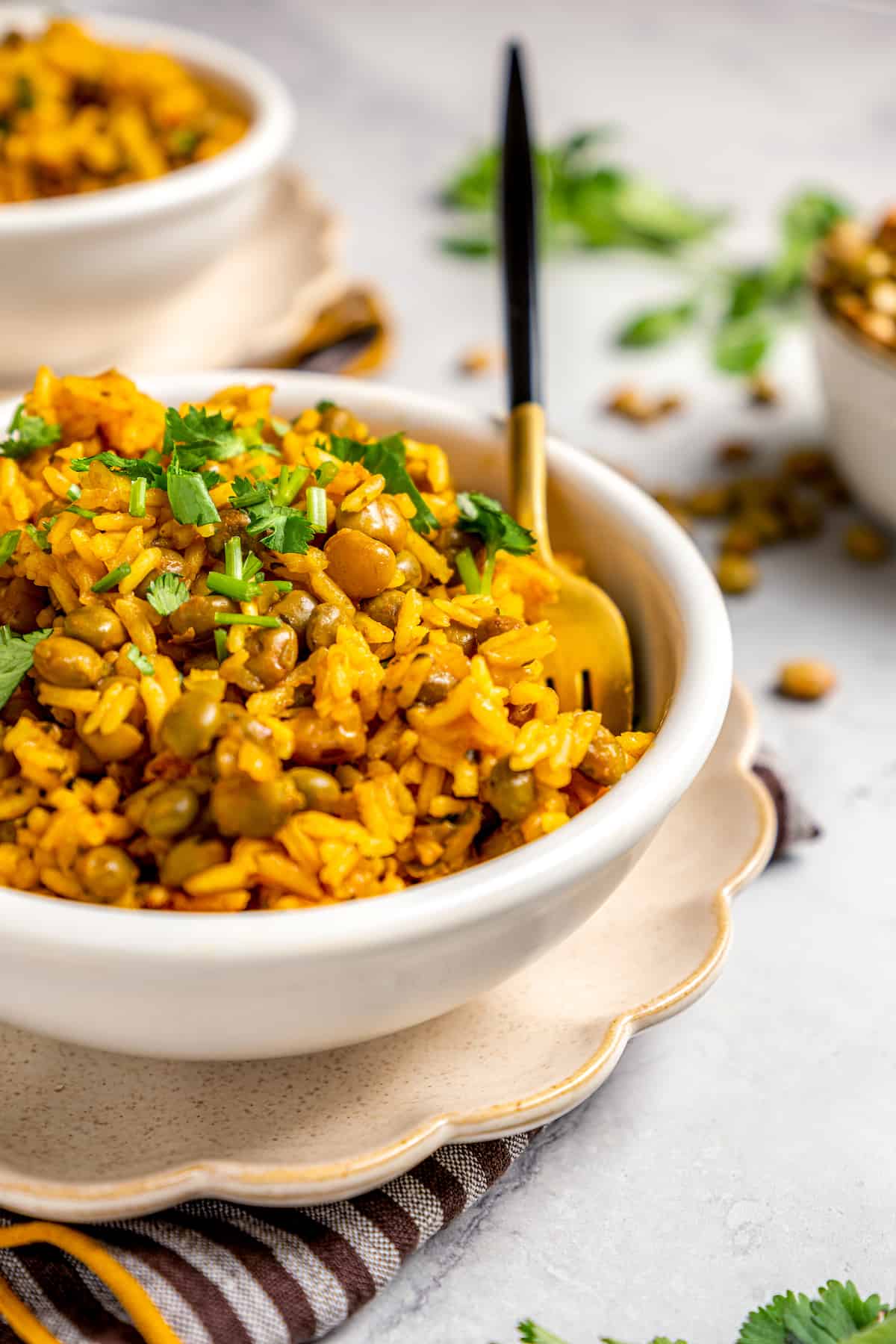
Are Pigeon Peas the Same as Green Peas?
No, pigeon peas are not the same as green peas. Pigeon peas are larger, dark green legumes with a nutty flavor and creamy texture. They are common in Caribbean cuisine and you can find them canned or dried at most grocery stores. In this recipe, we use the canned version.
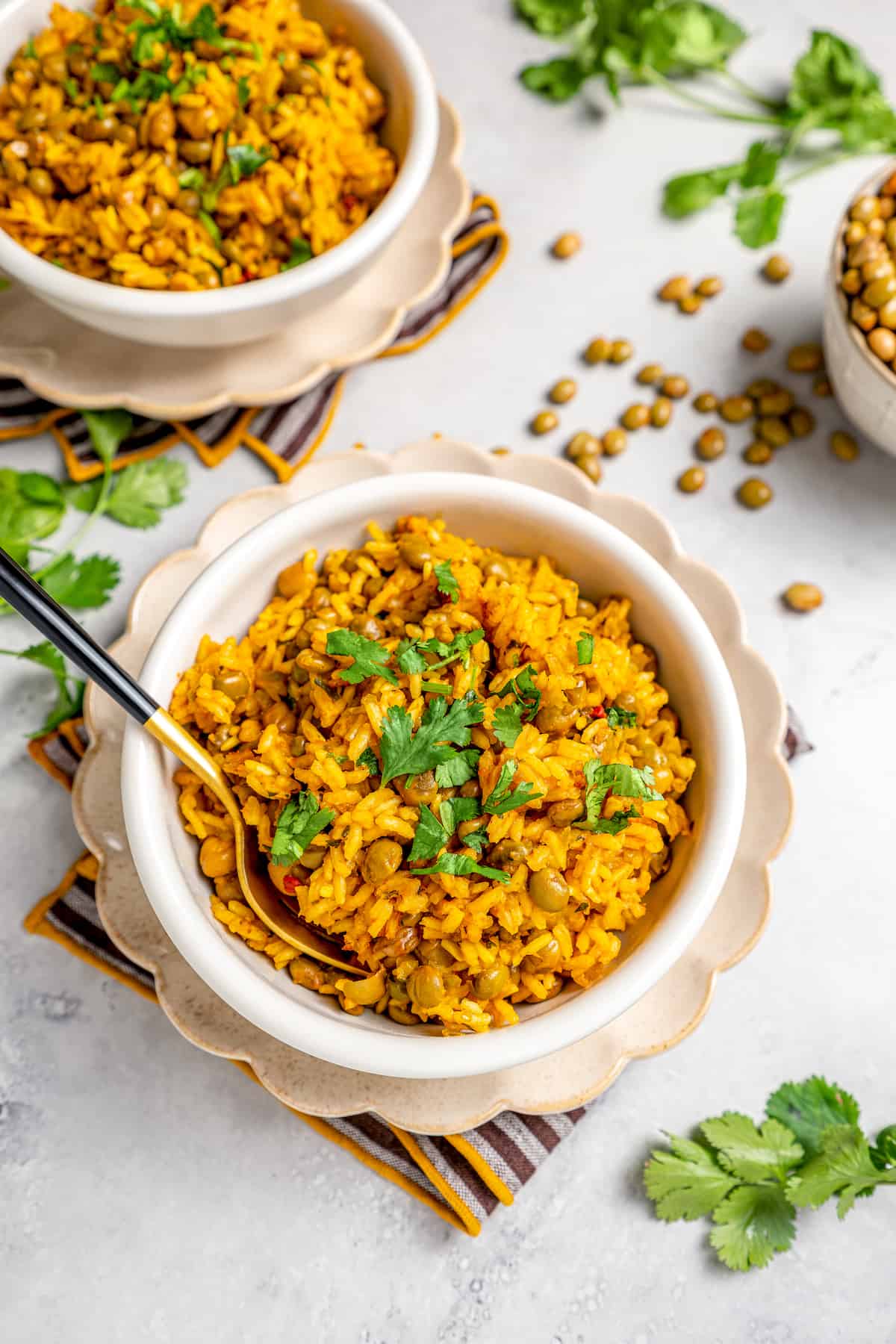
How to Make Vegan Puerto Rican Rice and Beans
Once you’ve gathered all your ingredients, making vegan Puerto Rican rice and beans is easy!
Warm the oil. Set a large pot over medium heat and add the oil.
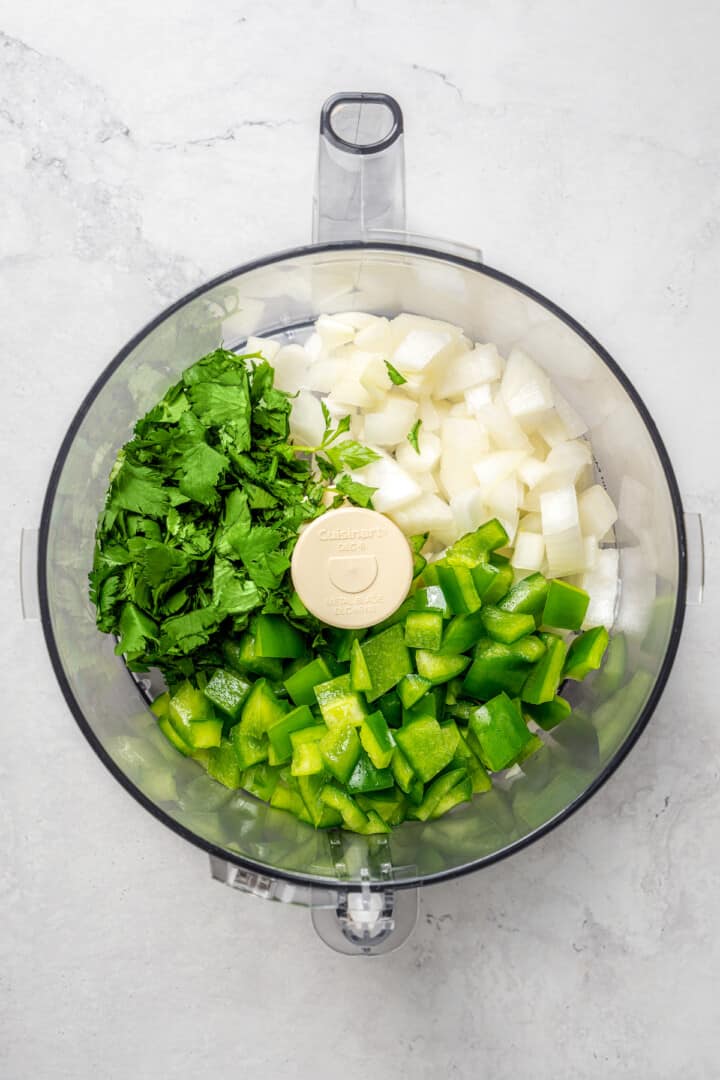
Make the sofrito mixture. Pulse the onion, bell pepper, and cilantro in a food processor until it resembles a chunky salsa.
Cook the sofrito. Add the sofrito mixture to the hot oil and cook for about 6 minutes, stirring often.
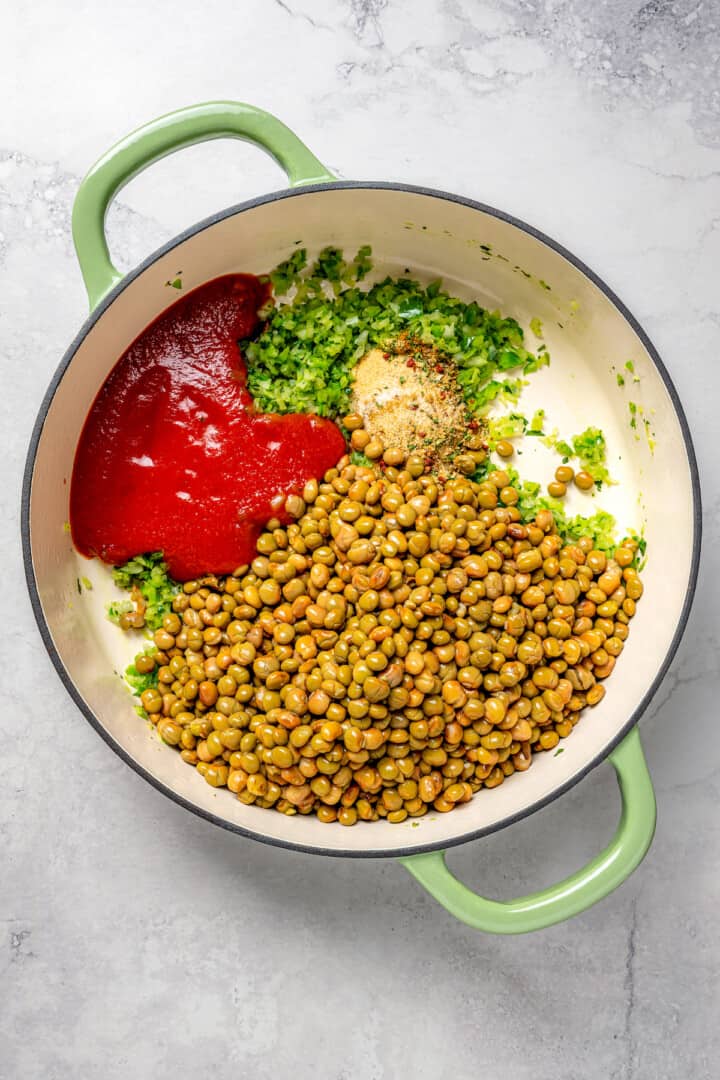
Add the spices, peas, and liquid. To the sofrito mixture, add all of the remaining ingredients except the rice and bring to a boil.
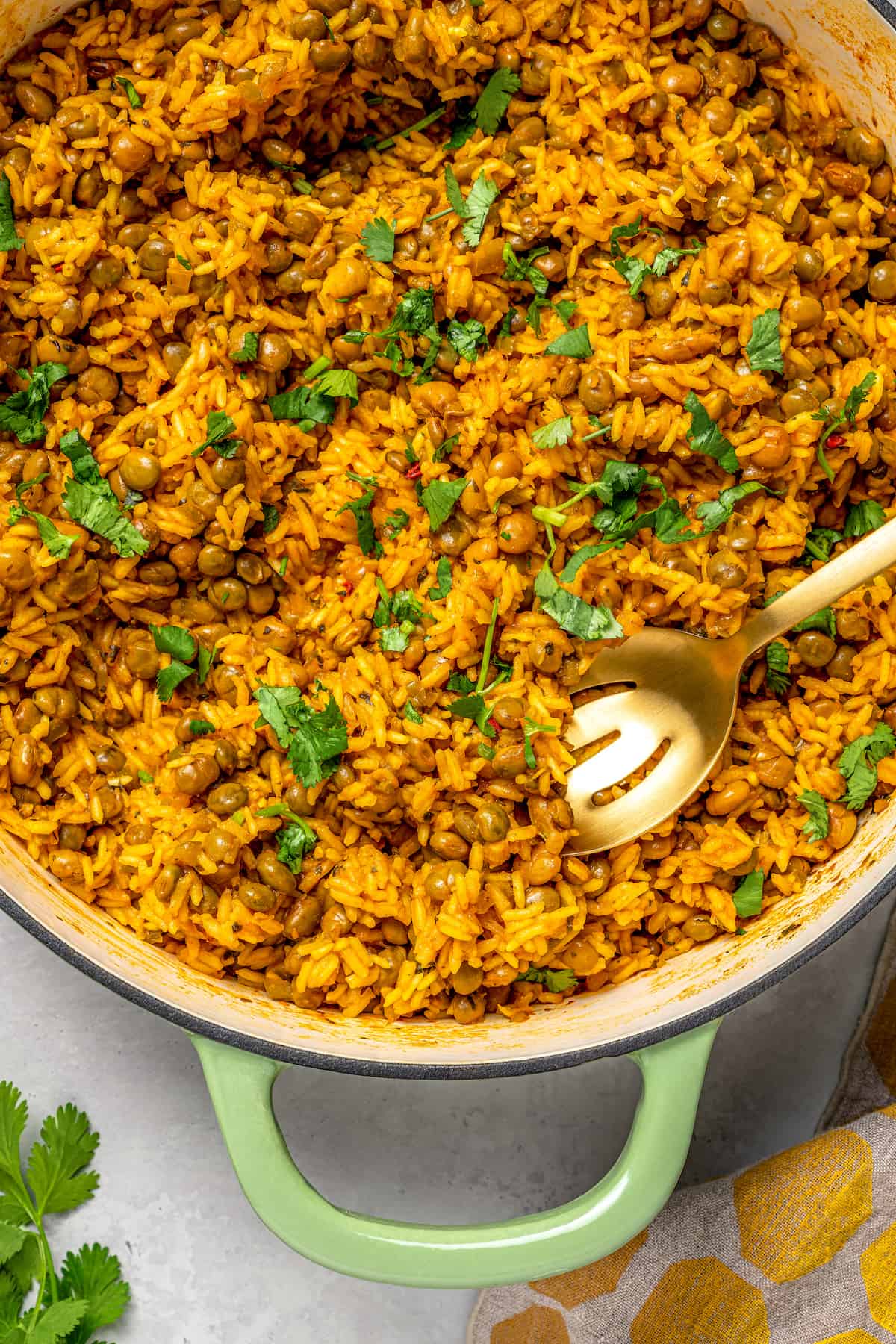
Add the rice. Once the liquid is boiling, stir in the rice. Cover and reduce the heat to low, then cook for 20 to 22 minutes, or until the rice is tender and the liquid is mostly absorbed.
Finish. Season to taste, then serve.
Tips for Success
Making vegan Puerto Rican rice and beans is easy, but these tips will help you make sure it turns out perfect !
- Make sure your spices are fresh. When you open the jars, they should smell fragrant. If, instead, they have no aroma or a stale smell, they’re due for replacement. This is a dish that’s all about the seasoning!
- Use long grain white rice. Short grain rice will not work in this recipe, as it cooks up soft and sticky.
- Keep an eye on the rice. Stir it occasionally to keep it from sticking to the bottom of the pan, and add more liquid if needed.
Variations
If you don’t find (or don’t like) pigeon peas, you can substitute kidney beans, pinto beans, or black beans. Basmati and jasmine rice can be used in this recipe instead of long-grain.
Serving Suggestions
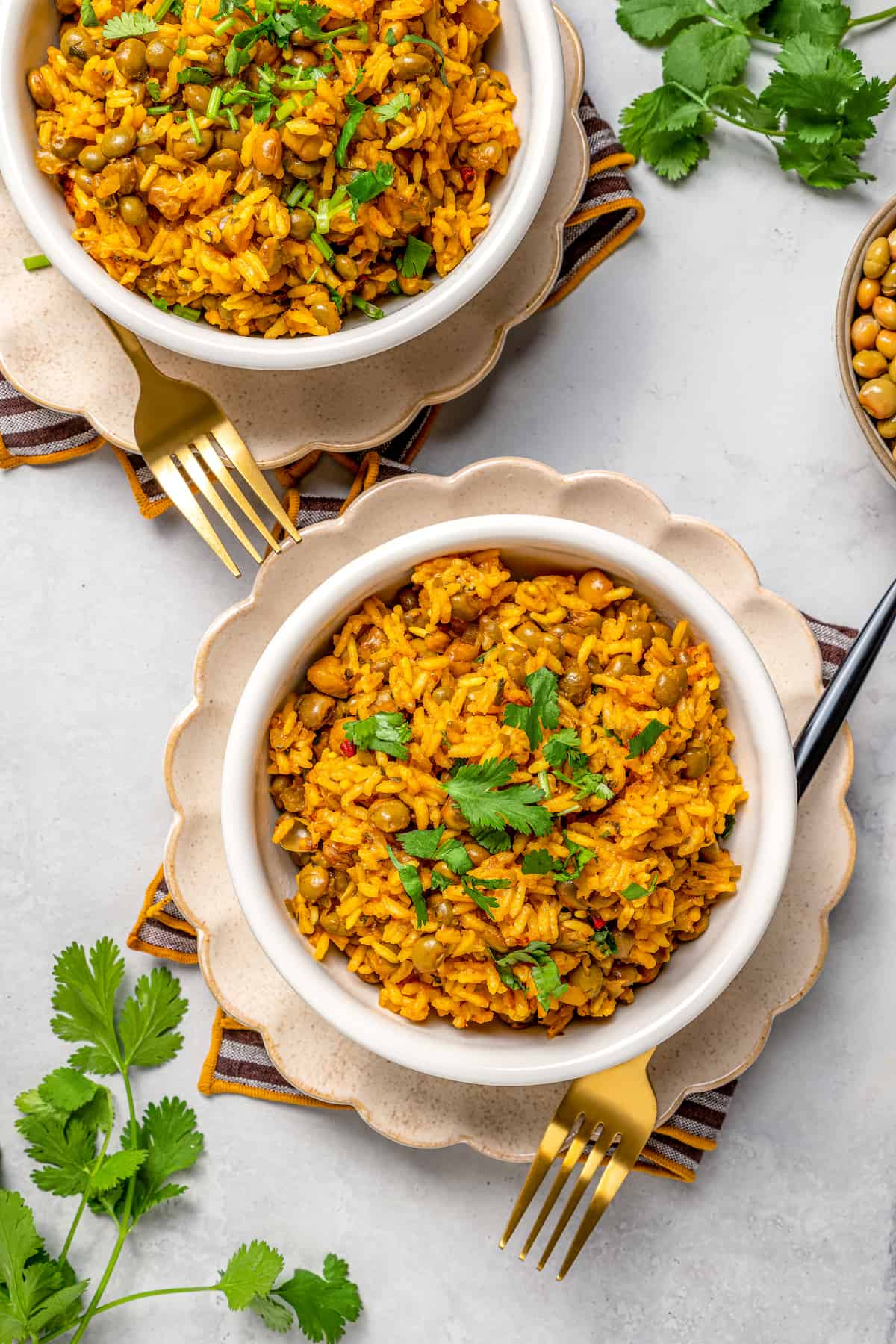
Serve this vegan Puerto Rican rice and beans with a side of plantains, Rainbow Fruit Salad , or Marinated Tofu , or eat it on its own as a main dish. I love using leftovers as a burrito or enchilada filling too!
How to Store Leftovers
Store leftovers of Puerto Rican rice and beans in an airtight container in the refrigerator for up to 5 days. Reheat the rice in a skillet over medium heat with a splash of water or broth to loosen up the rice, or in the microwave.
Can This Recipe Be Frozen?
Yes, this vegan Puerto Rican rice and beans dish can be frozen in an airtight container or freezer bag for up to 3 months. Let it thaw in the refrigerator, then reheat it according to the instructions above.
More Rice Recipes
- Vegan Arancini Fried Rice Balls (With Air Fryer Option)
- Creamy Vegan Mushroom Wild Rice Soup
- Korean (Gochujang) Tofu Rice Bowls
- Sheet Pan Fried Rice (Vegan & One Pan)
Ingredients
- 1 tablespoon olive oil , 12 grams
- 1 cup yellow onion , rough chopped (135 grams)
- 1 cup green bell pepper , rough chopped (145 grams)
- ½ cup fresh cilantro , rough chopped (20 grams)
- 1 cup tomato sauce , 235 grams
- 1 ½ teaspoon sea salt , 10 grams
- 2 teaspoon garlic powder , 3 grams
- ½ teaspoon ground cumin , 1 gram
- ½ teaspoon ground coriander , 1 gram
- ½ teaspoon ground achiote , annatto seeds (1 gram)
- ½ teaspoon onion powder , 1 gram
- ½ teaspoon oregano , 0.5 grams
- ½ teaspoons dried parsley , 0.5 grams
- ¼ teaspoon turmeric , 0.7 grams
- 30 ounces canned green pigeon peas , also known as gandules (850 grams)
- 2 ½ cups vegetable broth , or water, 600 grams
- 2 cups long grain white rice , 450 grams
Instructions
- Place a large pot over medium heat and add oil.
- To a food processor, add the onion, bell pepper, and cilantro and pulse into a chunky sauce resembling a salsa. Do not blend too much.
- When the oil is heated, add the blended mixture to the pot and cook for approximately 6 minutes, stirring often.
- Add all remaining ingredients except the rice and bring to a boil.
- Once boiling, add the rice, cover, and reduce the heat to low. Cook for 20 – 22 minutes.
- Taste and stir in any additional spices if desired before serving.
Notes
- You can also substitute the dry seasonings for Sazon Culantro y Achiote
- Beans: You can substitute canned kidney beans, pinto beans, or black beans in place of pigeon peas if preferred.
- Rice: Basmati or jasmine rice work great for this recipe!
- To store: Store leftovers of Puerto Rican rice and beans in an airtight container in the refrigerator for up to 5 days. Reheat the rice in a skillet over medium heat with a splash of water or broth to loosen up the rice, or in the microwave.
- To freeze: Vegan Puerto Rican rice and beans dish can be frozen in an airtight container or freezer bag for up to 3 months. Let it thaw in the refrigerator, then reheat it according to the instructions above.
