Learn how to make vegetable broth with veggie scraps. It’s flavourful, easy, cost-effective, and freezer-friendly!
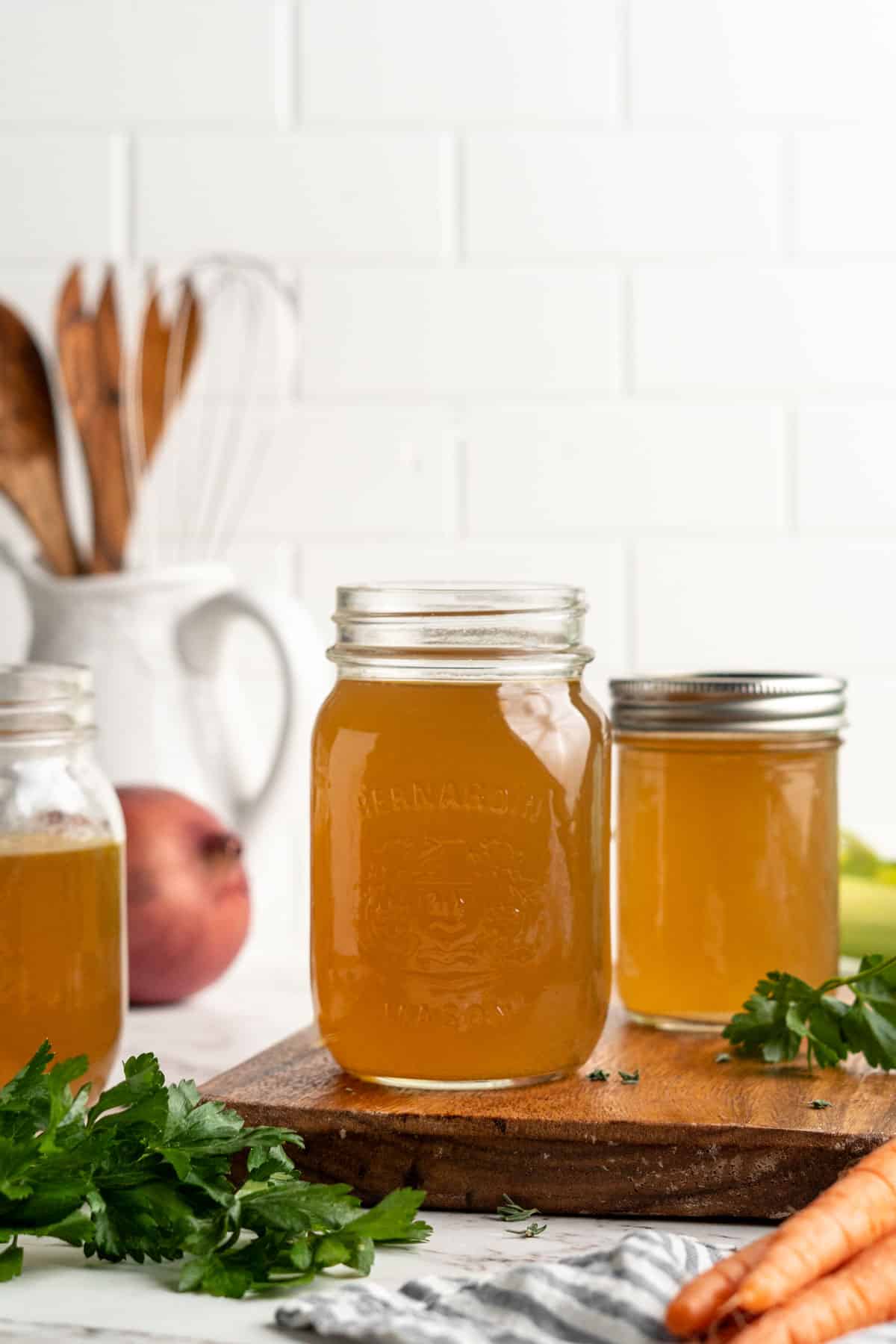
So many recipes call for vegetable broth, but if you usually rely on store-bought cartons or bouillon cubes, you’re missing out! The first time I tried homemade vegetable broth I was blown away by the depth of flavour— and by how much money I was saving by making it myself. Best part? You can use kitchen scraps to make it!
Whenever you’re cutting up an onion and you have a bit you don’t use, throw it in a zipped freezer bag and into the freezer. Toss in the leafy tops of carrots and celery, papery garlic peels, extra herbs, mushroom stems. Over time, you’ll accumulate lots of veggie scraps that would’ve otherwise gone into the trash, and when your bag is full, you can use them to make vegetable broth.
Once you have your collection of scraps, you’ll also want to add celery, onion, carrot, and garlic for that classic vegetable broth flavour, then you simmer everything away until the liquid is infused with all that veggie goodness.
What Is the Difference Between Vegetable Stock and Vegetable Broth?
When we’re talking about vegetable stock vs. vegetable broth (as opposed to animal-based stocks and broths), the only difference is that vegetable stock is seasoned with salt and pepper, while vegetable broth is not. So if you add the optional salt to this recipe, you’ve got stock!
Notes on Ingredients
Scroll down to the recipe card to find the ingredient quantities and recipe instructions.
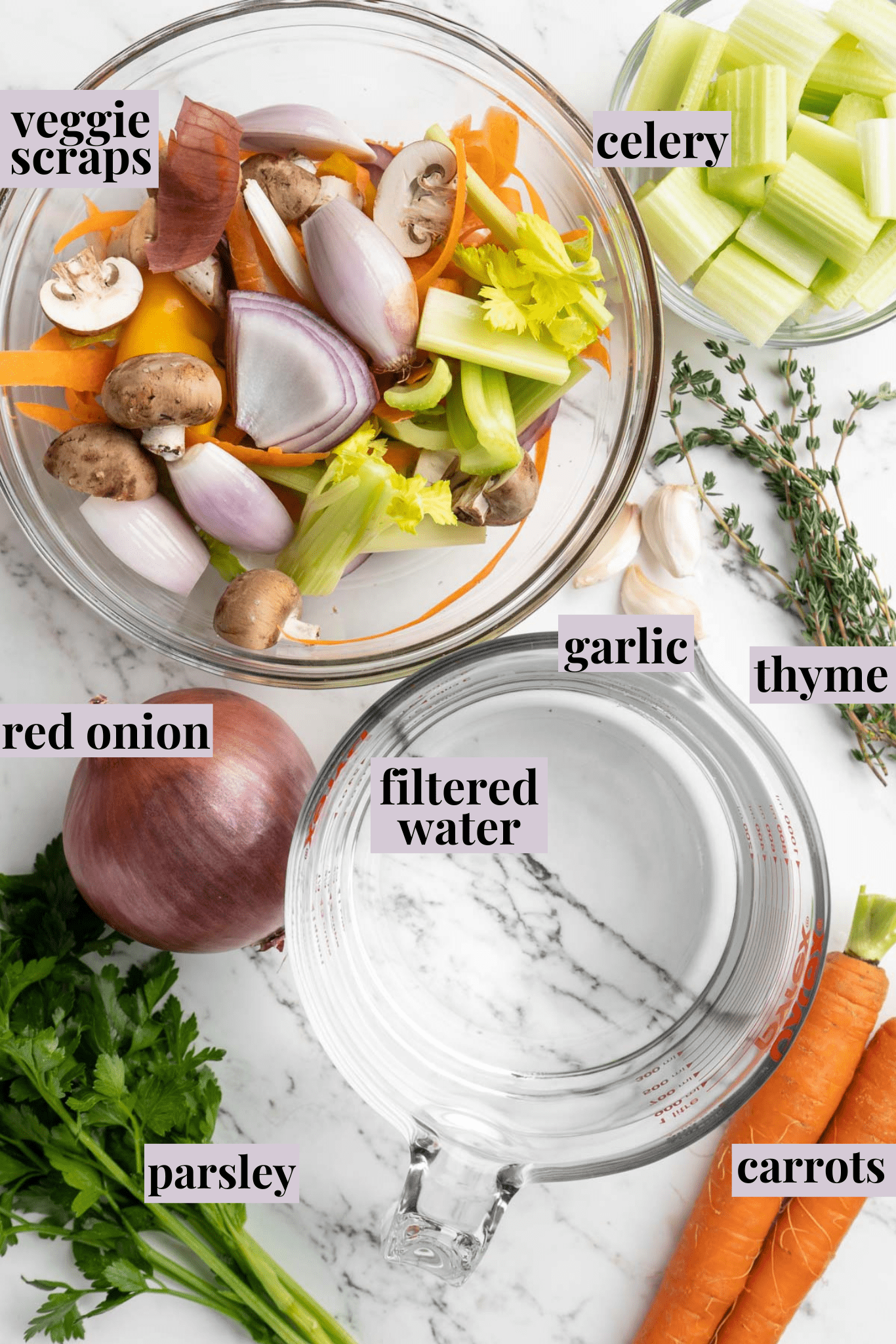
- Celery – Chopping the celery (and carrots) exposes more of their surface area to the liquid, which means you’ll get more flavour in your vegetable broth.
- Carrots
- Red onions – Yellow onions work too, or use leeks and shallots.
- Garlic – I like to add a lot, but you can use less!
- Thyme
- Parsley
- Frozen veggie scraps
- Filtered water – Filtered water will help ensure your broth doesn’t have any off flavours.
Optional Add-Ins
- Mushrooms – Any kind you have on hand! This is a great way to use the tough stems of shiitakes.
- Bell peppers
- Salt
- Peppercorns
- Chili pepper or scotch bonnet pepper – I like adding a hot pepper for depth.
- Liquid aminos – This adds umami to the broth.
What Not to Put in Vegetable Broth
Leave out broccoli, cauliflower, Brussels sprouts, kale, and other cruciferous vegetables, as they will make your broth bitter. I would also leave out potatoes; they’ll make your broth cloudy. And, it goes without saying, don’t add any vegetables that are spoiled!
How to Make Vegetable Broth With Veggie Scraps
I love making a batch of vegetable broth over the weekend so I can use it in my cooking all week long. Because it’s largely hands-off, I can let the broth simmer away while I do other things around the house!
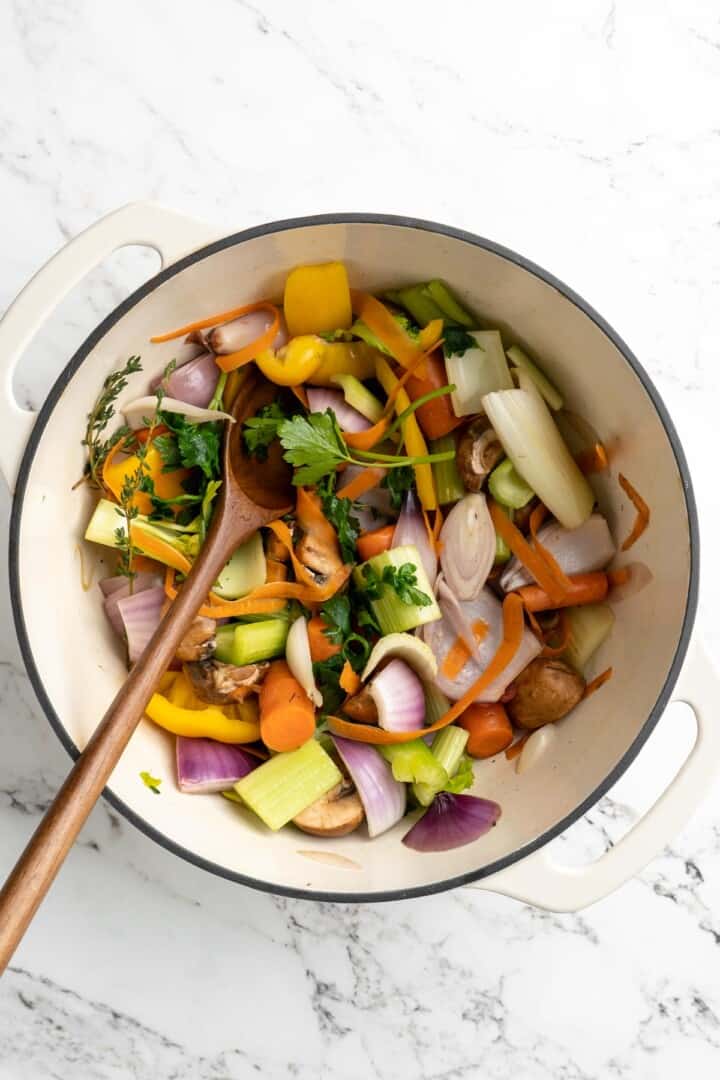
Sweat the ingredients. Place all of the ingredients except the water in a pot set over high heat. Let the heat sweat the ingredients for about 3 minutes. Add any of the optional ingredients, then stir in the water. Bring the mixture to a boil.
Simmer. Reduce the heat to a simmer and cook the vegetable broth for 1 hour.
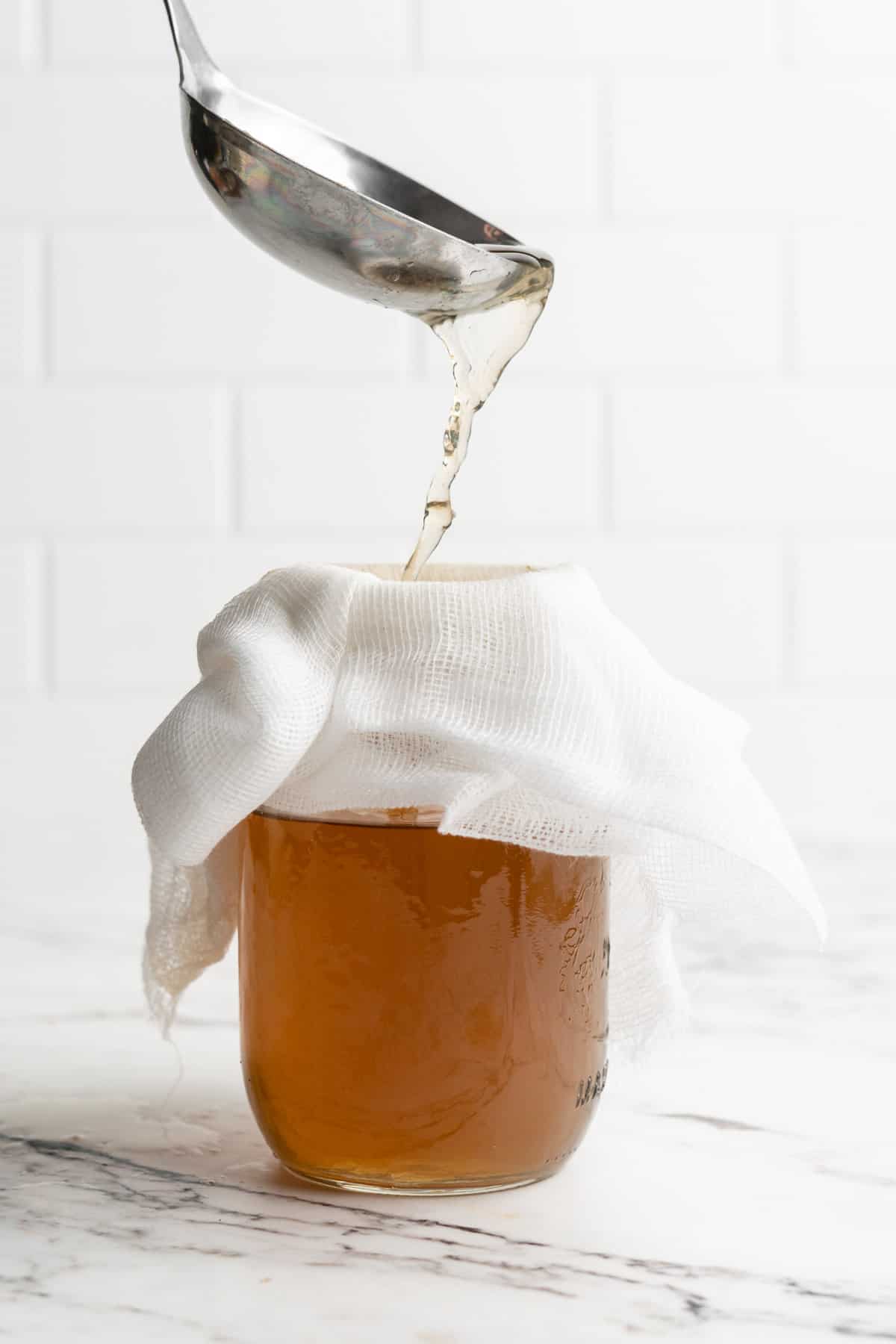
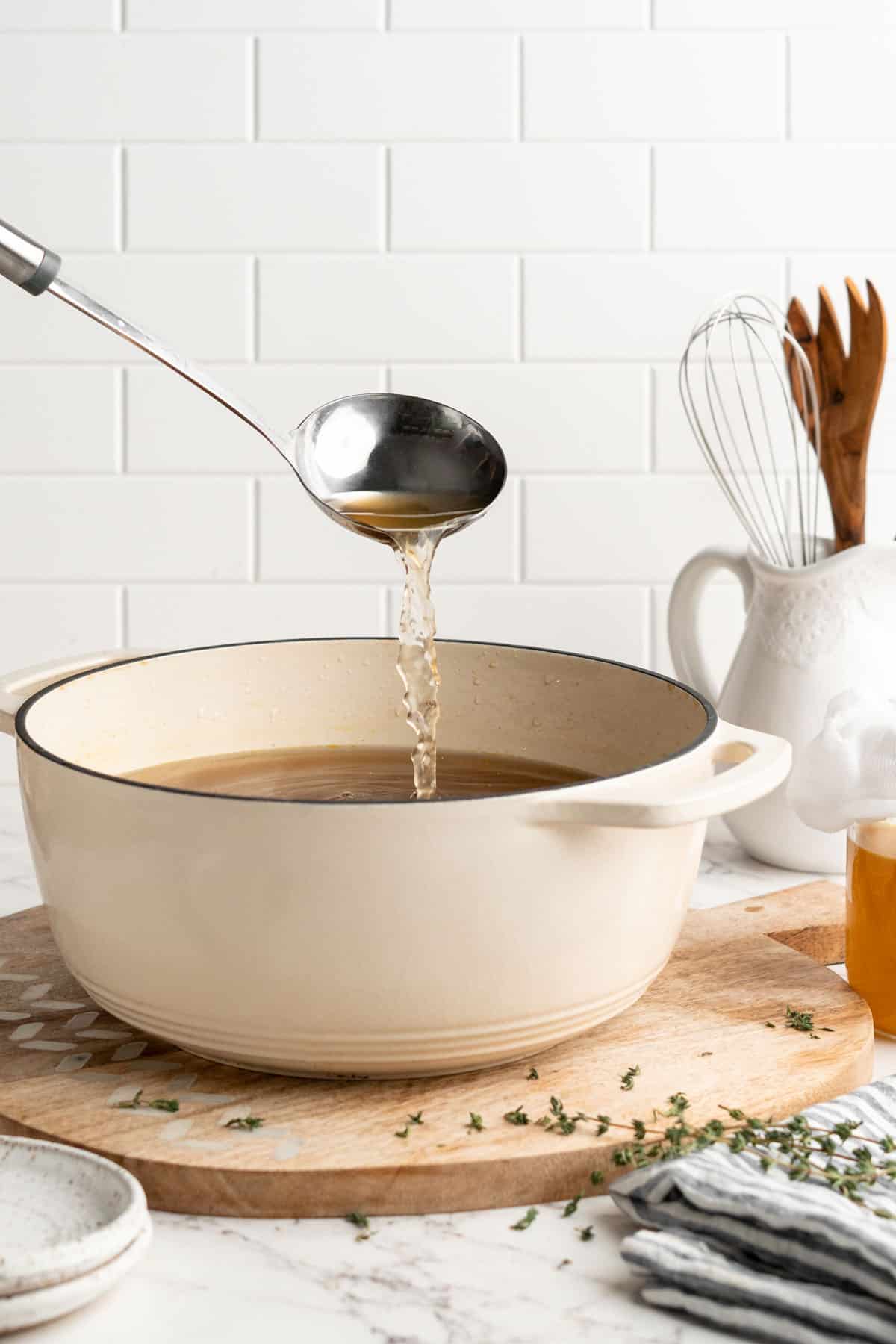
Cool and store. Remove the pot from the heat and allow the broth to cool. Place a layer of cheesecloth or a very thin towel on top of your jars or storage containers and pour the broth into them, discarding the vegetables caught in the cheesecloth. Add the liquid aminos, if using.
Tips for Success
Here are some tips to help you make sure your homemade vegetable broth turns out perfect.
- Don’t add too much salt. You’ll probably be using your broth in a recipe, and odds are that recipe will have you adding salt as well. So you don’t want to start with a broth that’s overly salty!
- Make concentrated broth. For even more flavour, you can use 10 cups of water instead of 12.
- No cheesecloth? No problem! Just pour the broth into a fine mesh strainer set over a large bowl. Then, discard the solids and divide the broth into containers for storage.
Variations
The best part about homemade vegetable broth is that it’s so versatile. Here are some ways to customize this recipe:
- Make mushroom broth by swapping the frozen veggie scraps for 6 cups of mushroom stems/scraps—or simply use fresh mushrooms.
- Add turmeric for a golden colour, nutritional yeast , and some smoked paprika for a vegan chicken broth substitute.
- Try adding shiitake stems, sliced ginger root, and kombu for an Asian-inspired broth perfect for making miso soup.
- Save corn cobs after removing the corn and simmer them in the broth. This makes a delicious base for corn soup!
Uses for Vegetable Broth
I use this vegetable broth several times a week! Naturally, it’s great in soups like my Vegetable Minestrone Soup and Roasted Cauliflower Soup . I also use it as a cooking liquid for quinoa and rice, for making Creamy Vegan Mushroom Risotto , and as a base for Vegan Gravy .
How to Store
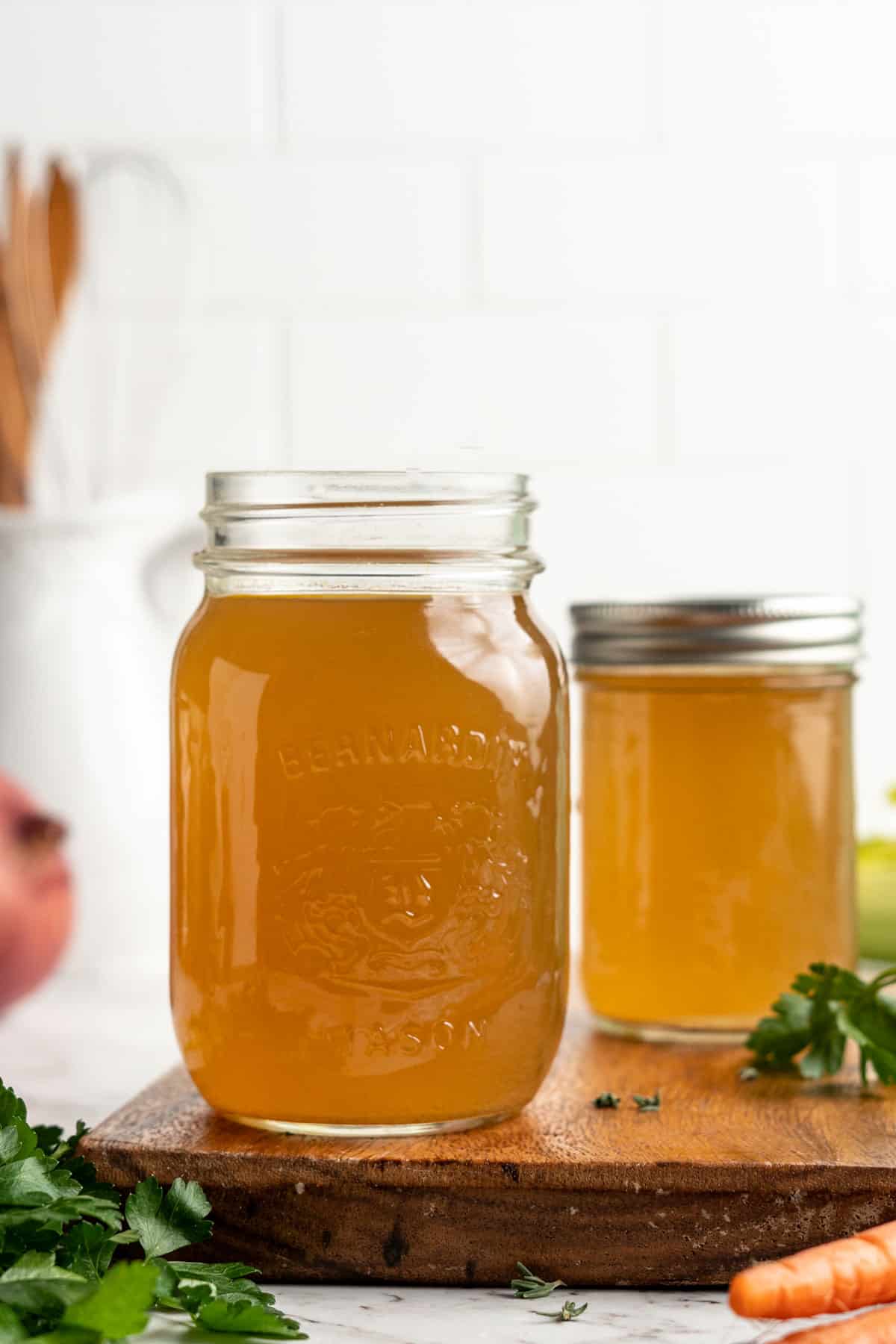
Vegetable broth can be stored in the refrigerator for up to a week in an airtight container or jar.
Can This Recipe Be Frozen?
To freeze, allow the broth to cool completely and then divide into freezer-safe containers or ice cube trays. Once frozen, transfer cubes to a freezer bag for easy storage. Thaw in the fridge overnight before using.
More Kitchen Basics
- How to Make Banana Milk (Vegan, Paleo, 5 Minutes!)
- How to Make Peanut Butter
- How to Cook Lentils
Ingredients
How to Make Vegetable Broth with Veggie Scraps
- 3 stalks celery , chopped
- 2-3 medium carrots , chopped
- 1 to 2 red onions , or leeks or shallots, or all if you have
- 3 to 5 cloves garlic , you can lessen, I love adding garlic
- Few sprigs thyme
- A big handful parsley
- 2-3 cups of frozen veggie scraps , this is in addition to the above vegetables
- 10-12 cups filtered water
Optional, but recommended if you have them
- Mushrooms
- Bell peppers
- 1/2 teaspoon salt
- 10 peppercorns
- 1 chili pepper or scotch bonnet pepper , helps to deepen flavours
Umami additions
- 1/4 cup liquid aminos , or coconut aminos or low sodium soy sauce
Instructions
How to Make Vegetable Broth with Veggie Scraps
- In a pot over high heat, add all the ingredients except the water. Let the heat sweat the ingredients for about 3 minutes to help bring out flavours. If adding in extra ingredients, add them now. Pour in all the water and stir. I use 12 cups, but you can use 10 cups if you want an even more concentrated broth.
- Bring to a boil, then reduce to a simmer for 1 hour.
- Remove from heat and allow to cool.
- Select the containers you’ll be storing broth in (I like clear large glass jars). Place a layer of cheese cloth or a very thin towel on top and pour into jars to catch liquid and strain vegetables.
- At this point, I stir in equal amounts of liquid aminos (totalling 1/4 cup) in the jars. I end up with two jars, so I stir in 2 tablespoons into each. After sitting for a day the flavours will deepen even more.
- Store in fridge for up to a week. See notes for freezing instructions. Enjoy!
Notes
Learn how to make vegetable broth with veggie scraps. It’s flavourful, easy, cost-effective, and freezer-friendly!
So many recipes call for vegetable broth, but if you usually rely on store-bought cartons or bouillon cubes, you’re missing out! The first time I tried homemade vegetable broth I was blown away by the depth of flavour— and by how much money I was saving by making it myself. Best part? You can use kitchen scraps to make it!
Whenever you’re cutting up an onion and you have a bit you don’t use, throw it in a zipped freezer bag and into the freezer. Toss in the leafy tops of carrots and celery, papery garlic peels, extra herbs, mushroom stems. Over time, you’ll accumulate lots of veggie scraps that would’ve otherwise gone into the trash, and when your bag is full, you can use them to make vegetable broth.
Once you have your collection of scraps, you’ll also want to add celery, onion, carrot, and garlic for that classic vegetable broth flavour, then you simmer everything away until the liquid is infused with all that veggie goodness.
What Is the Difference Between Vegetable Stock and Vegetable Broth?
When we’re talking about vegetable stock vs. vegetable broth (as opposed to animal-based stocks and broths), the only difference is that vegetable stock is seasoned with salt and pepper, while vegetable broth is not. So if you add the optional salt to this recipe, you’ve got stock!
Notes on Ingredients
Scroll down to the recipe card to find the ingredient quantities and recipe instructions.
- Celery – Chopping the celery (and carrots) exposes more of their surface area to the liquid, which means you’ll get more flavour in your vegetable broth.
- Carrots
- Red onions – Yellow onions work too, or use leeks and shallots.
- Garlic – I like to add a lot, but you can use less!
- Thyme
- Parsley
- Frozen veggie scraps
- Filtered water – Filtered water will help ensure your broth doesn’t have any off flavours.
Optional Add-Ins
- Mushrooms – Any kind you have on hand! This is a great way to use the tough stems of shiitakes.
- Bell peppers
- Salt
- Peppercorns
- Chili pepper or scotch bonnet pepper – I like adding a hot pepper for depth.
- Liquid aminos – This adds umami to the broth.
What Not to Put in Vegetable Broth
Leave out broccoli, cauliflower, Brussels sprouts, kale, and other cruciferous vegetables, as they will make your broth bitter. I would also leave out potatoes; they’ll make your broth cloudy. And, it goes without saying, don’t add any vegetables that are spoiled!
How to Make Vegetable Broth With Veggie Scraps
I love making a batch of vegetable broth over the weekend so I can use it in my cooking all week long. Because it’s largely hands-off, I can let the broth simmer away while I do other things around the house!
Sweat the ingredients. Place all of the ingredients except the water in a pot set over high heat. Let the heat sweat the ingredients for about 3 minutes. Add any of the optional ingredients, then stir in the water. Bring the mixture to a boil.
Simmer. Reduce the heat to a simmer and cook the vegetable broth for 1 hour.
Cool and store. Remove the pot from the heat and allow the broth to cool. Place a layer of cheesecloth or a very thin towel on top of your jars or storage containers and pour the broth into them, discarding the vegetables caught in the cheesecloth. Add the liquid aminos, if using.
Tips for Success
Here are some tips to help you make sure your homemade vegetable broth turns out perfect.
- Don’t add too much salt. You’ll probably be using your broth in a recipe, and odds are that recipe will have you adding salt as well. So you don’t want to start with a broth that’s overly salty!
- Make concentrated broth. For even more flavour, you can use 10 cups of water instead of 12.
- No cheesecloth? No problem! Just pour the broth into a fine mesh strainer set over a large bowl. Then, discard the solids and divide the broth into containers for storage.
Variations
The best part about homemade vegetable broth is that it’s so versatile. Here are some ways to customize this recipe:
- Make mushroom broth by swapping the frozen veggie scraps for 6 cups of mushroom stems/scraps—or simply use fresh mushrooms.
- Add turmeric for a golden colour, nutritional yeast , and some smoked paprika for a vegan chicken broth substitute.
- Try adding shiitake stems, sliced ginger root, and kombu for an Asian-inspired broth perfect for making miso soup.
- Save corn cobs after removing the corn and simmer them in the broth. This makes a delicious base for corn soup!
Uses for Vegetable Broth
I use this vegetable broth several times a week! Naturally, it’s great in soups like my Vegetable Minestrone Soup and Roasted Cauliflower Soup . I also use it as a cooking liquid for quinoa and rice, for making Creamy Vegan Mushroom Risotto , and as a base for Vegan Gravy .
How to Store
Vegetable broth can be stored in the refrigerator for up to a week in an airtight container or jar.
Can This Recipe Be Frozen?
To freeze, allow the broth to cool completely and then divide into freezer-safe containers or ice cube trays. Once frozen, transfer cubes to a freezer bag for easy storage. Thaw in the fridge overnight before using.
More Kitchen Basics
- How to Make Banana Milk (Vegan, Paleo, 5 Minutes!)
- How to Make Peanut Butter
- How to Cook Lentils
Ingredients
How to Make Vegetable Broth with Veggie Scraps
- 3 stalks celery , chopped
- 2-3 medium carrots , chopped
- 1 to 2 red onions , or leeks or shallots, or all if you have
- 3 to 5 cloves garlic , you can lessen, I love adding garlic
- Few sprigs thyme
- A big handful parsley
- 2-3 cups of frozen veggie scraps , this is in addition to the above vegetables
- 10-12 cups filtered water
Optional, but recommended if you have them
- Mushrooms
- Bell peppers
- 1/2 teaspoon salt
- 10 peppercorns
- 1 chili pepper or scotch bonnet pepper , helps to deepen flavours
Umami additions
- 1/4 cup liquid aminos , or coconut aminos or low sodium soy sauce
Instructions
How to Make Vegetable Broth with Veggie Scraps
- In a pot over high heat, add all the ingredients except the water. Let the heat sweat the ingredients for about 3 minutes to help bring out flavours. If adding in extra ingredients, add them now. Pour in all the water and stir. I use 12 cups, but you can use 10 cups if you want an even more concentrated broth.
- Bring to a boil, then reduce to a simmer for 1 hour.
- Remove from heat and allow to cool.
- Select the containers you’ll be storing broth in (I like clear large glass jars). Place a layer of cheese cloth or a very thin towel on top and pour into jars to catch liquid and strain vegetables.
- At this point, I stir in equal amounts of liquid aminos (totalling 1/4 cup) in the jars. I end up with two jars, so I stir in 2 tablespoons into each. After sitting for a day the flavours will deepen even more.
- Store in fridge for up to a week. See notes for freezing instructions. Enjoy!
Notes

Vegetable Broth
Ingredients
How to Make Vegetable Broth with Veggie Scraps
- 3 stalks celery chopped
- 2-3 medium carrots chopped
- 1 to 2 red onions or leeks or shallots, or all if you have
- 3 to 5 cloves garlic you can lessen, I love adding garlic
- Few sprigs thyme
- A big handful parsley
- 2-3 cups of frozen veggie scraps this is in addition to the above vegetables
- 10-12 cups filtered water
Optional, but recommended if you have them
- Mushrooms
- Bell peppers
- 1/2 teaspoon salt
- 10 peppercorns
- 1 chili pepper or scotch bonnet pepper helps to deepen flavours
Umami additions
- 1/4 cup liquid aminos or coconut aminos or low sodium soy sauce
Instructions
How to Make Vegetable Broth with Veggie Scraps
- In a pot over high heat, add all the ingredients except the water. Let the heat sweat the ingredients for about 3 minutes to help bring out flavours. If adding in extra ingredients, add them now. Pour in all the water and stir. I use 12 cups, but you can use 10 cups if you want an even more concentrated broth.
- Bring to a boil, then reduce to a simmer for 1 hour.
- Remove from heat and allow to cool.
- Select the containers you’ll be storing broth in (I like clear large glass jars). Place a layer of cheese cloth or a very thin towel on top and pour into jars to catch liquid and strain vegetables.
- At this point, I stir in equal amounts of liquid aminos (totalling 1/4 cup) in the jars. I end up with two jars, so I stir in 2 tablespoons into each. After sitting for a day the flavours will deepen even more.
- Store in fridge for up to a week. See notes for freezing instructions. Enjoy!
Notes
Nutrition
Vegetable Broth https://jessicainthekitchen.com/make-vegetable-broth-veggie-scraps/ May 5, 2023
Corn succotash is a flavourful veggie side dish that’s easy to make for a weeknight dinner. With corn, beans, bell peppers, red onions, and cherry tomatoes, it has a whole rainbow of colours!

Succotash is a classic American dish made with a base of corn and lima beans, usually with other vegetables added for colour and flavour. While you can buy a bag of frozen succotash at the grocery store, it doesn’t compare to the homemade version. It’s so much more flavourful!
This recipe is cooked on the stovetop, making it a quick and easy side dish that comes together in a matter of minutes—ideal for those busy weeknights or meals where your main dish needs a lot of attention. And, although it’s usually served as a side, you can serve it over quinoa and you’ve got yourself a complete meal!
Why Do They Call It Succotash?
The origin of the word “succotash” is believed to come from the Narragansett Indian word “sahquttahhash,” which refers to any kind of boiled or mashed sweet corn with beans. It was common in New England cuisine dating back to the 17th century, but it became popular throughout the United States during the Great Depression thanks to its simple, inexpensive ingredients.
Notes on Ingredients
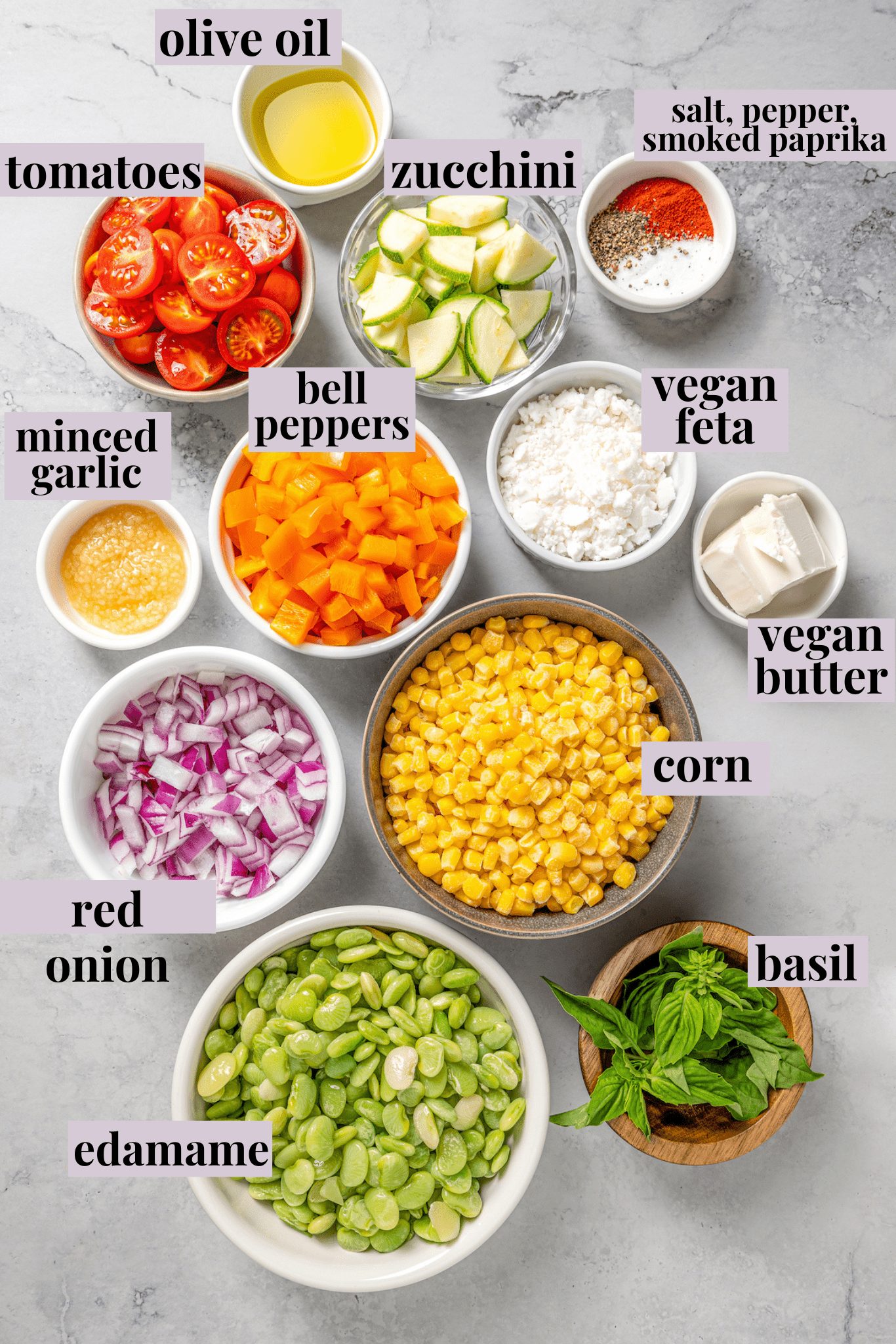
Scroll down to the recipe card to find the ingredient quantities and recipe instructions.
- Olive oil – You can substitute olive oil with vegetable oil, canola oil, or avocado oil.
- Red onion – I like using red onion for the colour, but yellow or white works too.
- Garlic
- Corn kernels – Fresh, frozen, or canned.
- Frozen lima or shelled edamame beans
- Orange bell peppers – Feel free to use another colour.
- Zucchini
- Salt
- Black pepper
- Paprika – Both sweet paprika and smoked paprika work in this recipe.
- Cherry tomatoes
- Vegan butter – Use store-bought or homemade vegan butter .
- Vegan feta cheese – Optional, but recommended. I used Just Like Feta by Violife.
- Fresh basil – Also optional, but I love the fresh flavour it adds to this corn succotash recipe.
Is Frozen Corn as Good as Fresh?
Because frozen corn is harvested and then quickly frozen, it retains all the nutrition of fresh corn—and research has shown that it actually has more vitamin C than fresh! But setting aside nutrition, no one can argue with the fact that fresh corn tastes much better than canned or frozen, so when it’s in season, be sure to use it!
How to Make Corn Succotash
Here’s how easy it is to make a batch of corn succotash!
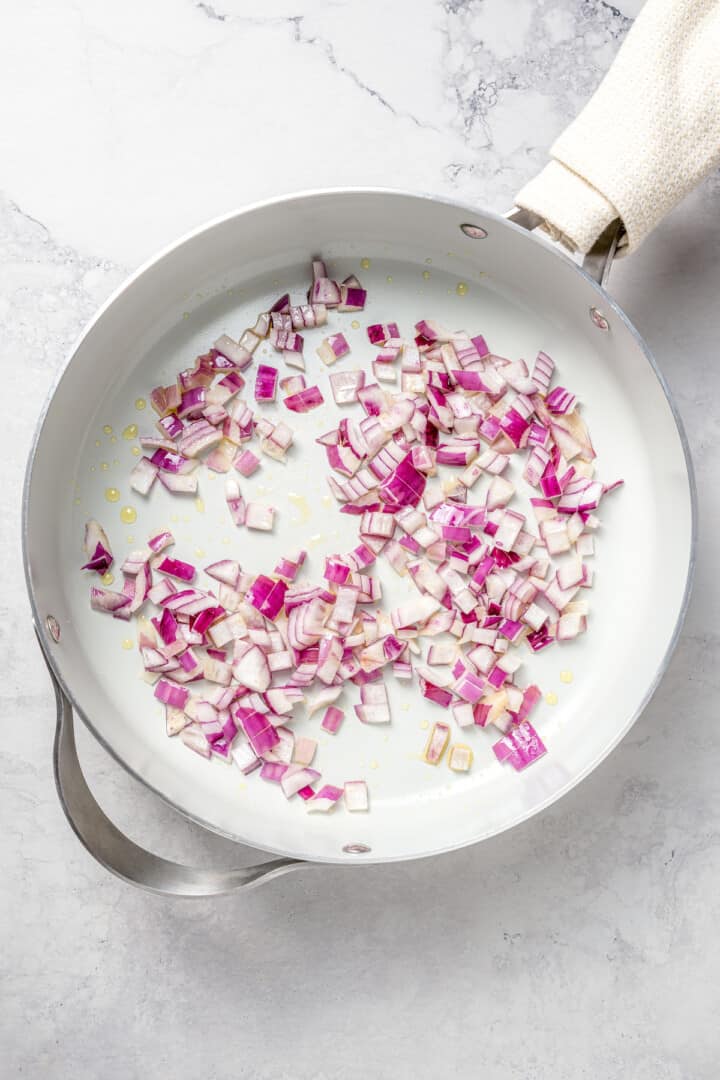
Cook the onion and garlic. Heat the oil in a large skillet over medium heat. Add the onion and sauté for about 6 minutes, or until just tender, then add the garlic and cook for 1 minute.
Add the next 8 ingredients. Increase the heat to medium-high and add the corn, beans, bell pepper, zucchini, salt, pepper, and paprika. Cook, stirring constantly, for 10 to 12 minutes, or until vegetables are tender.
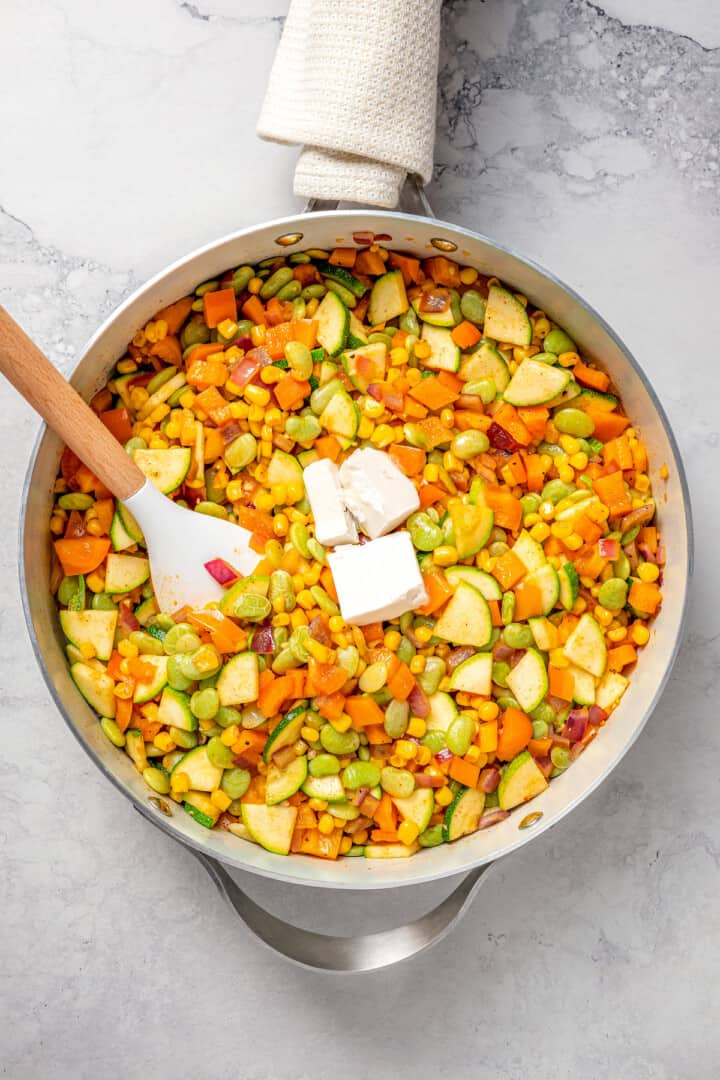
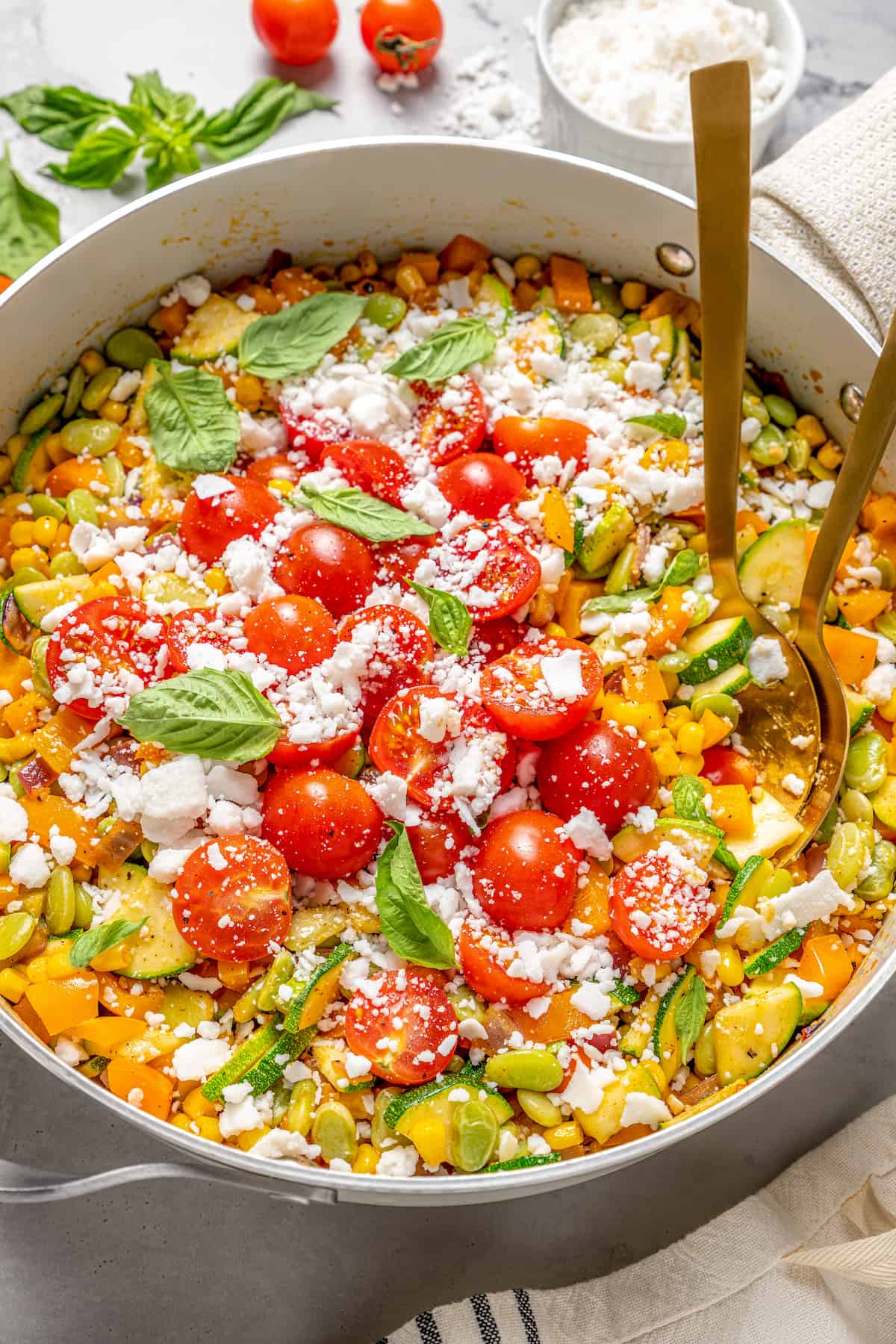
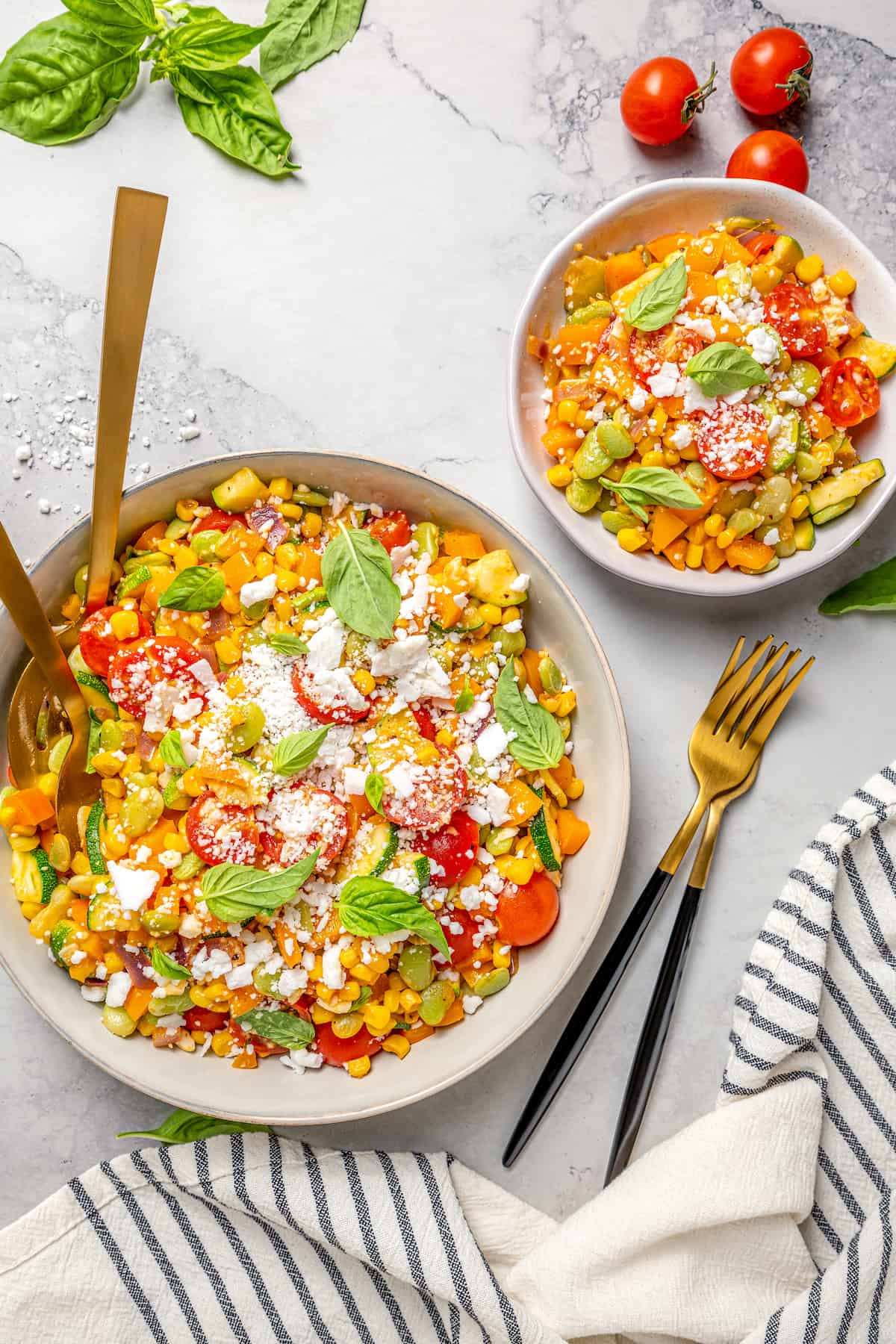
Finish. Add butter and cook for 1 minute, or until it melts. Remove from the heat and stir in tomatoes. Season to taste, then add the vegan feta and basil, if you’re using them.
Tips for Success
Here are some simple tips to help make sure your corn succotash turns out perfect.
- Cut all the veggies in uniform sizes. This will make sure they’re all finished cooking at the same time—and make your succotash look more aesthetically pleasing!
- Use the best fresh vegetables you can find. The veggies are the star here! This is a great recipe to make at the height of summer, when the farmers market is full of fresh, local produce.
- Make sure you use a large skillet. There’s a lot of stuff in this corn succotash, so you’ll need room in the pan to stir everything without it spilling over the edges.
Variations
Corn succotash is one of those recipes that’s easy to make your own. Here are some ideas:
- Use frozen peas or chickpeas instead of lima beans or edamame.
- Make it spicier by adding in some diced jalapeños or red chili flakes. Or simply serve it with a bottle of hot sauce and let everyone customise their own serving!
- For a creamy version, stir in a few tablespoons of vegan cream cheese or coconut milk at the end.
- If you can’t find vegan feta cheese, you can use vegan Parmesan .
Serving Suggestions
This corn succotash recipe is so versatile, you can pair it with just about any main dish! Here are some ideas:
- Lemon Pepper Tofu
- Vegan Quinoa Cauliflower Burgers
- Vegan Pulled Mushroom Sandwiches
- Vegan Fish Sticks (with Vegan Tartar Sauce)
How to Store
If you have any leftovers, store them in an airtight container in the fridge for up to 1 week. Reheat in the microwave or in a skillet with a splash of oil.
Can This Recipe Be Frozen?
Yes, you can freeze corn succotash for up to 3 months. To freeze, transfer the succotash to an airtight container or freezer-safe bag. Thaw overnight in the fridge before reheating according to the instructions above.
More Recipes With Corn
- How to Make Vegan Creamed Corn
- 15 Minute Black Bean and Corn Quesadillas
- Mexican Street Corn Burrito Bowls
- Black Bean Avocado and Corn Salad (Salsa)

Ingredients
- 1 tablespoon olive oil , 12 grams
- 1 cup red onion , diced (approximately 1⁄2 of a medium red onion or 135 grams)
- 1 tablespoon minced garlic , approximately 3 garlic cloves or 17 grams
- 3 cups corn kernels , fresh, frozen, or canned (510 grams)
- 1 12 ounce bag of frozen lima or shelled edamame beans (340 grams)
- 2 orange bell peppers , approximately 2 1⁄4 cup or 315 grams
- 1 green zucchini , diced (approximately 2 cups or 300 grams)
- 1 ¾ teaspoon Salt , 5 grams
- 1 ¼ teaspoon Black pepper , 2 grams
- 1 teaspoon Paprika , 1 gram
- 1 pint cherry tomatoes , rinsed and halved (283 grams)
- 2 tablespoons vegan butter , 30 grams
- 8.1 ounces Vegan feta cheese , 230 grams (optional, but recommended – I used the Just Like Feta by Violife)
- 1 bundle of fresh basil , sliced (optional) (30 grams)
Instructions
- Place a large skillet over medium heat and add oil.
- Add onion and saute until just tender (approximately 6 minutes).
- Add garlic and saute for 1 minute.
- Bring the heat up to medium-high and add corn, beans, bell pepper, zucchini, salt, pepper, and paprika. Cook, stirring constantly, until vegetables are tender (approximately 10 – 12 minutes).
- Add butter and cook for 1 minute until melted.
- Remove from the heat and stir in tomatoes. Taste and add any additional salt or pepper if desired. Sprinkle with vegan feta cheese and fresh basil if preferred. Serve warm.
Notes
- Oil: You can substitute olive oil with vegetable oil, canola oil, or avocado oil.
- Corn: 3 cups corn kernels is approximately 2 (15 oz.) cans of corn, 1 (18 oz.) bag of frozen corn, or 4 to 5 ears of corn
- Store in an airtight container in the fridge for up to 1 week.
