This fresh, flavorful homemade marinara sauce recipe is a cinch to make with just three ingredients: tomato paste, olive oil, and water, plus a handful of Italian herbs. Of course, the best reason to make your own marinara is that it tastes so much better than store-bought!
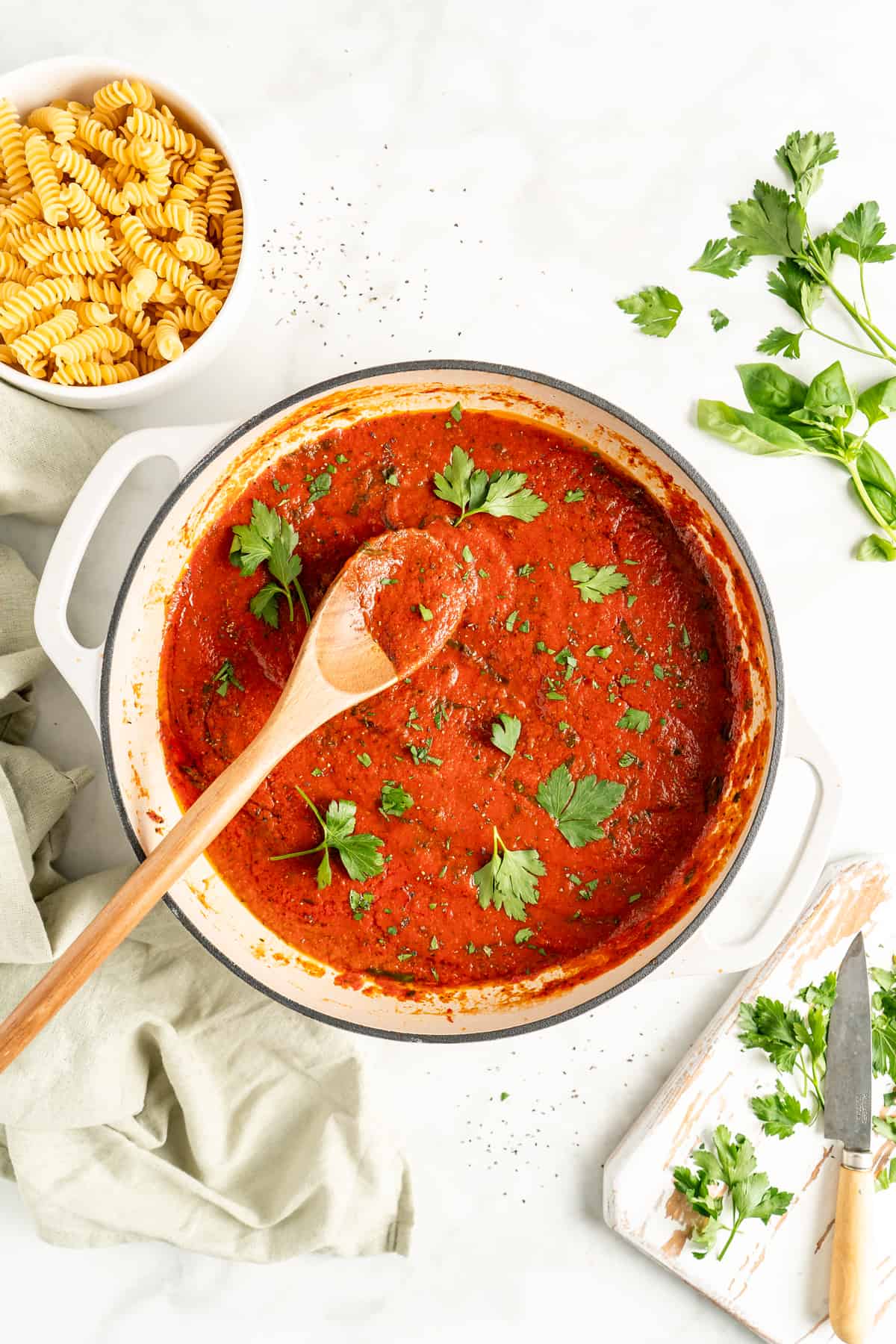
When I say that this is the EASIEST homemade marinara sauce, I mean it! Instead of peeling and chopping pounds and pounds of tomatoes and standing over the stove while they simmer, I’m sharing a time-saving shortcut.
I make this marinara recipe from tomato paste, olive oil, and water. With a few simple herbs and seasonings to boost the flavor, it’s done in a matter of minutes and ready to use for lasagna , pizza , or dipping arancini .
Reasons to Love This Quick Marinara Sauce Recipe
- No peeling, chopping, or slow cooking. I love homemade tomato sauce and pomodoro sauce made from fresh tomatoes. But on nights when time isn’t on my side, this quick version is ready with a fraction of the effort.
- Three ingredients. The base of this sauce is only tomato paste, olive oil, and water. After that, I add Italian herbs, like oregano, basil, and parsley, to complement the tomato.
- Versatile. This homemade marinara sauce is ideal for pairing with spaghetti and meatballs , pizzas, and vegan chicken parm sandwiches . It packs in all the flavor you want in a classic marinara and goes well with so many recipes. It also freezes beautifully, so you can keep it on hand for whenever you need it.
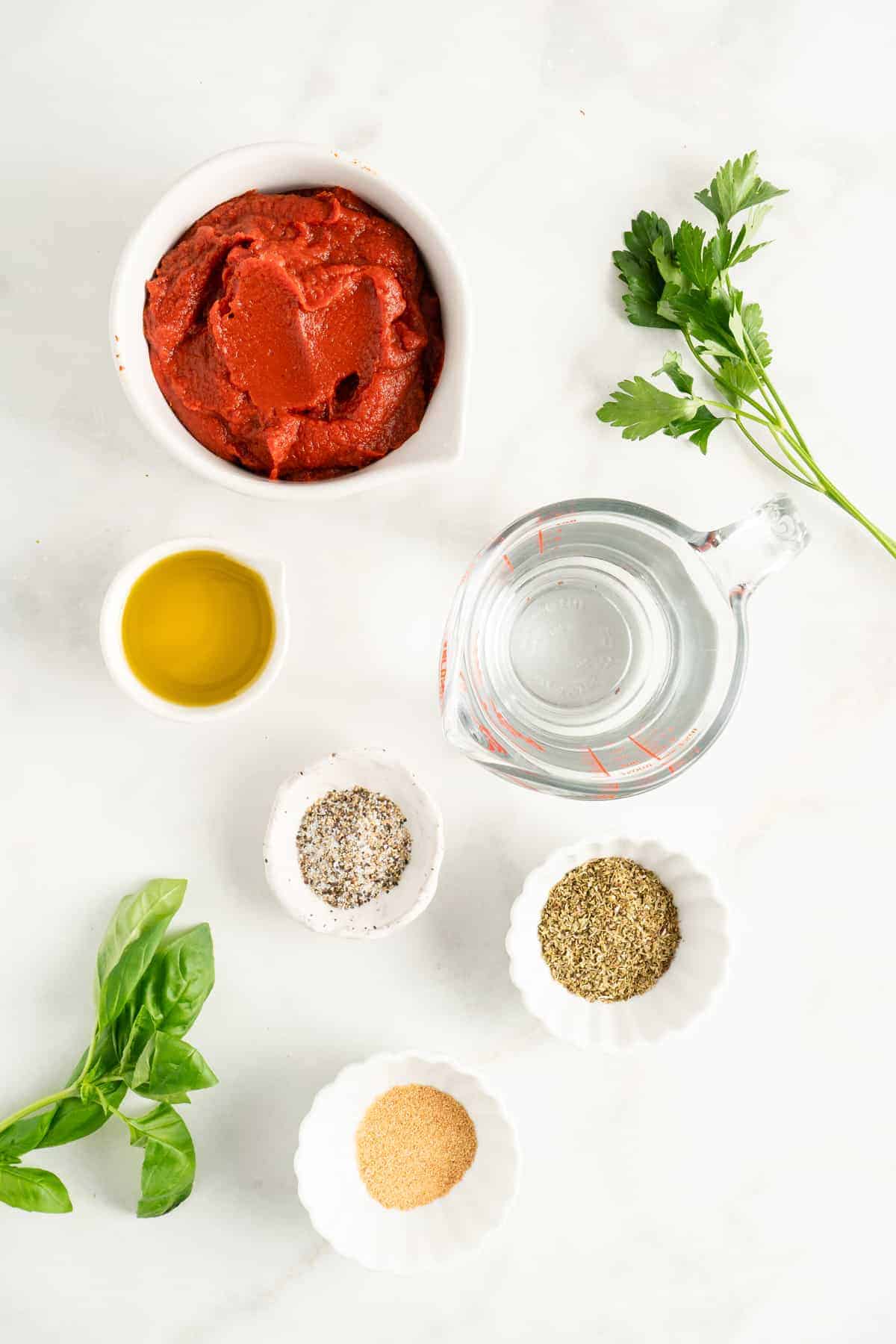
Notes on Ingredients
Please note that this is important information on the ingredients and instructions. The full recipe, including amounts and details, can be found below (scroll to the recipe card) for your reference.
- Tomato paste – You know how so many recipes only call for a tablespoon of tomato paste, and then you have a whole can left over? This marinara sauce recipe is a great way to use up leftover tomato paste!
- Olive oil – Choose a good-quality olive oil, as the flavor counts.
- Herbs – Oregano, basil, and parsley. I recommend fresh herbs as they have more flavor. If you’re using dried herbs in a pinch, you’ll need one-third of the amount.
- Garlic Powder – In addition to salt and pepper. You could use freshly minced garlic (about 2 fresh cloves) or onion powder will work here, too.
How to Make Homemade Marinara Sauce
Seriously, it doesn’t get any easier than this. In about as much time as it takes to open up and heat a jar of store-bought marinara, you can have your own homemade sauce instead! I like to make a big batch and keep it in the freezer for pasta dinners and pizza.
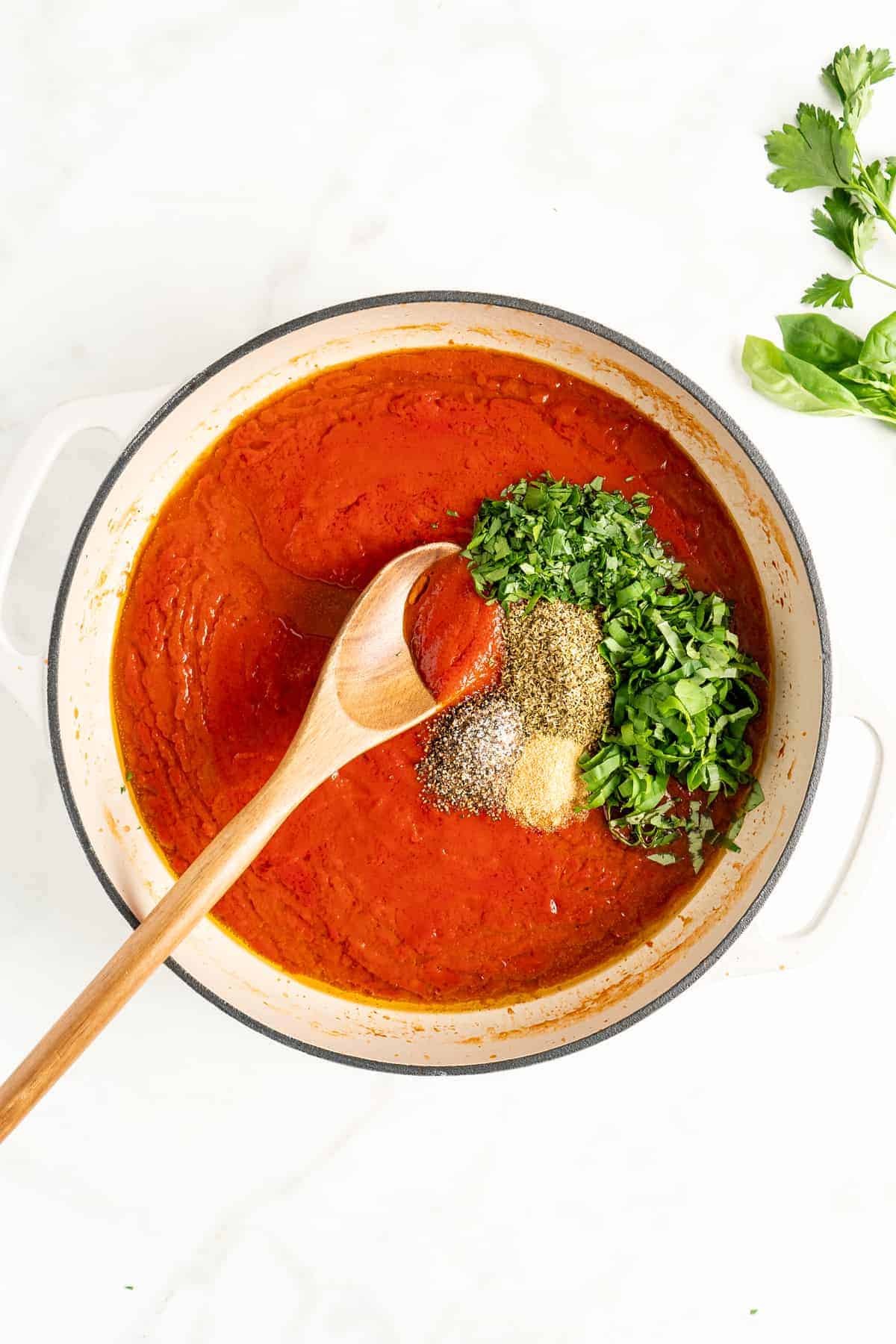
Combine the ingredients.
- Start the tomato base. Heat a medium saucepan over medium-high heat. Add the tomato paste, water, and olive oil and stir to combine. Bring to a boil for about a minute, then season with salt and pepper to taste.
- Add the seasonings. Stir in the rest of the ingredients, setting aside some of the parsley for garnish. Reduce the heat to low and cover; simmer for 5 to 8 minutes.
- Finish. Add more water by the tablespoon if you’d like a thinner sauce, then garnish with the parsley.

Recipe Tips
- Use a high-quality tomato paste. Since you’re using paste instead of tomatoes, you want to make sure you buy the best tomato paste you can find. (Tubes of tomato paste are generally more flavorful than canned, although they’re not sold everywhere.)
- Make sure you use a stainless steel or other non-reactive saucepan. Aluminum, cast iron, and copper react with the acid in tomato sauce, so they’re not the best choice.
- Add a pinch of sugar if you need to. Taste the sauce, and if you need to cut the acid a bit, a pinch of sugar helps.
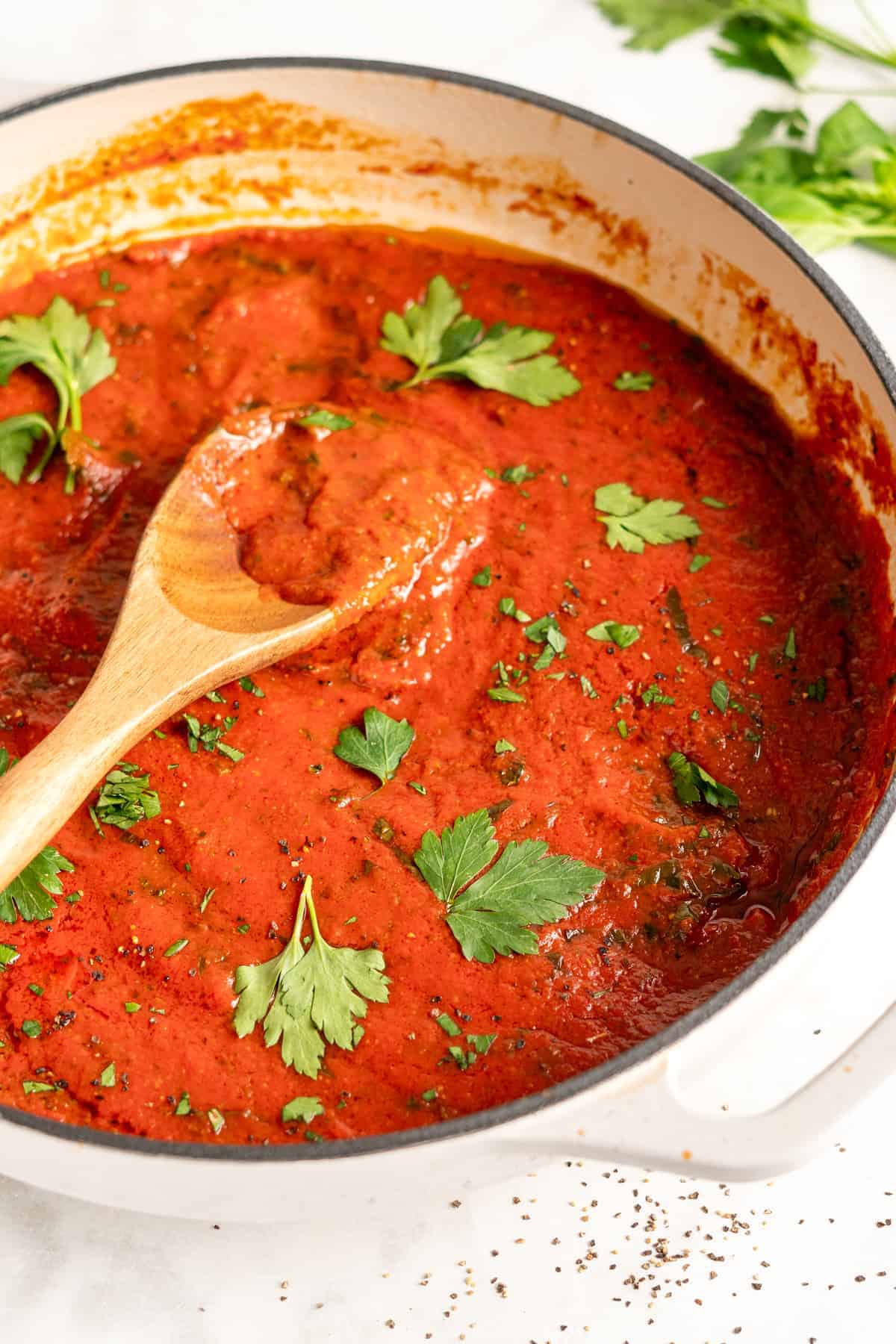
Ways to Use Marinara Sauce
With a batch of this easy homemade marinara sauce ready in 15 minutes, these are some of my favorite ways to put it to use in recipes.
- Pizza. Homemade marinara sauce makes an excellent pizza sauce for classic pizza or French bread pizza recipes.
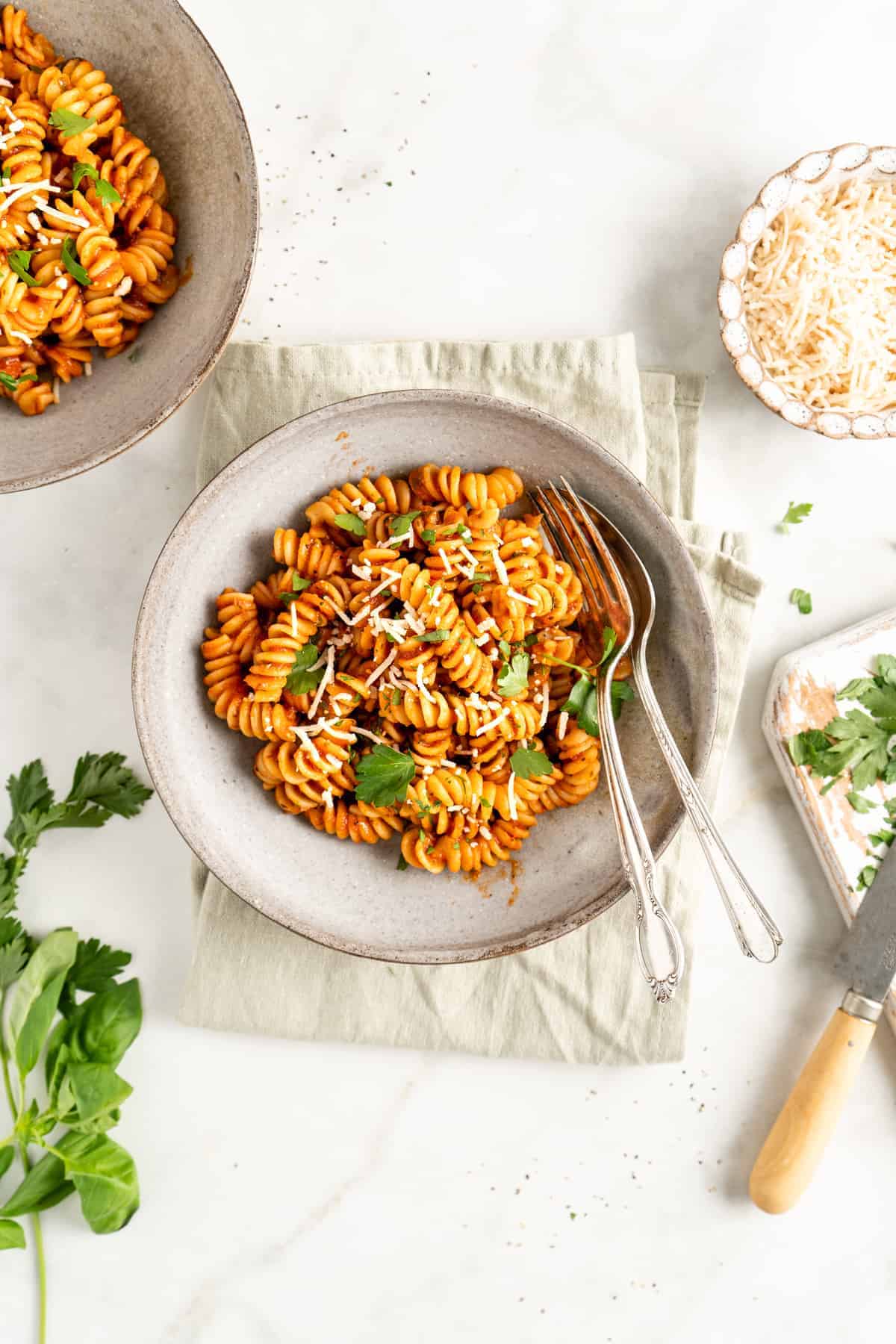
- Pasta recipes . Toss spaghetti or your favorite pasta with savory marinara sauce and meatballs, or add this sauce to vegan gnocchi , lasagna, or baked ziti .
- As a dipping sauce. Serve marinara sauce as a dip with breadsticks, low-carb pizza bites , or crispy polenta fries .
- More Italian-style dishes. Use this marinara sauce to make vegan chicken parmesan and stromboli .
How to Store
- Refrigerate. Store your homemade marinara in a jar or an airtight container for up to a week in the refrigerator.
- Freeze. Marinara sauce is great for freezing! I like to transfer it to freezer bags and freeze them flat for easy storage. Then, when you’re ready to use it, you can place the bags in a bowl of hot water until they thaw, then heat the sauce in a saucepan on the stove. Marinara will last up to 3 months in the freezer.
More Easy Homemade Sauces
- Arrabbiata Sauce
- Vegan Alfredo Sauce
- Basil Pesto
- Parsley Pesto
Ingredients
- 6 oz. of tomato paste
- 6 oz. of water
- 2 tbsp olive oil
- 2 teaspoons of oregano
- 1 teaspoon fresh basil , chopped
- 1 tbsp of fresh parsley , chopped
- 1/2 teaspoon of salt
- 1 teaspoon garlic powder
- 1/2 teaspoon of pepper
Instructions
- Heat a medium pot over medium-high heat. Add the tomato paste, water and olive oil to heat. Using a spatula or spoon, stir ingredients together frequently until incorporated and begins to boil a little for about 1 minute.
- Add salt and pepper to taste and incorporate. Then add the rest of the ingredients, leaving a little parsley behind. Stir ingredients and lower heat to low. Cover the pot and leave to simmer for about 5 minutes to 8 minutes, checking to make sure the basil and parsley don’t burn. If it’s too thick for you, you can add more water by the tablespoon.
- Garnish with remaining parsley.
Notes
This fresh, flavorful homemade marinara sauce recipe is a cinch to make with just three ingredients: tomato paste, olive oil, and water, plus a handful of Italian herbs. Of course, the best reason to make your own marinara is that it tastes so much better than store-bought!
When I say that this is the EASIEST homemade marinara sauce, I mean it! Instead of peeling and chopping pounds and pounds of tomatoes and standing over the stove while they simmer, I’m sharing a time-saving shortcut.
I make this marinara recipe from tomato paste, olive oil, and water. With a few simple herbs and seasonings to boost the flavor, it’s done in a matter of minutes and ready to use for lasagna , pizza , or dipping arancini .
Reasons to Love This Quick Marinara Sauce Recipe
- No peeling, chopping, or slow cooking. I love homemade tomato sauce and pomodoro sauce made from fresh tomatoes. But on nights when time isn’t on my side, this quick version is ready with a fraction of the effort.
- Three ingredients. The base of this sauce is only tomato paste, olive oil, and water. After that, I add Italian herbs, like oregano, basil, and parsley, to complement the tomato.
- Versatile. This homemade marinara sauce is ideal for pairing with spaghetti and meatballs , pizzas, and vegan chicken parm sandwiches . It packs in all the flavor you want in a classic marinara and goes well with so many recipes. It also freezes beautifully, so you can keep it on hand for whenever you need it.
Notes on Ingredients
Please note that this is important information on the ingredients and instructions. The full recipe, including amounts and details, can be found below (scroll to the recipe card) for your reference.
- Tomato paste – You know how so many recipes only call for a tablespoon of tomato paste, and then you have a whole can left over? This marinara sauce recipe is a great way to use up leftover tomato paste!
- Olive oil – Choose a good-quality olive oil, as the flavor counts.
- Herbs – Oregano, basil, and parsley. I recommend fresh herbs as they have more flavor. If you’re using dried herbs in a pinch, you’ll need one-third of the amount.
- Garlic Powder – In addition to salt and pepper. You could use freshly minced garlic (about 2 fresh cloves) or onion powder will work here, too.
How to Make Homemade Marinara Sauce
Seriously, it doesn’t get any easier than this. In about as much time as it takes to open up and heat a jar of store-bought marinara, you can have your own homemade sauce instead! I like to make a big batch and keep it in the freezer for pasta dinners and pizza.
Combine the ingredients.
- Start the tomato base. Heat a medium saucepan over medium-high heat. Add the tomato paste, water, and olive oil and stir to combine. Bring to a boil for about a minute, then season with salt and pepper to taste.
- Add the seasonings. Stir in the rest of the ingredients, setting aside some of the parsley for garnish. Reduce the heat to low and cover; simmer for 5 to 8 minutes.
- Finish. Add more water by the tablespoon if you’d like a thinner sauce, then garnish with the parsley.
Recipe Tips
- Use a high-quality tomato paste. Since you’re using paste instead of tomatoes, you want to make sure you buy the best tomato paste you can find. (Tubes of tomato paste are generally more flavorful than canned, although they’re not sold everywhere.)
- Make sure you use a stainless steel or other non-reactive saucepan. Aluminum, cast iron, and copper react with the acid in tomato sauce, so they’re not the best choice.
- Add a pinch of sugar if you need to. Taste the sauce, and if you need to cut the acid a bit, a pinch of sugar helps.
Ways to Use Marinara Sauce
With a batch of this easy homemade marinara sauce ready in 15 minutes, these are some of my favorite ways to put it to use in recipes.
- Pizza. Homemade marinara sauce makes an excellent pizza sauce for classic pizza or French bread pizza recipes.
- Pasta recipes . Toss spaghetti or your favorite pasta with savory marinara sauce and meatballs, or add this sauce to vegan gnocchi , lasagna, or baked ziti .
- As a dipping sauce. Serve marinara sauce as a dip with breadsticks, low-carb pizza bites , or crispy polenta fries .
- More Italian-style dishes. Use this marinara sauce to make vegan chicken parmesan and stromboli .
How to Store
- Refrigerate. Store your homemade marinara in a jar or an airtight container for up to a week in the refrigerator.
- Freeze. Marinara sauce is great for freezing! I like to transfer it to freezer bags and freeze them flat for easy storage. Then, when you’re ready to use it, you can place the bags in a bowl of hot water until they thaw, then heat the sauce in a saucepan on the stove. Marinara will last up to 3 months in the freezer.
More Easy Homemade Sauces
- Arrabbiata Sauce
- Vegan Alfredo Sauce
- Basil Pesto
- Parsley Pesto
Ingredients
- 6 oz. of tomato paste
- 6 oz. of water
- 2 tbsp olive oil
- 2 teaspoons of oregano
- 1 teaspoon fresh basil , chopped
- 1 tbsp of fresh parsley , chopped
- 1/2 teaspoon of salt
- 1 teaspoon garlic powder
- 1/2 teaspoon of pepper
Instructions
- Heat a medium pot over medium-high heat. Add the tomato paste, water and olive oil to heat. Using a spatula or spoon, stir ingredients together frequently until incorporated and begins to boil a little for about 1 minute.
- Add salt and pepper to taste and incorporate. Then add the rest of the ingredients, leaving a little parsley behind. Stir ingredients and lower heat to low. Cover the pot and leave to simmer for about 5 minutes to 8 minutes, checking to make sure the basil and parsley don’t burn. If it’s too thick for you, you can add more water by the tablespoon.
- Garnish with remaining parsley.
Notes

How to Make Homemade Marinara Sauce
Ingredients
- 6 oz. of tomato paste
- 6 oz. of water
- 2 tbsp olive oil
- 2 teaspoons of oregano
- 1 teaspoon fresh basil chopped
- 1 tbsp of fresh parsley chopped
- 1/2 teaspoon of salt
- 1 teaspoon garlic powder
- 1/2 teaspoon of pepper
Instructions
- Heat a medium pot over medium-high heat. Add the tomato paste, water and olive oil to heat. Using a spatula or spoon, stir ingredients together frequently until incorporated and begins to boil a little for about 1 minute.
- Add salt and pepper to taste and incorporate. Then add the rest of the ingredients, leaving a little parsley behind. Stir ingredients and lower heat to low. Cover the pot and leave to simmer for about 5 minutes to 8 minutes, checking to make sure the basil and parsley don’t burn. If it’s too thick for you, you can add more water by the tablespoon.
- Garnish with remaining parsley.
Notes
Nutrition
How to Make Homemade Marinara Sauce https://jessicainthekitchen.com/make-homemade-marinara-sauce/ October 28, 2021
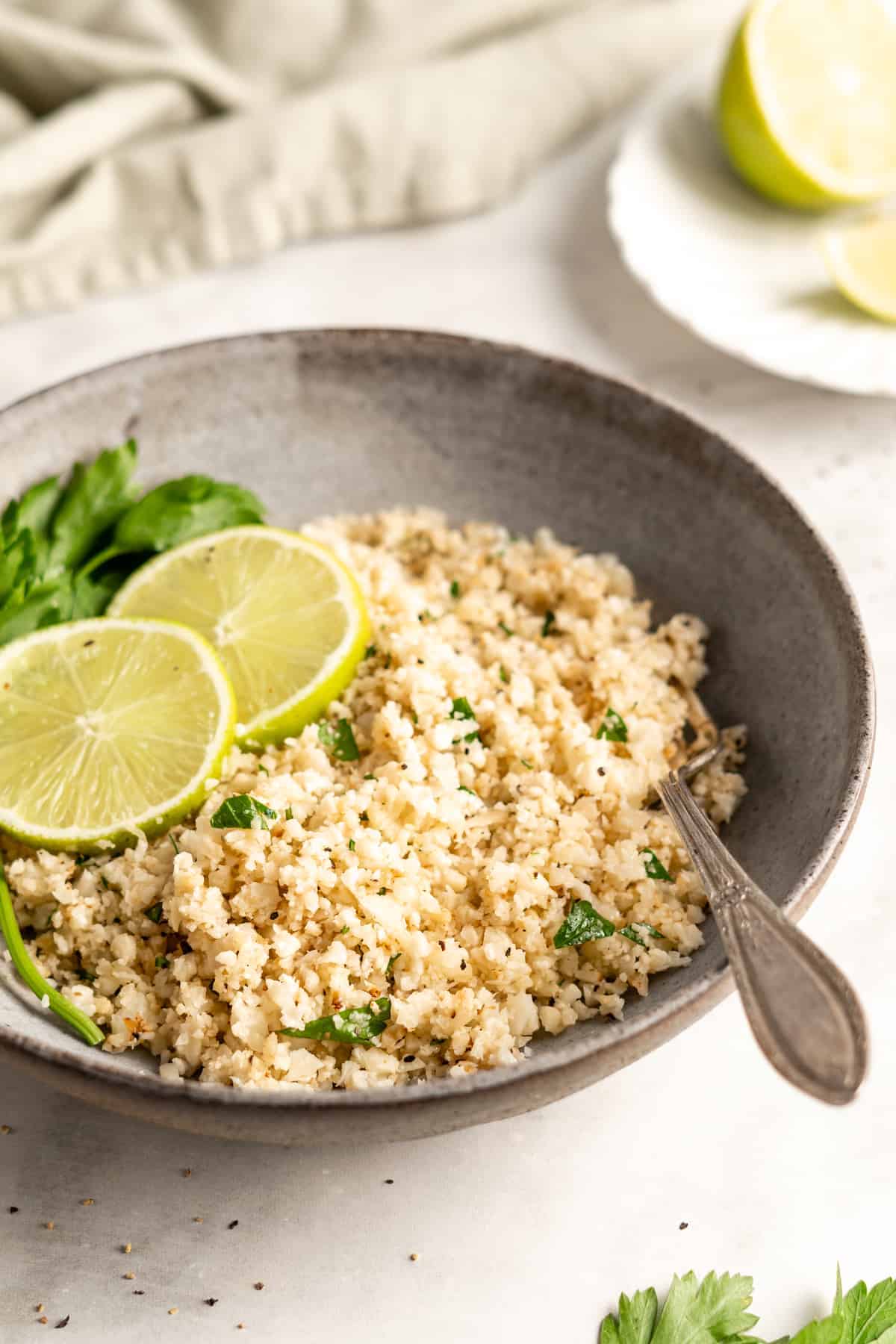
Learn how to make cauliflower rice in a few short steps. In less than 15 minutes, you’ll have a flavorful low-carb alternative to regular rice!
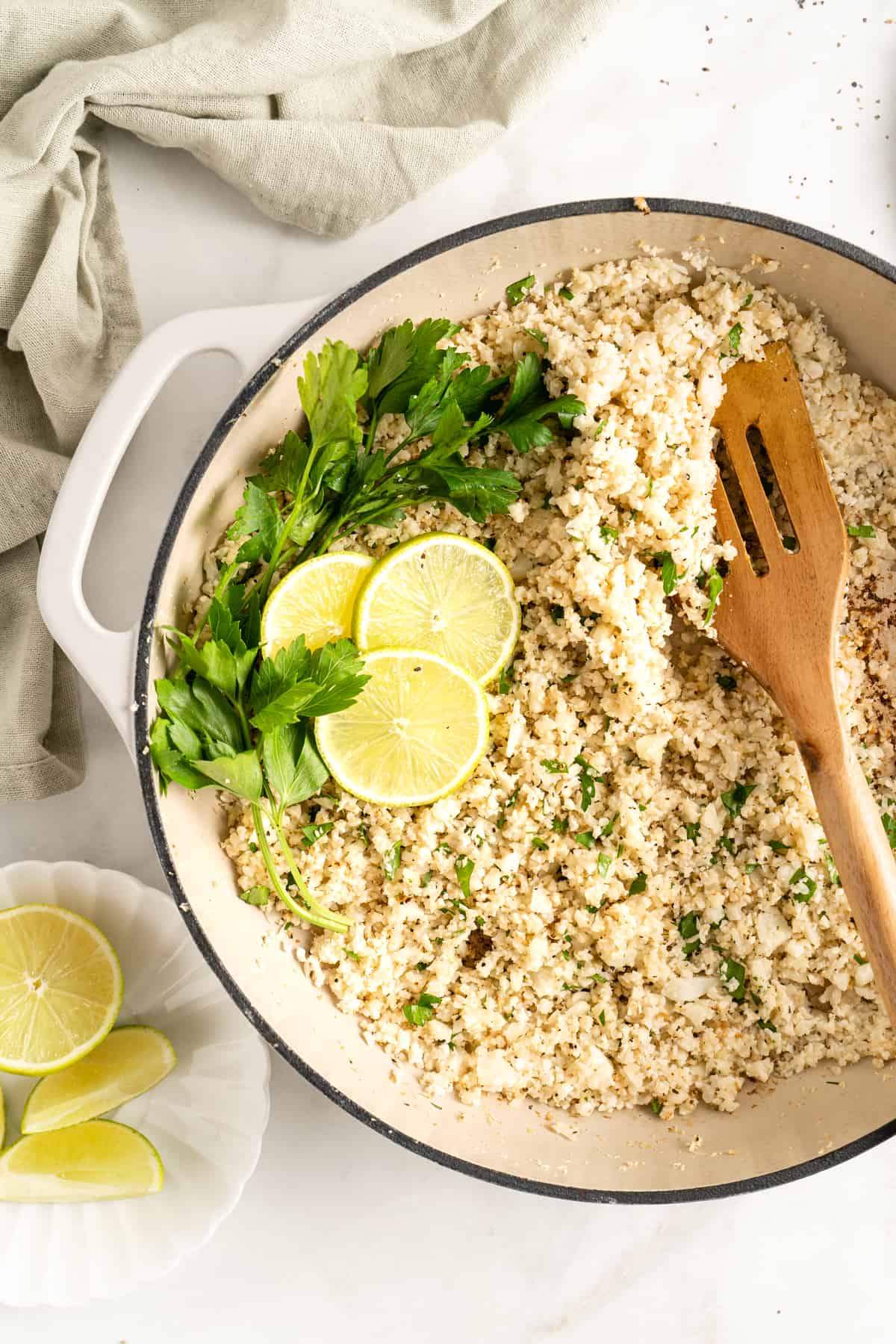
These days, cauliflower rice is so popular that you can even buy it frozen. But you know what? It’s so easy, and that much better when you make it fresh. I’ve always found frozen cauli rice to be a bit waterlogged, and the flavor just doesn’t compare to homemade. So, today, I’ll show you how to make cauliflower rice from scratch with fresh cauliflower. The results are fluffy, toasty, and delicious.
What Makes This Cauliflower Rice Recipe So Good
- Low in carbs. You can substitute low-carb cauliflower rice in just about any recipe that calls for regular white rice . I even make cauliflower fried rice !
- Quicker to cook. Unlike regular rice, cauliflower rice contains a lot of moisture, so a quick 5-minute sauté is enough to cook it. No steaming or boiling needed! If you’re making a curry or stir fry , you can simply cook the cauliflower rice in a skillet with oil, then season to taste with salt and pepper.
- Perfect texture. The step of coarsely chopping the cauliflower in the food processor is absolutely worth it. (And if you don’t have a food processor, no worries—you can use a box grater instead!)
- Flavorful and versatile. If you’re using this cauliflower rice in a burrito bowl or as a side dish, I like to add garlic and lime juice to amp up the flavor.
Notes on Ingredients
Please note that this is important information on the ingredients and instructions. The full recipe, including amounts and details, can be found below (scroll to the recipe card) for your reference.
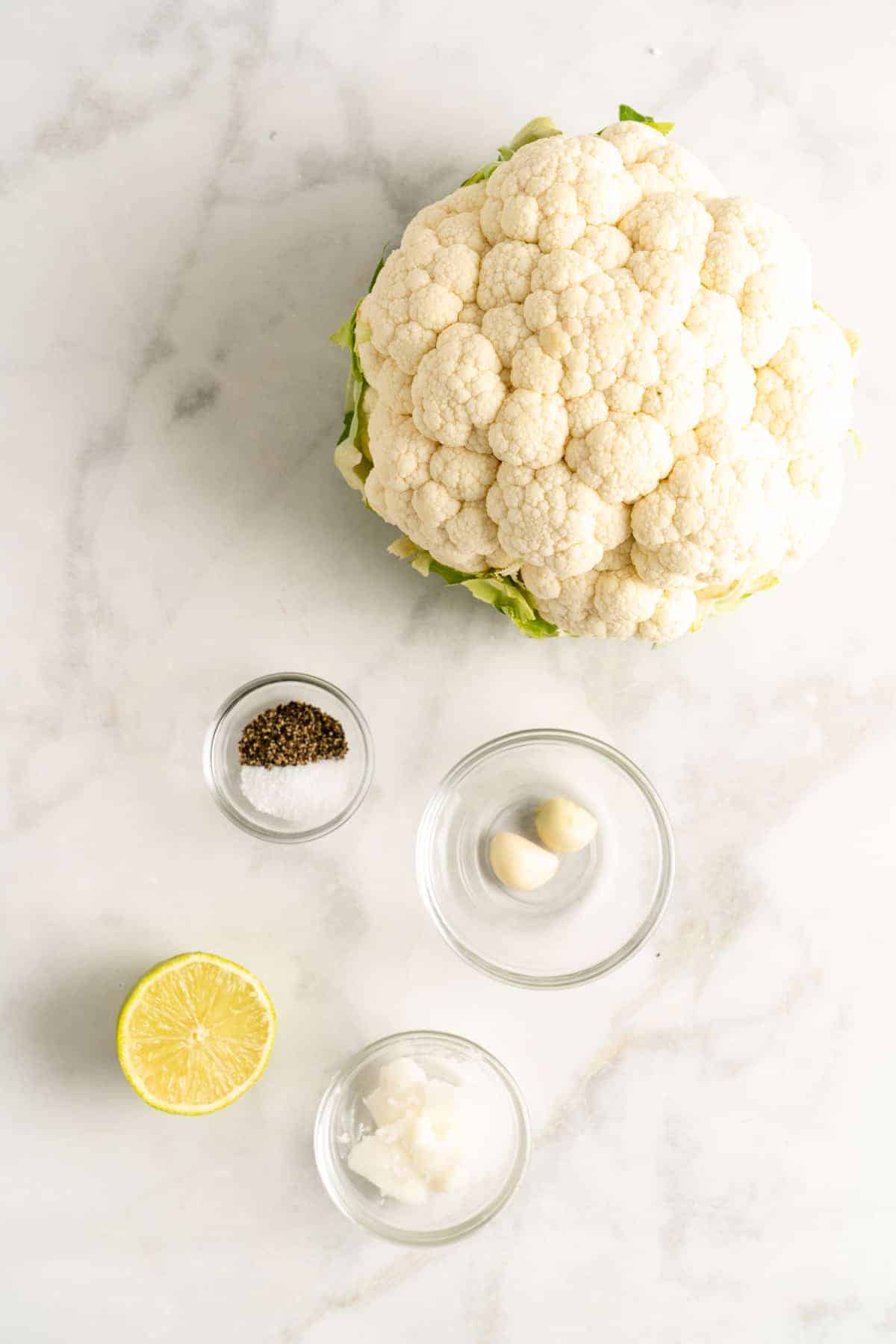
- Cauliflower – Choose a large head of cauliflower. Look for creamy white cauliflower with firm, tightly packed florets. The cauliflower should feel heavy for its size.
- C oconut oil – Or use any oil you like to cook with.
- G arlic – Freshly minced garlic boosts the flavor. If you don’t have fresh, substitute 1 tablespoon of jarred minced garlic instead.
- L ime – I love adding a squeeze of fresh lime juice to my cauliflower rice, especially if I’m serving it with Thai curry or Mexican-inspired dishes, like tofu tacos . Depending on what you’re pairing your rice with, lemon will work too!
How to Make Cauliflower Rice
Gather your ingredients, and here’s how to make cauliflower rice, step by step . A blender or food processor makes ricing the cauliflower very easy. If you don’t have one, after cutting the cauliflower into florets, use a box grater to rice it instead.
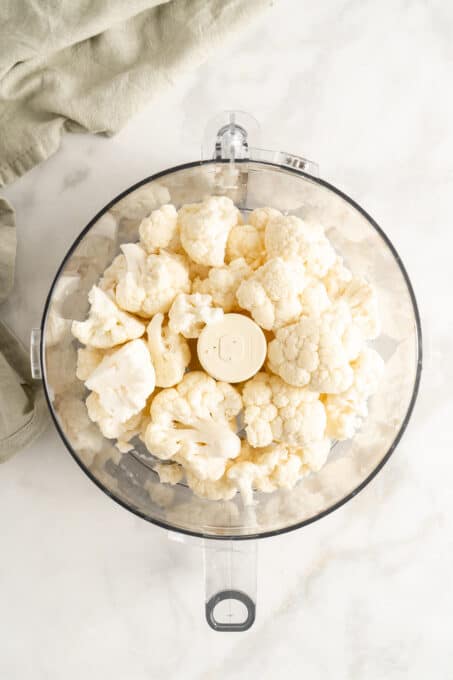
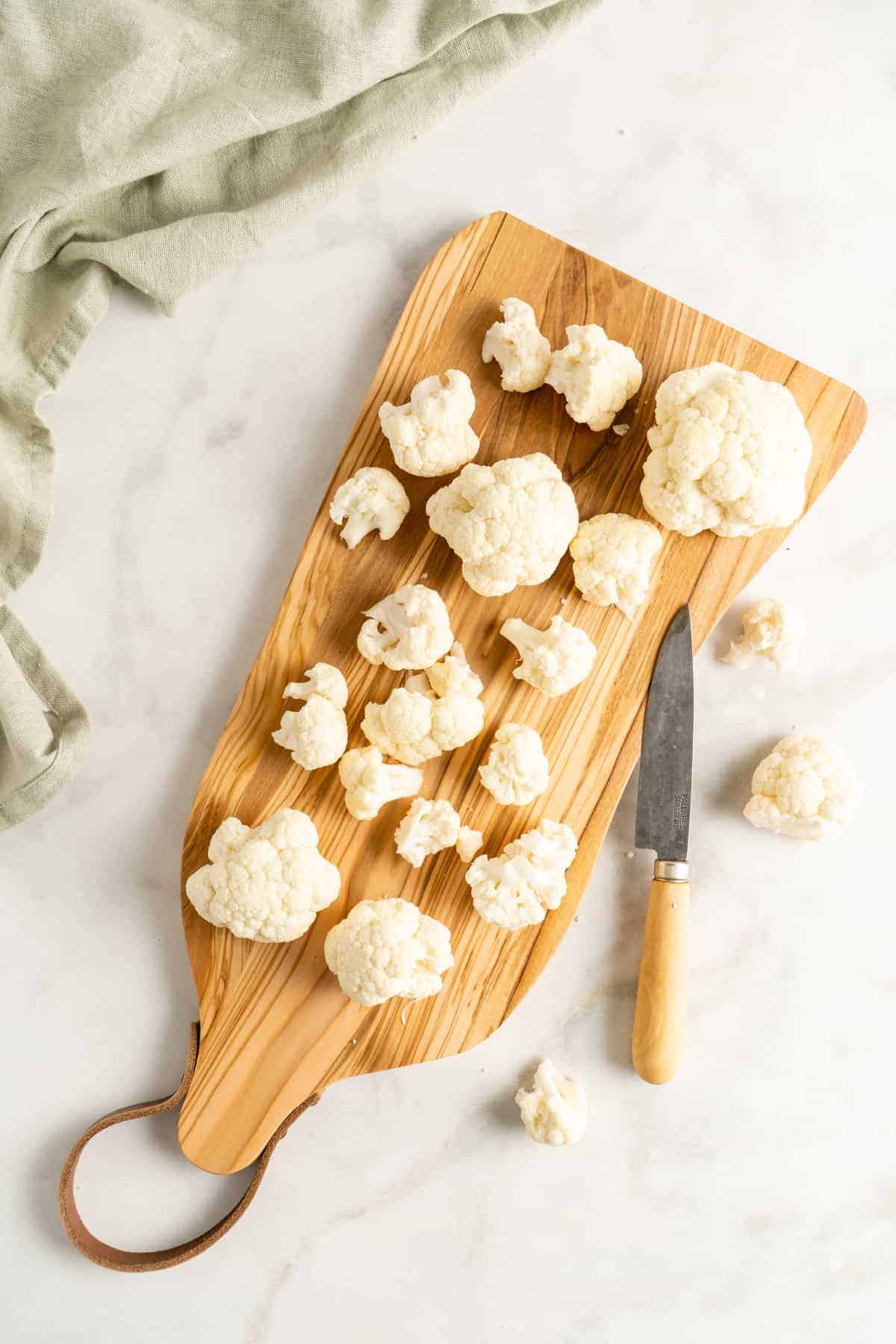
Cut the cauliflower into florets.
- Cut the cauliflower. Cut the cauliflower into manageable florets. They should be small enough to fit into your food processor.
- Rice the cauliflower. Pulse the florets until the mixture resembles grains of rice.
- Drain the excess liquid. Now, transfer the riced cauliflower to a paper towel and squeeze it to remove any excess liquid.
Cook the Cauliflower Rice
Once your raw cauliflower rice is ready, follow these quick steps to cook it for a simple, easy side dish that pairs well with just about any dish.
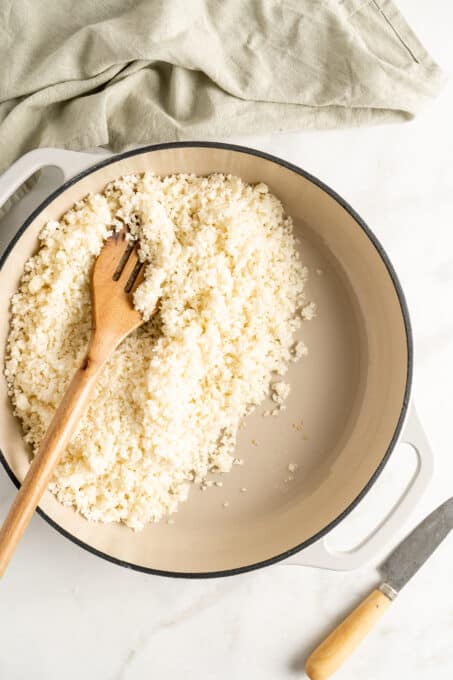
Sauté.
- Sauté the garlic. Warm the coconut oil in a skillet set over medium-high heat, then add the garlic and cook until fragrant.
- Add the cauliflower rice. Add the riced cauliflower, salt, pepper, and lime juice. Cook, stirring occasionally, until the cauliflower begins to brown slightly, which should take 3 to 5 minutes. Remove from heat and serve.
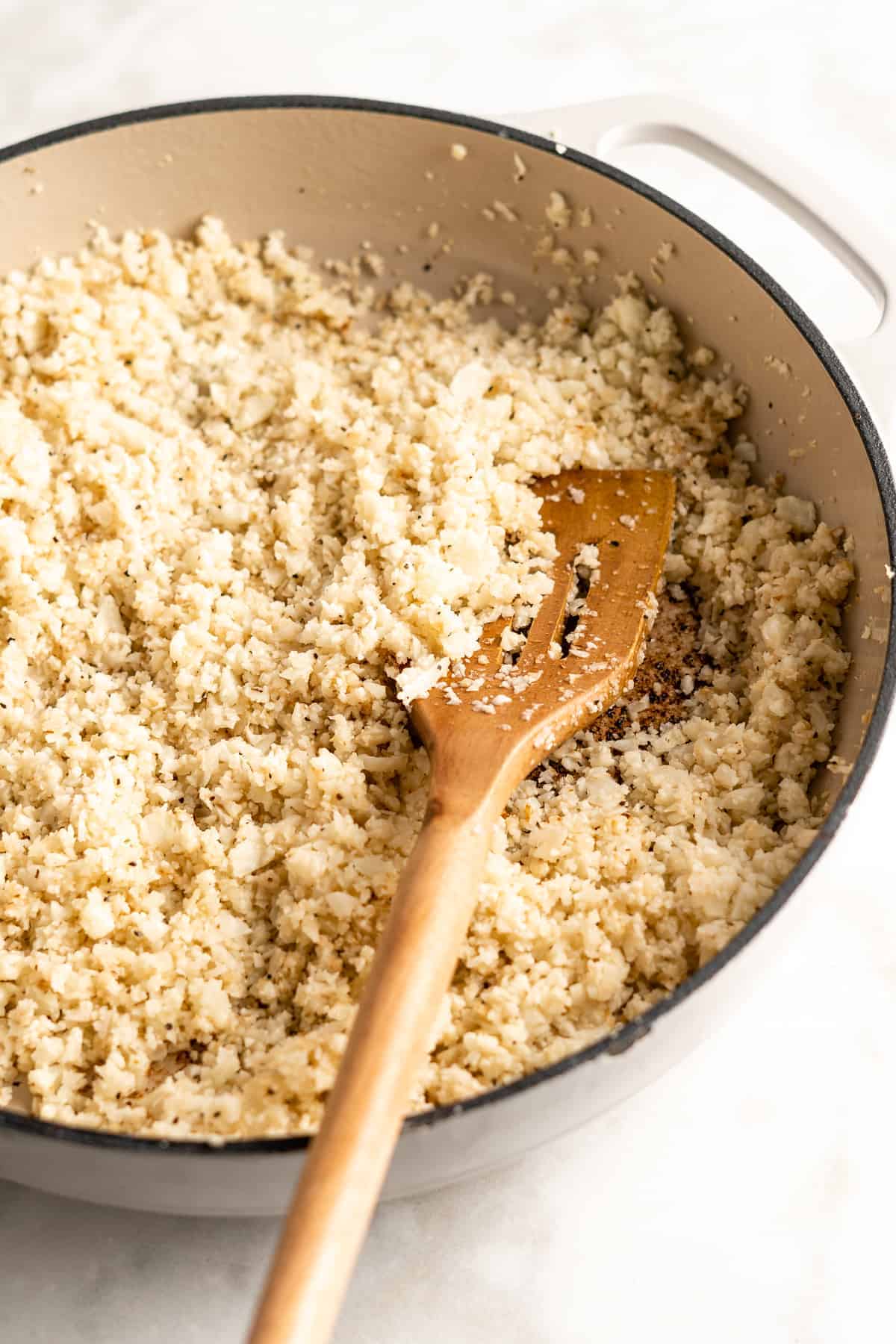
Tips for Perfect Cauliflower Rice
- Pulse in batches. If you have a large cauliflower or a small food processor, I recommend ricing the florets in two batches to ensure that the “grains” are uniform in size.
- Make ahead. You can rice the cauliflower up to 5 days in advance, then cook it whenever you’re ready to eat!
- Customize it. Add fresh cilantro and lime zest for a Mexican-inspired flavor (or try a variation of Mexican rice with cauliflower rice), cook it with turmeric or curry powder , stir in your favorite herbs. Just like traditional rice, cauliflower rice is like a blank canvas!
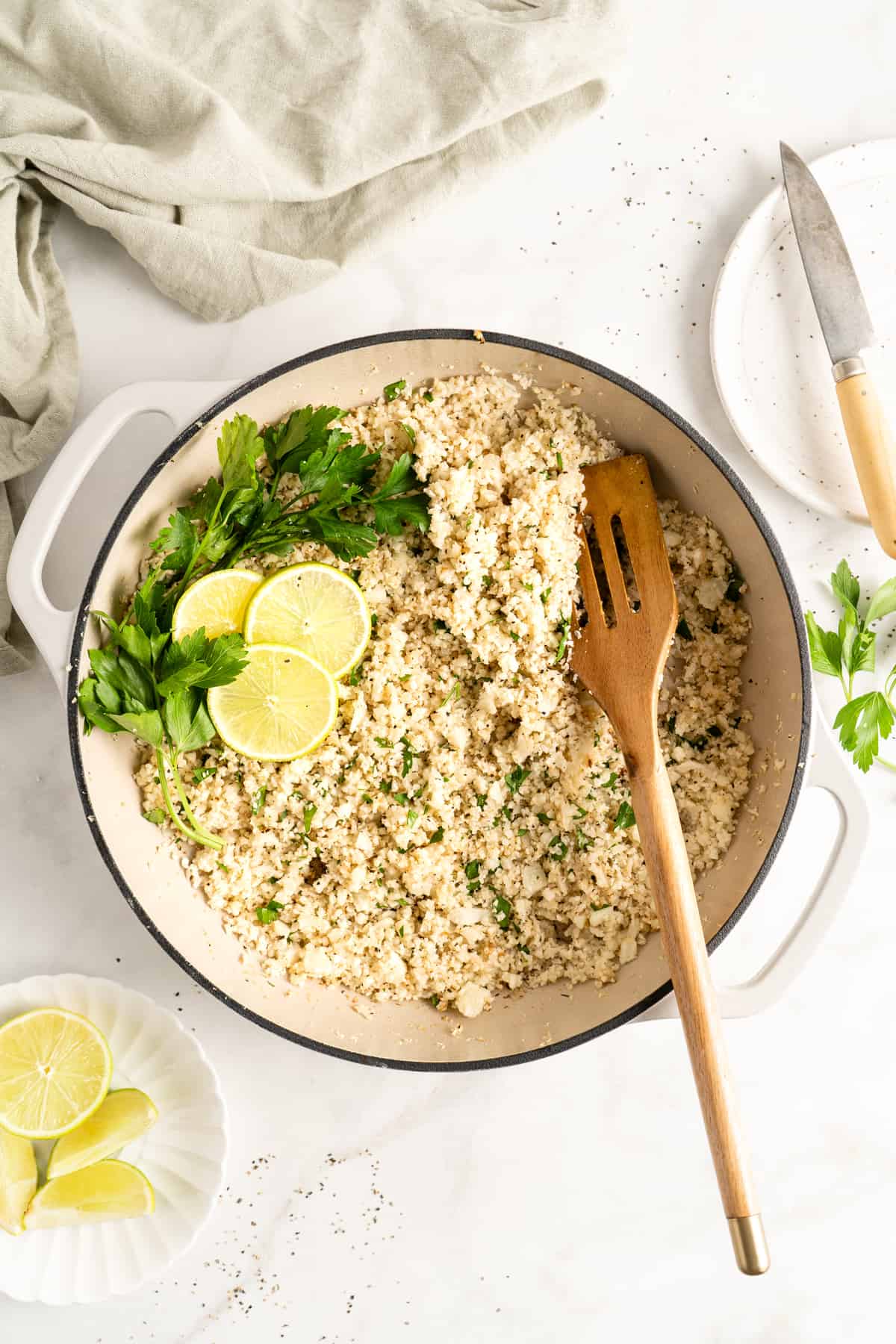
Serving Suggestions
You can use cauliflower rice in any dish where you’d use regular rice. Here are some of my favorite ways to serve it:
- Use it in place of regular rice when making pineapple fried rice or dirty rice .
- Use cauli rice as a base for a vegan sushi rice bowl .
- Let it soak up the sauce from this sweet-and-sour tofu or tempeh stir fry .
- Serve it with vegan butter chicken or chickpea tikka masala .
More Ways to Use Cauliflower Rice
- Pizza crust. Use cauliflower rice to make a low-carb pizza crust by adding a vegan egg replacer and cheese to bind it. Also, try these cauliflower pizza bites .
- Vegan meatballs. Combine the leftover cauli rice with hot sauce, quinoa, and a handful of other easy ingredients to make spicy vegan Buffalo cauliflower meatballs .
How to StoreLeftovers
- Refrigerate. Store cooked cauliflower rice in an airtight container in the fridge for up to 3 days. Cauliflower rice is wonderful for meal prepping. I like to portion it into containers and top it with marinated tofu or use it in place of rice in these peanut tofu bowls .
- Reheat. Reheat it in the microwave or in a skillet on the stovetop.
- Freeze. You can freeze cooked cauliflower rice in a freezer bag or an airtight container for up to 2 months. Warm it in a skillet from frozen or let it thaw in the refrigerator overnight, then heat it.
P.S. Here are some of the items I used to make this recipe, if you’d like to use them too:
More Cauliflower Recipes
- Bang Bang Cauliflower
- Cauliflower Mac and Cheese
- Roasted Cauliflower Hummus
- Whole Roasted Cauliflower
- Cauliflower Steaks
Ingredients
How to Make Cauliflower Rice
- 1 large head cauliflower , stem removed
- 2 teaspoons coconut oil
- 2 cloves garlic , minced
- 1/2 teaspoon salt
- 1/4 teaspoon ground black pepper
- 1/2 lime
Instructions
How to Make Cauliflower Rice
- Cut the cauliflower into manageable floret pieces.
- In a food processor, add the pieces and pulse until it resembles rice. If you don’t have a food processor, you can use a grater but I found better success with a food processor.
- Add the riced cauliflower to a paper towel and squeeze to remove excess liquid. Set aside.
- In a pan over medium high heat, heat the coconut oil.
- Add the garlic and stir until fragrant.
- Add the riced cauliflower, salt, pepper and lime and stir to combine. Cook until the cauliflower begins to brown slightly, about 3 to 5 minutes. Remove and enjoy!
