Homemade almond butter is so worth it! It’s easy to make, more affordable than store-bought, and it’s absolutely delicious. Here’s how to make almond butter at home!
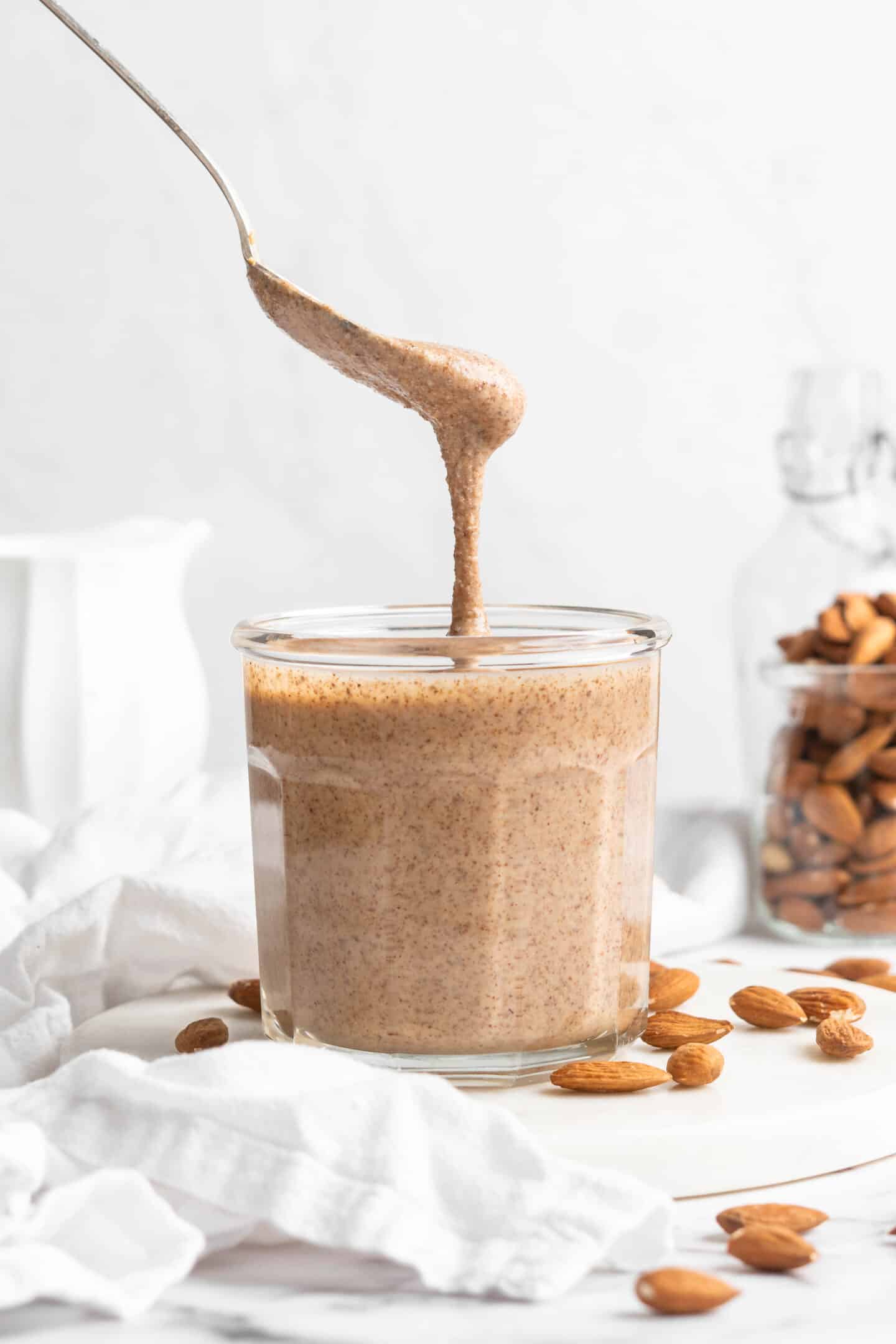
Almond butter is so expensive at the grocery store, but despite this, it’s hard to resist—I mean, it’s good stuff . It’s supremely smooth and creamy, it’s the perfect addition to so many of our favourite breakfast foods (I love to slather it on milk bread toast!), and a spoonful is the perfect pick-me-up.
So why not try making it yourself?
Why Make Your Own Almond Butter
Aside from the monetary savings, making your own almond butter means you can control the ingredients. Store-bought almond butters often have added sugar, salt, and other oils, but when you make it at home, you can keep it as simple or as complex as you like.
Homemade almond butter tastes amazing, too. Nothing’s more disappointing than shelling out $12 for a new brand of almond butter, only to get it home and find out it’s bland and oily. Womp womp. When you make your own nut butter, it will never disappoint because you can taste and adjust as you go.
Oh, and did I mention how easy it is? Because that too! Once you know how to make almond butter, you’ll wonder why anyone wouldn’t make it at home.
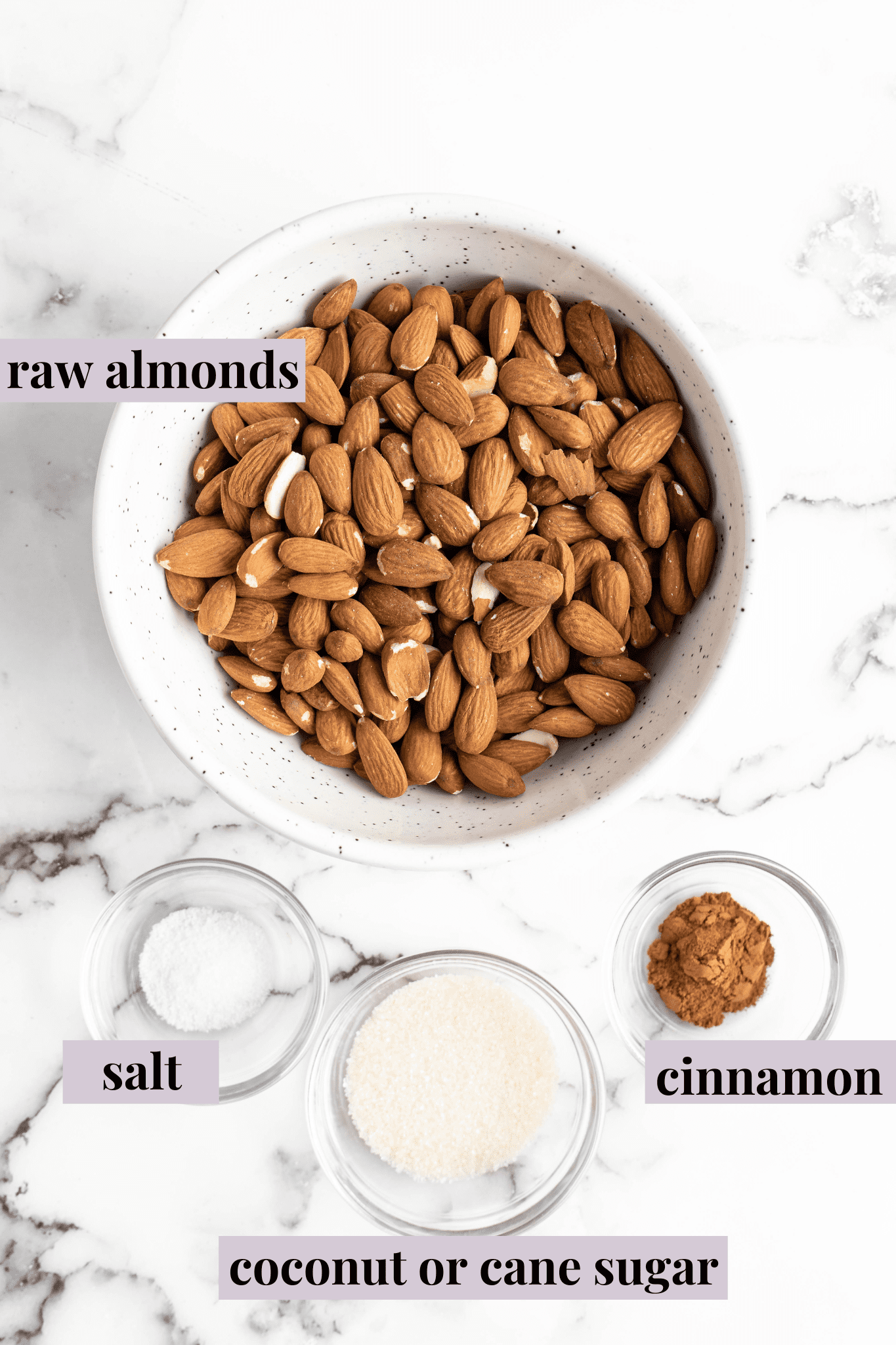
Notes on Ingredients
Please note that this is important information on the ingredients and instructions and the FULL recipe with amounts and details can be found DOWN BELOW (scroll to it) in the recipe card.
- Raw almonds – Skin-on is just fine!
- Sea salt
Optional for a sweet nut butter:
- Coconut or cane sugar
- Cinnamon
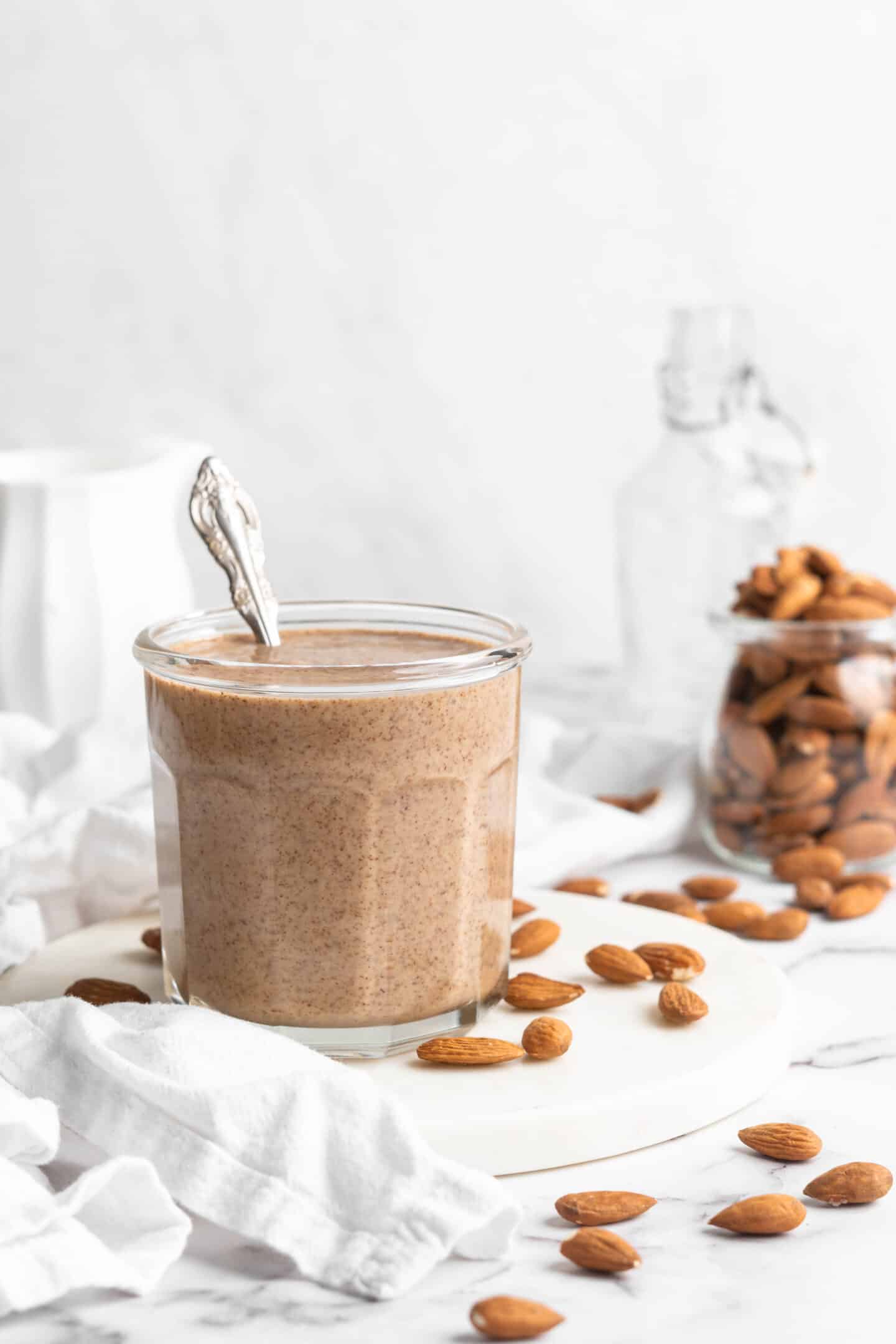
How to Make Almond Butter
This is going to be the best almond butter you’ve ever had! Here’s how to make it.
Prepare . Preheat your oven to 350°F/180°C and line a baking sheet with parchment paper or a silicone mat.
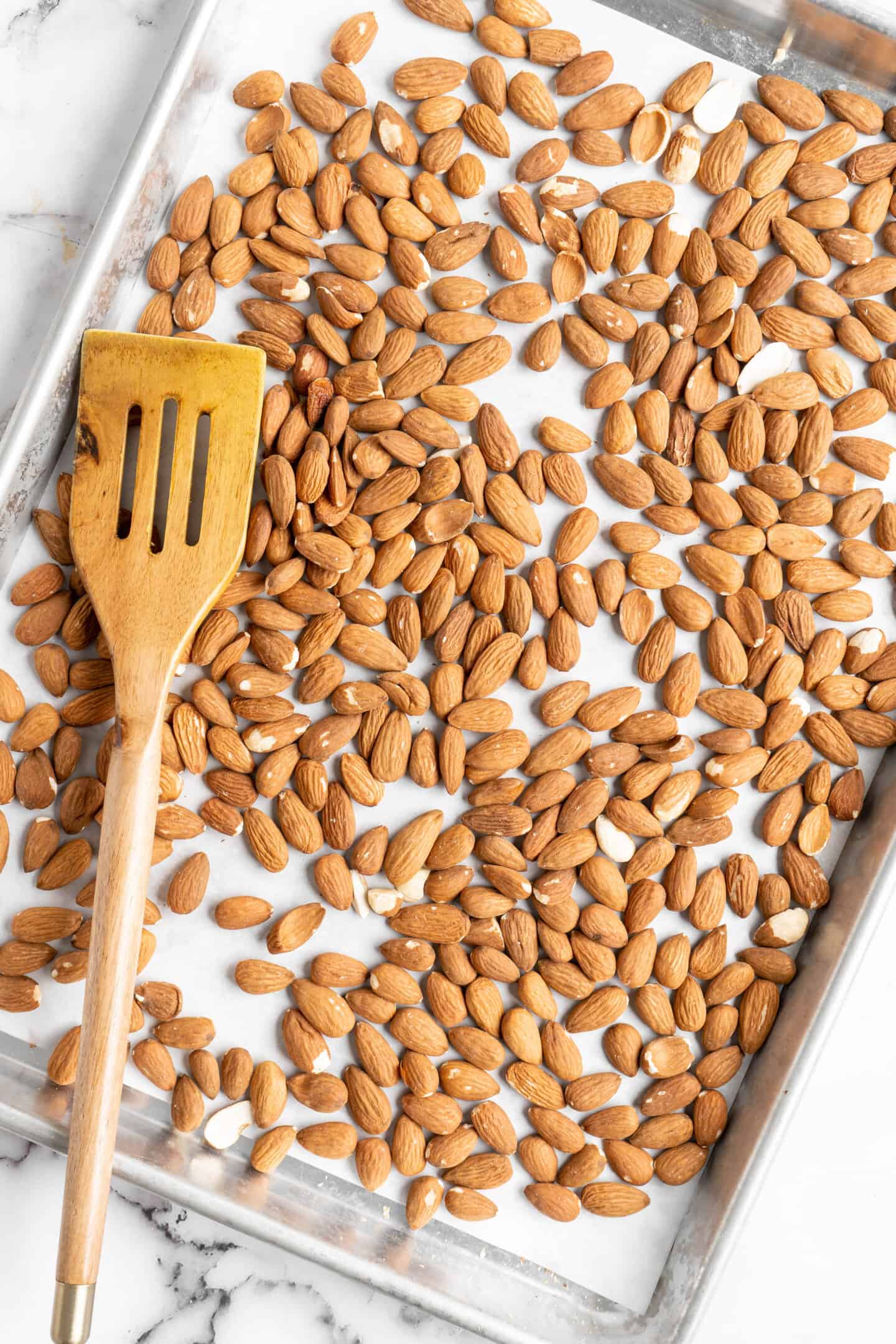
Roast the almonds . Place the almonds on the prepared baking sheet and toast them for 5 minutes, or until they’re fragrant. This will warm up their oils.
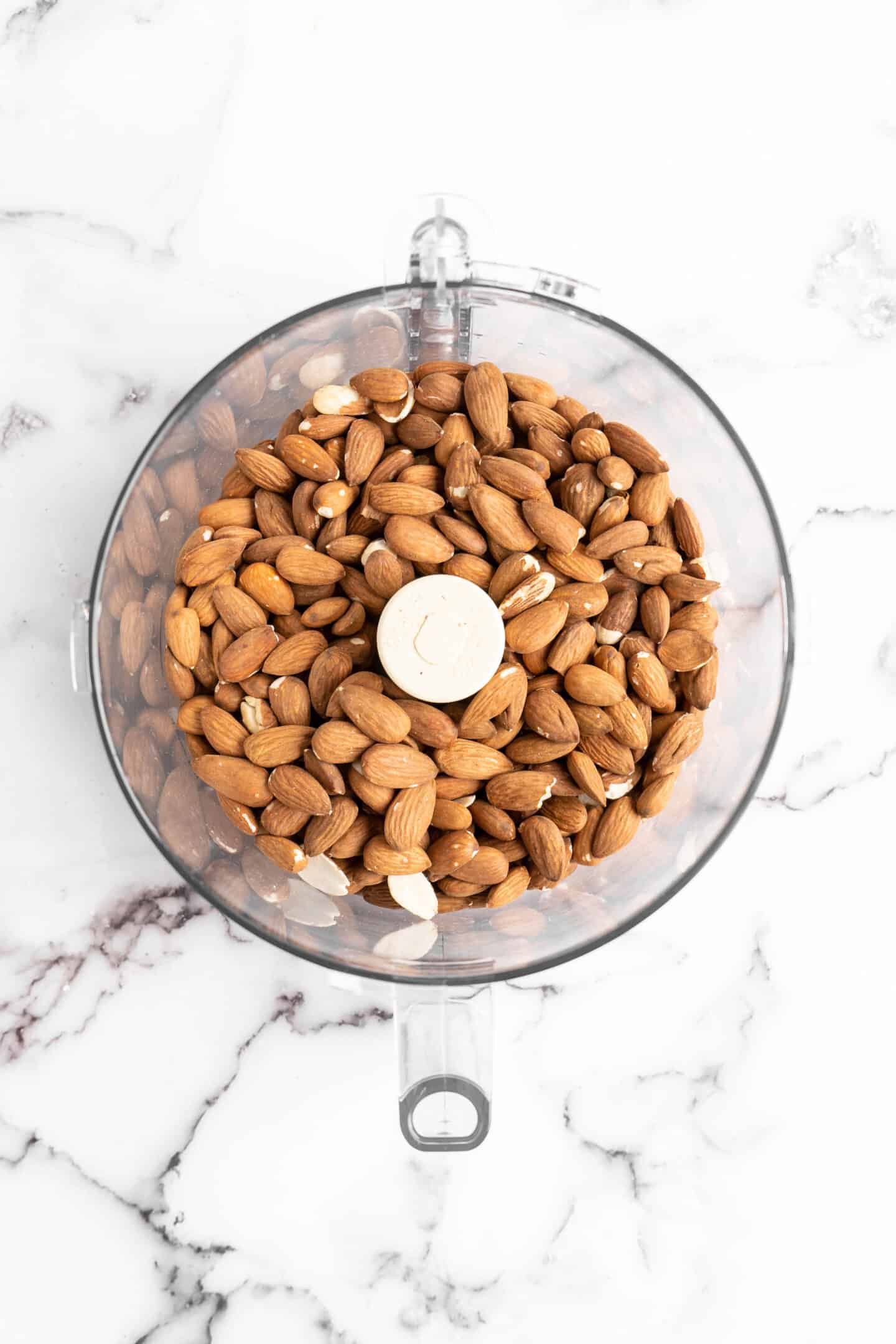
Process the almonds . Let the almonds cool slightly, then place them in your food processor. Process on low or high until the mixture forms a smooth, creamy nut butter, stopping to stir occasionally. Your food processor may get a bit warm depending on how long this takes, but you can turn it off and give it a break if needed.
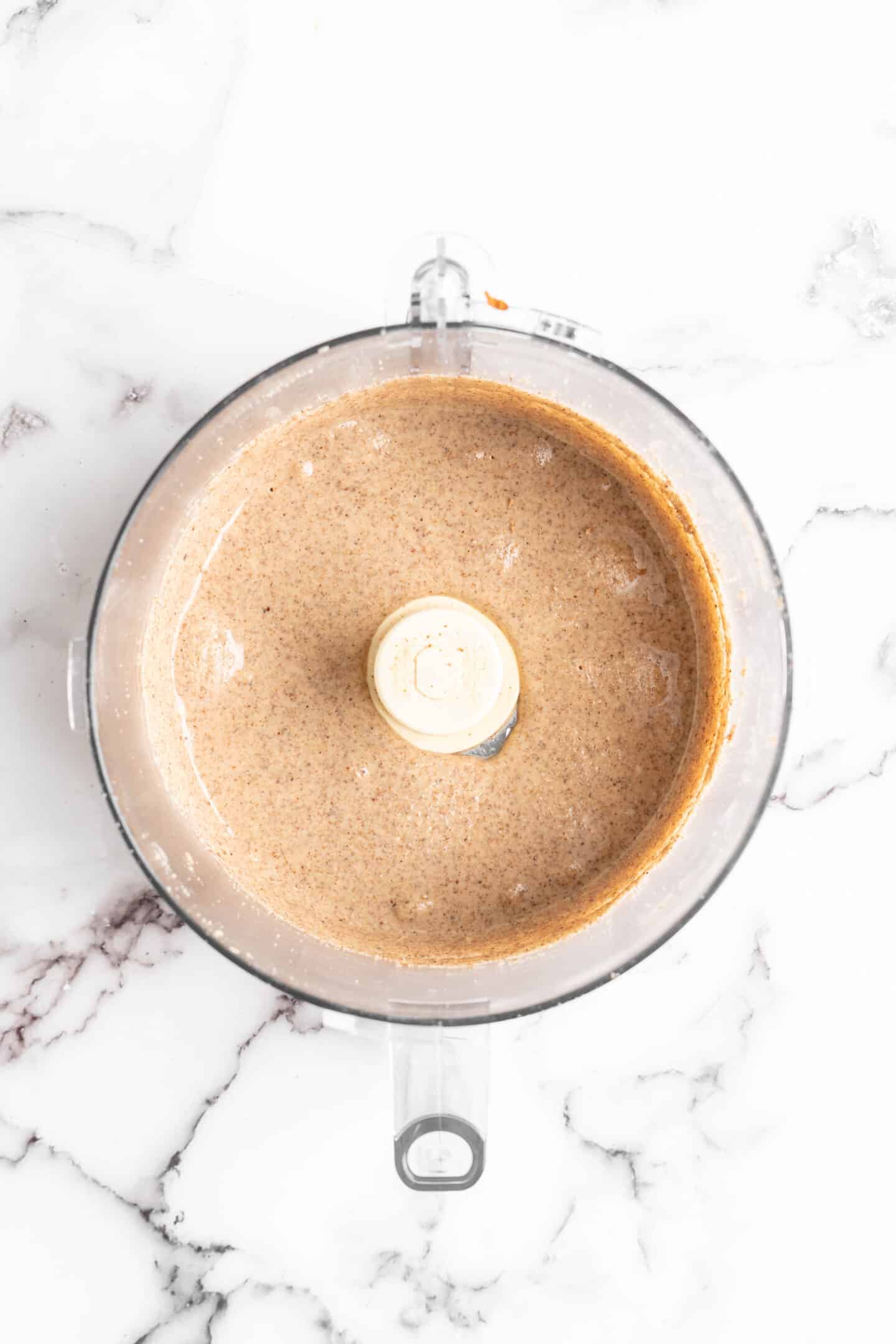
Season . Once the butter is smooth, add the salt and any add-ins. Process for another 30 seconds to incorporate.
Tips for Success
Now that you know the basics of how to make almond butter, these tips will help you make sure it turns out perfect:
- Use unsalted almonds . This allows you to control the flavour of your nut butter. Salted nuts can be heavily salted, which isn’t what you want in a nut butter.
- Don’t add too much salt, either . Just a pinch is perfect! You can always taste and add more if needed, but it’s a lot harder to fix almond butter once you’ve added too much salt!
- Be patient . It can take up to 15 minutes for the nuts to turn into butter, so don’t panic if it seems to be taking a long time.
Flavour Ideas
Want to take your almond butter to the next level? Add some flavours! Here are some of my favourite mix-ins.
- Make it cozy . Add finely chopped raisins (or cranberries, if you’re not a raisin person), cinnamon, and maple syrup for a sweet spread for your morning toast.
- Make it decadent. Add chocolate shavings and a pinch of salt for a sweet and salty nut butter that’s straight-up amazing. I love this on pancakes and waffles !
- Make it savory. I know it sounds strange, but a little bit of curry powder is delicious in almond butter!
How to Store
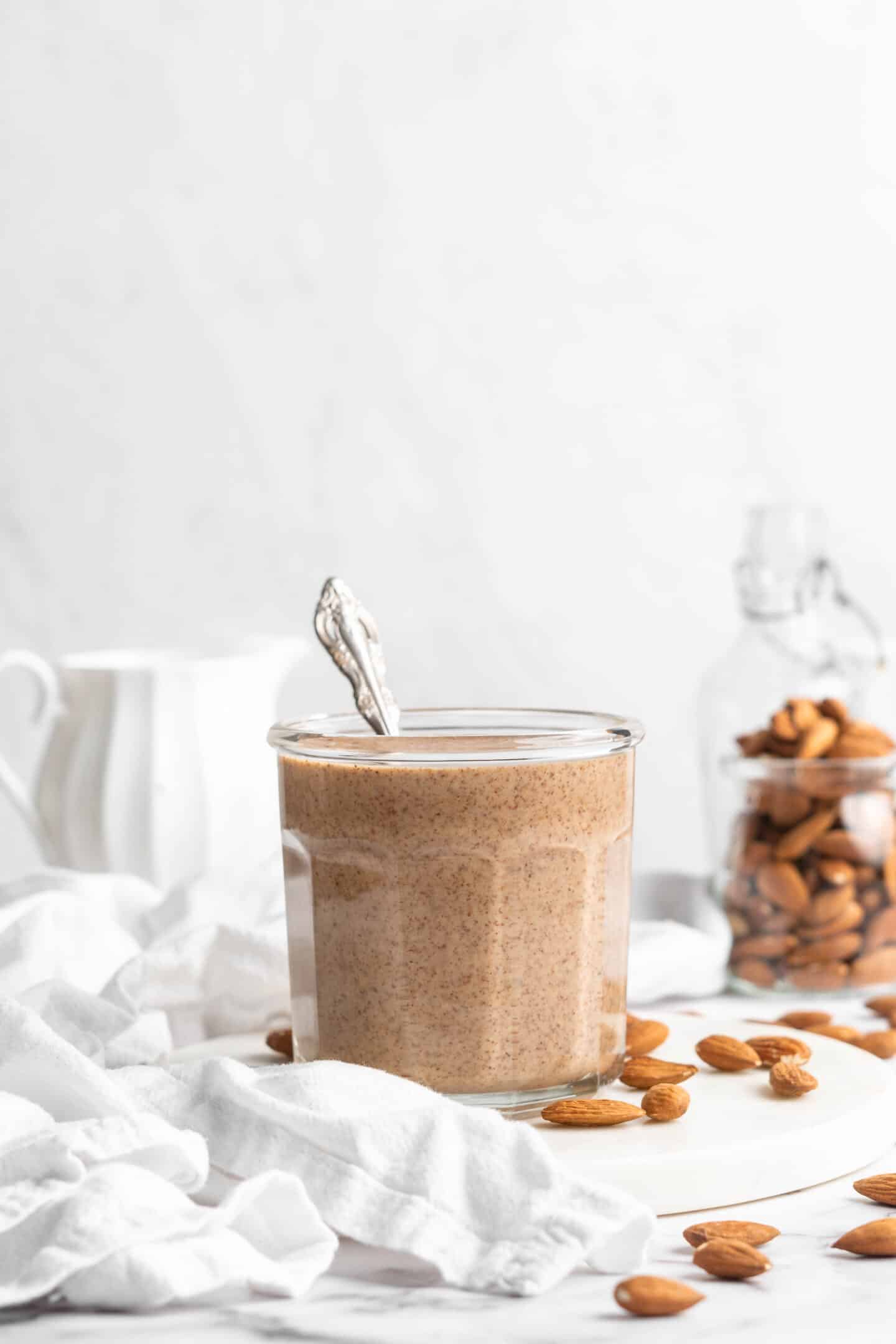
Pour your homemade almond butter into a jar with a cover and place it in the fridge. You can use this nut butter anywhere you’d use store-bought and it will keep for about a month. If needed, give it a stir before serving.
Can I Freeze This Recipe?
Yes, if you want to store your almond butter for an extended period of time, pop it in the freezer and store it for up to six months. Thaw it in the refrigerator before you use it.
Ingredients
- 2-3 cups of raw almonds , or desired raw nut
- pinch salt
- Optional for a sweet nut butter:
- 2 tablespoons coconut or cane sugar
- 1 teaspoon cinnamon
Instructions
- Preheat oven to 350°F/180°C. Line a baking sheet with parchment paper or a silicone mat.
- Add the nuts to the baking sheet and bake for 5 minutes. This helps to give the nuts a fragrant smell and to warm up the oils in the nuts.
- Remove the nuts and add to a food processor. Pulse on low or high until combined into a nut butter. Your food processor may get a bit warm depending on how long it takes, so just turn it off for about a minute to prevent overheating if this happens. You may also need to stir everything together every few minutes.
- When liquified into a nut butter, sprinkle over a pinch of sea salt and extra add ins if adding now too. Pulse for another 30 seconds to incorporate.
- Pour into a jar with a cover and place in the fridge. You can use this nut butter anywhere you’d use storebought!
Notes
Homemade Almond Butter
Ingredients
- 2-3 cups of raw almonds or desired raw nut
- pinch salt
- Optional for a sweet nut butter:
- 2 tablespoons coconut or cane sugar
- 1 teaspoon cinnamon
Instructions
- Preheat oven to 350°F/180°C. Line a baking sheet with parchment paper or a silicone mat.
- Add the nuts to the baking sheet and bake for 5 minutes. This helps to give the nuts a fragrant smell and to warm up the oils in the nuts.
- Remove the nuts and add to a food processor. Pulse on low or high until combined into a nut butter. Your food processor may get a bit warm depending on how long it takes, so just turn it off for about a minute to prevent overheating if this happens. You may also need to stir everything together every few minutes.
- When liquified into a nut butter, sprinkle over a pinch of sea salt and extra add ins if adding now too. Pulse for another 30 seconds to incorporate.
- Pour into a jar with a cover and place in the fridge. You can use this nut butter anywhere you’d use storebought!
Video
Notes
Nutrition
Homemade Almond Butter https://jessicainthekitchen.com/how-to-make-almond-butter/ July 20, 2022
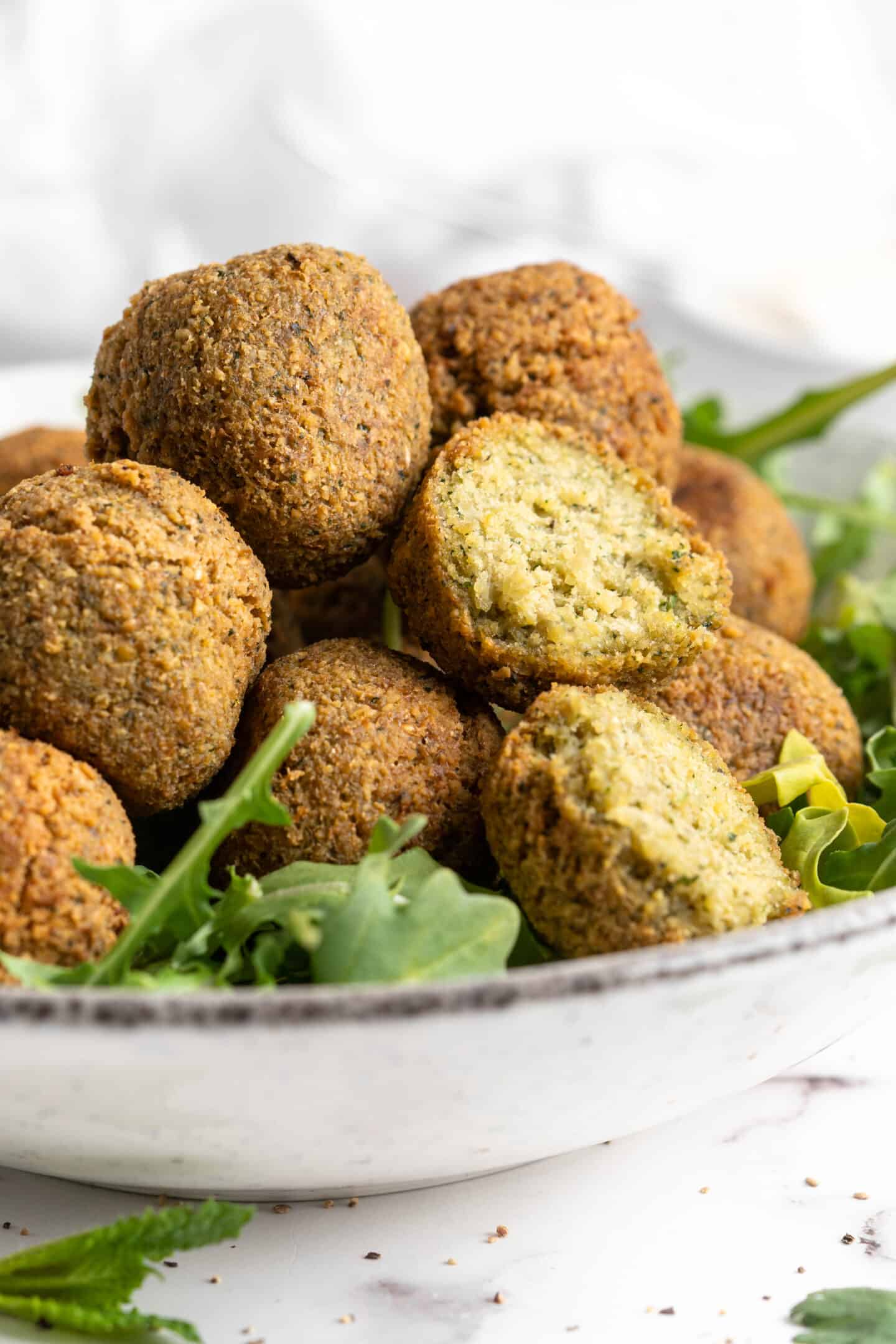
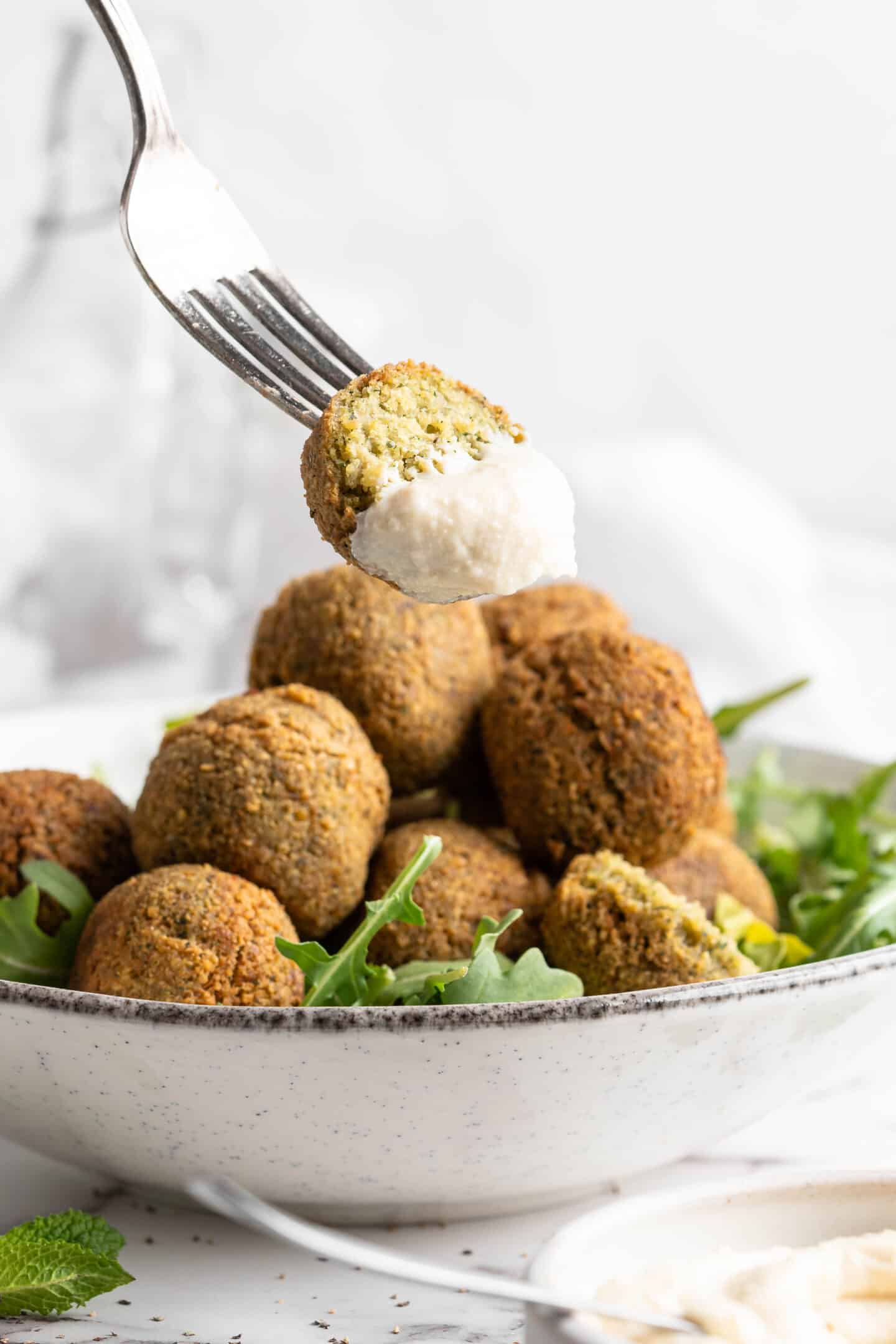
This restaurant-style homemade falafel is perfectly seasoned, crispy on the outside, and everything you want your falafel to be! Tuck it into pita bread and drizzle it with tahini, or just eat it as-is for a tasty vegan snack!
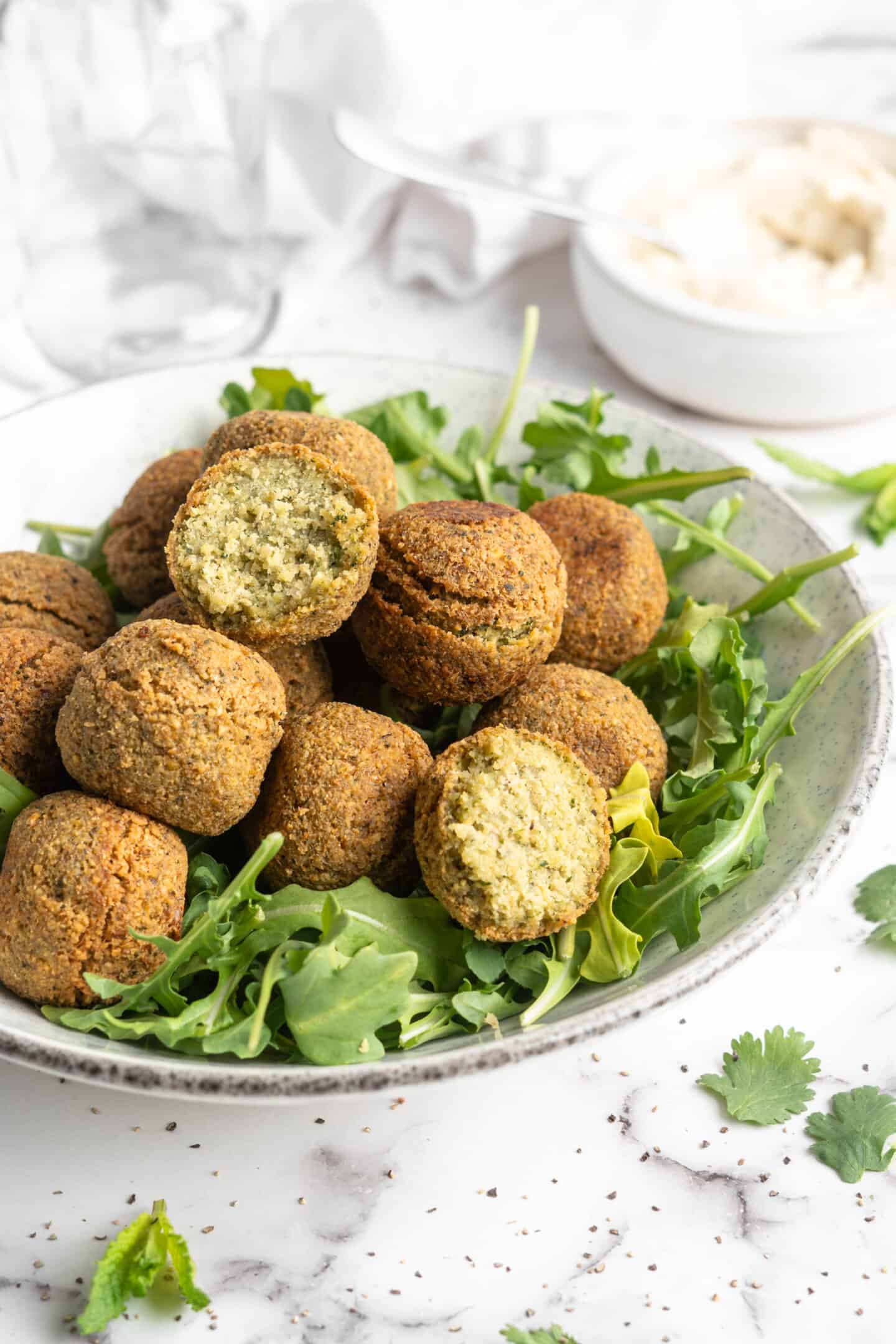
As a vegan, falafel is one of my go-to restaurant orders because it’s naturally plant-based. There’s no awkward, “Yes, I’ll order this, but can you make it without butter? And cheese?” or “Is this soup made with beef stock?” because falafel is made with chickpeas, herbs, and spices. No hidden butter or beef stock!
And falafel is so good . It has that irresistibly crispy exterior, the pillowy soft inside, and it’s delicious paired with some of my other favourite foods—namely, fluffy pita bread and tahini sauce . But up until now, I could never get homemade falafel to taste like the kind they serve at restaurants.
Well, I’ve figured out the secret: it’s deep frying.
I know, a lot of people have an aversion to deep frying. I get it! And for you, there’s a baked version of this falafel recipe below. But if you’re game for frying the falafel, you will get perfect restaurant-style falafel at home. Crispy, golden brown, soft on the inside, and just all around amazing.
Obviously, we’re not going to be deep frying every meal every day of the week, but I believe in everything (well, everything except meat and dairy) in moderation, and like my homemade vegan donuts , this falafel recipe is totally worth it.
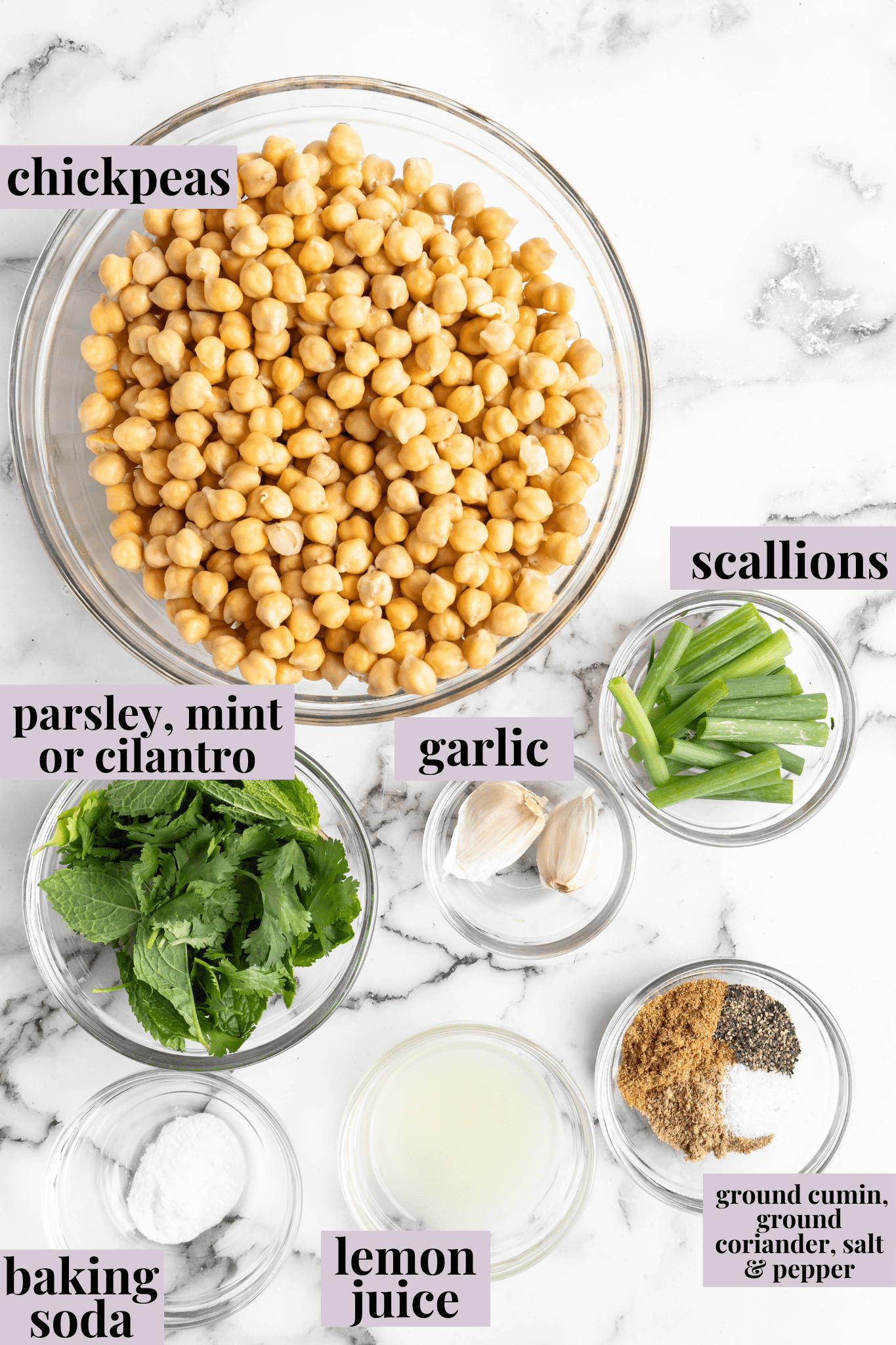
Notes on Ingredients
Please note that this is important information on the ingredients and instructions and the FULL recipe with amounts and details can be found DOWN BELOW (scroll to it) in the recipe card.
- Dried chickpeas – Soak them in water for 24 hours, then rinse them before starting the recipe.
- Parsley, mint, or cilantro – You can choose one, two, or use all three.
- Scallions – Some recipes call for regular onions, but I prefer green onions because they have a milder flavour that doesn’t compete with the herbs and spices.
- Garlic
- Ground cumin
- Ground coriander
- Sea salt
- Black pepper
- Baking soda – This is what makes the inside of the falafel soft and fluffy.
- Lemon juice
- Water
- Canola, grapeseed, or peanut oil – You’ll need to fill a deep saucepan or Dutch oven with 2 to 3 inches, so the exact amount depends on the size and shape of your cooking vessel.
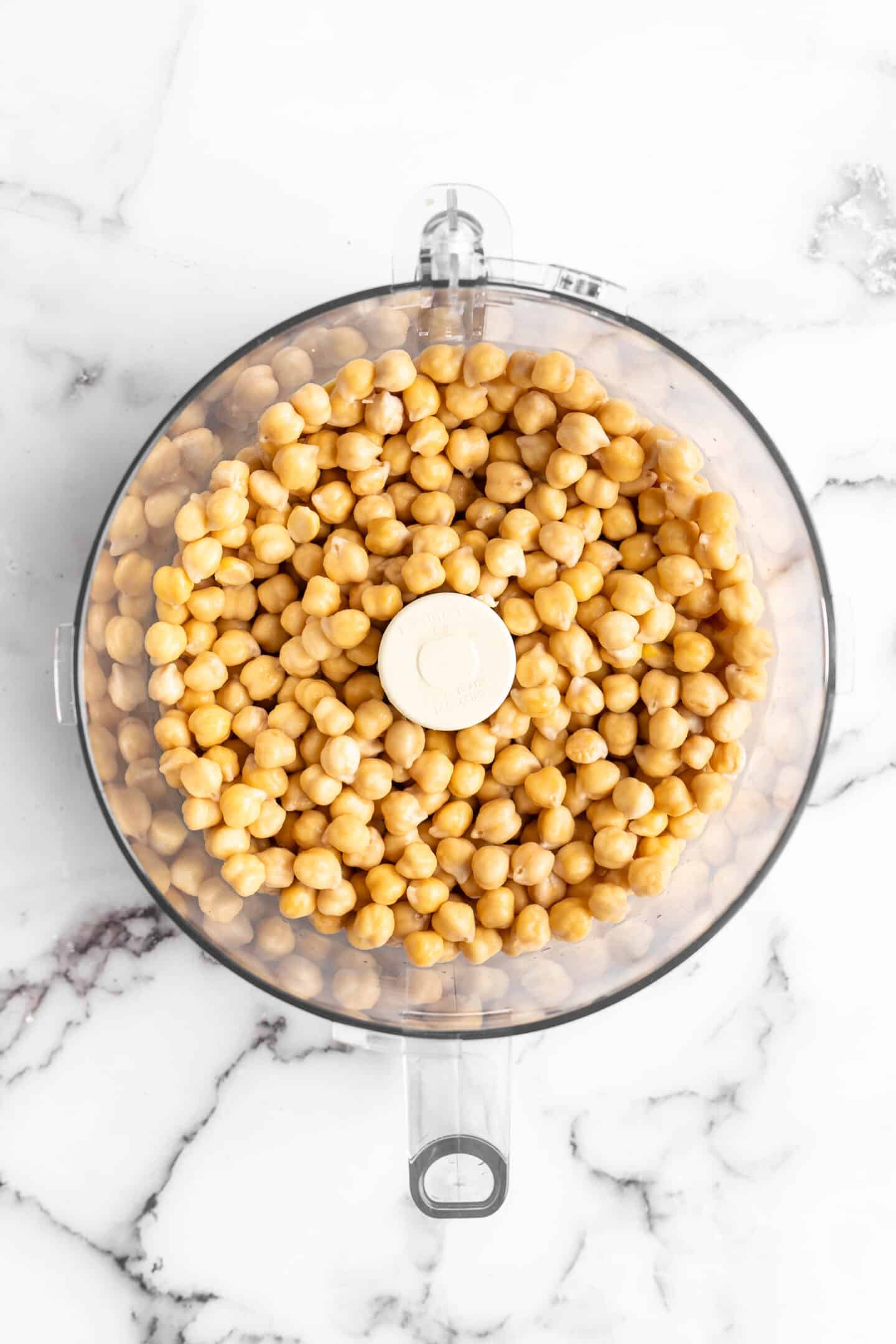
Why Can’t You Use Canned Chickpeas for Falafel?
Canned chickpeas are a great convenience, but they shouldn’t be used when making homemade falafel! Because they’re pre-cooked, most of the starch is released into the cooking liquid, which means they won’t hold together as well when cooked (again) in the falafel.
In addition, canned chickpeas have that distinct canned bean flavour to them, and that will come through in the finished falafel. Using dried chickpeas tastes much better, too.
How to Make Homemade Falafel
Ready to make falafel as good as your favourite restaurant’s? Here’s what you’ll need to do.
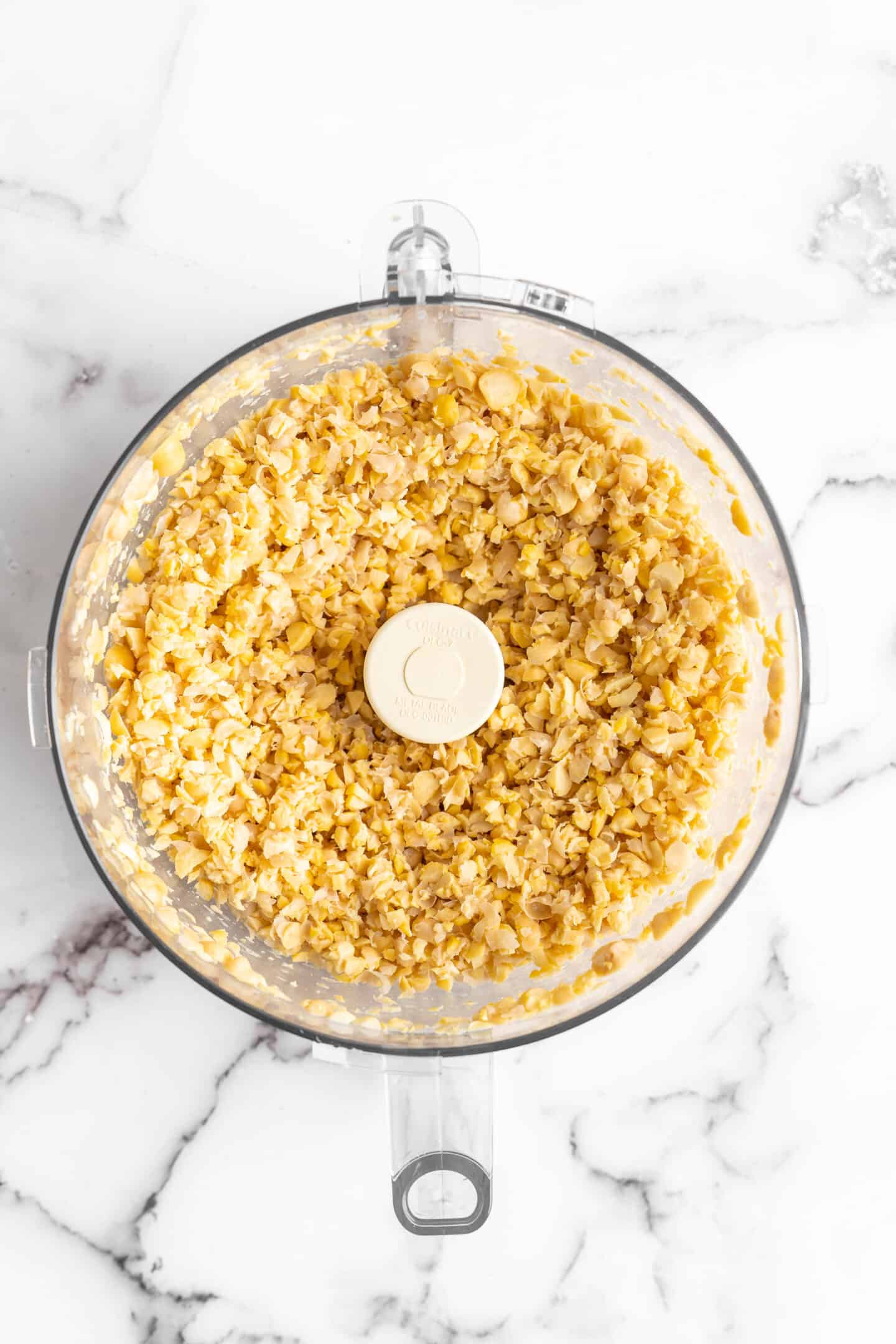
Grind the chickpeas. Place the soaked chickpeas in your food processor. Turn it on and process until the mixture resembles a coarse crumb—it should have the texture of homemade breadcrumbs. Transfer the ground chickpeas into a large bowl.
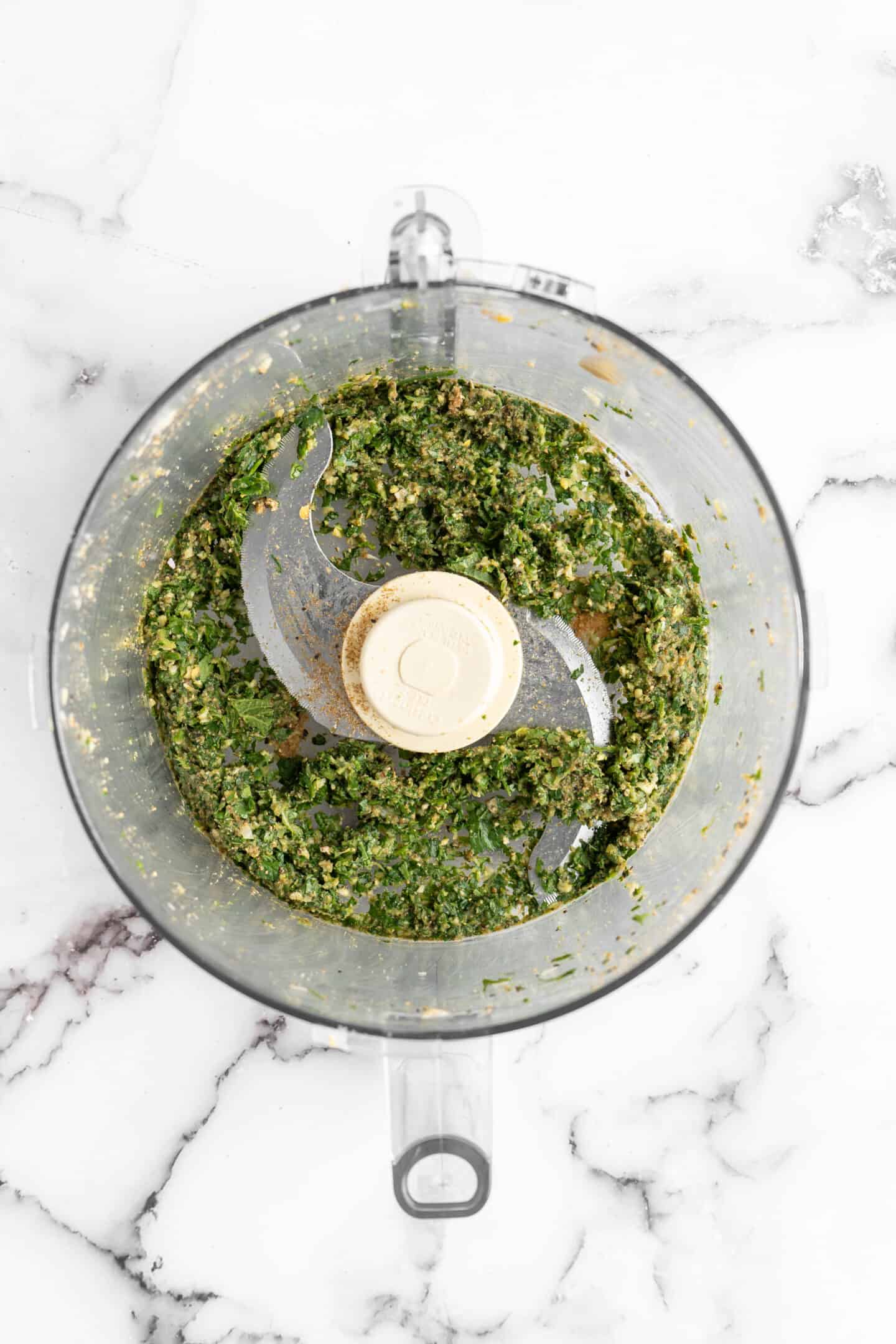
Make the seasoning mixture . Add the fresh herbs, scallions, garlic, cumin, coriander, salt, pepper, baking soda, and lemon juice to the food processor. Process until the mixture is smooth.

Finish the falafel mixture . Add the chickpeas back into the food processor. Stir them into the herb mixture, then turn on the food processor. You’ll want to let it run until the falafel mixture is light green in color, with only small bits of herbs, and the mixture comes together when you pinch it. If it doesn’t hold together, add water one tablespoon at a time. Season to taste.
Heat the oil. Add the oil to a deep saucepan or Dutch oven, filling it 2 to 3 inches deep. Turn the stove to medium-high and heat the oil until it reaches about 350ºF.
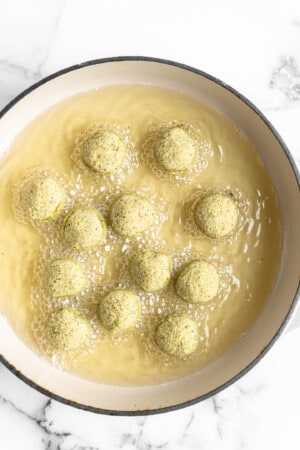
Cook the falafel . Use clean hands to shape the falafel mixture into balls (or slightly flattened balls) and carefully place them in the oil. Cook for about 4 to 5 minutes, or until the outside is crispy and browned.
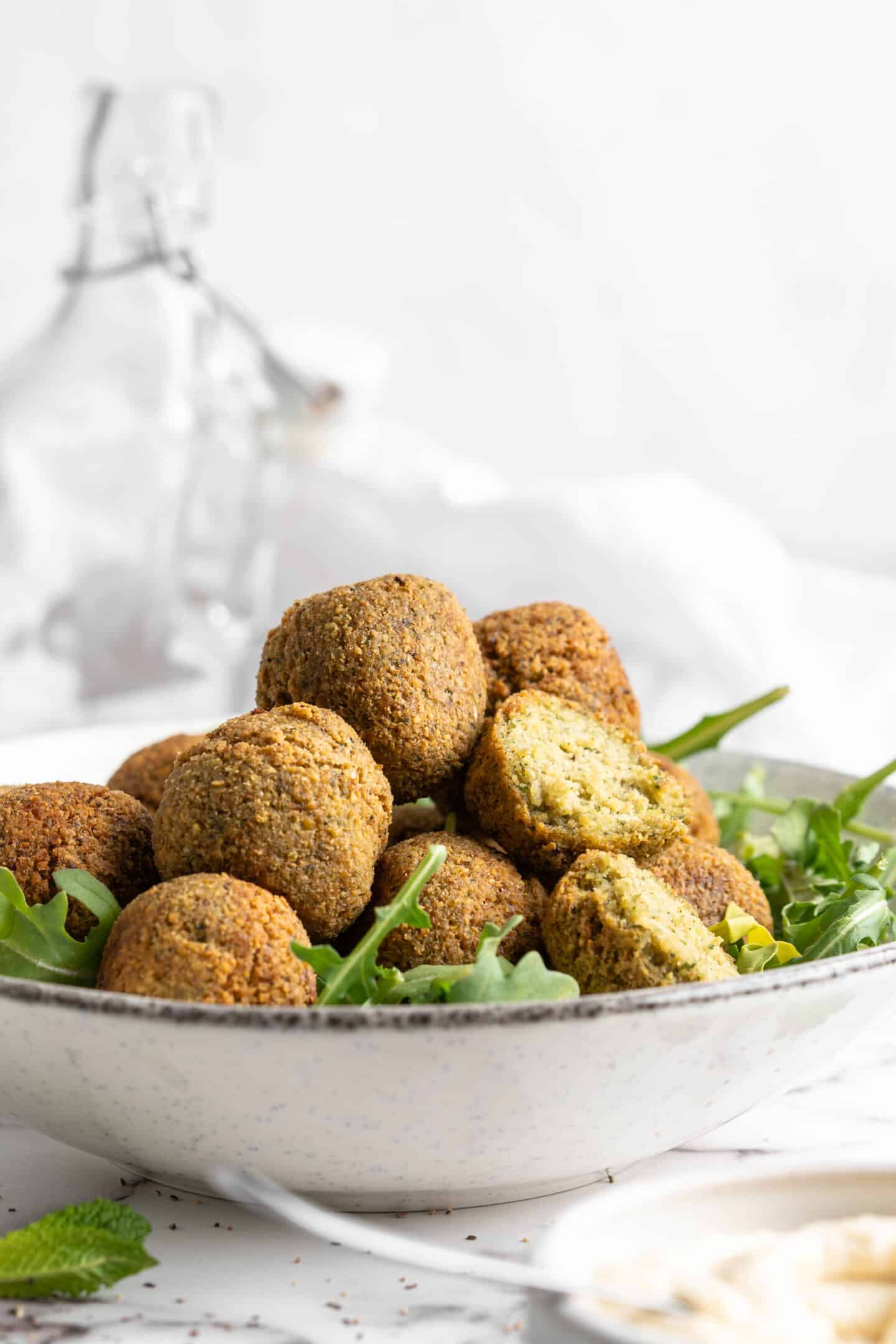
Cool and serve . Set the cooked falafel on a paper-towel-lined plate to absorb excess oil, then serve them with your favourite bread, sauces, and accompaniments.
How Can I Bake This Falafel Recipe?
As mentioned above, fried falafel is crispier and fluffier than baked falafel, but if you prefer to make it in the oven, you can.
Preheat your oven to 375ºF. Set the falafel on a sheet pan and generously spray them with cooking spray or an oil mister. Bake for 20 minutes, flipping halfway through the cooking time to make sure both sides brown.
Tips for Success
Here are some tips for perfect restaurant-style homemade falafel:
- Don’t over-process the chickpeas . You want them to be coarsely ground, not a paste. Over-processing will make for dense falafel.
- Use a thermometer to monitor the oil temperature. They’re not expensive, and they’re totally worth it when it comes to deep frying. If the oil is too hot, foods won’t cook all the way through, but if it’s not hot enough, food will absorb the oil and get greasy.
- Don’t over-crowd the pan when frying . You want each falafel to have plenty of room to cook, so don’t overcrowd the pan. Fry them in batches if necessary.
How to Store and Reheat Leftovers
Homemade falafel is best when served hot and fresh. However, you can store leftovers in an airtight container in the fridge for up to 3 days. Reheat in a 350ºF oven until warmed through, or warm it up in the microwave.
Can This Recipe Be Frozen?
Yes, this recipe can be frozen. I recommend freezing the uncooked falafel balls or patties on a baking sheet, then transferring them to a freezer-safe bag once they’re frozen solid.
To cook, thaw the falafel overnight in the fridge, then cook according to the recipe instructions.
If you want to freeze leftover cooked falafel, you can do that too, but as discussed above, it really is best eaten fresh, so if you want to freeze falafel for future meals, I definitely recommend freezing it uncooked vs. cooking it first.
5 Ways to Eat Homemade Falafel
There are way more than five, of course, but these are my favourites:
- Make falafel wraps with hummus and/or tahini .
- Add them to a bed of greens with pita chips and tahini dressing for a falafel salad.
- Pair them with couscous or rice, kalamata olives or Middle Eastern-style pickles, hummus, and baba ghanoush for falafel meal bowls.
- Shape the falafel mixture into burger patties; bake them and make falafel burgers.
- Cut or crumble them into pieces and fold them into warm tortillas for falafel tacos.
Ingredients
- 1 3/4 cup dried chickpeas , soaked in water for 24 hours, then rinsed
- 1 cup parsley , mint, or cilantro (use one, two, or all three)
- 3 scallions , cut into 3–4 pieces
- 2 cloves garlic
- 2 teaspoons ground cumin
- 1 teaspoon ground coriander
- 1 teaspoon sea salt
- 1/2 teaspoon black pepper
- 1/2 teaspoon baking soda
- 1 tablespoon lemon juice
- A few tablespoons of water , as needed
- Canola, grapeseed, or peanut oil for frying , you’ll need to fill a deep saucepan or Dutch oven with 2–3 inches, so the exact amount depends on the shape of your cooking vessel
Instructions
- Place the chickpeas in a food processor and process until the mixture resembles a coarse crumb. Transfer the ground chickpeas into a large mixing bowl.
- Add the herbs, scallions, garlic, cumin, coriander, salt, pepper, baking soda, and lemon juice to the food processor. Process until the mixture is smooth.
- Add the ground chickpeas back to the food processor and stir them into the herb mixture a bit. Turn on the food processor and process until the mixture is light green in color, with small bits of herbs, and the mixture comes together when pinched, adding water as needed. (I needed to add 2 tablespoons, but I recommend adding it only a tablespoon at a time, as the falafel will fall apart if too little or too much is added.) Taste and adjust the seasonings if needed.
- Pour the oil into a deep saucepan or Dutch oven until it’s 2–3 inches deep. Heat over medium-high until the oil reaches about 350ºF.
- Shape the falafel mixture into balls (or flattened balls, kind of like a flying saucer) and drop them into the oil, being careful not to crowd the pan. Cook for about 4–5 minutes, or until the outside is crispy and nicely browned. Place the cooked falafel on a paper-towel-lined plate to absorb any excess oil, then serve.
Notes
- To bake the falafel, generously spray the falafel with cooking spray or an oil mister and bake them on a sheet pan in a 375ºF oven for 20 minutes, flipping halfway through the cooking time. (If you shape them into balls, a mini muffin tin will keep them from rolling all over!)
- Falafel is best when served hot and fresh. However, you can store leftovers in an airtight container in the fridge for up to 3 days. Reheat in a 350ºF oven until warmed through, or warm it up in the microwave.
