Here’s absolutely everything you know about how to make spaghetti squash! My tricks on how to make it turn out perfect (no soggy squash!) and what you can do with it.
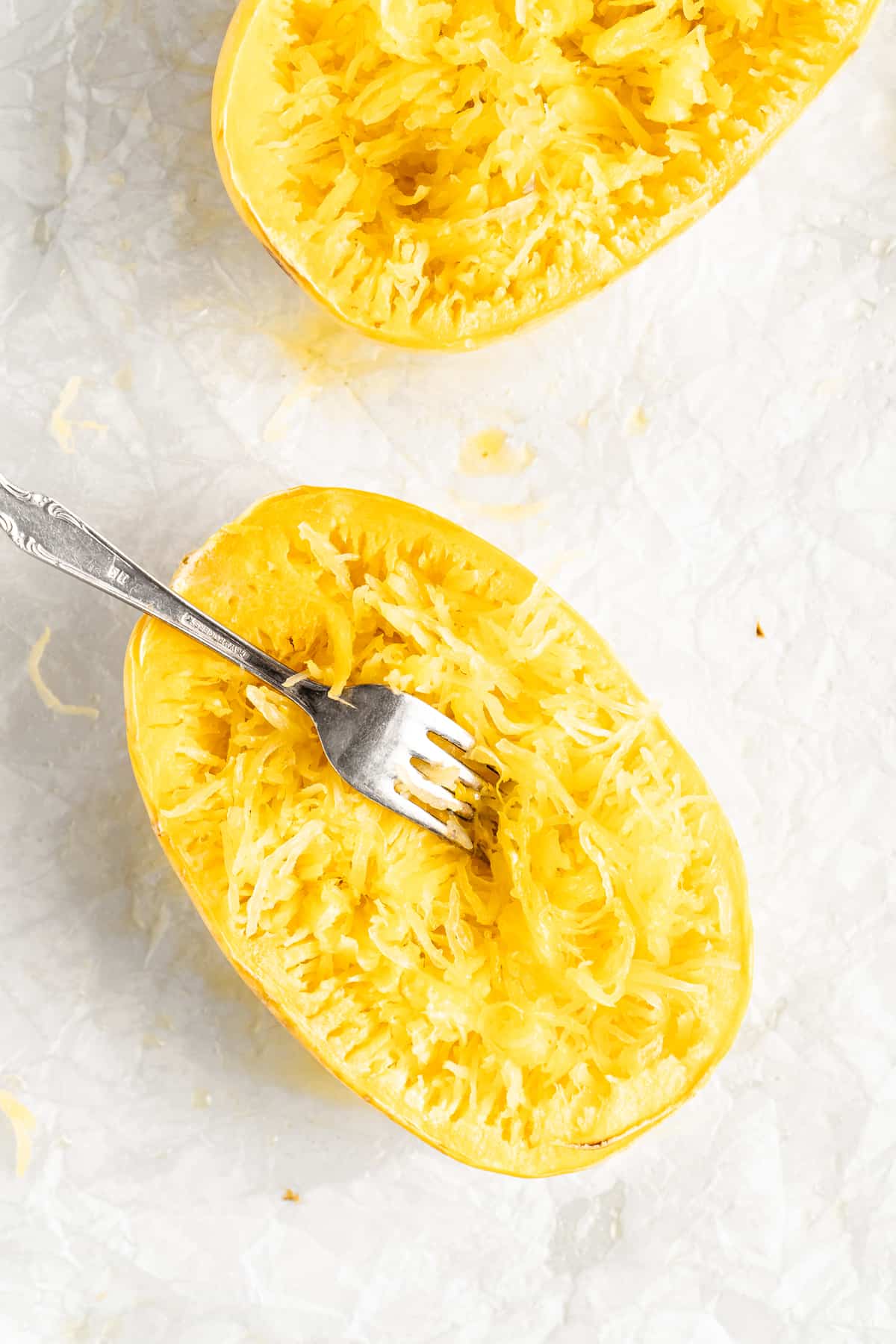
There are many tutorials on cooking spaghetti squash on the internet, and I thought about differentiating this one by calling it “How to Make Spaghetti Squash You’ll Actually Want to Eat.” Because when it comes to spaghetti squash, technique is everything —use the wrong cooking method and you’re left with a squash that’s watery, bland, and not all that appetizing. With the method I share below, you’re guaranteed squash that forks up into perfectly tender strings, with a lightly caramelized flavor from roasting.
Now, if you’ve never had spaghetti squash before, you may be wondering, “Does it actually taste like spaghetti?” Not to be the bearer of bad news, but it’s definitely more of a replacement for spaghetti in form rather than flavor. It’s not all bad news though, because spaghetti squash tastes better than pasta when it’s made right. While pasta is basically a vehicle for whatever sauce you add to it, spaghetti squash brings its own flavor to the table! (And really, if we were comparing spaghetti squash to a pasta, I’d say it’s more like angel hair!)
A Quick Spaghetti Squash Primer
Spaghetti squash is shaped like a big oval, and although Wikipedia says it comes in a variety of colors, I’ve really only seen it in shades of yellow myself. The flesh inside also ranges in color from a pale yellow to an yellow-orange-goldenrod type of shade. When you’re at the store or farmers market choosing a spaghetti squash, the deeper yellow ones tend to be the ripest and most ready to eat; look for one that doesn’t have any gashes or soft spots.
Can You Use It as a Substitute for Other Winter Squash?
Nope! And the reverse is true, too—you can’t substitute, say, a butternut squash in a recipe that calls for spaghetti squash. While virtually every other winter squash variety is interchangeable, spaghetti squash is the single outlier thanks to its stringy texture.
How Do You Store It?
You’ve probably noticed that spaghetti squash is never refrigerated at the grocery store. The same goes for when you bring it home! Just keep it in a cool, dry place on the counter. It should last about 2 weeks like this, but it may last even longer depending on when it was harvested. If you’re buying from a farmstand, you can ask the farmer!
How to Make Spaghetti Squash
Making spaghetti squash is easy—in fact, I think the hardest part is cutting it. You’ll start with one spaghetti squash and olive oil for drizzling. Here’s what you’ll need to do:
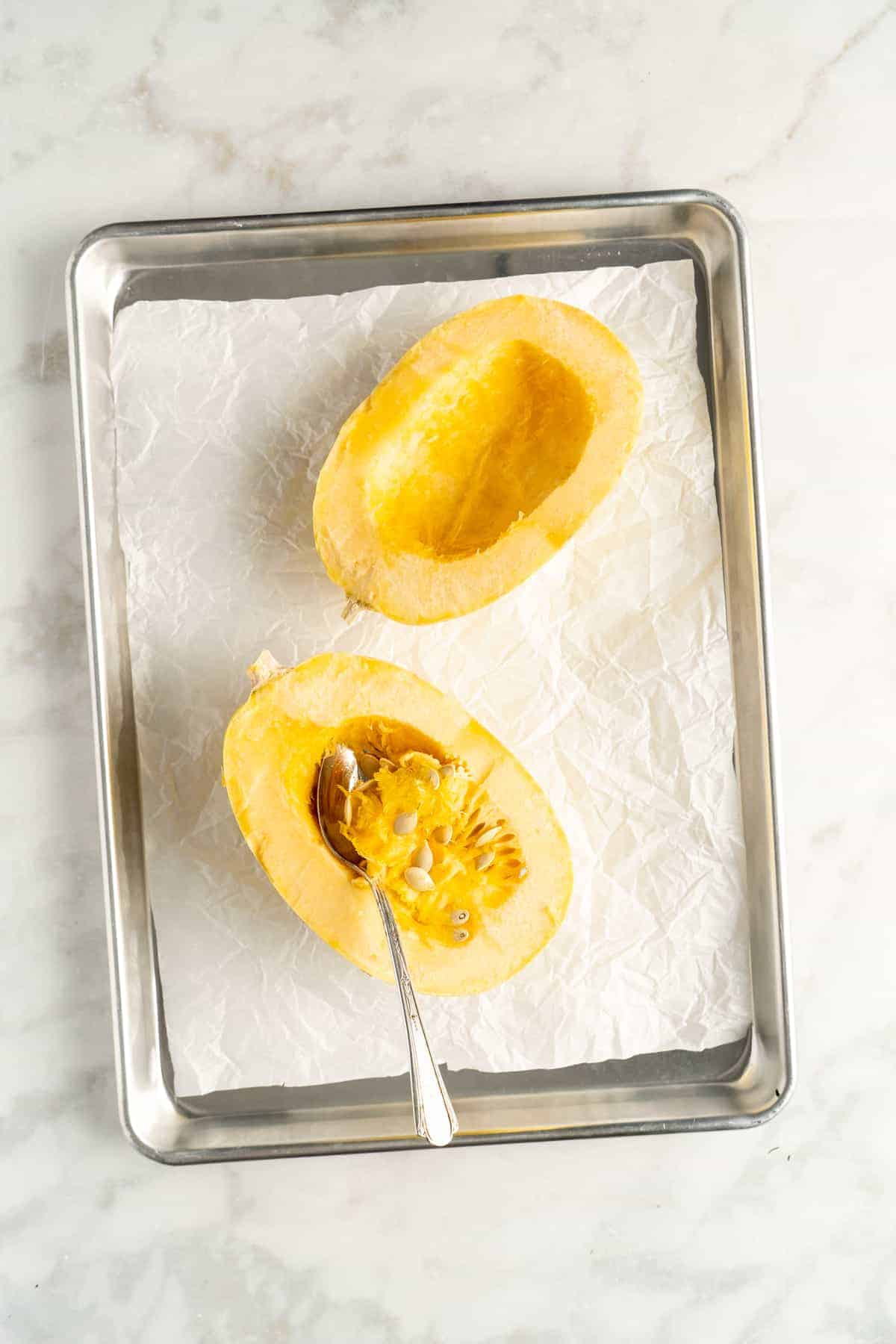
Prepare. Preheat oven to 400ºF and cut the spaghetti squash in half lengthwise using a very sharp chef’s knife. Scoop out the pulpy center and seeds. (The seeds can be saved and roasted just like pumpkin seeds!)
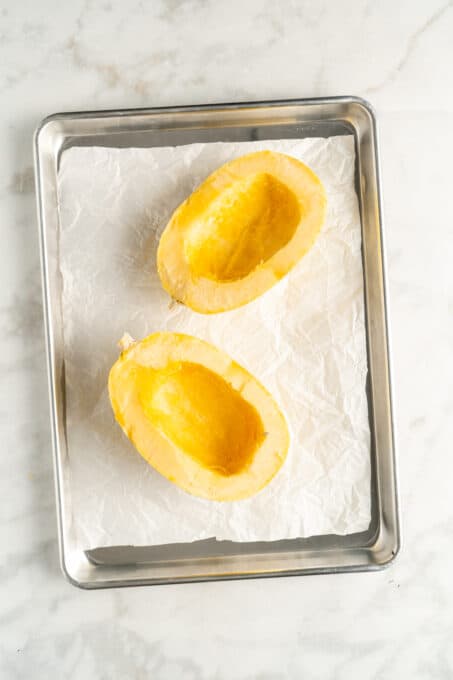
Bake. Place the squash halves cut-side-up on a lined baking sheet. Drizzle the insides with olive oil, then bake for 30 to 45 minutes, or until the tops are caramelized on the edges and the squash can be easily pierced with a fork, but is still tender.
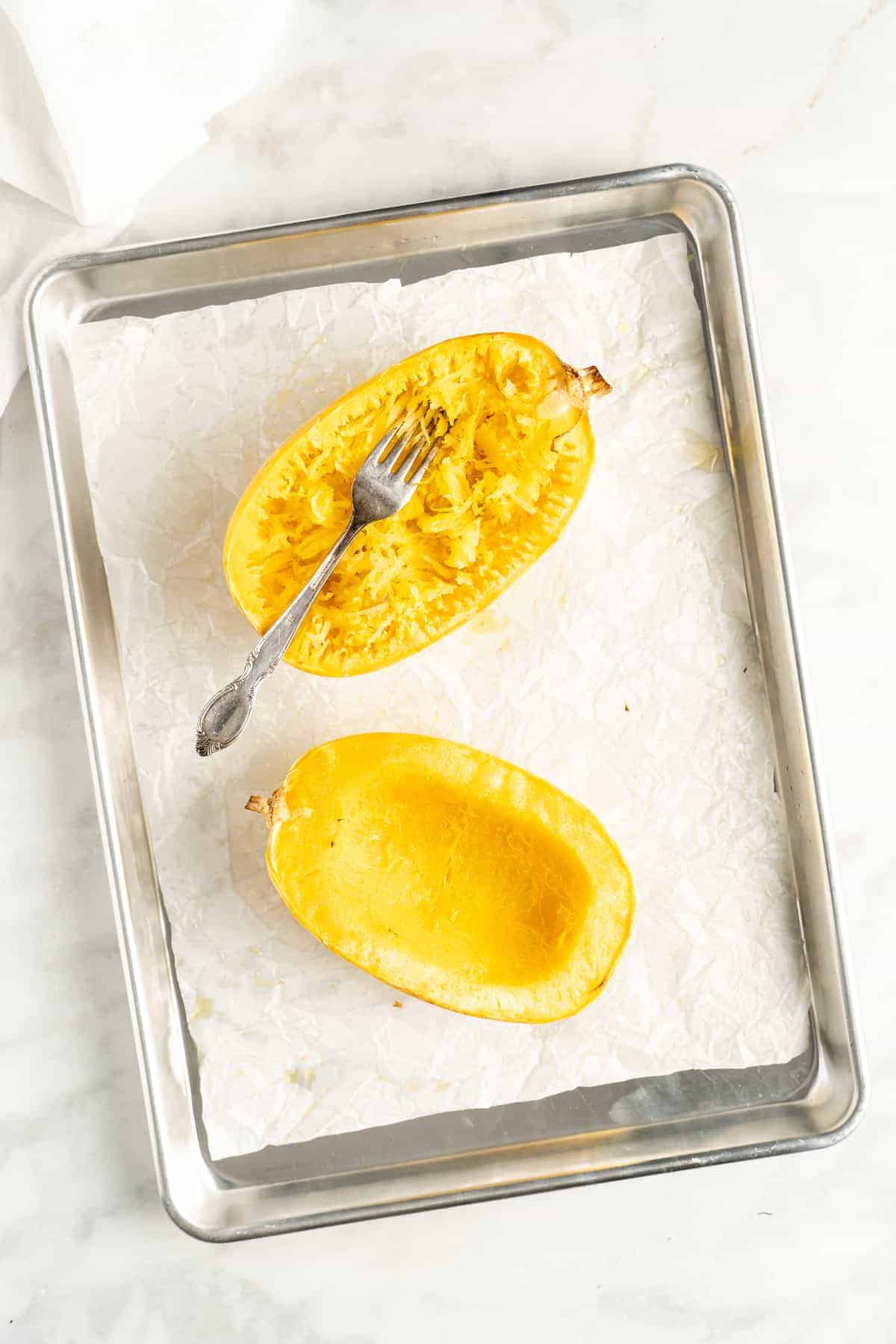
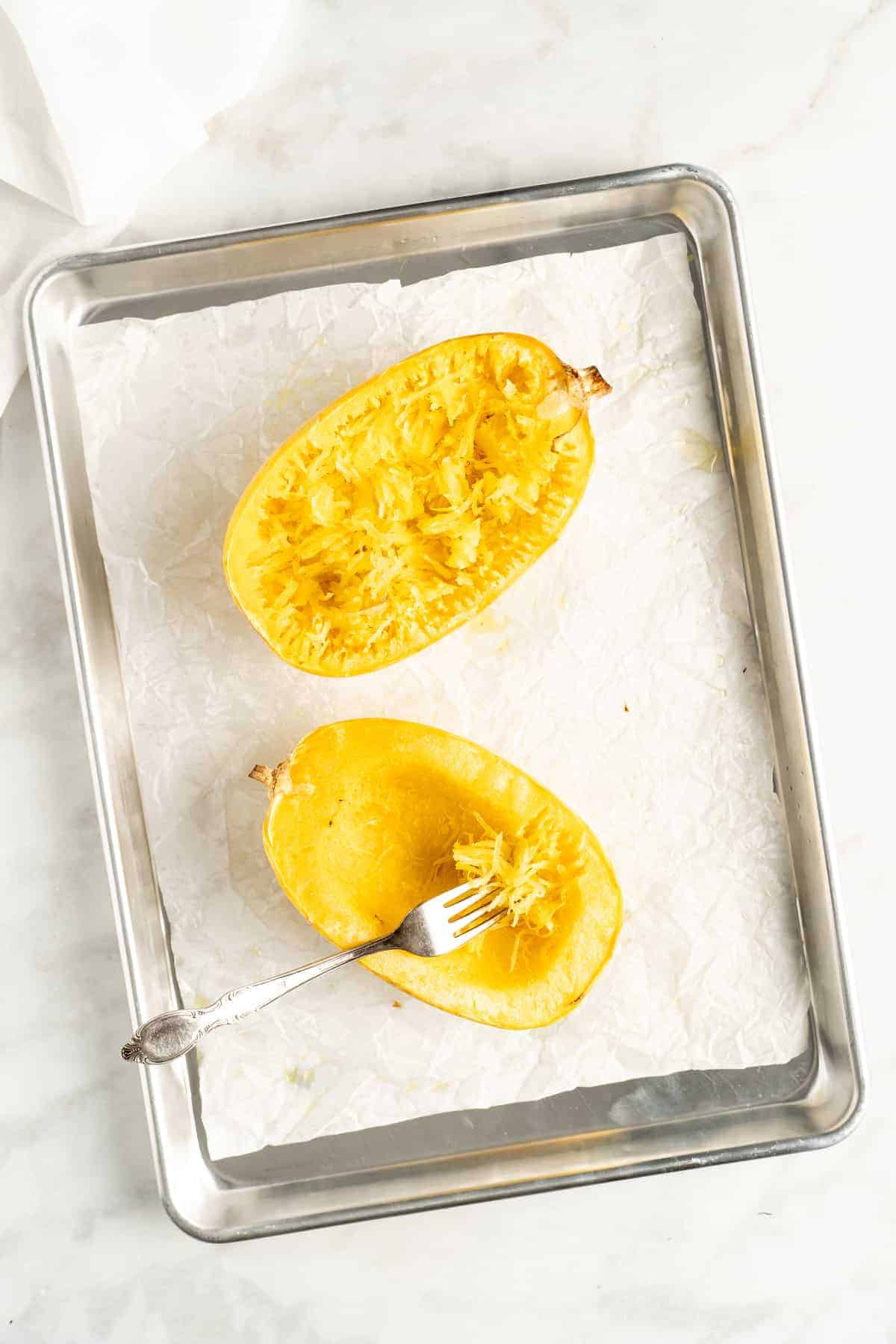
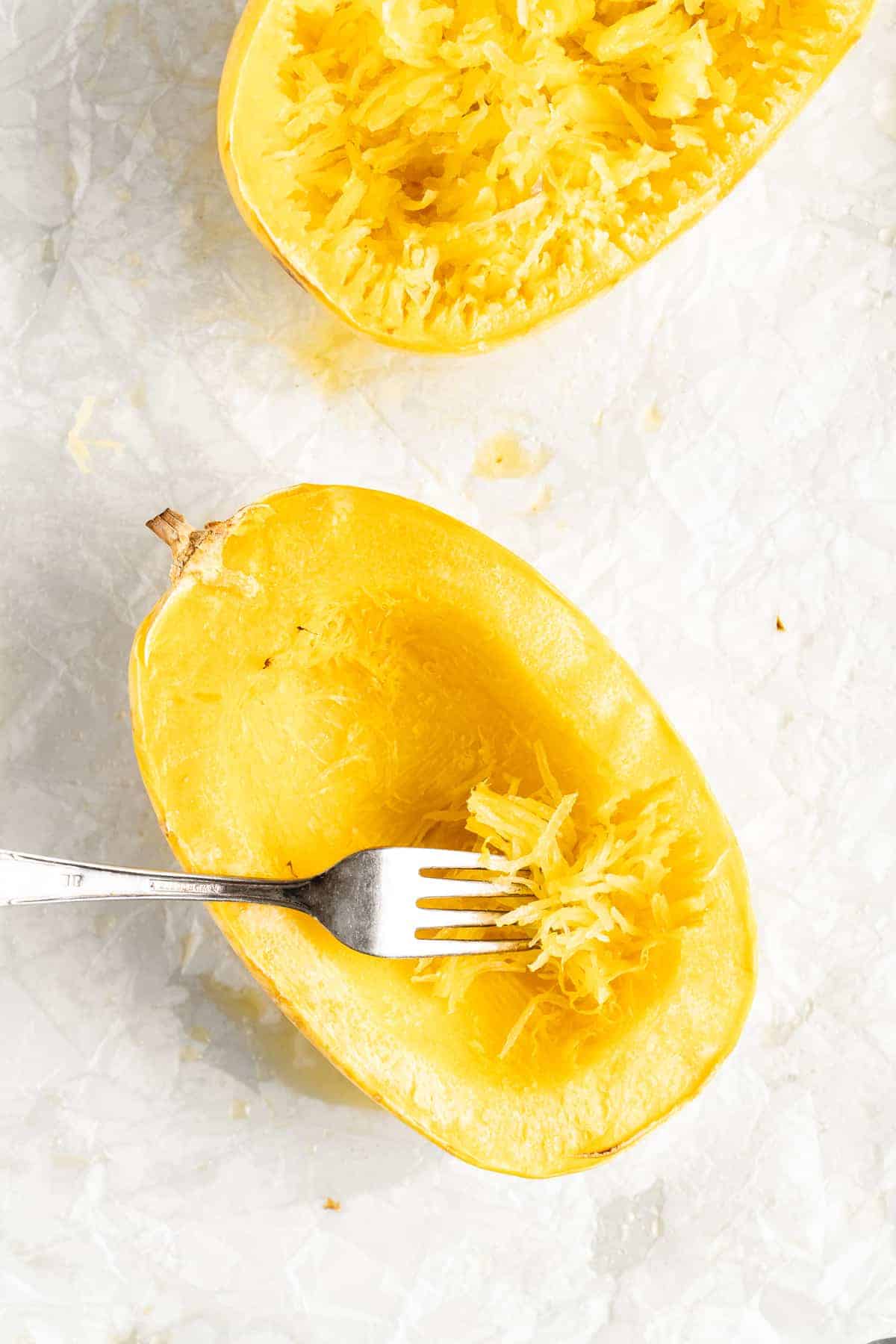
Cool and make “noodles.” Take the baking sheet out of the oven and let the squash cool a bit. If the squash has liquid collecting in the center, pat it with a paper towel to absorb it, then use a fork to scrape the flesh from side to side until it resembles spaghetti noodles.
Why This Method Works
I’ve tried so many ways to make spaghetti squash and this is my favorite. I feel like the microwave method lacks flavor; roasting the squash cut-side-down in the oven traps the steam inside and has a tendency to make the flesh so moist that it doesn’t properly noodle. (I guess noodle isn’t a verb, but you know what I mean!)
How to Use Spaghetti Squash
And now it’s time to answer the big question: how can you use spaghetti squash? You know I have plenty of ideas for you!
- Serve it alongside Chickpea Tikka Masala or another favorite curry instead of rice.
- Use to make Vegan Sesame Noodles .
- Pair it with Homemade Marinara and Meatballs .
- Make Spaghetti Squash Alfredo , vegan-style.
- Toss it with Vegan Pesto and cherry tomatoes.
- Make Spaghetti Squash Lasagna Boats .
Ingredients
- 1 spaghetti squash
- Olive oil to drizzle
Instructions
- Preheat oven to 400°F/200°C.
- Cut the spaghetti squash in half lengthwise and spoon out all the insides. All the stringy bites and the seeds.
- Drizzle with some olive oil and place cut side up on a lined baking sheet.
- Bake for 30 to 45 minutes until the sides are slightly brown and squash is fork tender but still slightly firm. You’ll want to bake it for 30 minutes for a small spaghetti squash and 45 for a larger one.
- Remove from the oven and allow to cool slightly. Pat with a paper towel to remove any water that has formed.
- Using a fork, scrape the squash from side to side until it resembles spaghetti. Don’t pierce through the squash at the bottom or sides.
How to Make Spaghetti Squash
Ingredients
- 1 spaghetti squash
- Olive oil to drizzle
Instructions
- Preheat oven to 400°F/200°C.
- Cut the spaghetti squash in half lengthwise and spoon out all the insides. All the stringy bites and the seeds.
- Drizzle with some olive oil and place cut side up on a lined baking sheet.
- Bake for 30 to 45 minutes until the sides are slightly brown and squash is fork tender but still slightly firm. You’ll want to bake it for 30 minutes for a small spaghetti squash and 45 for a larger one.
- Remove from the oven and allow to cool slightly. Pat with a paper towel to remove any water that has formed.
- Using a fork, scrape the squash from side to side until it resembles spaghetti. Don’t pierce through the squash at the bottom or sides.
Nutrition
How to Make Spaghetti Squash https://jessicainthekitchen.com/how-to-cook-spaghetti-squash/ November 1, 2021
This vegan overnight French toast casserole is filled with the cozy flavors of pumpkin puree, warm spices, and a sweet and crunchy pecan-maple topping. It’s an easy make-ahead breakfast recipe for holidays and fall brunches!
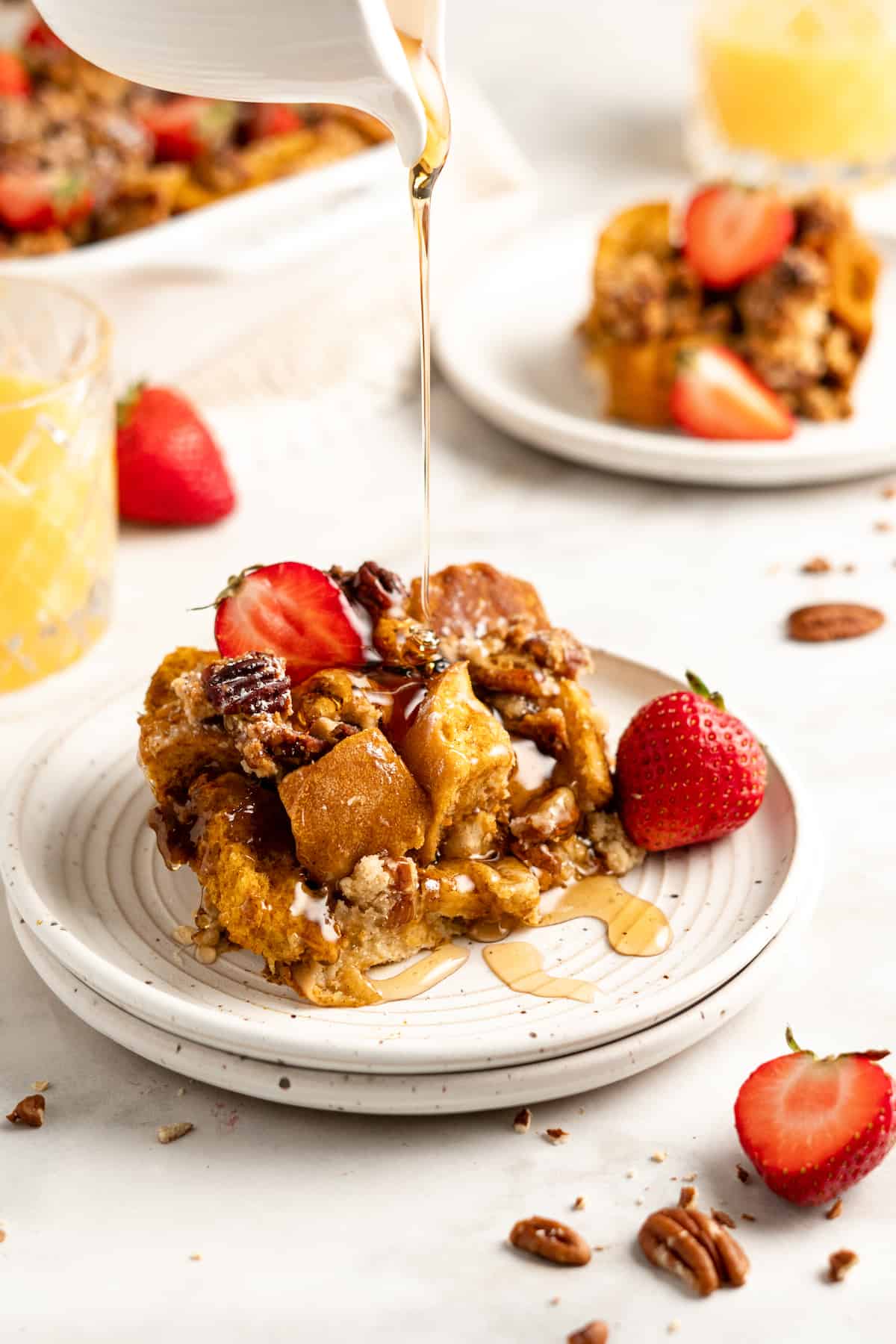
This vegan French toast casserole is a cozy, eggless, make-ahead breakfast. Warm cinnamon, vanilla, and pumpkin puree make this recipe perfect for a holiday brunch or special gathering with family and friends. I make this pumpkin French toast bake at least a few times every fall, and it’s always a hit. As a bonus, the whole house smells like cinnamon as it bakes up, which instantly puts everyone in the holiday spirit!
This Vegan Pumpkin French Toast Casserole at a Glance
- Stress-free mornings. This overnight French toast casserole is easy to prep the night before. Simply add the maple pecan topping and bake when it’s time to serve.
- Eggless and dairy-free. Even though this vegan French toast is made without eggs or dairy, it’s still rich, custardy, and true to the original.
- Festive flavors. With the cozy spices, maple, and pumpkin, a baked French toast casserole fits right in at Thanksgiving breakfast, Christmas morning, or holiday brunch.
- Crowd-pleasing. Everyone loves this casserole. Even non-vegans!
WATCH THE VIDEO TO SEE HOW IT’S MADE:
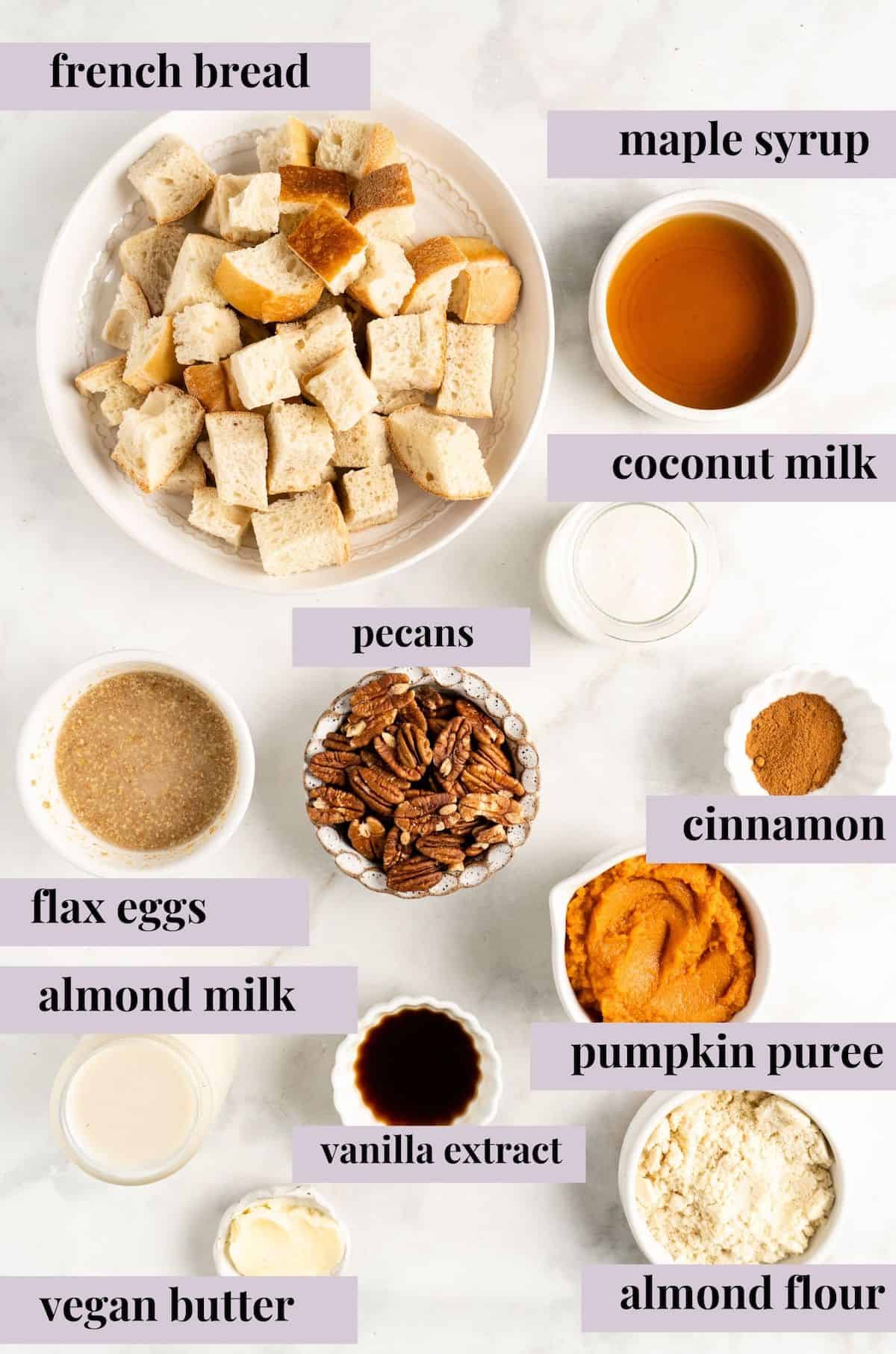
Notes on Ingredients
Scroll down to the recipe card to find the ingredient quantities and recipe instructions.
- Gluten-free bread – The best bread for French toast is day-old, stale bread, as it will soak up more of the custard (see below). French loaf or challah are my first choices. You can use traditional French bread, sourdough, or challah if you’re not avoiding gluten.
- Pumpkin puree – Make sure you buy pure pumpkin, not pumpkin pie filling.
- Flax eggs – To replace the traditional eggs in this vegan French toast casserole and give it structure. See how to make a flax egg .
- Coconut milk – Use the canned variety, not the refrigerated cartons or bottles. This adds creaminess to the recipe.
- Almond milk – Or you can use oat milk, soy milk, or another plant-based milk you have on hand.
- Maple syrup – Buy real maple syrup, not artificial breakfast syrup. It’s not the same!
- Ground cinnamon and vanilla – Try a version made with pumpkin pie spice , or add nutmeg, ginger, and cloves along with the cinnamon.
Crunch Maple Pecan Topping
- Almond flour – You can use coconut flour instead of almond flour, or regular flour if you aren’t gluten-free.
- Maple syrup – You can sub any other liquid sweetener, such as agave.
- Vegan butter – This needs to be melted.
- Pecans – You can buy whole pecans and chop them, or buy pecan pieces. Feel free to swap the pecans with walnuts, if you’d like.
Why Stale Bread Works Best for French Toast
The most important thing is that your bread should be stale. If it’s fresh and moist, your French toast casserole will turn out soggy. Use day-old bread, or if that’s not an option, cut the bread into squares and let them sit at room temperature for a few hours to dry out. Or, pop the bread cubes in the oven at 300ºF for 10 to 15 minutes, or until the bread is dry but not toasted.
How to Make a Vegan Overnight French Toast Casserole
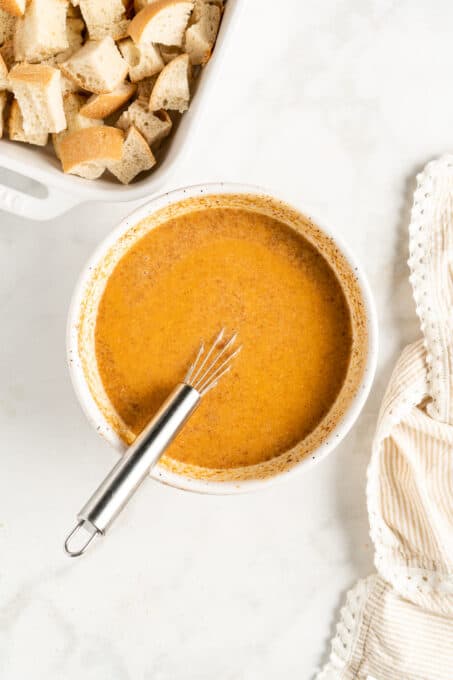
Make the custard.
- Prepare the custard. First, combine the pumpkin puree with flax eggs, coconut milk, almond milk, maple syrup, ground cinnamon, salt, and vanilla extract. Whisk until the puree is fully incorporated.
- Assemble the casserole. Next, cut the bread into cubes and arrange them inside a greased casserole dish. Pour the custard over the bread and press down gently, so the bread is completely soaked.
- Chill overnight. Cover the casserole with plastic wrap and refrigerate it overnight, or for at least 6 hours.
Bake the Casserole
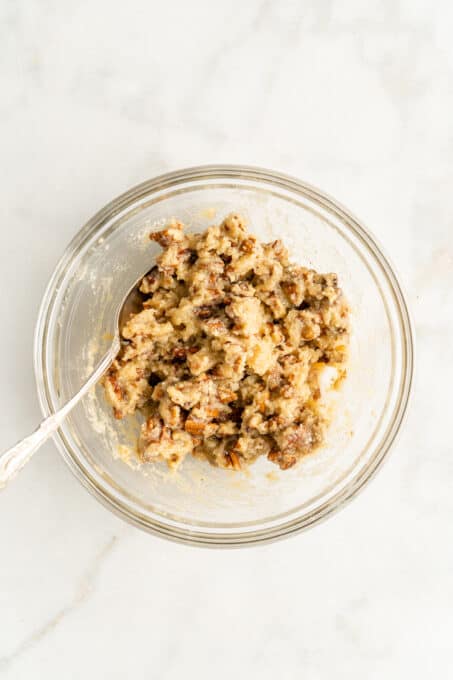
Prepare the topping.
- Prepare to bake. The following day, preheat the oven to 350ºF and remove the casserole from the refrigerator. Set it on the countertop to take the chill off slightly before it goes into the oven.
- Make the topping. Meanwhile, combine the almond flour with maple syrup, vegan butter , and chopped pecans for the topping. Stir that together and spread the mixture on top of the casserole.
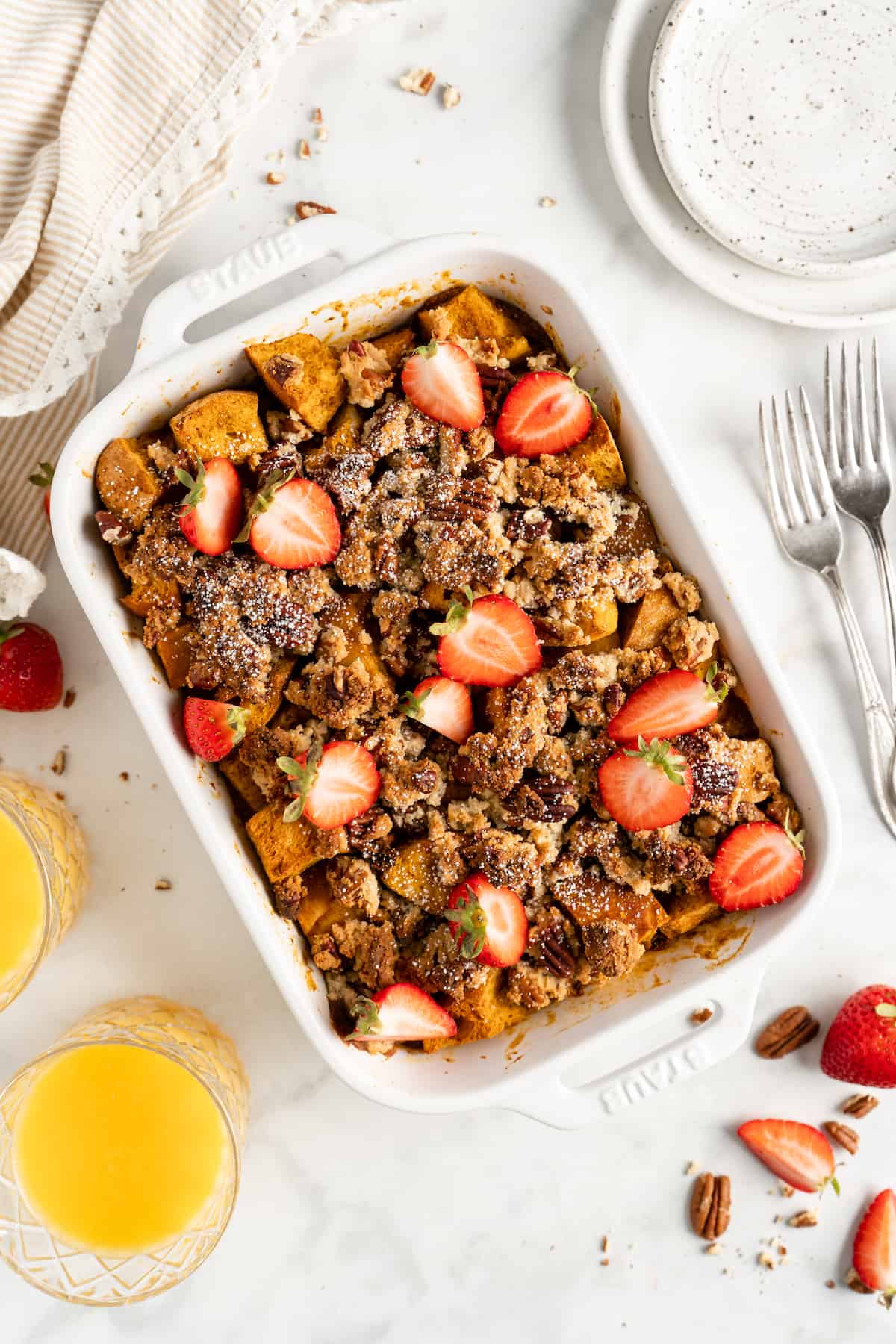
- Bake. Bake at 350ºF for 45 to 60 minutes. Since this vegan French toast casserole doesn’t contain eggs, you can bake it until it reaches your desired texture. If you want it extra soft and creamy, take it out earlier!
- Serve. Remove the casserole dish from the oven and allow it to cool slightly before serving. Serve with a drizzle (or generous pour) of maple syrup, if desired.
Recipe Tips
- Add the topping before baking. Don’t make the topping in advance. It needs to be made in the morning so it’s fresh and crunchy.
- About the cooking times. I prefer cooking this casserole for about 50 minutes, when it’s set but still soft on the inside. If you want it completely baked, definitely aim for 60 minutes.
- Watch the topping. The top may get a bit browned after the first 20 minutes, so cover the baking dish with foil, if necessary.
Get Creative With Add-Ins
The cozy pumpkin flavors in this vegan French toast casserole go well with any of the following ideas.
- Fresh fruit. Great fall options are diced apples and pears.
- Dried fruit. Add in raisins, dried cranberries (great for Christmas morning!), cherries, chopped apricots, or currants.
- Nuts. Fold chopped pecans, walnuts, or almonds right in with the bread for the casserole.
- Pepitas. Small pumpkin seeds, or save the seeds from Pumpkin carving, and toast them!
- Chocolate chips. Make sure to buy vegan chocolate chips or cacao nibs.
Serving Suggestions
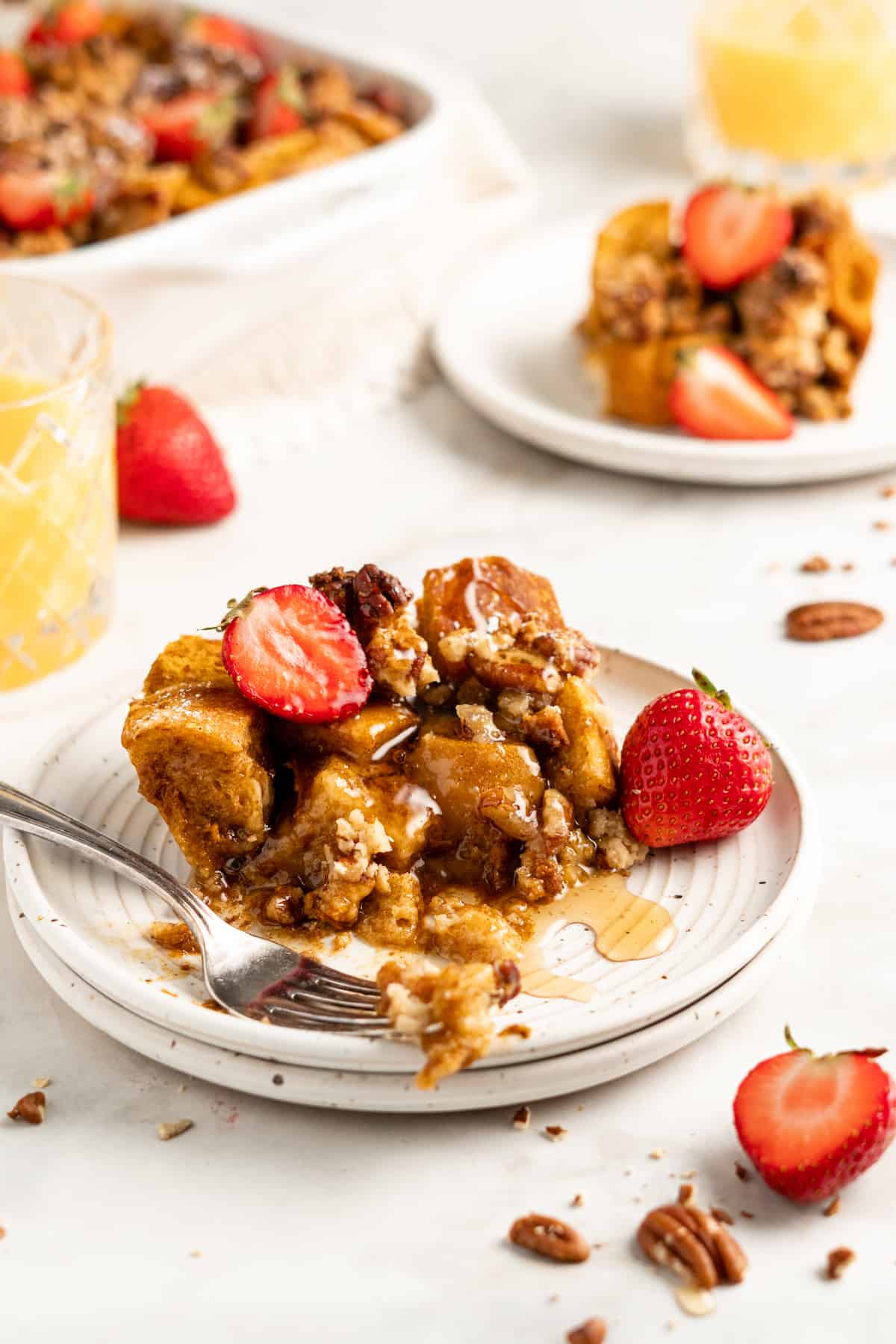
You may or may not need the maple syrup for serving. Taste a bit of the casserole first, because mine tasted lovely without. Otherwise, you can serve your vegan French toast casserole with a dusting of powdered sugar, topped with apple butter, or coconut whipped cream . Add this casserole to a breakfast or brunch spread with a savory tofu scramble and garlic roasted potatoes , with your favorite plant-based sausage or crispy vegan bacon on the side.
How to Store and Reheat Leftovers
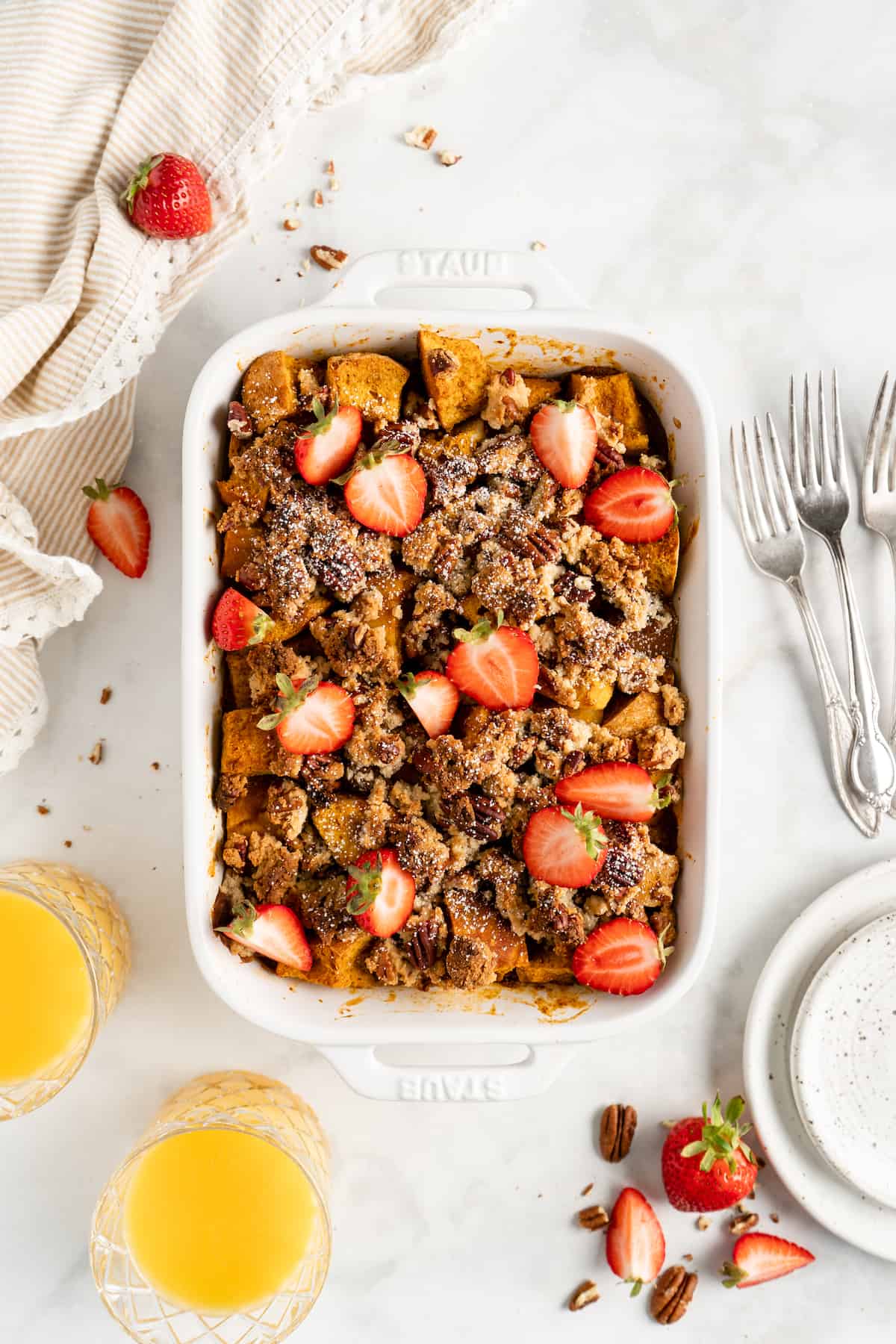
- Refrigerate. Store leftovers tightly wrapped in the refrigerator for up to 3 days. You can warm them up in the oven at 350ºF for about 20 minutes (depending on the amount you’re heating up) or in the microwave until they’re warmed through.
- Freeze. Wrap it well and keep it in the freezer for up to 2 months. For best results, let it thaw in the refrigerator, then reheat according to the instructions above.
More Vegan Brunch Recipes
- Apple Pie Pancakes
- Pumpkin Waffles
- Cinnamon Roll French Toast
- Fluffy Tofu Scramble
- Instant Pot Steel-Cut Oats
Ingredients
Overnight French Toast Casserole (Vegan)
- 14 ounces gluten free French loaf or challah , broken or torn into 1 inch pieces
- 1 cup pumpkin purée
- 4 flax eggs
- 1/2 cup coconut milk
- 1 cup almond milk
- 1/4 to 1/3 cup maple syrup , depending on how sweet you want it. 1/4 is minimum, 1/3 is more noticeable
- 1 teaspoon ground cinnamon
- Pinch salt
- 1 tablespoon vanilla extract
Pecan Topping
- 7 tablespoons almond flour
- 3 tablespoons maple syrup
- 1/2 tablespoons melted vegan butter
- 3/4 cup pecans , coarsely chopped
Instructions
Overnight French Toast Casserole (Vegan)
- Set the french loaf in a casserole dish (I used a 1.5 QT).
- Mix together the pumpkin puree, flax eggs, coconut milk, almond milk, maple syrup, ground cinnamon, salt and vanilla extract. Mix thoroughly.
- Pour over the bread and press down so every bit gets soaked in batter.
- Cover with saran wrap and place in the fridge overnight, or at least 6 hours.
- Remove from fridge when set. Preheat oven to 350 degrees.
- In a small bowl, mix the almond flour, maple syrup, vegan butter and chopped pecans. Stir together to combine and spread over the top of the casserole.
- Bake for 45 to 60 minutes. I prefer about 50 which is set but still soft on the inside. If you want it completely baked, definitely aim for 60 minutes. The top may get a bit crispy after the first 20 minutes so cover with foil if necessary and keep baking.
- Remove from oven and allow to cool slightly. Serve with maple syrup and enjoy!
Notes
- This recipe is vegan.
- TO MAKE IT GLUTEN FREE Use a gluten free loaf.
- ALTERNATIVES You can sub any other liquid sweetener such as agave. You can put in more add-ins: blueberries, more spices, apples. You can use coconut flour instead of almond flour, or regular flour if you aren’t gluten free.
- Store leftovers tightly wrapped in the refrigerator for up to 3 days. You can warm them up in the oven at 350ºF for about 20 minutes (depending on the amount you’re heating up) or in the microwave until they’re warmed through.
- To freeze this casserole wrap it well and keep it in the freezer for up to 2 months. For best results, let it thaw in the refrigerator, then reheat it according to the instructions above.
