Learn how to cook lentils perfectly every time with tons of flavour! These tips and tricks will keep all your lentils from getting mushy for soups, salads, and side dishes.

I love love love lentils!! I avoided using lentils for no good reason, and now I LOVE them! They are known as a power legume due to how long they’ve been around (all the way back to 8,000 BC) and their high protein content. They’re also incredibly versatile: Whether you have them plain, on a salad, in chili , or as a meat replacer in meatloaf !
There are many different colours of lentils — black, red, brown, green and yellow. The different colours are cooked for different times. So no, they aren’t very easily exchanged. If you see a recipe asking for red lentils, I definitely recommend using red lentils since you’ll have to completely adjust the cooking times and may end up with too mushy or rock hard lentils instead.
What Are Lentils?
Lentils are a super easy side dish, but what are the little pods of flavour, anyway?
They’re actually part of the legume family like peas, peanuts, and beans. Also known as pulses, they’re most popular in Indian cuisine. I love them because dried lentils can last for years in an airtight container in the pantry.
Even cooked lentils are safe up to 1 week in the fridge or up to 3 months in the freezer. There’s no easier meal prep option!
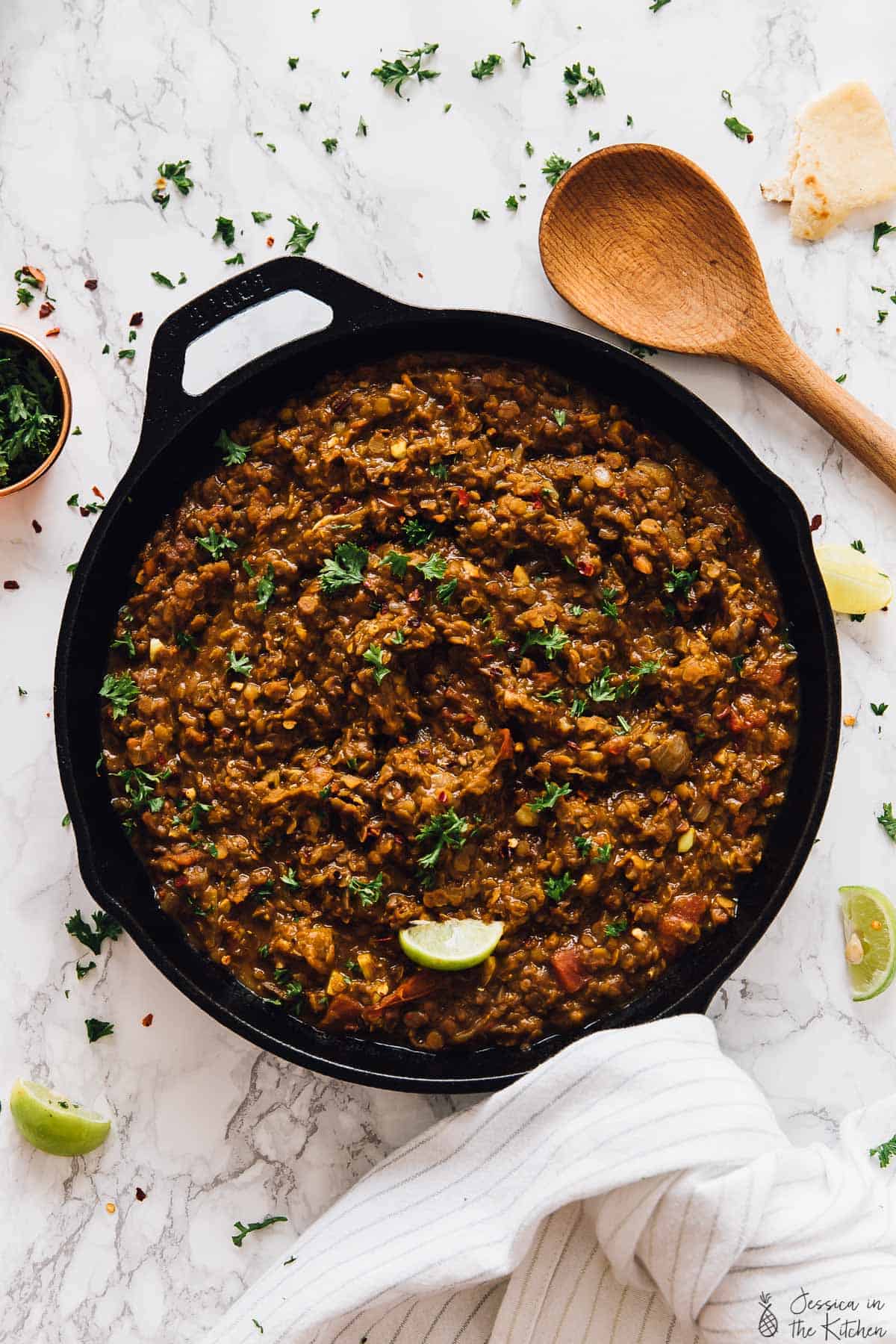
What Is the Ratio of Lentils to Water?
Whether you’re making a single serving or feeding an army, it’s so easy to double or triple a lentil recipe!
For every 1 cup of lentils, you’ll want 2 cups of water. If you want to add a little extra flavour, use vegetable broth to keep it vegan or any other broth if you’re not on a plant-based diet.
I don’t recommend salting the lentils before cooking since the reducing liquid can get overly salty. Just salt when you’re done!
Is It Best to Soak Lentils Before Cooking Them?
While you need to soak dried beans before cooking, lentils don’t need a soaking time.
Since they simmer in liquid, they should come out perfectly tender without getting mushy.
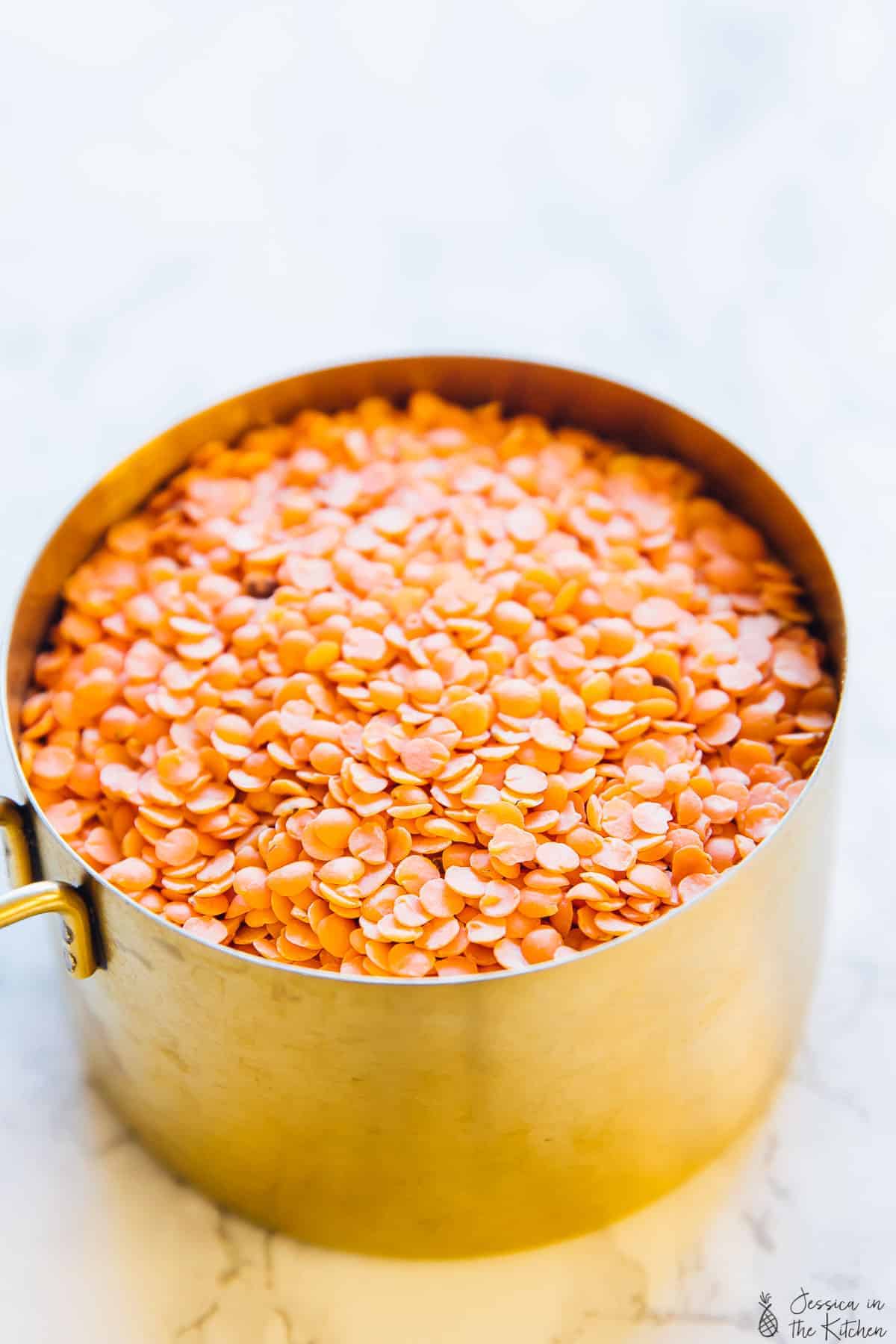
How to Cook Lentils
This is truly the best and most consistent way to cook lentils with just 2 ingredients — lentils and water!
Before you cook lentils, it’s important to run your fingers through them and look to check for any small stones — AKA “sorting your lentils.” Yes, I’ve found a small stone before! Remove any other debris, then give them a quick rinse in a sieve or fine mesh strainer.
Mix 1 cup of lentils with 2 cups of water in a sauce pan over medium heat. Make sure all the lentils are covered in water. Bring to a rumbling simmer, then reduce the heat and simmer about 20 minutes.
Like rice, lentils absorb water while they cook. If the water level drops below the lentils, add a little more liquid to keep them moist. You want the lentils softened but not mushy. I always add salt and any other seasonings when they’re done cooking.
Different Kinds of Lentils (and Varying Cook Times)
There are actually four kinds of lentils! The cook time often varies for each lentil, so be sure to watch them based on the type. Here they are below (and neatly in the recipe for convenience too).
Red/Orange/Yellow Split Lentils –
Orange/Yellow Split/Red Lentils are the “softest” kind of lentils and take the quickest to cook, about 15 to 20 minutes. They’re lovely in dahls and soups! Somethings they disintegrate completely!
Brown Lentils & Green Lentils –
Brown and green lentils are the most similar kinds! They have a nice shape/purpose that’s why they’re preferred for dishes like vegan meatloaf and stews . Also great for like burgers, sandwiches, taco fillings. They take about 25 to 30 minutes to cook! If they’re overlooked they can get mushy.
Black Lentils –
Black lentils are amazing and not as commonly found. They take about 20 to 25 minutes. I had it in an Indian Dahl in London (check out my what to eat in London guide to check out the restaurant) once and it’s the best I’ve ever had!
French Lentils –
They’re like blue green! I haven’t used these personally yet, but will one day! They keep their shape the MOST so best in salads. Also would be great in like shepherd’s pie! Usually when a recipe calls for one type, the only real substitute you can do is green for brown and brown for green. Otherwise you may end up with red lentils gone too soft, or too tough!
Whether you’re new to this legume or looking for the best way to make lentils, here’s a few tips and tricks I’ve picked up along the way:
- Keep them moist. If you don’t want dry, hard lentils, make sure to keep a little liquid in the pot! You can always add a little more if the water is evaporating faster than they cook.
- Skip the soak. Lentils definitely don’t need any soaking before they’re cooked. Save time and skip the soaking! You do want to rinse them briefly and check them for stones or debris, though.
- Season at the end. Nothing is worse than overly salty lentils, quinoa, or rice. I don’t use any seasonings, including salt, until they’re done cooking so I can taste as I go.
- Add any flavour! Lentils have a great earthy flavour, but they can take on any flavours you want! Try cooking them in veggie or mushroom broth. Or, add some carrots, onions, garlic, celery, or herbs to the pot!

Easy Lentil Recipes You’ll Love
- One-Pot Vegan Lentil Stew
- Red Lentil Chili
- Lentil Balls (Meal Prep)
- Red Lentil Curry (Vegan)
- Vegan Coconut Curry Lentil Soup
Ingredients
- 1 cup lentils
- 2 cups water
Equipment
- Fine mesh strainer
- Sauce pot
Instructions
- Add lentils and water to sauce pan over medium heat. Ensure water is covering lentils. Bring to a rumbling simmer, then lower heat to a regular simmer.
- Let lentils cook for around 20 to 30 minutes (see time variations below), or until soft and chewy but still firm. If water level drops below lentils before they’re cooked, add a little more liquid. Lentil Cooking Times per Variation: Red/Orange/Yellow Split Lentils: 15-20 minutes Brown and Green Lentils: 25-30 minutes Black Lentils: 20-25 minutes French Lentils: 25-30 minutes
- When finished, add salt to taste and season lentils.
Notes
Different Kinds of Lentils (and Varying Cook Times)
Red/Orange/Yellow Split Lentils –
Brown Lentils & Green Lentils –
Black Lentils –
French Lentils –

How to Cook Lentils
Equipment
- Fine mesh strainer
- Sauce pot
Ingredients
- 1 cup lentils
- 2 cups water
Instructions
- Add lentils and water to sauce pan over medium heat. Ensure water is covering lentils. Bring to a rumbling simmer, then lower heat to a regular simmer.
- Let lentils cook for around 20 to 30 minutes (see time variations below), or until soft and chewy but still firm. If water level drops below lentils before they’re cooked, add a little more liquid. Lentil Cooking Times per Variation: Red/Orange/Yellow Split Lentils: 15-20 minutes Brown and Green Lentils: 25-30 minutes Black Lentils: 20-25 minutes French Lentils: 25-30 minutes
- When finished, add salt to taste and season lentils.
Video
Notes
Different Kinds of Lentils (and Varying Cook Times)
Red/Orange/Yellow Split Lentils –
Brown Lentils & Green Lentils –
Black Lentils –
French Lentils –
Nutrition
How to Cook Lentils https://jessicainthekitchen.com/how-to-cook-lentils/ May 25, 2021
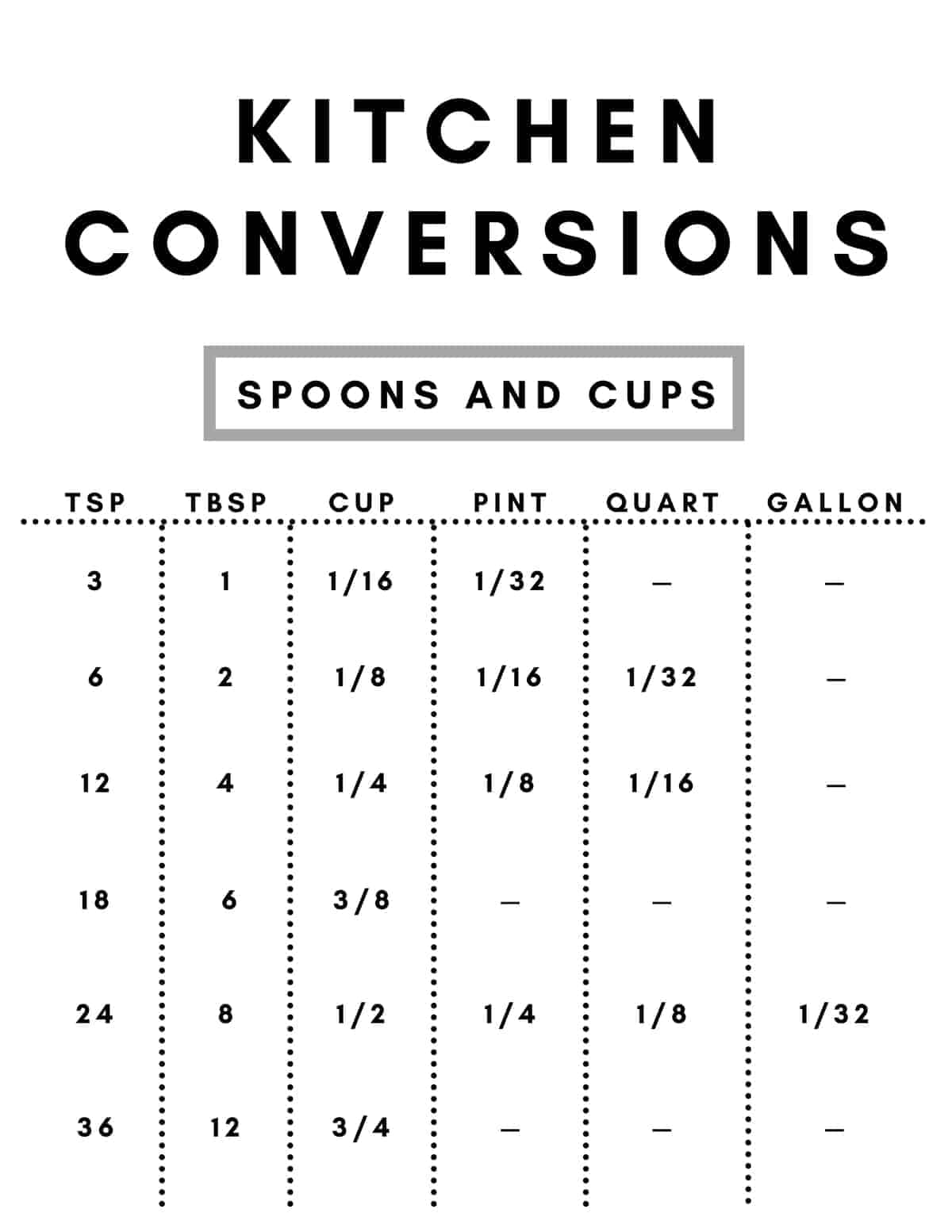
If you can never remember how many teaspoons are in a tablespoon, you’re not alone. Learn some of the most basic cooking measurements and get a printable kitchen conversion chart!

Most of the common kitchen measurements are simply fractions of larger measurements. My husband can never remember how many teaspoons are in a tablespoon. I, however, drilled them into my memory years ago!
Sometimes I want to turn a small recipe into more servings for meal prep or a dinner party, but converting kitchen measurements can be tricky. You definitely don’t want to accidentally triple or quadruple the salt!
When it comes to these small units of kitchen measurement, it’s a waste to whip out a scale for 1 teaspoon vanilla extract. Almost all my recipes I know has a teaspoon or tablespoon for something from seasonings to baking soda.
Whether you’re looking this up for the first or the millionth time, you’re not alone. I’ve got some simple conversions I use all the time and a handy dandy conversion chart to save on your phone or print for your fridge.
How to Convert Teaspoons to Tablespoons
To convert teaspoons to tablespoons, you just need some basic multiplication!
So, a teaspoon is ⅓ of a tablespoon. There are 3 teaspoons in a tablespoon.
You need 6 teaspoons for 2 tablespoons. Once you learn the basics, it’s easy to increase or decrease as needed!
The Most Common Kitchen Measurement Conversions
Sometimes it’s handy to know 34 teaspoons is 1/32 of a gallon, but it’s not a kitchen conversion I use often. Here’s some of the most frequently used conversions in my kitchen:
- 4 tablespoons = ¼ cup
- 8 tablespoons = ½ cup
- 16 tablespoons = 1 cup
- 1 cup = 8 fluid ounces
- 1 cup = 1/2 pint
- 4 cups = 1 quart
- 2 pints = 1 quart
- 32 fluid ounces = 4 cups
- 2 quarts = 1/2 gallon
- 1 stick of butter = 8 tablespoons
From here, you can double any recipe or cut it in half with ease. Turn any recipe into a week’s worth of meal prep with these tricks!
Measurements Around the World
When you’re talking about kitchen measurements, there’s the imperial system and the metric system. These measurements are for the imperial system, which is only used in the United States, Liberia, and Myanmar today.
What’s the difference? Imperial measurements revolve around cups and pounds, whereas grams and liters are used for metric measurements for dry and liquid ingredients, respectively.
If you’re wondering how to convert imperial teaspoons and tablespoons to metric options, there’s a few tips to remember:
- 1 U.S. tablespoon is .5 fluid ounces. A metric tablespoon, however, is precisely 15 mL.
- 1 U.S. teaspoon is 1/6 of a fluid ounce. It’s just a smidge less than a 5mL metric teaspoon.
Luckily, these measurements are so similar, you can easily use a 1:1 swap to convert. Just taste as you go!
When it comes to baking, however, measuring by weight is always king.
Easy Meal Prep Recipes
- The Best Baked Tofu
- Creamy Vegan Mushroom Soup
- How to Cook Quinoa
- Buffalo Cauliflower Wings
- Tropical Vegan Green Smoothie
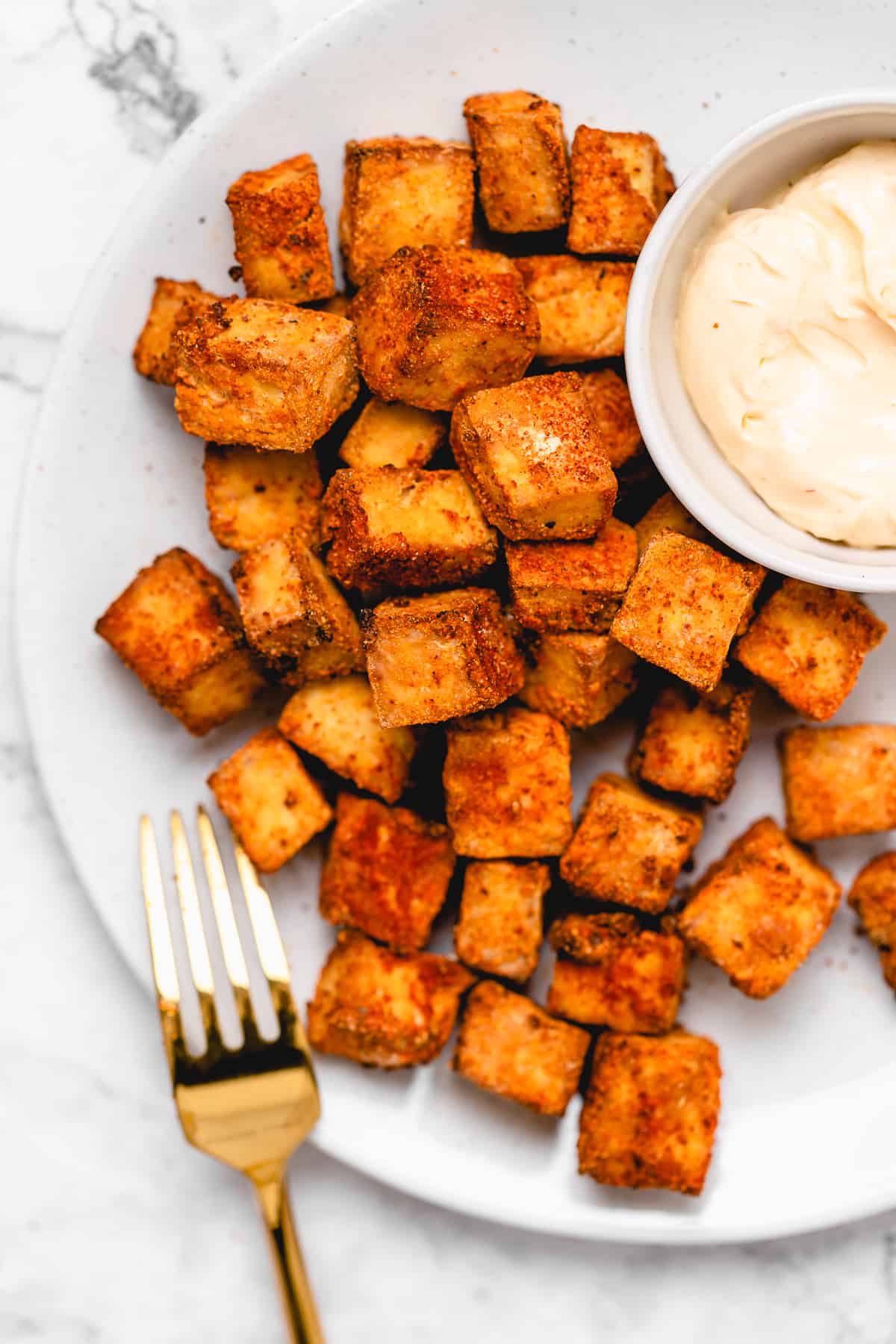
Want to make your tofu taste better but don’t know where to start? Today I’m going to show you how to cook tofu and also share some incredibly helpful tips for making the MOST delicious tofu you ever have!
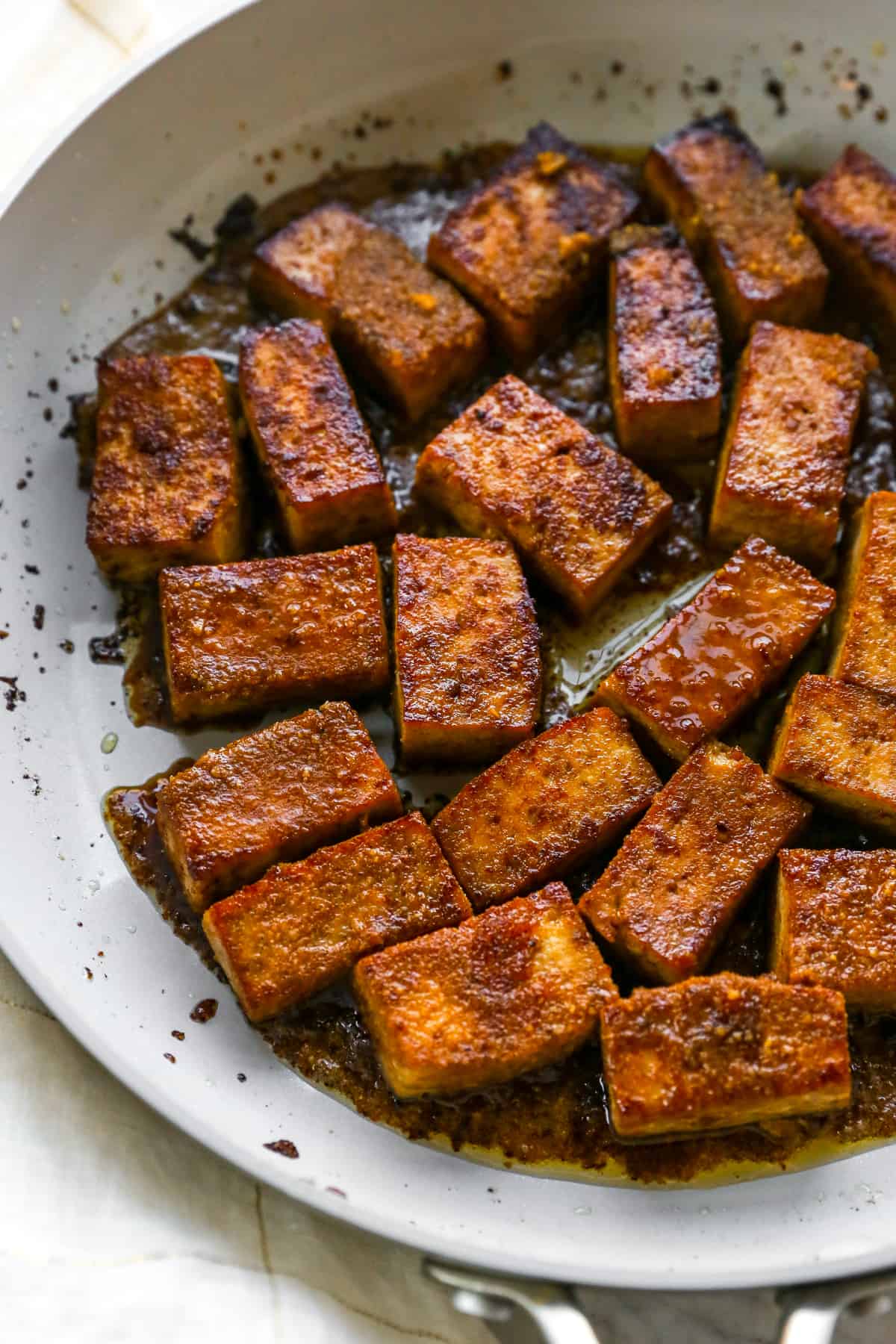
Cooking tofu can feel a bit tricky at first, but once you master it, you’ll wonder how you ever lived without this versatile, protein-packed ingredient. Whether you’re craving crispy tofu for stir-fries, silky tofu for soups, or marinated tofu bursting with flavour, there’s a method for every dish.
What I love most about tofu is how it transforms into whatever you want it to be — it’s like a blank canvas for your favourite spices, sauces, and marinades. The trick is knowing how to prepare and cook it to bring out its best texture and taste.
If you’ve ever struggled with soggy tofu or bland bites, don’t worry — I’ve got you covered. This guide breaks down everything you need to know, from pressing tofu to achieve the perfect crispiness to seasoning it for maximum flavour. After this, you’ll be a tofu pro in no time!
Firstly, What is Tofu?
Tofu, also known as bean curd, is a food made from soy beans. Tofu is often seen as a vegan meat replacement and can be used in everything from vegan meat replacements to cheesecakes to puddings to vegan ‘eggs’ and so much more. One of the things that is asked a lot in relation to tofu is whether it is “real”. Yes, it definitely is.
Tofu can get a bad wrap but it is DELICIOUS. It’s versatile, easy to use, meal prep friendly, and freezer friendly too. Tofu is also high in protein so it’s an excellent vegan source for complete proteins.
In fact, Tofu is your FRIEND. So instead of dwelling on all the reasons tofu may have been wrong to you in the past, let’s focus on all the ways to get it right. When you cook tofu properly AND are using the correct tofu, trust me, you’ll be so glad you added it to your recipes!
Different Types of Tofu – Regular Tofu vs. Silken Tofu
Understanding the different types of tofu is key to cooking it well. Whether you’re using it as a meat replacement, adding it to soups, or blending it into desserts, knowing which type to use makes all the difference. Let’s break it down:
Regular Tofu
If you’re using tofu as a meat replacement, you’ll want to buy regular tofu, which comes in medium, firm, or extra-firm varieties—not silken tofu.
- Soft Block Tofu: Soft block tofu is similar to silken tofu and works well in recipes like creamy soups or blended sauces. It has a delicate texture but slightly more structure than silken.
- Medium Block Tofu: This tofu is perfect for dishes like miso soup. It’s firmer than silken or soft tofu, but still retains a tender texture that works well in brothy recipes.
- Firm/Extra-Firm Block Tofu: This is the go-to tofu for most recipes where you want a hearty, meat-like texture. It’s my favourite and a staple in my kitchen. Firm and extra-firm tofu are typically sold in water-filled packages.
Silken Tofu
Silken tofu is quite different from regular tofu in both texture and preparation. Unlike regular tofu, it doesn’t need to be refrigerated and is usually sold in shelf-stable boxes with very little water surrounding it. Silken tofu has a delicate, custard-like consistency that cannot be pressed, although it can be gently drained if necessary.
One confusing aspect of silken tofu is the labeling—you’ll often see terms like “soft,” “firm,” or “extra-firm” on the packaging. These don’t refer to the same firmness levels as regular tofu but rather the slight variations within the silken tofu category itself.
Silken tofu is perfect for recipes where you want a smooth, creamy texture. It works beautifully in smoothies, puddings, cheesecakes, and other blended dishes, adding a luscious, silky consistency that’s hard to replicate with other types of tofu.
Press Your Tofu – Pressing vs Draining
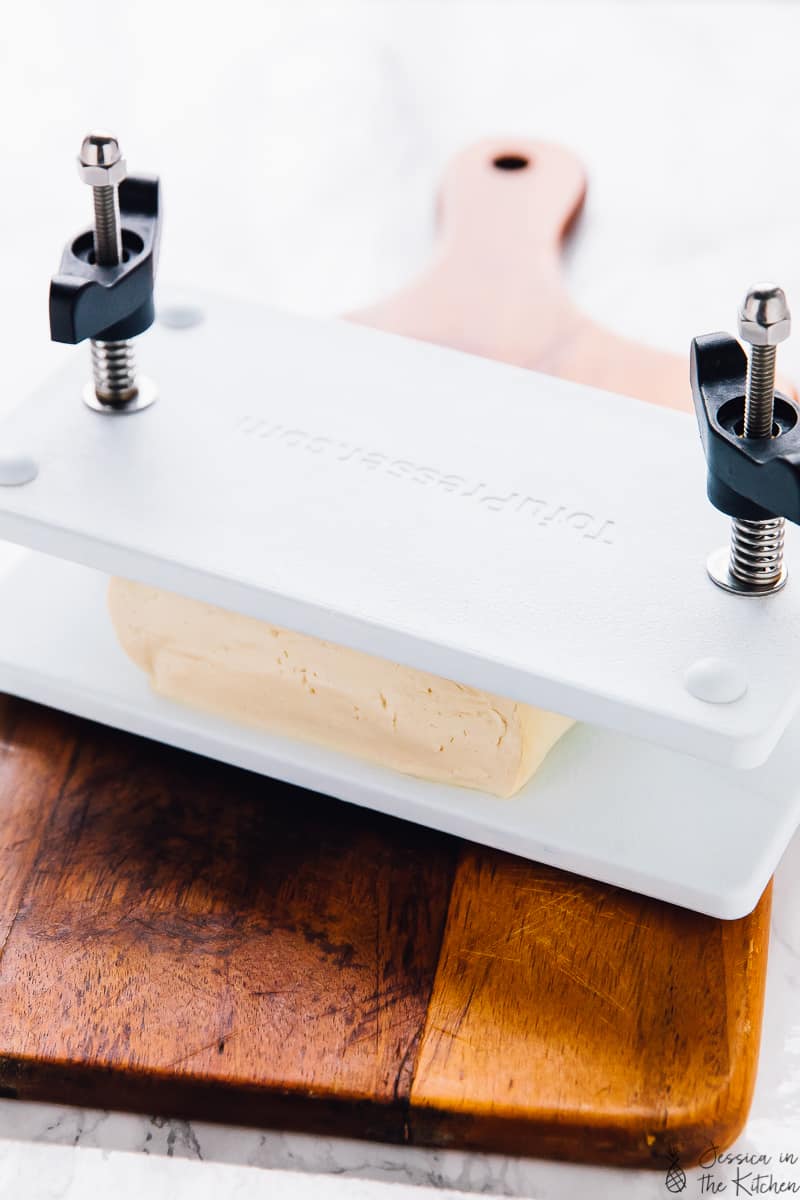
Pressing tofu is a game-changer when it comes to making it flavorful and satisfying. By pressing out the excess liquid, you create space for the tofu to absorb marinades and seasonings properly. If you skip this step and try marinating tofu that hasn’t been pressed, the liquid inside will block the flavors from soaking in, leaving your tofu bland and unseasoned, no matter how long you marinate it.
To get the best results, press your tofu for about 30 minutes. This allows enough time to remove as much liquid as possible, ensuring your tofu can fully absorb your marinades and achieve that golden, crispy texture when cooked. Shortening this step might be tempting, but if you want perfectly crispy tofu, it’s worth the time!
How to Press Tofu
- With a tofu press : A tofu press is a very simple mechanism that basically screws your tofu into press to press out the liquid. You can adjust it to any level of pressing that you want, and it works wonders. It tastes the fear out of everything on top of your tofu toppling over, and for someone like me who uses tofu so often, it’s paid for itself. Prices range from $20-$30, but it’s probably going to last you for life. Pressing tofu for us now takes less than 5 minutes to set up from cutting up the tofu bag to putting it in the press.
- Use heavy kitchen items: The second method is stacking heavy items on top of your tofu to remove the liquid. To press tofu this way, remove from the bag or package and wrap in a kitchen towel. Place a heavy pot (such as a cast iron) on top of the tofu or a stack of heavy books that can balance on top. Press for at least 30 minutes. You can press tofu a day or two ahead of time, and place in an airtight tupperware container in your fridge.
Draining Your Tofu
There are some recipes where you don’t want to press your tofu as much, or you’re using silken tofu for example. In this case, you’ll want to just wrap it in a kitchen towel or paper towel to drain excess liquid from your tofu. This is not the method I recommend when using tofu as a meat replacement.
Season Your Tofu – No, Really
You HAVE to season tofu. Stop treating it like a piece of meat (haha get it).
No, tofu’s base flavour is not delicious. That isn’t its job though . Tofu is there as a base for you to manipulate. Tofu is a blank slate and that’s exactly what I love about it. It needs and wants seasoning, marinading, flavour and proper cooking so that it can become anything you want. You can’t just salt and pepper the outside of tofu and expect it to taste amazing. That was my very first realisation about tofu that made the biggest difference for the way I cooked it.
There are two main ways to add flavour to your tofu: you can marinate it (which is what I’ll show you how to do below), or you can toss it with a bunch of dry seasonings.
Marinate It
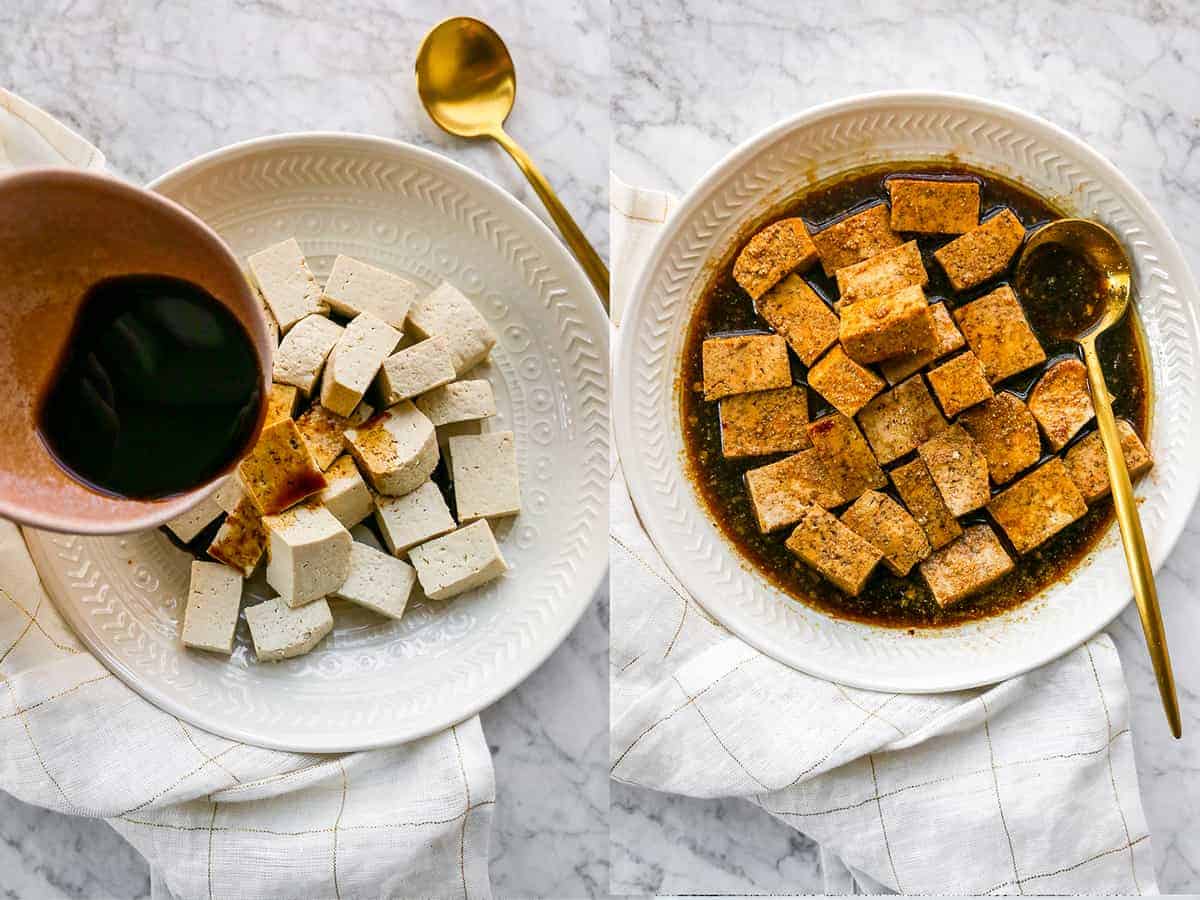
One of the best ways to infuse tofu with flavour quickly and all throughout the tofu is to marinate it. You can literally use any meat marinades for tofu, just pump up the flavours. Remember that tofu tastes like nothing, so it’s up to you to really get those flavours singing.
You can marinate tofu for anywhere from 15 minutes to overnight. You again want to use extra-firm tofu here so it doesn’t fall apart and so it really soaks it all up.
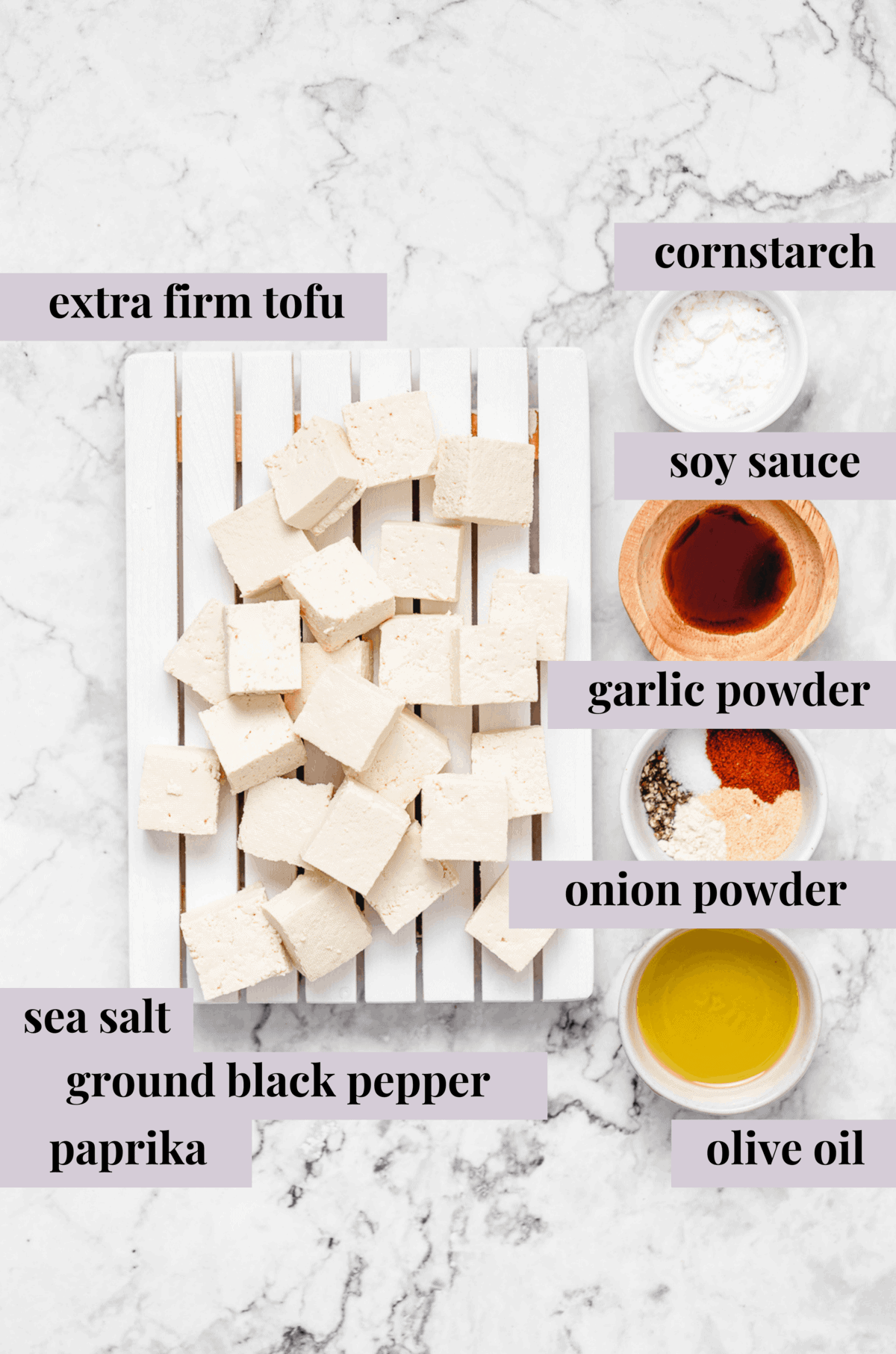
Here’s a quick look at what I like to use for my favourite marinade. I’ve included the full recipe in the recipe card below, if you want to print it out!
- Light soy sauce – Don’t use regular soy sauce, but you can use liquid aminos , tamari or coconut aminos .
- Rice wine vinegar
- Sesame oil
- Agave
- Seasonings – Garlic powder, onion powder, smoked paprika, and black pepper.
- Water
You’ll also need 1lb of tofu, some oil for cooking it in, and possibly cornstarch if you want to make it extra crispy. (More on that below.)
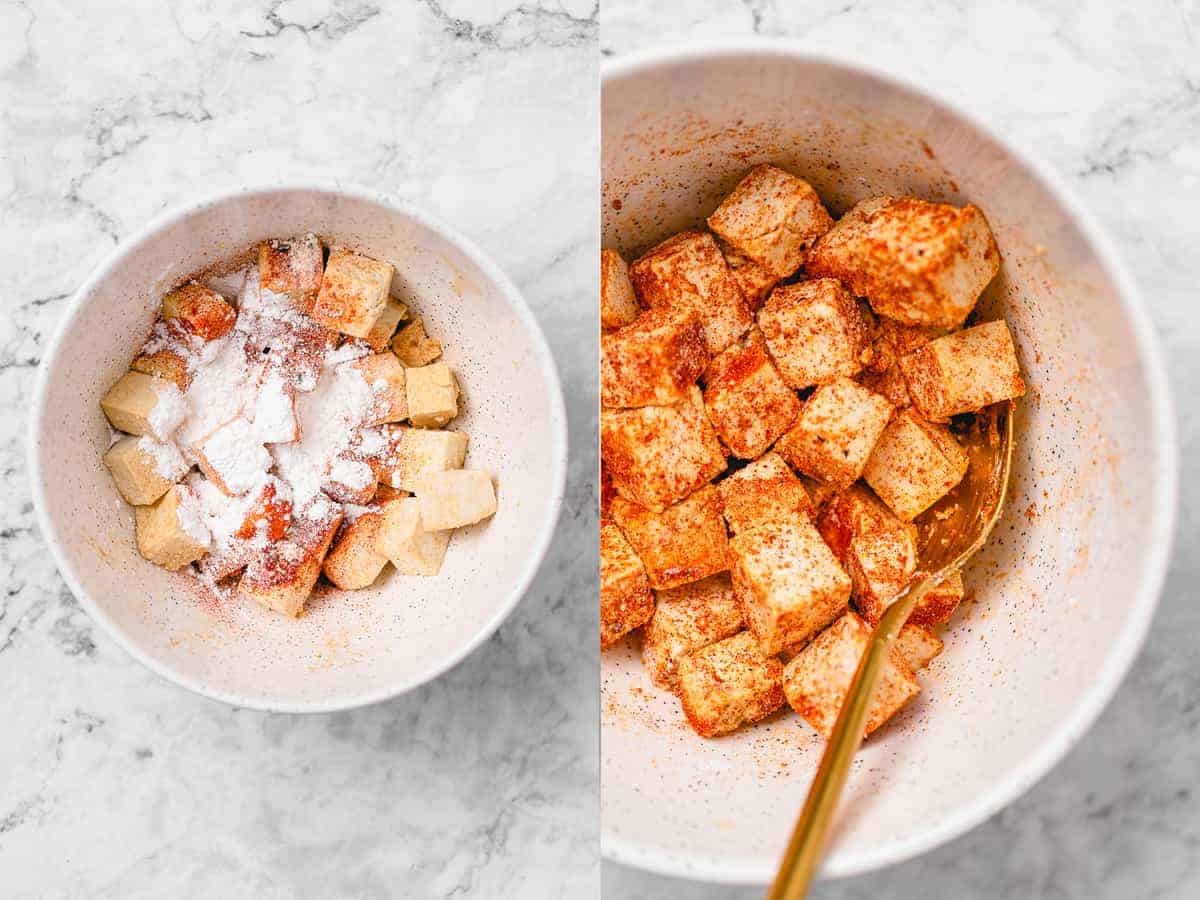
Coat It in Dry Seasonings
You can also use your favourite potent seasoning mix and coat your tofu in it.
Pre-season it, then let it soak in a sauce to soak up flavours. My Slow Cooker Tofu Butter Chicken wasn’t even pre-seasoned, but it was well pressed, and so it truly soaked up the flavours of that sauce. Alternatively, my stove top Tofu Butter Chicken is pressed, coated with cornstarch and a lot of seasonings, then pan fried, then steeped in sauce. Both taste absolutely incredible. It’s all about what method you want to use, when.
Using Cornstarch & Other Tofu Tips
As I mentioned earlier, coating tofu in cornstarch is my go-to trick for achieving the crispiest exterior with minimal effort. It’s a simple, no-fuss alternative to breading, which can sometimes feel like a time-consuming chore. The cornstarch method delivers quick, effective results without compromising on that golden, crunchy texture.
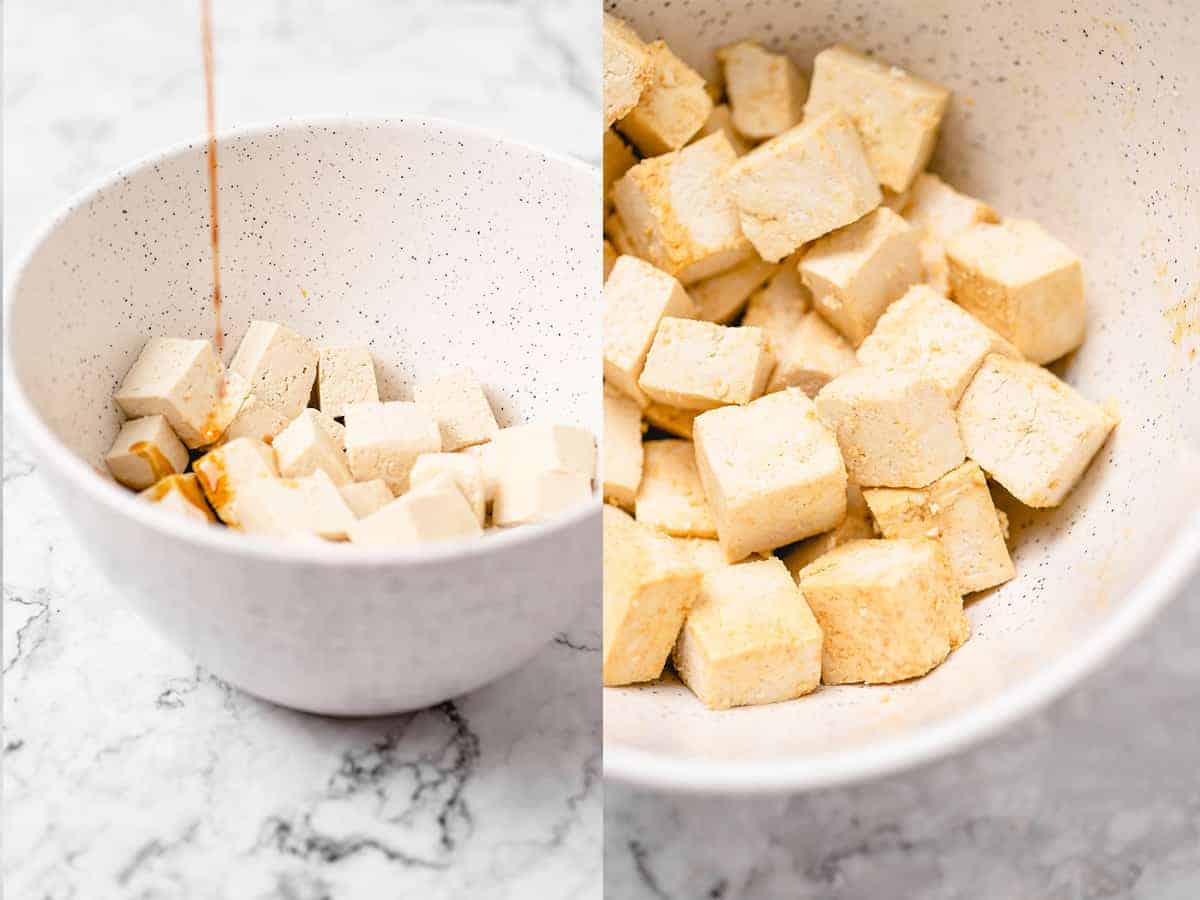
For crispy baked tofu, here’s how I do it: Preheat your oven to 400°F (200°C). Start by pressing the tofu and cutting it into cubes. Toss the cubes in a mix of garlic, black pepper, salt (or your favourite seasonings), liquid aminos, and a drizzle of olive oil. Once seasoned, add a generous coating of cornstarch and mix everything together to ensure the tofu is evenly coated. Bake on a parchment-lined sheet for about 20 minutes, or until the edges are perfectly crispy. Cornstarch not only adds crunch but also helps absorb any excess moisture, making it a key ingredient for crispy tofu.
Another important tip: tofu thrives at high heat! Whether you’re pan-frying or baking, starting with high heat helps to crisp up the exterior beautifully. Once you’ve achieved that golden crust, you can lower the heat to finish cooking if needed.
With these tips, getting crispy, flavour-packed tofu is easier than ever!
My Favourite Ways to Use Tofu
- Tofu and Veggie Stir Fry in Sweet Ginger Sauce
- Marinated Tofu Recipe
- Baked Tofu
- Air Fryer Tofu
- Easy Vegan Quiche
- Vegan Quiche Cups
- Tofu Butter Chicken
- Slow Cooker Tofu Butter Chicken
- Tofu Scramble
- Vegan Crispy Cajun Fried Chicken with Maple Mustard Dressing
Ingredients
- 1 lb block of tofu , pressed for at least 30 minutes and cut into 1-inch pieces
Marinade Recipe
- 1/4 cup light soy sauce , don’t use regular soy sauce (you can always used liquid aminos, tamari or coconut aminos
- 3 tablespoons rice wine vinegar
- 2 teaspoons sesame oil
- 4 teaspoons agave
- 1 teaspoon garlic powder
- 1 teaspoon onion powder
- 1/4 teaspoon black pepper
- 1/4 teaspoon paprika , (preferably smoked)
- 2 tablespoons water
Rest of Recipe
- 2 teaspoons oil , (any oil)
- 1 teaspoon cornstarch
Instructions
- In a medium-size bowl place the pressed and cubed tofu. Add the soy sauce and toss to coat. Add in all of the other marinade ingredients (rice wine vinegar, sesame oil, agave, garlic powder, onion powder, black pepper, paprika and water) and toss to thoroughly combine. Ensure all the pieces are coated and let the tofu sit in the marinade for at least 30 minutes, up to 2 days.
Rest of the Recipe
- In a pan over medium high heat, add the oil. Once hot, scoop your tofu out of the leftover marinade (do not toss your marinade) and add into the pan. Crisp up your tofu on each side for about 2-3 minutes on each side, until all sides are crisped up and browned.
- While your tofu is cooking, add 1 teaspoon of cornstarch to the marinade and whisk vigorously to combine.
- Once tofu is finished cooking. Turn off the heat. Immediately add in your marinade and stir to combine. The residual heat will heat through the sauce and cook off the cornstarch. Stir to combine and let it all sit together for at least 2 minutes. Remove from the stove, serve and enjoy!
Notes
- Allowing the marinade to sit on the tofu for at least 30 minutes really makes a massive difference to penetrating the tofu and giving it a deep flavour. Marinated tofu really is the best!
- Make sure you’re not buying silken tofu! That will yield the wrong texture and will break apart if you try and press it. Check out my Tofu 101 post for more, or watch my tofu 101 IG series .
- If you want to bake the tofu instead, I recommend following my Baked Tofu post instructions – 400°F for 20 minutes, flipping in between. I would still recommend doing the marinade with cornstarch step afterwards (just heat up the pan a bit and add the tofu right after it comes out of the oven).
- How to press tofu: I cover this in detail in my How to Cook Tofu 101 post ! The prep time includes the time to press the tofu
- Often times tofu sticks in your pan if you’re trying to flip it too early, the heat is too low, or your non-stick coating is gone. If your tofu is sticking, consider one of these and adjust accordingly – it’s usually that you’re trying to flip it too quickly!
This post was originally published in 2019, and has been updated with new photos and information in 2021.
