If you can never remember how many teaspoons are in a tablespoon, you’re not alone. Learn some of the most basic cooking measurements and get a printable kitchen conversion chart!
Most of the common kitchen measurements are simply fractions of larger measurements. My husband can never remember how many teaspoons are in a tablespoon. I, however, drilled them into my memory years ago!
Sometimes I want to turn a small recipe into more servings for meal prep or a dinner party, but converting kitchen measurements can be tricky. You definitely don’t want to accidentally triple or quadruple the salt!
When it comes to these small units of kitchen measurement, it’s a waste to whip out a scale for 1 teaspoon vanilla extract. Almost all my recipes I know has a teaspoon or tablespoon for something from seasonings to baking soda.
Whether you’re looking this up for the first or the millionth time, you’re not alone. I’ve got some simple conversions I use all the time and a handy dandy conversion chart to save on your phone or print for your fridge.
How to Convert Teaspoons to Tablespoons
To convert teaspoons to tablespoons, you just need some basic multiplication!
So, a teaspoon is ⅓ of a tablespoon. There are 3 teaspoons in a tablespoon.
You need 6 teaspoons for 2 tablespoons. Once you learn the basics, it’s easy to increase or decrease as needed!
The Most Common Kitchen Measurement Conversions
Sometimes it’s handy to know 34 teaspoons is 1/32 of a gallon, but it’s not a kitchen conversion I use often. Here’s some of the most frequently used conversions in my kitchen:
- 4 tablespoons = ¼ cup
- 8 tablespoons = ½ cup
- 16 tablespoons = 1 cup
- 1 cup = 8 fluid ounces
- 1 cup = 1/2 pint
- 4 cups = 1 quart
- 2 pints = 1 quart
- 32 fluid ounces = 4 cups
- 2 quarts = 1/2 gallon
- 1 stick of butter = 8 tablespoons
From here, you can double any recipe or cut it in half with ease. Turn any recipe into a week’s worth of meal prep with these tricks!
Measurements Around the World
When you’re talking about kitchen measurements, there’s the imperial system and the metric system. These measurements are for the imperial system, which is only used in the United States, Liberia, and Myanmar today.
What’s the difference? Imperial measurements revolve around cups and pounds, whereas grams and liters are used for metric measurements for dry and liquid ingredients, respectively.
If you’re wondering how to convert imperial teaspoons and tablespoons to metric options, there’s a few tips to remember:
- 1 U.S. tablespoon is .5 fluid ounces. A metric tablespoon, however, is precisely 15 mL.
- 1 U.S. teaspoon is 1/6 of a fluid ounce. It’s just a smidge less than a 5mL metric teaspoon.
Luckily, these measurements are so similar, you can easily use a 1:1 swap to convert. Just taste as you go!
When it comes to baking, however, measuring by weight is always king.
Easy Meal Prep Recipes
- The Best Baked Tofu
- Creamy Vegan Mushroom Soup
- How to Cook Quinoa
- Buffalo Cauliflower Wings
- Tropical Vegan Green Smoothie
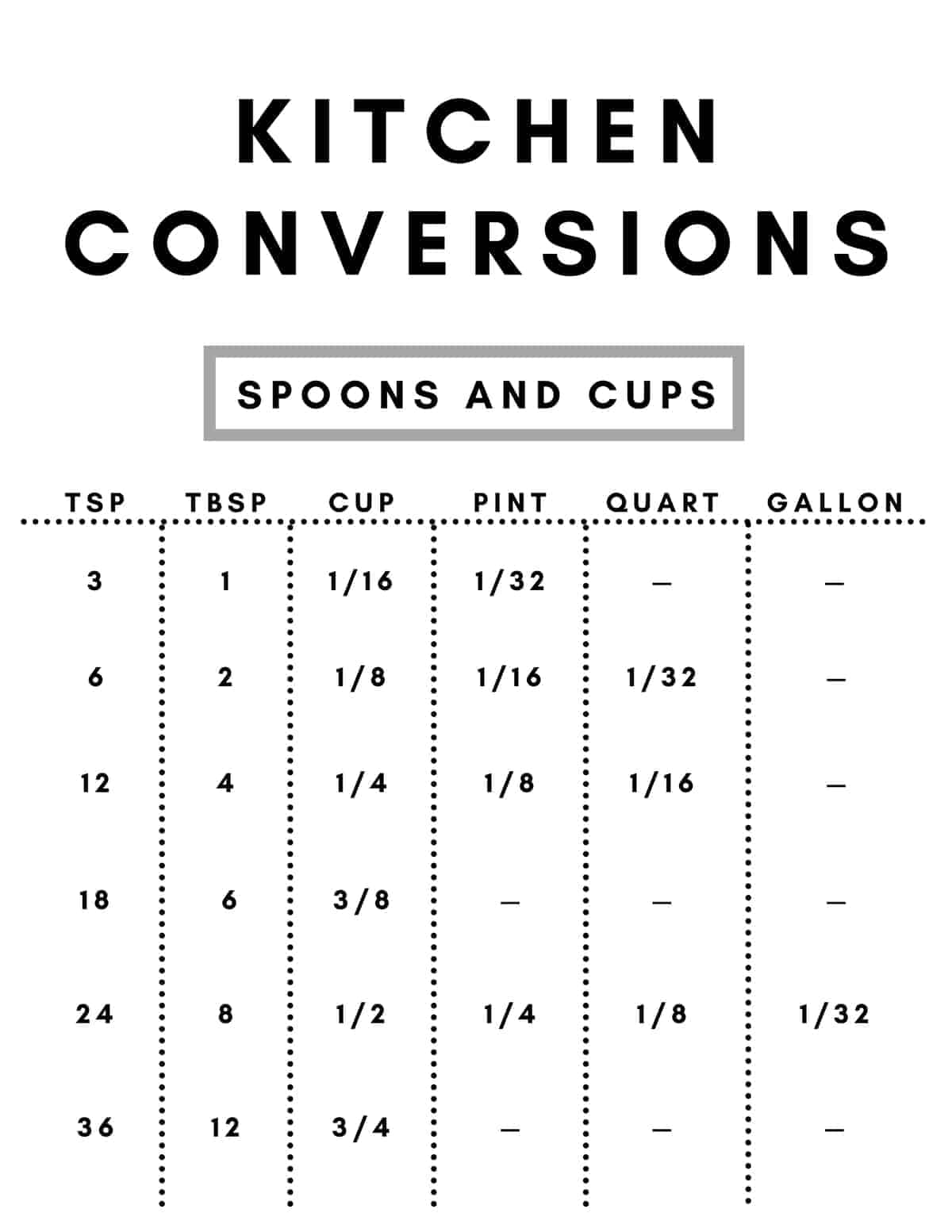
If you can never remember how many teaspoons are in a tablespoon, you’re not alone. Learn some of the most basic cooking measurements and get a printable kitchen conversion chart!
Most of the common kitchen measurements are simply fractions of larger measurements. My husband can never remember how many teaspoons are in a tablespoon. I, however, drilled them into my memory years ago!
Sometimes I want to turn a small recipe into more servings for meal prep or a dinner party, but converting kitchen measurements can be tricky. You definitely don’t want to accidentally triple or quadruple the salt!
When it comes to these small units of kitchen measurement, it’s a waste to whip out a scale for 1 teaspoon vanilla extract. Almost all my recipes I know has a teaspoon or tablespoon for something from seasonings to baking soda.
Whether you’re looking this up for the first or the millionth time, you’re not alone. I’ve got some simple conversions I use all the time and a handy dandy conversion chart to save on your phone or print for your fridge.
How to Convert Teaspoons to Tablespoons
To convert teaspoons to tablespoons, you just need some basic multiplication!
So, a teaspoon is ⅓ of a tablespoon. There are 3 teaspoons in a tablespoon.
You need 6 teaspoons for 2 tablespoons. Once you learn the basics, it’s easy to increase or decrease as needed!
The Most Common Kitchen Measurement Conversions
Sometimes it’s handy to know 34 teaspoons is 1/32 of a gallon, but it’s not a kitchen conversion I use often. Here’s some of the most frequently used conversions in my kitchen:
- 4 tablespoons = ¼ cup
- 8 tablespoons = ½ cup
- 16 tablespoons = 1 cup
- 1 cup = 8 fluid ounces
- 1 cup = 1/2 pint
- 4 cups = 1 quart
- 2 pints = 1 quart
- 32 fluid ounces = 4 cups
- 2 quarts = 1/2 gallon
- 1 stick of butter = 8 tablespoons
From here, you can double any recipe or cut it in half with ease. Turn any recipe into a week’s worth of meal prep with these tricks!
Measurements Around the World
When you’re talking about kitchen measurements, there’s the imperial system and the metric system. These measurements are for the imperial system, which is only used in the United States, Liberia, and Myanmar today.
What’s the difference? Imperial measurements revolve around cups and pounds, whereas grams and liters are used for metric measurements for dry and liquid ingredients, respectively.
If you’re wondering how to convert imperial teaspoons and tablespoons to metric options, there’s a few tips to remember:
- 1 U.S. tablespoon is .5 fluid ounces. A metric tablespoon, however, is precisely 15 mL.
- 1 U.S. teaspoon is 1/6 of a fluid ounce. It’s just a smidge less than a 5mL metric teaspoon.
Luckily, these measurements are so similar, you can easily use a 1:1 swap to convert. Just taste as you go!
When it comes to baking, however, measuring by weight is always king.
Easy Meal Prep Recipes
- The Best Baked Tofu
- Creamy Vegan Mushroom Soup
- How to Cook Quinoa
- Buffalo Cauliflower Wings
- Tropical Vegan Green Smoothie
Learn how to cook lentils perfectly every time with tons of flavour! These tips and tricks will keep all your lentils from getting mushy for soups, salads, and side dishes.

I love love love lentils!! I avoided using lentils for no good reason, and now I LOVE them! They are known as a power legume due to how long they’ve been around (all the way back to 8,000 BC) and their high protein content. They’re also incredibly versatile: Whether you have them plain, on a salad, in chili , or as a meat replacer in meatloaf !
There are many different colours of lentils — black, red, brown, green and yellow. The different colours are cooked for different times. So no, they aren’t very easily exchanged. If you see a recipe asking for red lentils, I definitely recommend using red lentils since you’ll have to completely adjust the cooking times and may end up with too mushy or rock hard lentils instead.
What Are Lentils?
Lentils are a super easy side dish, but what are the little pods of flavour, anyway?
They’re actually part of the legume family like peas, peanuts, and beans. Also known as pulses, they’re most popular in Indian cuisine. I love them because dried lentils can last for years in an airtight container in the pantry.
Even cooked lentils are safe up to 1 week in the fridge or up to 3 months in the freezer. There’s no easier meal prep option!
What Is the Ratio of Lentils to Water?
Whether you’re making a single serving or feeding an army, it’s so easy to double or triple a lentil recipe!
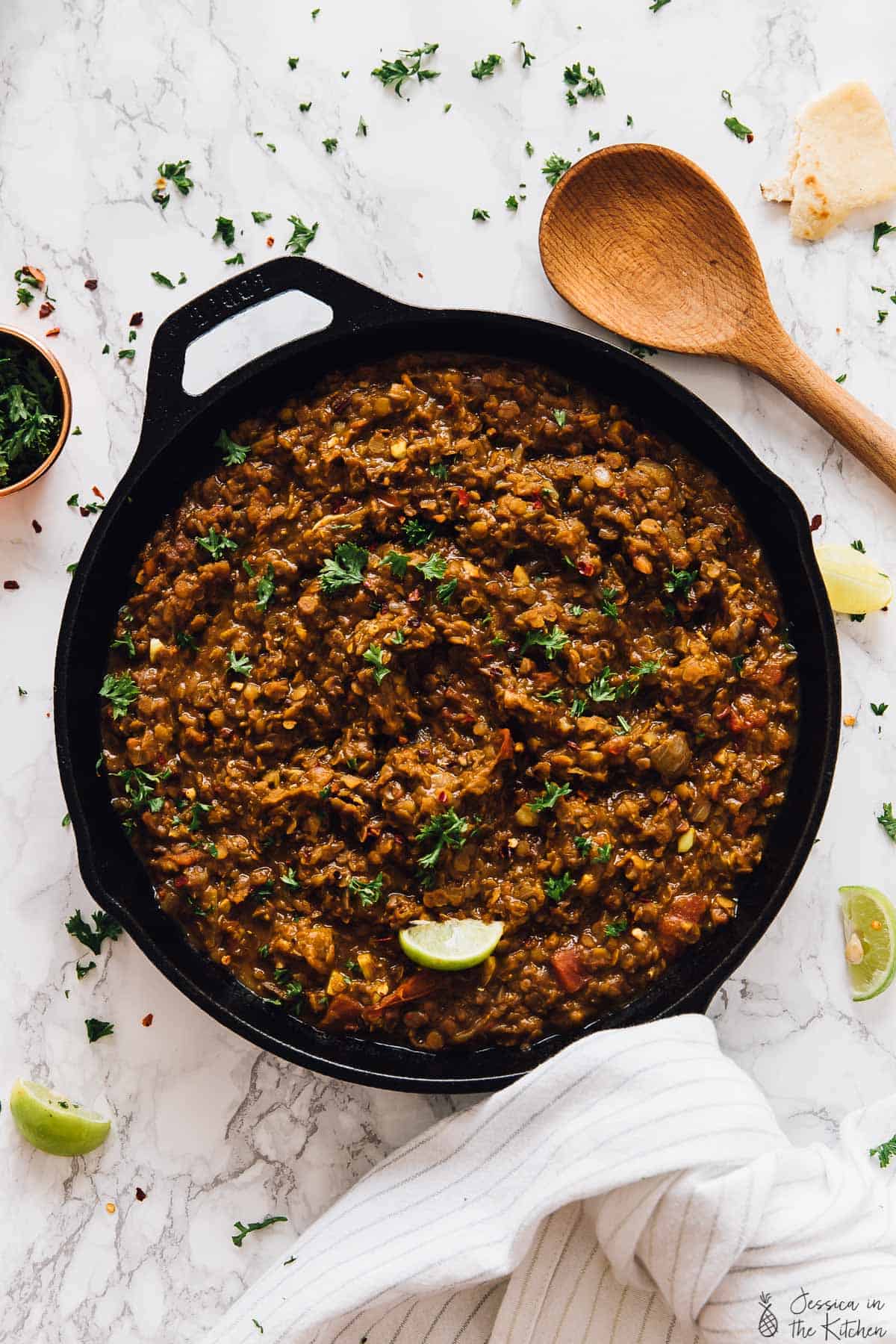
For every 1 cup of lentils, you’ll want 2 cups of water. If you want to add a little extra flavour, use vegetable broth to keep it vegan or any other broth if you’re not on a plant-based diet.
I don’t recommend salting the lentils before cooking since the reducing liquid can get overly salty. Just salt when you’re done!
Is It Best to Soak Lentils Before Cooking Them?
While you need to soak dried beans before cooking, lentils don’t need a soaking time.
Since they simmer in liquid, they should come out perfectly tender without getting mushy.
How to Cook Lentils
This is truly the best and most consistent way to cook lentils with just 2 ingredients — lentils and water!
Before you cook lentils, it’s important to run your fingers through them and look to check for any small stones — AKA “sorting your lentils.” Yes, I’ve found a small stone before! Remove any other debris, then give them a quick rinse in a sieve or fine mesh strainer.
Mix 1 cup of lentils with 2 cups of water in a sauce pan over medium heat. Make sure all the lentils are covered in water. Bring to a rumbling simmer, then reduce the heat and simmer about 20 minutes.
Like rice, lentils absorb water while they cook. If the water level drops below the lentils, add a little more liquid to keep them moist. You want the lentils softened but not mushy. I always add salt and any other seasonings when they’re done cooking.
Different Kinds of Lentils (and Varying Cook Times)
There are actually four kinds of lentils! The cook time often varies for each lentil, so be sure to watch them based on the type. Here they are below (and neatly in the recipe for convenience too).
Red/Orange/Yellow Split Lentils –
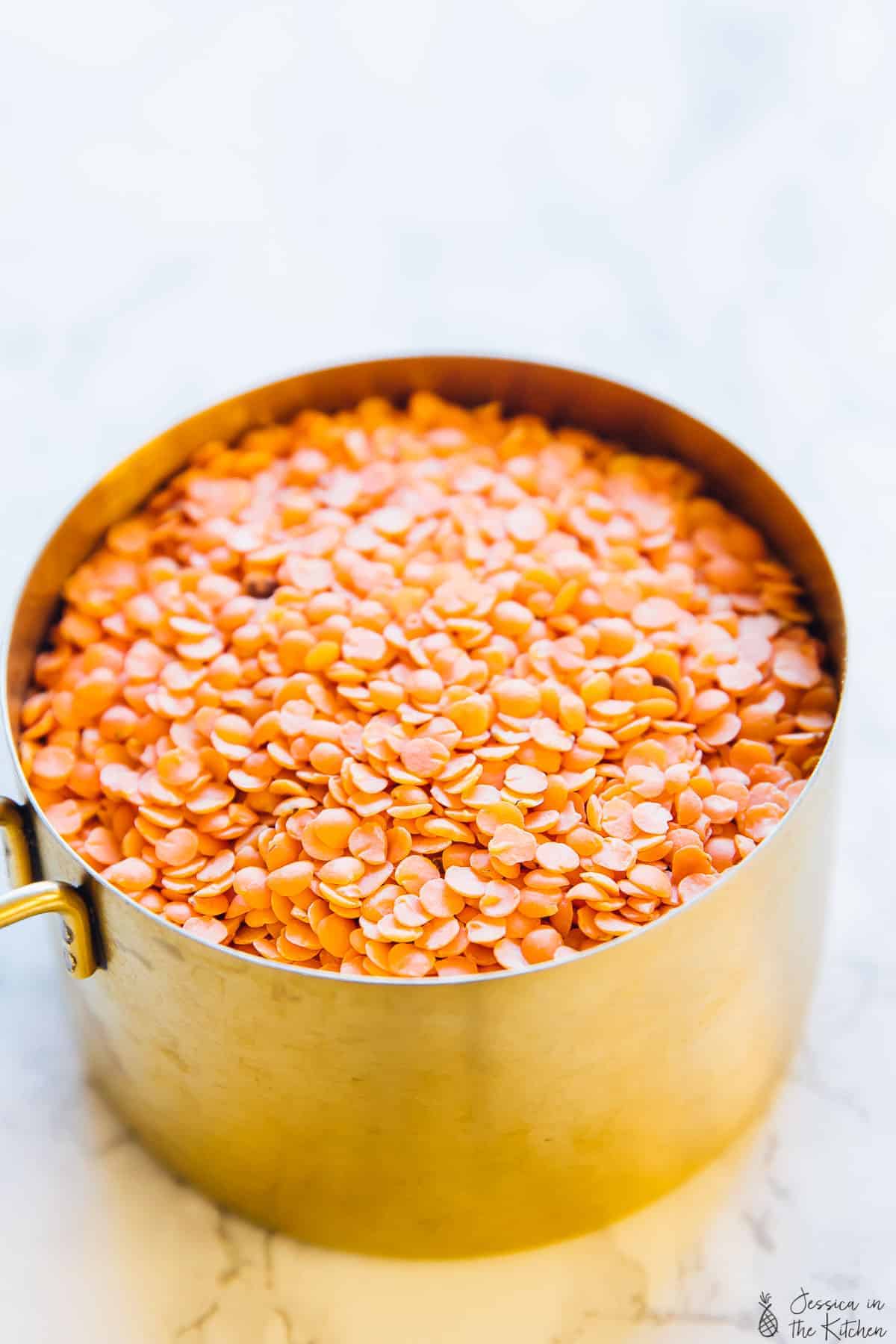
Orange/Yellow Split/Red Lentils are the “softest” kind of lentils and take the quickest to cook, about 15 to 20 minutes. They’re lovely in dahls and soups! Somethings they disintegrate completely!
Brown Lentils & Green Lentils –
Brown and green lentils are the most similar kinds! They have a nice shape/purpose that’s why they’re preferred for dishes like vegan meatloaf and stews . Also great for like burgers, sandwiches, taco fillings. They take about 25 to 30 minutes to cook! If they’re overlooked they can get mushy.
Black Lentils –
Black lentils are amazing and not as commonly found. They take about 20 to 25 minutes. I had it in an Indian Dahl in London (check out my what to eat in London guide to check out the restaurant) once and it’s the best I’ve ever had!
French Lentils –
They’re like blue green! I haven’t used these personally yet, but will one day! They keep their shape the MOST so best in salads. Also would be great in like shepherd’s pie! Usually when a recipe calls for one type, the only real substitute you can do is green for brown and brown for green. Otherwise you may end up with red lentils gone too soft, or too tough!
Whether you’re new to this legume or looking for the best way to make lentils, here’s a few tips and tricks I’ve picked up along the way:
- Keep them moist. If you don’t want dry, hard lentils, make sure to keep a little liquid in the pot! You can always add a little more if the water is evaporating faster than they cook.
- Skip the soak. Lentils definitely don’t need any soaking before they’re cooked. Save time and skip the soaking! You do want to rinse them briefly and check them for stones or debris, though.
- Season at the end. Nothing is worse than overly salty lentils, quinoa, or rice. I don’t use any seasonings, including salt, until they’re done cooking so I can taste as I go.
- Add any flavour! Lentils have a great earthy flavour, but they can take on any flavours you want! Try cooking them in veggie or mushroom broth. Or, add some carrots, onions, garlic, celery, or herbs to the pot!
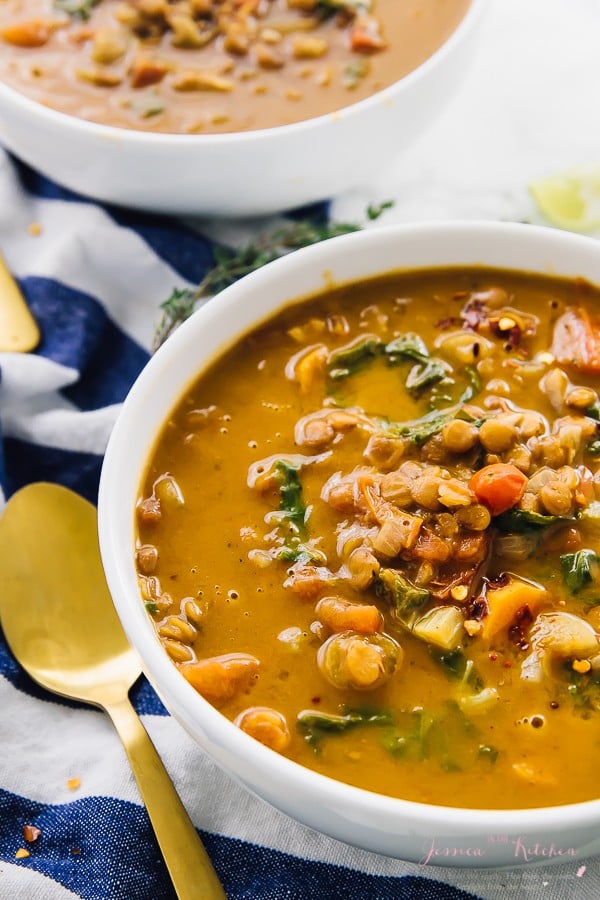
Easy Lentil Recipes You’ll Love
- One-Pot Vegan Lentil Stew
- Red Lentil Chili
- Lentil Balls (Meal Prep)
- Red Lentil Curry (Vegan)
- Vegan Coconut Curry Lentil Soup
Ingredients
- 1 cup lentils
- 2 cups water
Equipment
- Fine mesh strainer
- Sauce pot
Instructions
- Add lentils and water to sauce pan over medium heat. Ensure water is covering lentils. Bring to a rumbling simmer, then lower heat to a regular simmer.
- Let lentils cook for around 20 to 30 minutes (see time variations below), or until soft and chewy but still firm. If water level drops below lentils before they’re cooked, add a little more liquid. Lentil Cooking Times per Variation: Red/Orange/Yellow Split Lentils: 15-20 minutes Brown and Green Lentils: 25-30 minutes Black Lentils: 20-25 minutes French Lentils: 25-30 minutes
- When finished, add salt to taste and season lentils.
