Maybe you’re reading this article for yourself because you’re on the fence about whether a plant-based diet is right for you. Or maybe you’re here because you’re looking for information to send to a friend, family member, or partner to convince them to make the change. While there are a lot of reasons to go vegan, ranging from environmentalism to animal welfare, for many people, one of the most important reasons for switching to a plant-based diet is its health benefits.
There was a time when veganism was a fringe lifestyle, but now we have modern science to back up the health benefits of a plant-based diet.
What Does it Mean to Be Vegan?
A vegan diet is one that eliminates all animal products, including dairy, eggs, and honey. This means no meat, fish, poultry, or any other ingredients from animals. Instead, vegans eat a variety of plant-based foods such as fruits, vegetables, whole grains, legumes, nuts, and seeds—both whole foods and processed foods derived from these ingredients.
Some people go vegan for ethical reasons, while others do it for health reasons. While all vegans eat a plant-based diet, some people feel more comfortable using the term “plant-based” instead of vegan if they’re not an ethical vegan or choose to continue using animal products in their homes, for clothing, etc.
How to Eat a Healthy Plant-Based Diet
Simply giving up meat, dairy, and eggs doesn’t mean you’re going to experience the health benefits of a plant-based diet. It’s important to choose nutrient-dense foods on a vegan diet in order to get the most out of every meal. Eating a balanced diet with plenty of whole grains, legumes, fruits, and vegetables will ensure you’re getting all the essential vitamins and minerals needed for optimal health.
With so many plant-based substitutes available on the market these days, it’s easy to fill your cart with processed foods—but just because those cupcakes are vegan doesn’t mean they’re a healthy option! Don’t eat a diet full of sugar and carbs; instead, fill up on protein, healthy fats, fresh produce, and whole grains.
One of the biggest mistakes new vegans make is simply eliminating meat and cheese from their diets without replacing it with another protein. Proteins are the building blocks of life, so make sure you’re replacing those animal proteins with plant-based proteins , or you’re likely to feel lethargic and suffer brain fog. Eating a wide variety of vegan proteins like tofu, tempeh, beans, and lentils is key for any plant-based eater.
What is the Difference Between Vegan and Vegetarian?
Vegans don’t consume any animal products at all, including dairy and eggs.
There are different types of vegetarians—pescatarians, for example, only eat fish but no other meats. Ovo-vegetarians eat eggs but not dairy; lacto-vegetarians eat dairy, but not eggs. The majority of vegetarians are lacto-ovo vegetarians, which means they eat eggs and dairy, but not meat. The term “vegetarian” is usually understood to mean dairy and eggs are allowable.
Science-Backed Benefits of a Vegan Diet
Here are 7 health benefits of a plant-based lifestyle:
It’s Good for Your Heart
A plant-based diet has a number of benefits for heart health. Studies have shown that vegans have lower cholesterol and blood pressure levels, which can reduce the risk of heart disease. In fact, a study in the Journal of the American Heart Association found that plant-based diets may reduce the risk of dying from cardiovascular disease by 31 percent, and reduce the risk of developing it in the first place by 16 percent.
Plant-Based Diets May Prevent Type 2 Diabetes
By cutting out animal products, vegans tend to eat more fiber and fewer unhealthy fats than non-vegans. The diet is associated with a reduced risk of type 2 diabetes ; a study found that 7.6 percent of non-vegetarians have type 2 diabetes, while only 2.9 percent of vegans develop the disease.
Related to this, a plant-based diet also has the benefit of helping with weight management. By following a plant-based diet, you’ll likely consume fewer calories than you would on an omnivorous diet, aiding in weight loss and maintenance.
There Is Evidence It May Reduce Cancer Risk
Studies have found that adopting a plant-based diet may lower the risk of certain types of cancers . Plant-based diets tend to be high in fiber, antioxidants, and phytochemicals, which may help reduce the risk of cancer.
Eat a rainbow of fruits and vegetables to get the full spectrum of essential vitamins, minerals, and other important nutrients your body needs. Different colours of produce have different nutrients, so a dish like my Rainbow Fruit Salad with Maple Lime Dressing helps cover all your bases!
It Supports Brain Health
Studies have shown a reduced risk of dementia among those who consume a diet high in fruits and vegetables—just 100 more grams of produce per day (that’s about half a cup!) led to a 13 percent decrease in cognitive impairment in one study .
Experts believe this is due to polyphenols in fruits, vegetables, and whole grains. These nutrients may slow the progression of dementia and even reverse cognitive decline.
Plant Foods Reduce Inflammation
Inflammation is at the root of many chronic diseases, so it’s important to keep your levels in check—especially considering how modern foods, pollution, and even stress can trigger inflammation in our bodies.
Plant-based diets are associated with reduced inflammation due to the antioxidants and anti-inflammatory compounds found in fruits, vegetables, legumes, nuts and seeds. These compounds can neutralize the inflammatory toxins from processed foods, pollution, and more.
It Boosts Your Immune System
The antioxidants found in plant foods can help boost your immune system and fight off germs and other microorganisms—in fact, some of the same antioxidants and phytochemicals that fight inflammation will also keep your immune system humming!
A vegan diet full of healthy whole foods will give your immune system everything it needs to fight infection from bacteria and viruses.
Vegan Diets Are Higher in Fiber
Plant-based diets are naturally high in fiber, which has all kinds of health benefits—nope, it’s not just about keeping your digestive system on track!
A diet high in fiber allows you to better absorb the nutrients in your food, so you can experience all of the benefits listed above. Studies show that fiber can lower cholesterol, stabilize blood sugar levels, and reduce the risk of colorectal cancer.
Resources for Going Vegan
Now that you know the health benefits of a plant-based diets, you may be wondering where to start!
I have a number of guides here on Jessica in the Kitchen for everything from eating healthy on a budget to how to cook tofu . Here are some to help you start with a plant-based lifestyle:
- Budget-Friendly Vegan Recipes
- Easy Vegan Pantry Recipes
- Fridge and Pantry Staples
- Confusing & Popular Vegan Ingredients Explained
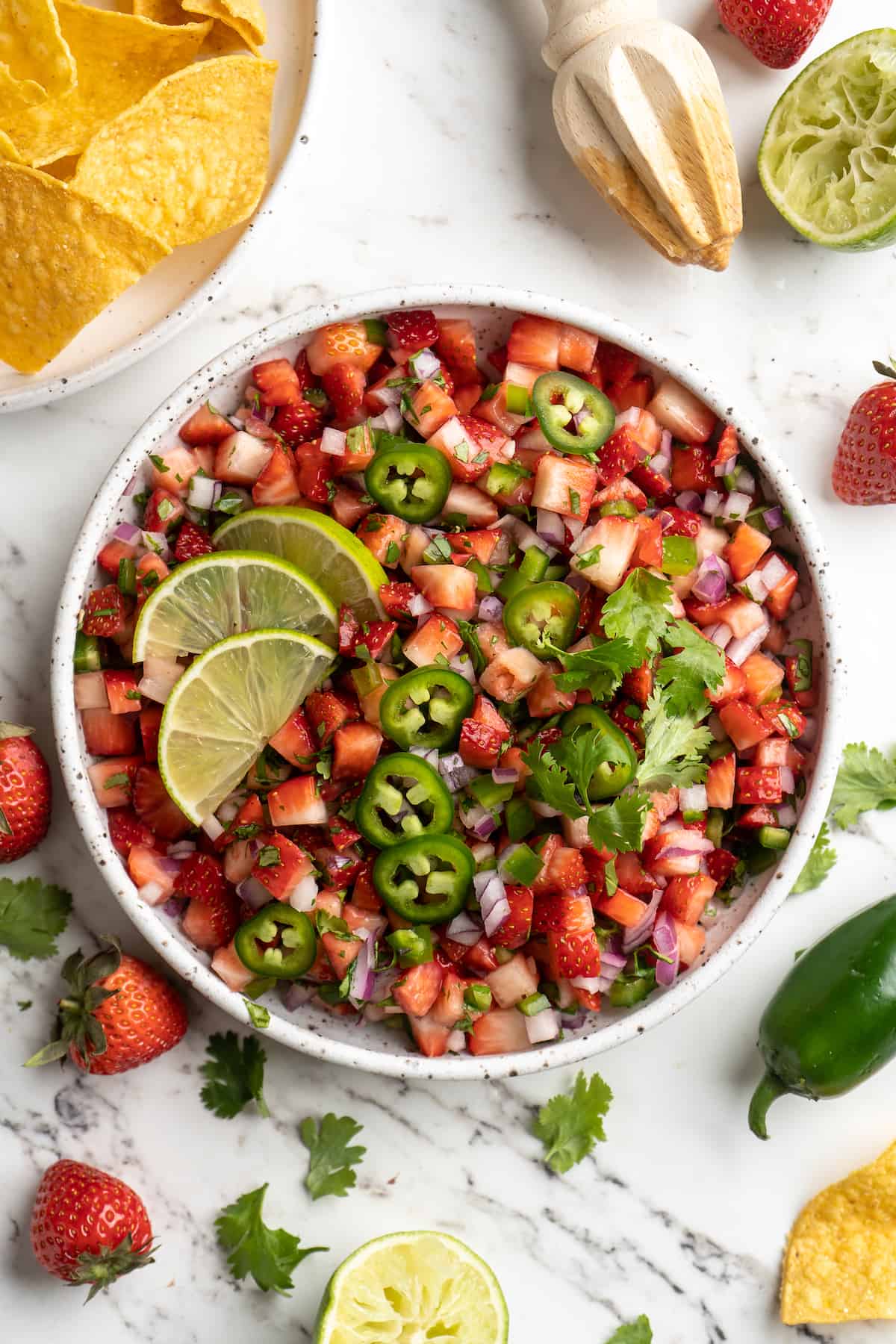
Strawberry salsa is sweet, savoury, and spicy, with a generous squeeze of fresh lime juice to liven things up. You’re only 10 minutes and 5 ingredients away from the perfect partner for crispy tortilla chips!
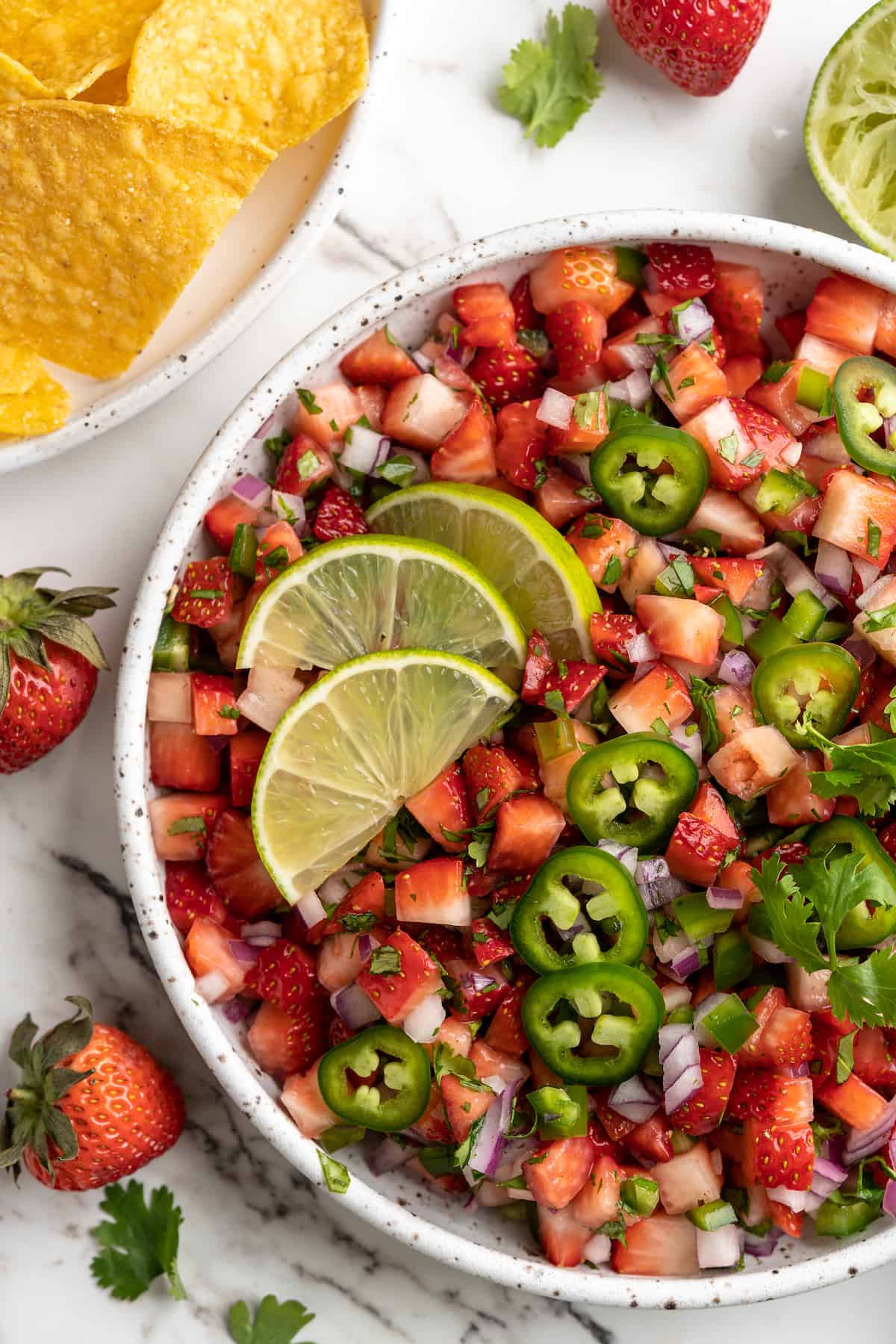
Are you a salsa traditionalist or a salsa trailblazer? While I love my restaurant-style blender salsa recipe, I have to admit that I have a weakness for non-traditional salsa recipes too. When strawberries are in season, this easy strawberry salsa is hard to beat.
It’s easy to make as an afternoon snack or while you cook crispy cauliflower tacos or vegan fish tacos for a weeknight dinner, but the flavours and freshness of this strawberry salsa make it fitting for a party, too. It’s versatile like that!
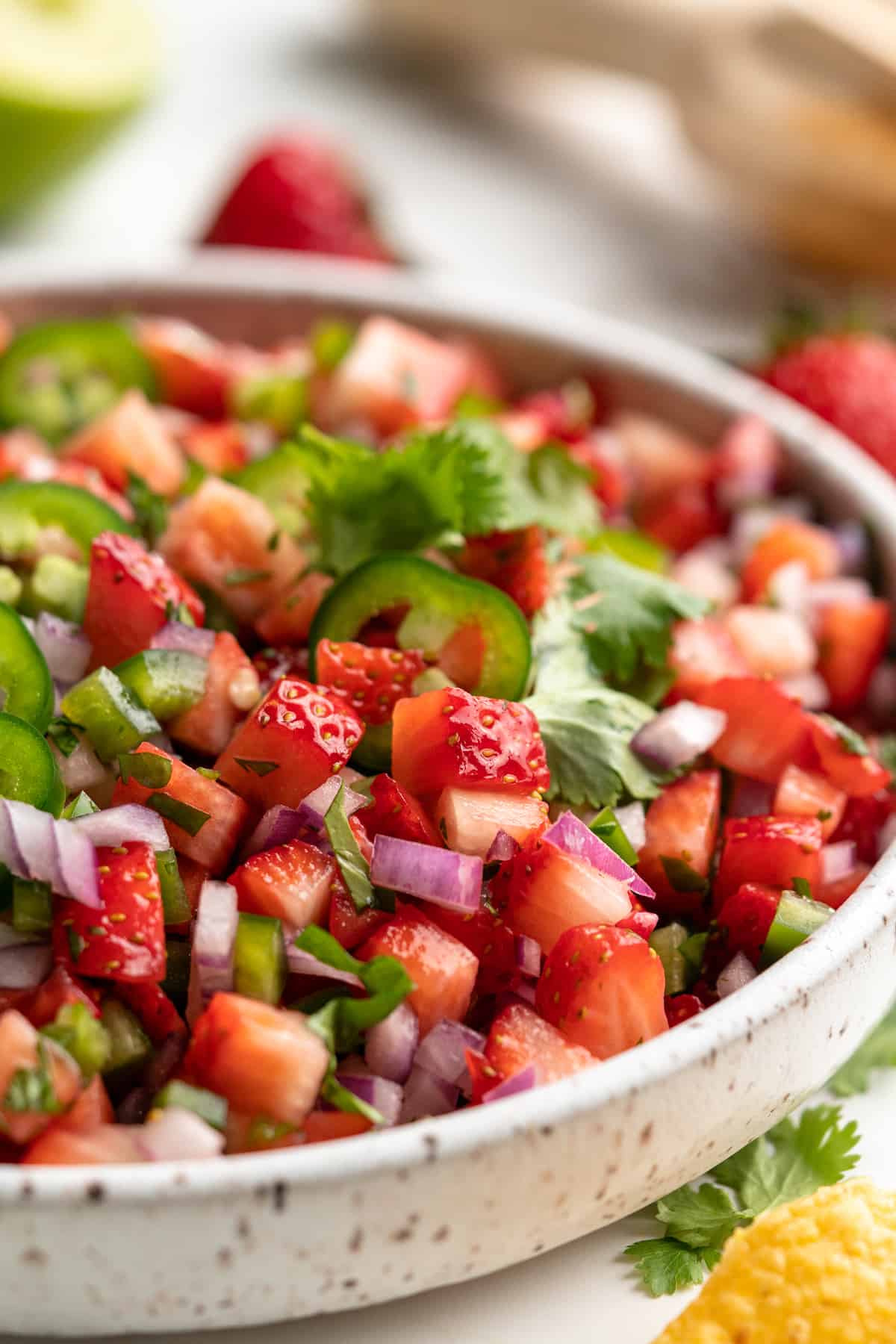
Why You’ll Love This Strawberry Salsa Recipe
Here’s what makes this strawberry jalapeño salsa such a winner:
- Contrasting flavours . I mean, I could just say this salsa is delicious, and that would be true, but if you want to know why it works, it’s because the sweet strawberries, tangy lime, pungent onion, and spicy jalapeño come together to create a perfectly balanced salsa.
- Practically effortless . Simple ingredients, 10 minutes of prep time—it doesn’t get much easier than this.
- Crowd-pleasing . I don’t think any summer party is complete without a platter of strawberry salsa and tortilla chips! It’s the kind of appetizer no one can walk away from.
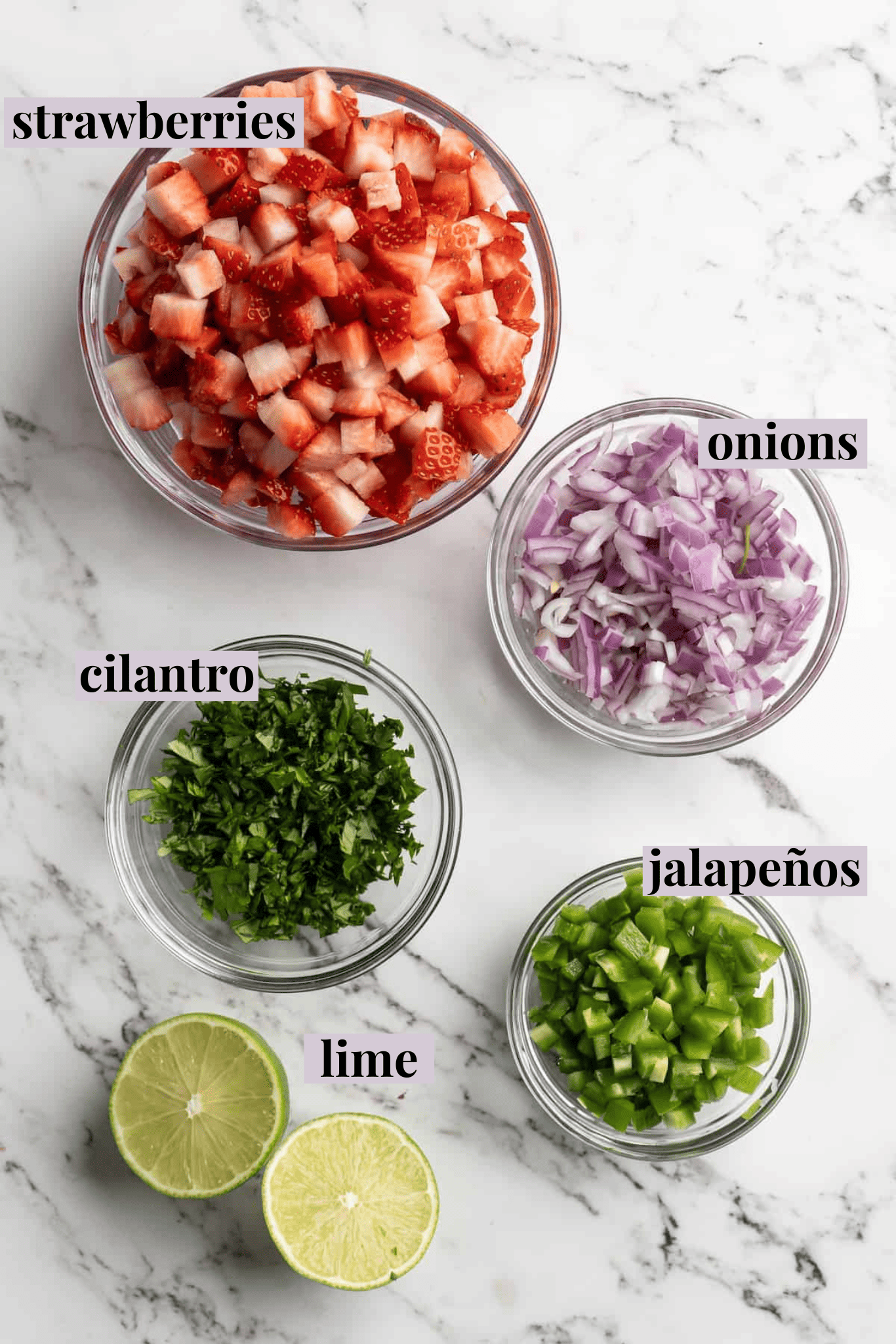
Notes on Ingredients
Scroll down to the recipe card to find the ingredient quantities and recipe instructions.
- Strawberries – If you’re lucky enough to find fresh, local strawberries, take advantage and use them here. They’re much more tender and sweet than store-bought strawberries.
- Red onion – You can cut the bite of the diced onions by soaking them in ice cold water while you prep the rest of the ingredients; you’ll still get onion flavour, without as much sharpness.
- Jalapeño – Use more or less, according to your taste preferences.
- Lime – Lime juice adds acidity to balance the sweetness of the berries.
- Cilantro – Finally, we get an herbaceous note from fresh cilantro.
What Can I Substitute for Fresh Cilantro?
Parsley is the most common substitute for fresh cilantro, but fresh basil or mint leaves also work well in this strawberry salsa recipe.
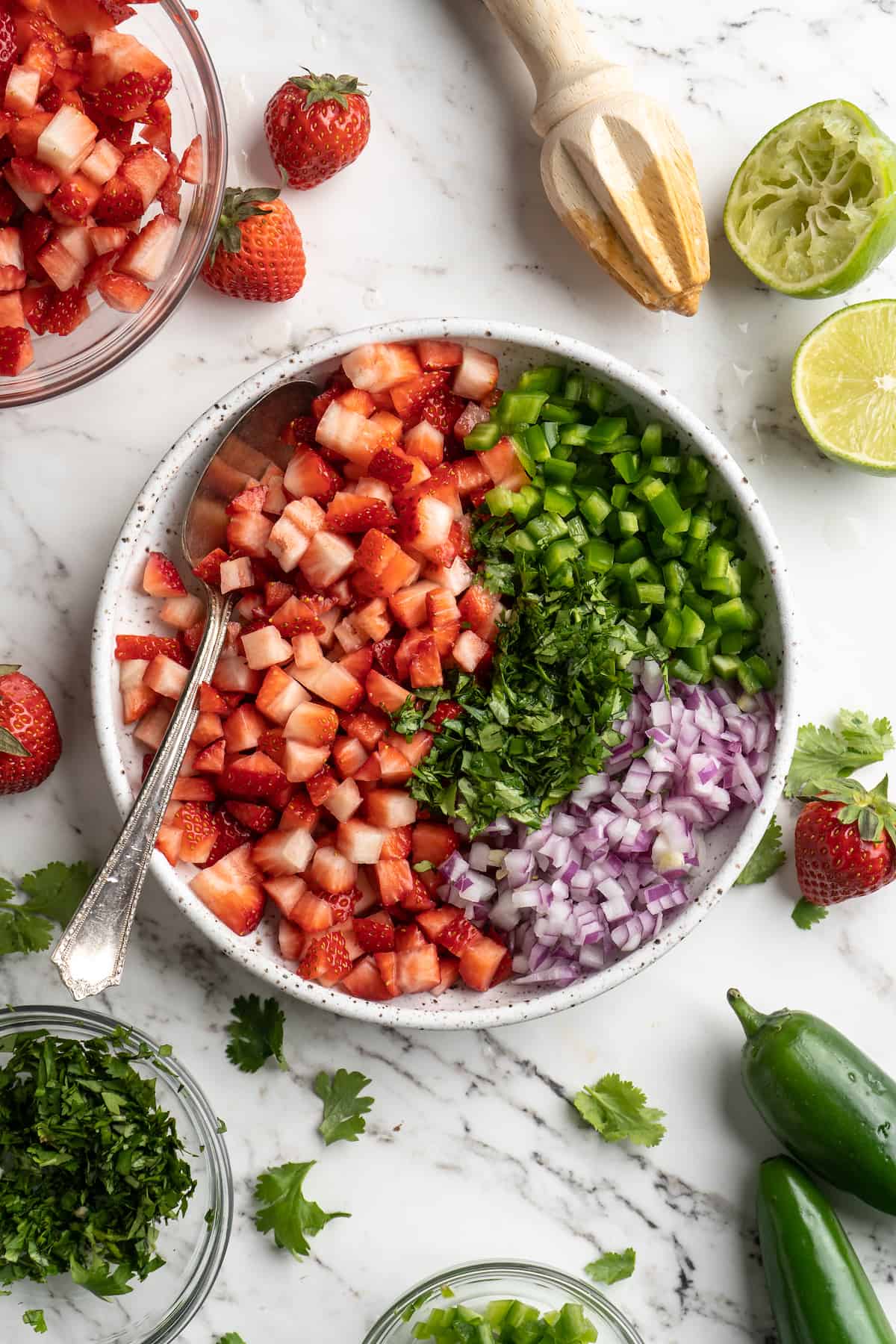
How to Make Strawberry Salsa
Here’s how easy it is to make fresh strawberry salsa at home:
- Combine . Add all of the ingredients to a mixing bowl.
- Toss . Gently toss everything together until it’s well-combined and all of the strawberries are coated in lime juice.
- Wait . Let the strawberry salsa sit for a few minutes to allow all the flavours to meld.
Tips for Success
This is a simple recipe, but these additional tips will help you make sure your strawberry salsa turns out perfect .
- Hull the strawberries . Cut any flavourless white parts off of the berries and then hull them with a paring knife or strawberry huller, removing the inner core. This will improve the flavour and texture of your salsa.
- Scale up for a party . This recipe does not make enough for a big get-together—it’s just too popular! So double or triple the recipe if you’re making it for a party.
- Cut the onions into uniform sizes . No one wants a big chunk of onion in their salsa! Make sure all of the onion pieces are roughly the same size.
Ways to Use Strawberry Salsa
Dipping crispy tortilla chips into strawberry salsa is absolute perfection, but there are so many other ways to put this strawberry salsa to use:
- Add it to quinoa and black bean burrito bowls .
- Spoon it over vegan chicken and add a drizzle of balsamic glaze .
- Pair it with crispy zucchini tacos to amp up the summery flavour.
- Tuck it into a vegan quesadilla made with your favourite melty plant-based cheese.
Fruit Salsa Variations
In addition to swapping out the cilantro, you can switch up the fruit, too. Use half the amount of strawberries and for the other half, substitute diced mango or pineapple to add some tropical flavour. To add more lime flavour, zest the lime before juicing it and then add the zest to the salsa.
How to Store Leftovers
Store leftover strawberry salsa in an airtight container in the refrigerator for up to a day.
Can This Recipe Be Frozen?
With the fresh ingredients in this recipe, it’s best not to freeze your strawberry salsa.
More Salsa Recipes
- Mango Basil Salsa
- Pineapple Salsa
- Black Bean Salsa
P.S. Here are some of the items I used to make this recipe if you’d like to use them too:
| WHAT YOU’LL NEED // SHOP MY FAVORITE INGREDIENTS & PREP PRODUCTS |

Ingredients
- 1 cup strawberries , chopped
- 1/4 large red onion , diced
- 1 jalapeño seeded and diced
- juice of a large lime
- 3 tablespoons cilantro
Instructions
- Mix all the ingredients together in a large bowl and toss lightly to combine.
- Let sit for a few minutes for all the flavours to meld.
- Serve with chips and enjoy!
Notes
- This recipe is vegan and gluten free. You can easily double or triple the recipe depending on your party size.
- This salsa is best made and served fresh. While you can store leftovers in the fridge, the strawberry will begin to wilt after being in the fridge for a day or so. I recommend making and serving it fresh.
- I don’t recommend freezing this salsa.
