Baba Ghanoush is a creamy Mediterranean dip that’s smoky, tangy, and all-around irresistible. It’s a staple at Middle Eastern restaurants, but I’ll show you how to make it at home!
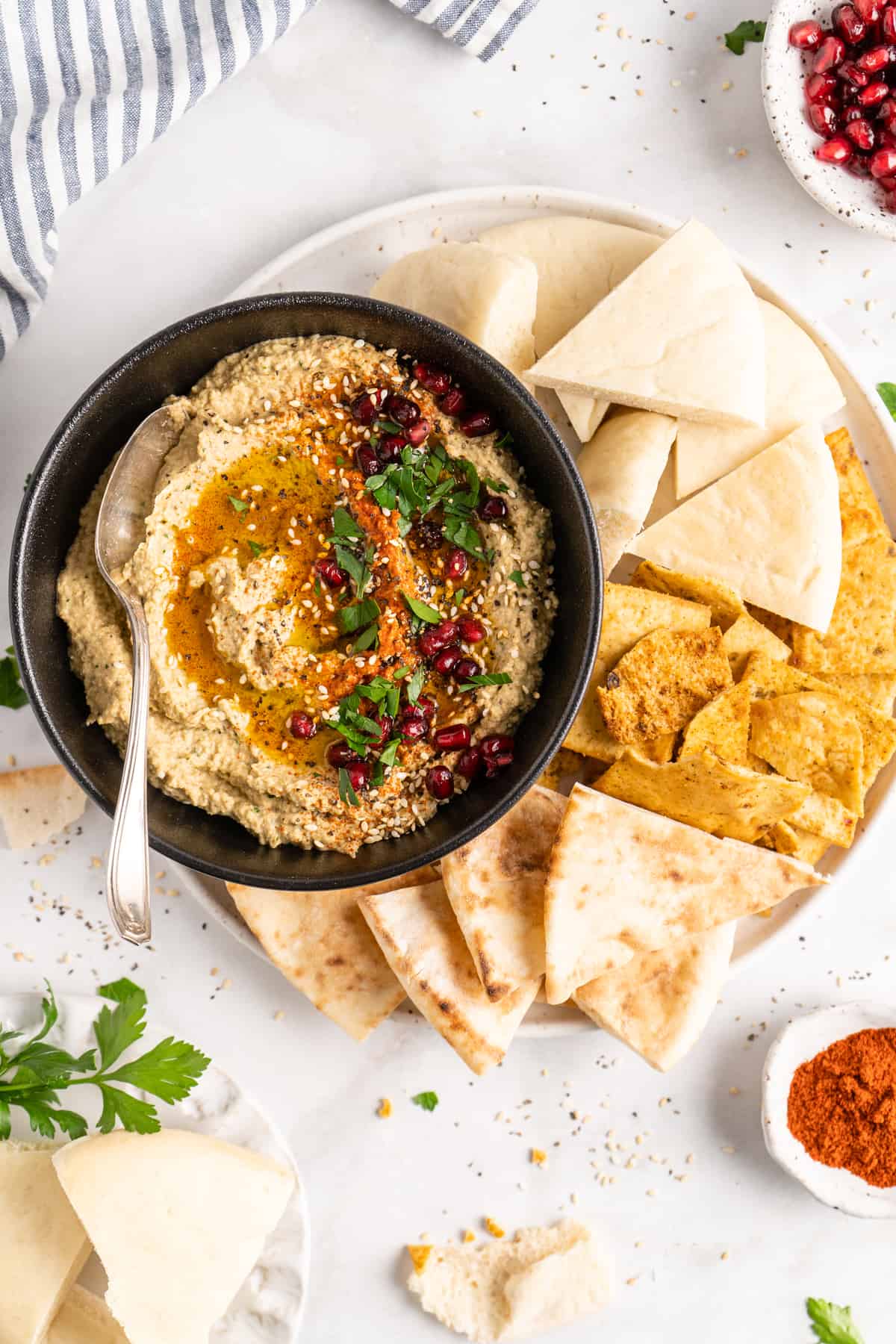
Any Middle Eastern restaurant worth its salt will offer hummus and baba ghanoush on their appetizer menu. Some people may prefer one or the other, but I always say: why not both?! Baba ghanoush has a uniquely smoky flavour, along with the brightness of lemon and the herbaceous addition of parsley. That smoky flavour comes from charring the eggplant over an open flame, but since we’re making this at home, my workaround is using smoked paprika instead.
Like hummus, traditional baba ghanoush is often topped with ground sumac, which is an astringent spice made from dried berries. It’s good stuff, but it’s also pricy! If you happen to have it on hand, by all means, use it! But if not, I think topping this with a drizzle of high-quality olive oil is the perfect finishing touch.
While baba ghanoush is great for serving with veggies and pita chips for an appetizer, I also love making a Mediterranean-inspired meal by whipping up a batch of this, along with Vegan Beet Falafel and Mediterranean Chickpea Salad .
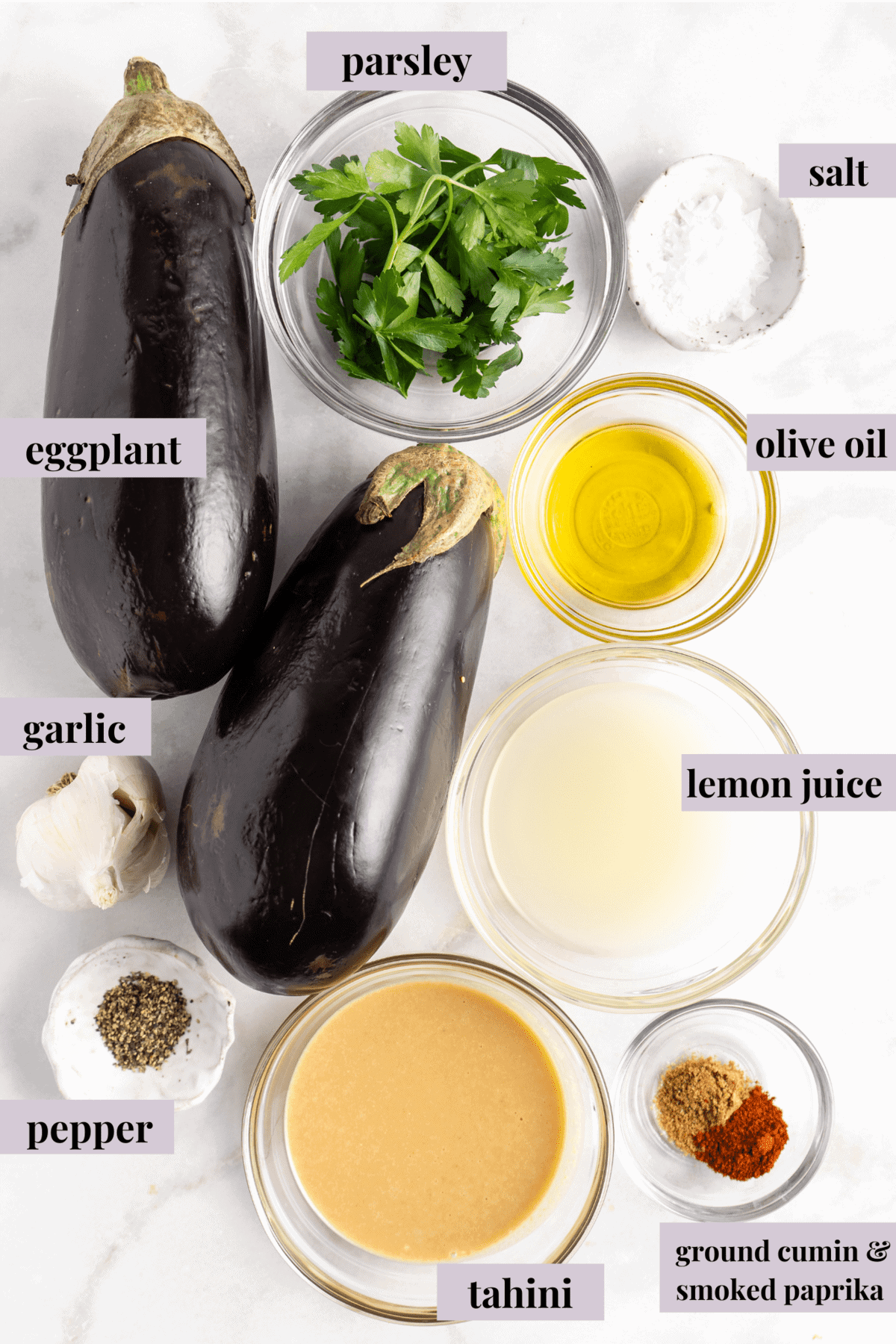
Notes on Ingredients
Please note that this is important information on the ingredients and instructions and the FULL recipe with amounts and details can be found DOWN BELOW (scroll to it) in the recipe card.
- Eggplant – Chinese eggplants, globe eggplants or Italian eggplants work best.
- Tahini – Here’s how to make your own tahini .
- Lemon juice
- Garlic
- Ground cumin
- Salt
- Olive oil
- Parsley – You can use more if you like.
- Smoked paprika
Tips for Choosing Eggplants
Eggplant isn’t the most popular vegetable at the grocery store, which means sometimes it sits and sits and sits , and by the time you come along to purchase it, it’s past its prime. An older eggplant can impart a bitter flavour, so it’s important to buy one that’s fresh. The skin should be shiny, rather than dull, and it should be firm all around, without any soft spots. It should feel heavy for its size, and the stem should be green, not brown and dry. Rather than buying one huge eggplant, it’s always better to buy a few smaller ones, as these are less likely to be bitter.
How to Make Baba Ghanoush
Get your pita bread ready for dipping, because we’re making baba ghanoush! Here’s what you need to do.
Prepare. Preheat oven to 400°F/200°C.
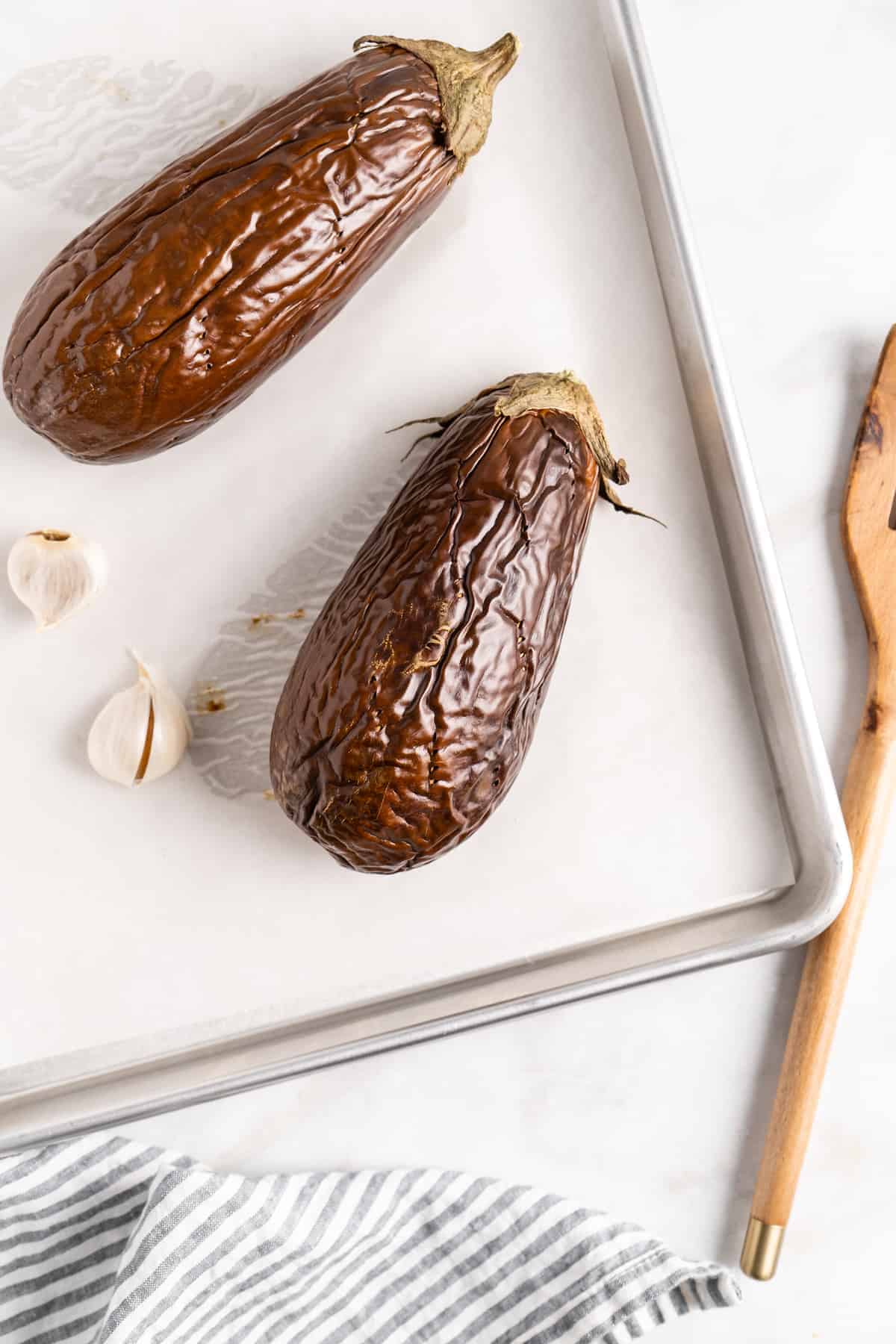
Roast the eggplants. Pierce the eggplants with a fork and place them on a baking sheet with the garlic. Roast for 30 to 40 minutes, or until the eggplants are tender and the skin is wrinkly.
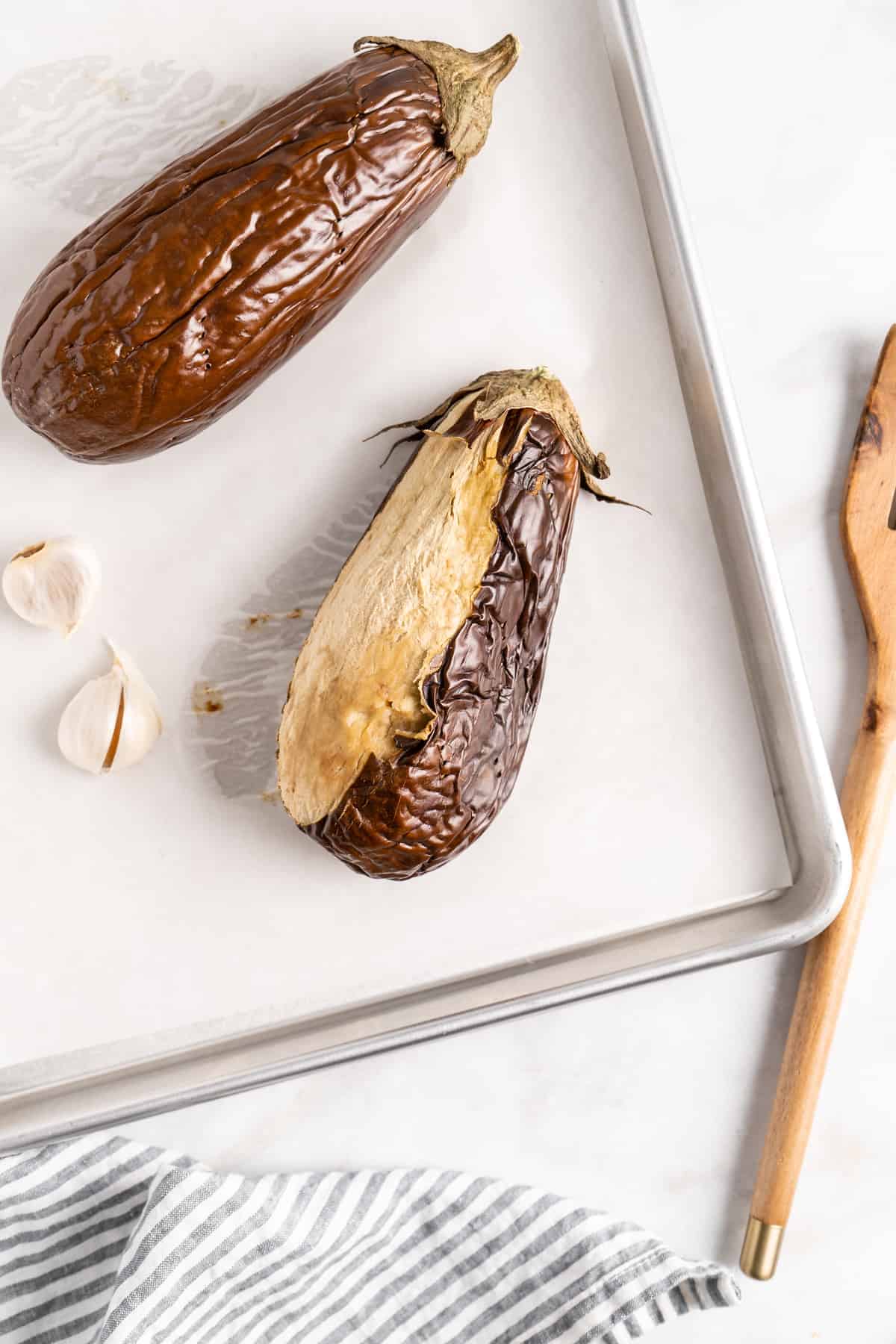
Cool and prepare the eggplant. Let the eggplants cool for 5 to 10 minutes, then peel off the skin and cut off the stem. Place the eggplant in a colander to let excess moisture drain off; after 5 minutes, use a wooden spoon or spatula to press the eggplant to remove any remaining liquid.
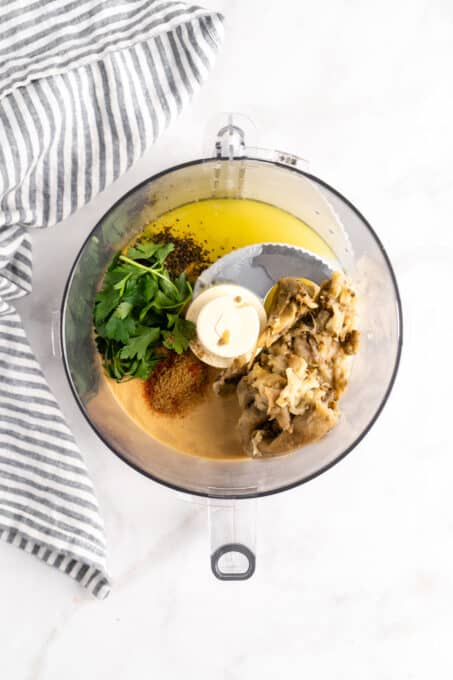
Puree . Place the eggplant, tahini, lemon juice, roasted garlic, cumin, sea salt, olive oil, parsley, and smoked paprika in a food processor and process until smooth. Taste and adjust the seasonings as desired.
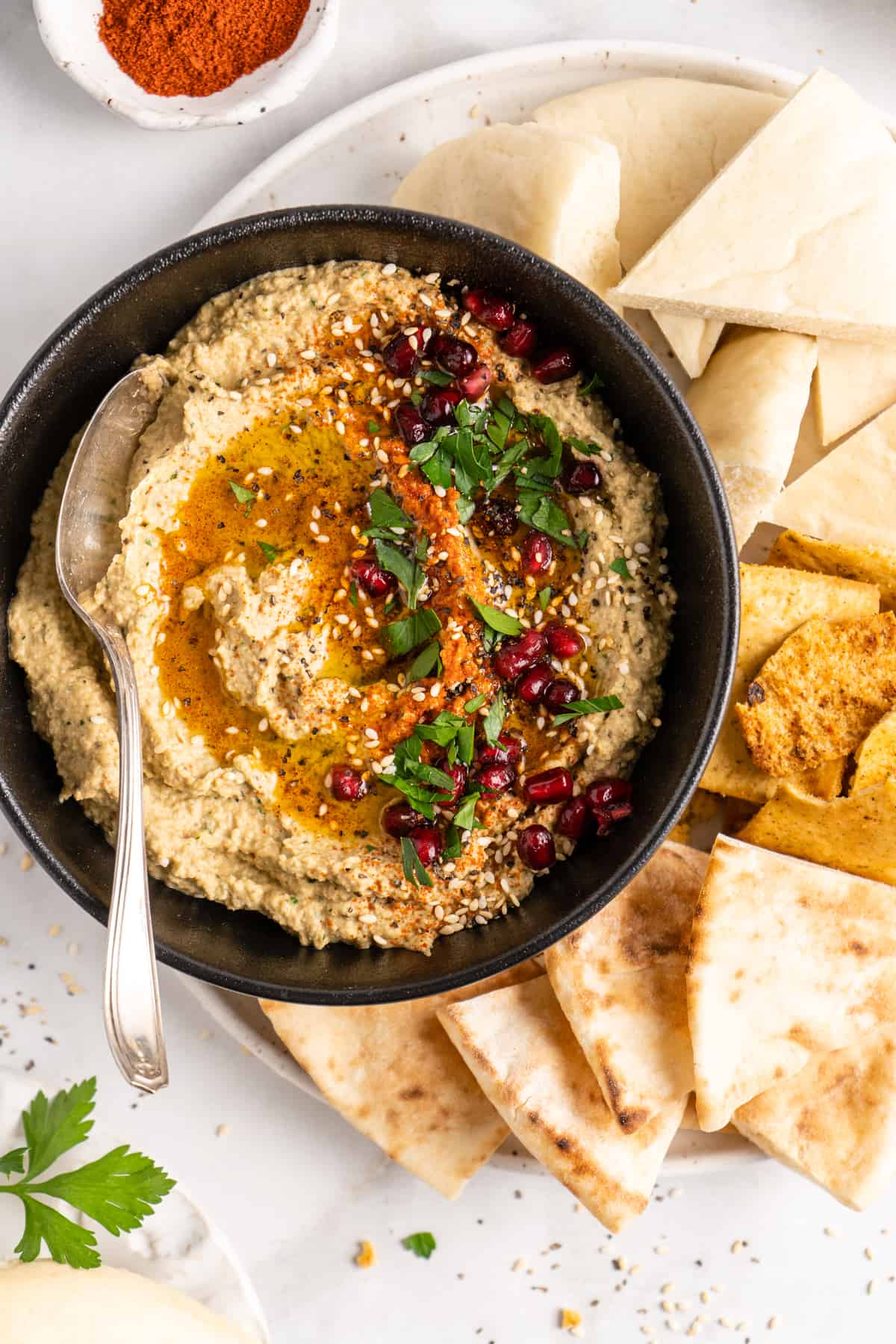
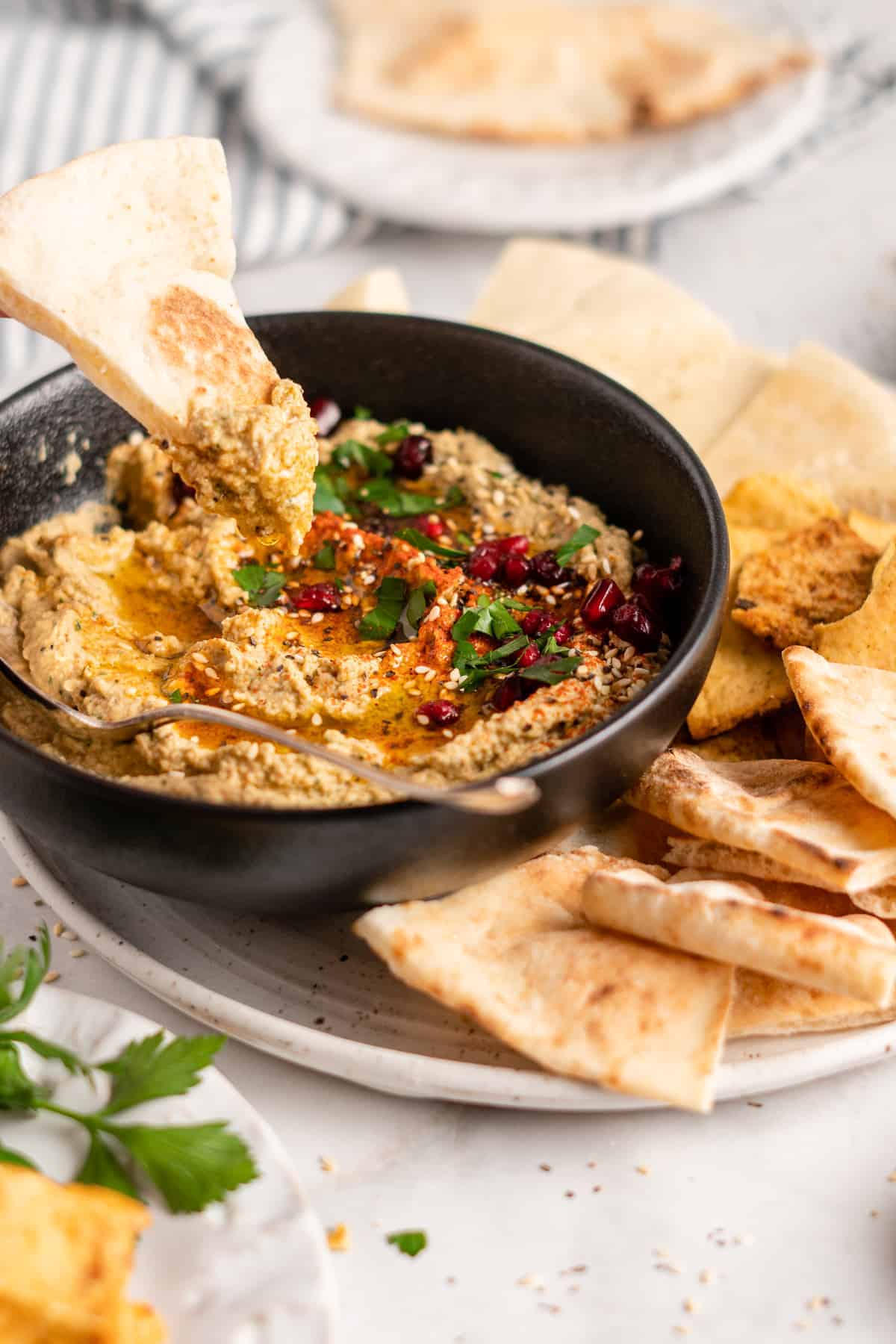
Serve. Scoop the finished baba ghanoush into a serving bowl and garnish with olive oil and chopped parsley. Serve with crudités, fresh pita bread, or pita chips.
Tips for Success
Here are some tips to help you make perfect baba ghanoush at home.
- Dealing with a bitter eggplant. If you notice that your eggplant is bitter, you can offset this by adding a touch of maple syrup or blended dates.
- Peeling the eggplants. Sometimes the eggplant doesn’t peel after roasting. That’s okay! Just cut the eggplants in half lengthwise, then scoop out the flesh.
- Amping up the garlic flavour. You can skip roasting the garlic if you want a more pronounced garlic flavour in your dip.
How to Store
Baba ghanoush should be refrigerated in an airtight container and eaten within 3 to 4 days. It’s eaten cold, so there’s no need to reheat!
Can This Recipe Be Frozen?
Baba ghanoush is best enjoyed fresh, but you can freeze it if you’d like. Place it in a freezer bag or airtight container and freeze up to 3 months. Let it thaw in the refrigerator before serving.
Ingredients
- 2 lbs eggplants , chinese eggplants, globe eggplants or italian eggplants work best – not overripe
- ¼ cup tahini
- ¼ cup lemon juice
- 3 cloves garlic
- ¼ teaspoon ground cumin
- generous pinch of salt to taste
- 1 tablespoon olive oil
- 1 tablespoon parsley , chopped
- ⅛ teaspoon smoked paprika
Instructions
- Preheat oven to 400°F/200°C.
- Prick the eggplants a few times with a fork, place on a baking sheet along with the garlic cloves still in their skins. Bake for about 30-40 minutes. The skin should be wrinkly.
- Remove from oven. When eggplants have cooled for about 5-10 minutes, peel off the skin (it should easily peel off), or cut into the eggplant along the skin, tear to the sides, and scoop out the flesh, leaving the skin behind.
- Strain the eggplant over a mesh colander to remove any excess liquid and remove any extra bits of eggplant skin for about 5 minutes. Using a spoon or a spatula, press out that extra liquid and discard it.
- In a food processor (or a bowl if you don’t have a food processor), add the eggplant, tahini, lemon juice, roasted garlic, cumin, sea salt, olive oil, parsley and smoked paprika. Puree until smooth, or using your fork or whisk, whisk vigorously until smooth.
- Taste to see if you need to adjust the seasonings. Serve garnished with olive oil, and chopped parsley.
Notes
Baba Ghanoush is a creamy Mediterranean dip that’s smoky, tangy, and all-around irresistible. It’s a staple at Middle Eastern restaurants, but I’ll show you how to make it at home!
Any Middle Eastern restaurant worth its salt will offer hummus and baba ghanoush on their appetizer menu. Some people may prefer one or the other, but I always say: why not both?! Baba ghanoush has a uniquely smoky flavour, along with the brightness of lemon and the herbaceous addition of parsley. That smoky flavour comes from charring the eggplant over an open flame, but since we’re making this at home, my workaround is using smoked paprika instead.
Like hummus, traditional baba ghanoush is often topped with ground sumac, which is an astringent spice made from dried berries. It’s good stuff, but it’s also pricy! If you happen to have it on hand, by all means, use it! But if not, I think topping this with a drizzle of high-quality olive oil is the perfect finishing touch.
While baba ghanoush is great for serving with veggies and pita chips for an appetizer, I also love making a Mediterranean-inspired meal by whipping up a batch of this, along with Vegan Beet Falafel and Mediterranean Chickpea Salad .
Notes on Ingredients
Please note that this is important information on the ingredients and instructions and the FULL recipe with amounts and details can be found DOWN BELOW (scroll to it) in the recipe card.
- Eggplant – Chinese eggplants, globe eggplants or Italian eggplants work best.
- Tahini – Here’s how to make your own tahini .
- Lemon juice
- Garlic
- Ground cumin
- Salt
- Olive oil
- Parsley – You can use more if you like.
- Smoked paprika
Tips for Choosing Eggplants
Eggplant isn’t the most popular vegetable at the grocery store, which means sometimes it sits and sits and sits , and by the time you come along to purchase it, it’s past its prime. An older eggplant can impart a bitter flavour, so it’s important to buy one that’s fresh. The skin should be shiny, rather than dull, and it should be firm all around, without any soft spots. It should feel heavy for its size, and the stem should be green, not brown and dry. Rather than buying one huge eggplant, it’s always better to buy a few smaller ones, as these are less likely to be bitter.
How to Make Baba Ghanoush
Get your pita bread ready for dipping, because we’re making baba ghanoush! Here’s what you need to do.
Prepare. Preheat oven to 400°F/200°C.
Roast the eggplants. Pierce the eggplants with a fork and place them on a baking sheet with the garlic. Roast for 30 to 40 minutes, or until the eggplants are tender and the skin is wrinkly.
Cool and prepare the eggplant. Let the eggplants cool for 5 to 10 minutes, then peel off the skin and cut off the stem. Place the eggplant in a colander to let excess moisture drain off; after 5 minutes, use a wooden spoon or spatula to press the eggplant to remove any remaining liquid.
Puree . Place the eggplant, tahini, lemon juice, roasted garlic, cumin, sea salt, olive oil, parsley, and smoked paprika in a food processor and process until smooth. Taste and adjust the seasonings as desired.
Serve. Scoop the finished baba ghanoush into a serving bowl and garnish with olive oil and chopped parsley. Serve with crudités, fresh pita bread, or pita chips.
Tips for Success
Here are some tips to help you make perfect baba ghanoush at home.
- Dealing with a bitter eggplant. If you notice that your eggplant is bitter, you can offset this by adding a touch of maple syrup or blended dates.
- Peeling the eggplants. Sometimes the eggplant doesn’t peel after roasting. That’s okay! Just cut the eggplants in half lengthwise, then scoop out the flesh.
- Amping up the garlic flavour. You can skip roasting the garlic if you want a more pronounced garlic flavour in your dip.
How to Store
Baba ghanoush should be refrigerated in an airtight container and eaten within 3 to 4 days. It’s eaten cold, so there’s no need to reheat!
Can This Recipe Be Frozen?
Baba ghanoush is best enjoyed fresh, but you can freeze it if you’d like. Place it in a freezer bag or airtight container and freeze up to 3 months. Let it thaw in the refrigerator before serving.
Ingredients
- 2 lbs eggplants , chinese eggplants, globe eggplants or italian eggplants work best – not overripe
- ¼ cup tahini
- ¼ cup lemon juice
- 3 cloves garlic
- ¼ teaspoon ground cumin
- generous pinch of salt to taste
- 1 tablespoon olive oil
- 1 tablespoon parsley , chopped
- ⅛ teaspoon smoked paprika
Instructions
- Preheat oven to 400°F/200°C.
- Prick the eggplants a few times with a fork, place on a baking sheet along with the garlic cloves still in their skins. Bake for about 30-40 minutes. The skin should be wrinkly.
- Remove from oven. When eggplants have cooled for about 5-10 minutes, peel off the skin (it should easily peel off), or cut into the eggplant along the skin, tear to the sides, and scoop out the flesh, leaving the skin behind.
- Strain the eggplant over a mesh colander to remove any excess liquid and remove any extra bits of eggplant skin for about 5 minutes. Using a spoon or a spatula, press out that extra liquid and discard it.
- In a food processor (or a bowl if you don’t have a food processor), add the eggplant, tahini, lemon juice, roasted garlic, cumin, sea salt, olive oil, parsley and smoked paprika. Puree until smooth, or using your fork or whisk, whisk vigorously until smooth.
- Taste to see if you need to adjust the seasonings. Serve garnished with olive oil, and chopped parsley.
Notes
Baba Ghanoush is a creamy Mediterranean dip that’s smoky, tangy, and all-around irresistible. It’s a staple at Middle Eastern restaurants, but I’ll show you how to make it at home!
Any Middle Eastern restaurant worth its salt will offer hummus and baba ghanoush on their appetizer menu. Some people may prefer one or the other, but I always say: why not both?! Baba ghanoush has a uniquely smoky flavour, along with the brightness of lemon and the herbaceous addition of parsley. That smoky flavour comes from charring the eggplant over an open flame, but since we’re making this at home, my workaround is using smoked paprika instead.
Like hummus, traditional baba ghanoush is often topped with ground sumac, which is an astringent spice made from dried berries. It’s good stuff, but it’s also pricy! If you happen to have it on hand, by all means, use it! But if not, I think topping this with a drizzle of high-quality olive oil is the perfect finishing touch.
While baba ghanoush is great for serving with veggies and pita chips for an appetizer, I also love making a Mediterranean-inspired meal by whipping up a batch of this, along with Vegan Beet Falafel and Mediterranean Chickpea Salad .
Notes on Ingredients
Please note that this is important information on the ingredients and instructions and the FULL recipe with amounts and details can be found DOWN BELOW (scroll to it) in the recipe card.
- Eggplant – Chinese eggplants, globe eggplants or Italian eggplants work best.
- Tahini – Here’s how to make your own tahini .
- Lemon juice
- Garlic
- Ground cumin
- Salt
- Olive oil
- Parsley – You can use more if you like.
- Smoked paprika
Tips for Choosing Eggplants
Eggplant isn’t the most popular vegetable at the grocery store, which means sometimes it sits and sits and sits , and by the time you come along to purchase it, it’s past its prime. An older eggplant can impart a bitter flavour, so it’s important to buy one that’s fresh. The skin should be shiny, rather than dull, and it should be firm all around, without any soft spots. It should feel heavy for its size, and the stem should be green, not brown and dry. Rather than buying one huge eggplant, it’s always better to buy a few smaller ones, as these are less likely to be bitter.
How to Make Baba Ghanoush
Get your pita bread ready for dipping, because we’re making baba ghanoush! Here’s what you need to do.
Prepare. Preheat oven to 400°F/200°C.
Roast the eggplants. Pierce the eggplants with a fork and place them on a baking sheet with the garlic. Roast for 30 to 40 minutes, or until the eggplants are tender and the skin is wrinkly.
Cool and prepare the eggplant. Let the eggplants cool for 5 to 10 minutes, then peel off the skin and cut off the stem. Place the eggplant in a colander to let excess moisture drain off; after 5 minutes, use a wooden spoon or spatula to press the eggplant to remove any remaining liquid.
Puree . Place the eggplant, tahini, lemon juice, roasted garlic, cumin, sea salt, olive oil, parsley, and smoked paprika in a food processor and process until smooth. Taste and adjust the seasonings as desired.
Serve. Scoop the finished baba ghanoush into a serving bowl and garnish with olive oil and chopped parsley. Serve with crudités, fresh pita bread, or pita chips.
Tips for Success
Here are some tips to help you make perfect baba ghanoush at home.
- Dealing with a bitter eggplant. If you notice that your eggplant is bitter, you can offset this by adding a touch of maple syrup or blended dates.
- Peeling the eggplants. Sometimes the eggplant doesn’t peel after roasting. That’s okay! Just cut the eggplants in half lengthwise, then scoop out the flesh.
- Amping up the garlic flavour. You can skip roasting the garlic if you want a more pronounced garlic flavour in your dip.
How to Store
Baba ghanoush should be refrigerated in an airtight container and eaten within 3 to 4 days. It’s eaten cold, so there’s no need to reheat!
Can This Recipe Be Frozen?
Baba ghanoush is best enjoyed fresh, but you can freeze it if you’d like. Place it in a freezer bag or airtight container and freeze up to 3 months. Let it thaw in the refrigerator before serving.
Ingredients
- 2 lbs eggplants , chinese eggplants, globe eggplants or italian eggplants work best – not overripe
- ¼ cup tahini
- ¼ cup lemon juice
- 3 cloves garlic
- ¼ teaspoon ground cumin
- generous pinch of salt to taste
- 1 tablespoon olive oil
- 1 tablespoon parsley , chopped
- ⅛ teaspoon smoked paprika
Instructions
- Preheat oven to 400°F/200°C.
- Prick the eggplants a few times with a fork, place on a baking sheet along with the garlic cloves still in their skins. Bake for about 30-40 minutes. The skin should be wrinkly.
- Remove from oven. When eggplants have cooled for about 5-10 minutes, peel off the skin (it should easily peel off), or cut into the eggplant along the skin, tear to the sides, and scoop out the flesh, leaving the skin behind.
- Strain the eggplant over a mesh colander to remove any excess liquid and remove any extra bits of eggplant skin for about 5 minutes. Using a spoon or a spatula, press out that extra liquid and discard it.
- In a food processor (or a bowl if you don’t have a food processor), add the eggplant, tahini, lemon juice, roasted garlic, cumin, sea salt, olive oil, parsley and smoked paprika. Puree until smooth, or using your fork or whisk, whisk vigorously until smooth.
- Taste to see if you need to adjust the seasonings. Serve garnished with olive oil, and chopped parsley.
Notes
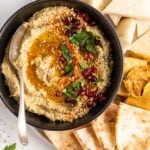
Baba Ghanoush
Ingredients
- 2 lbs eggplants chinese eggplants, globe eggplants or italian eggplants work best - not overripe
- ¼ cup tahini
- ¼ cup lemon juice
- 3 cloves garlic
- ¼ teaspoon ground cumin
- generous pinch of salt to taste
- 1 tablespoon olive oil
- 1 tablespoon parsley chopped
- ⅛ teaspoon smoked paprika
Instructions
- Preheat oven to 400°F/200°C.
- Prick the eggplants a few times with a fork, place on a baking sheet along with the garlic cloves still in their skins. Bake for about 30-40 minutes. The skin should be wrinkly.
- Remove from oven. When eggplants have cooled for about 5-10 minutes, peel off the skin (it should easily peel off), or cut into the eggplant along the skin, tear to the sides, and scoop out the flesh, leaving the skin behind.
- Strain the eggplant over a mesh colander to remove any excess liquid and remove any extra bits of eggplant skin for about 5 minutes. Using a spoon or a spatula, press out that extra liquid and discard it.
- In a food processor (or a bowl if you don’t have a food processor), add the eggplant, tahini, lemon juice, roasted garlic, cumin, sea salt, olive oil, parsley and smoked paprika. Puree until smooth, or using your fork or whisk, whisk vigorously until smooth.
- Taste to see if you need to adjust the seasonings. Serve garnished with olive oil, and chopped parsley.
Video
Notes
Nutrition
Baba Ghanoush https://jessicainthekitchen.com/baba-ghanoush/ March 2, 2022
I’ll show you how to make potstickers at home, step-by-step! My vegan version of these traditional Chinese dumplings has a savory tofu and veggie filling, paired with a sweet ginger sauce for dipping.
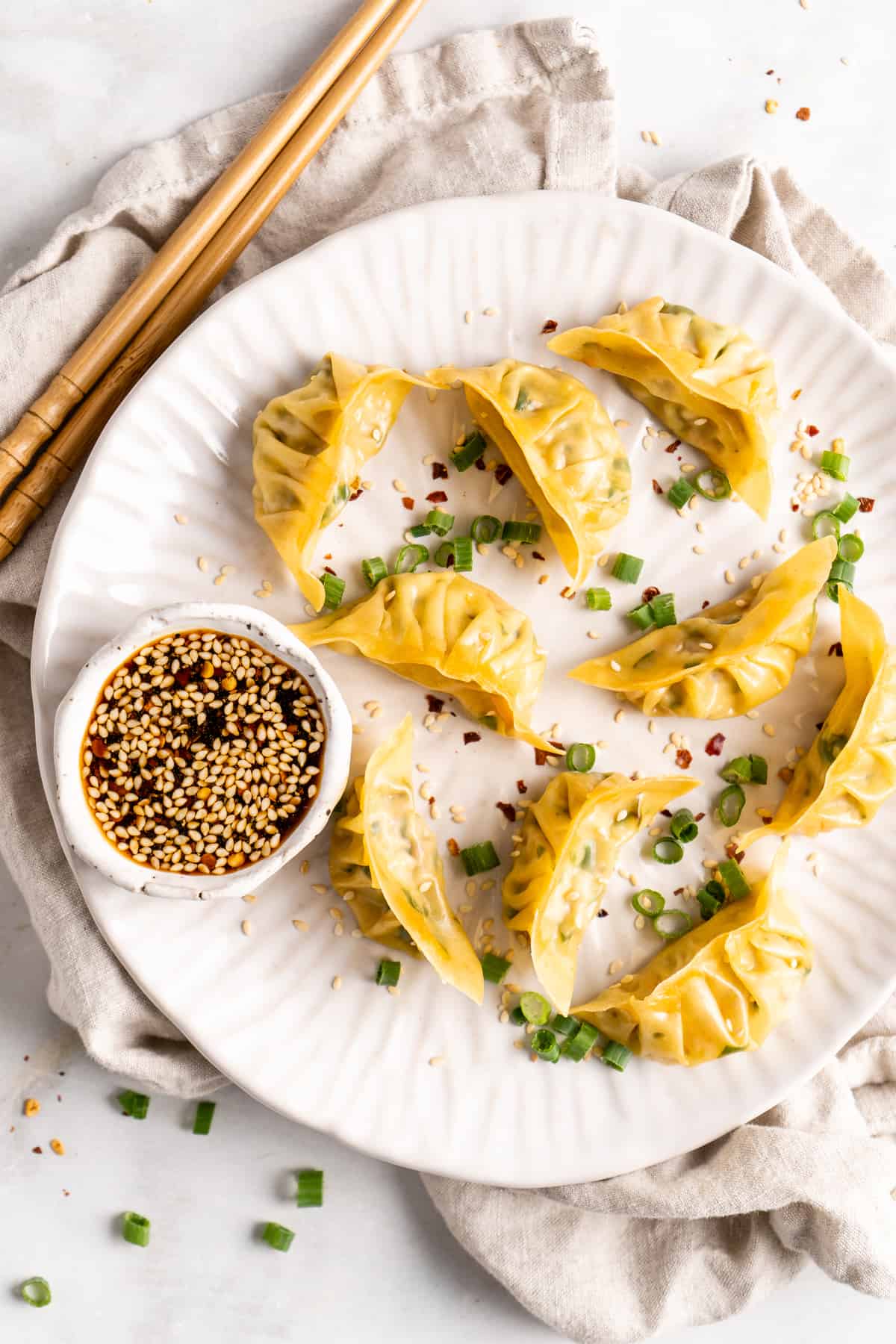
Before I made this recipe, I had never made Chinese dumplings at home because I assumed it would be time-consuming. How wrong I was! Making potstickers is quick and easy, especially when you start with pre-made wonton wrappers. It’s a nice little shortcut that makes homemade vegan dumplings much more manageable! Potstickers make a great side or starter to General Tso’s tofu , vegan fried rice , and easy peanut butter ramen noodles .
What to Expect From This Homemade Potstickers Recipe
- Easy filling. The filling here isn’t an authentic Chinese recipe, made with pork—I simply used some of my favourite stir-fry ingredients, including tofu, Swiss chard, carrots, and green onions.
- Make them your own. Once you’ve got the technique down, you can make potstickers with any filling you like!
- Homemade dipping sauce. You can use bottled or jarred dipping sauce for your dumplings, but I’m definitely partial to my sweet ginger dipping sauce recipe. It combines sweet and savory flavours with a heavy dose of ginger and red pepper flakes. It’s the perfect complement to the mild vegan potsticker filling!
Notes on Ingredients
Please note that this is helpful information on the ingredients needed to make these vegan potstickers. The FULL recipe with amounts and details can be found BELOW (scroll to it) in the recipe card.
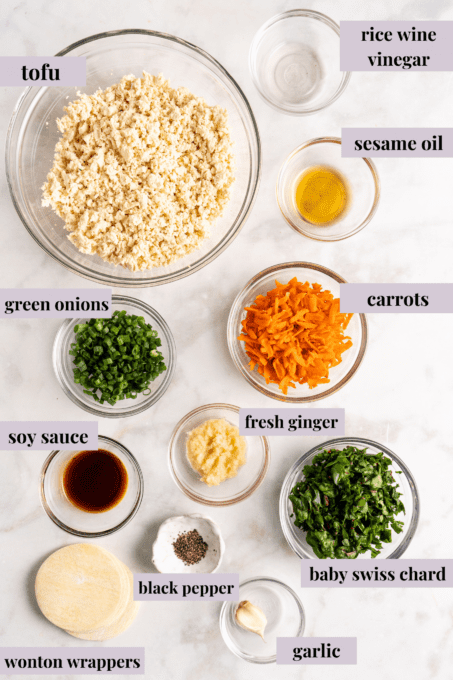
Dumpling ingredients.
- Round wonton wrappers – If you buy these frozen, they’ll need to be thawed before you start.
- Carrot – Grate the carrot with a box grater or your food processor. If neither is an option, you can finely mince it with a knife.
- Baby Swiss chard – If you can’t find baby Swiss chard at the grocery store, you can substitute baby spinach or kale.
- Green onions – If you don’t have green onions, any mild, finely chopped onion will work.
- Fresh ginger and garlic – You can substitute these fresh ingredients with their powdered counterparts if you need to. In this case, you’ll need about ⅓ the amount.
- Tofu – The tofu needs to be pressed before you make the filling. Learn more about pressing tofu in my in-depth tutorial, How To Cook Tofu 101 .
- Liquid aminos or soy sauce – Whichever you prefer. Liquid aminos are lower in sodium, but you can use low-sodium soy sauce if you’d like.
- Sesame oil – There really isn’t a substitute for sesame oil in Chinese cooking. However, if you have tahini (sesame paste), it will do the trick in this recipe.
- Rice wine vinegar – Make sure you buy plain rice wine vinegar, not the seasoned kind.
Homemade Ginger Dipping Sauce
- Maple syrup or agave nectar – You could use another sweetener here, like raw sugar.
- Soy sauce – Tamari or liquid aminos work here, too.
- Sesame seeds – Use white, black, or a combination of the two.
- Ground ginger – Feel free to use fresh if you prefer.
- Red pepper flakes – Use more or less, according to your taste preferences. Chili sauce , like Sriracha, is also a good way to add heat to the sauce.
- Green onions – Optional, for garnish and extra flavor.
How to Make Potstickers (Chinese Dumplings)
You don’t need to cook the filling for these potstickers in advance, so cleanup is very quick and easy. Here’s how to assemble and cook your dumplings, step-by-step.
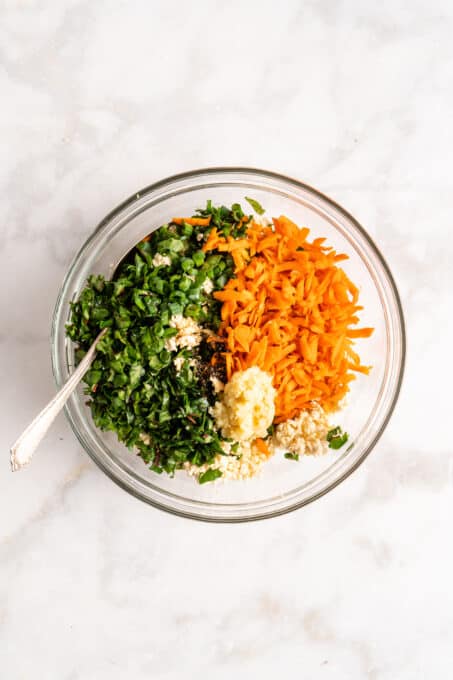
Combine the ingredients.
- Make the filling. Combine the carrot, green onions, ginger, garlic and tofu in a medium bowl. Stir in the pepper, liquid aminos, sesame oil, and rice wine vinegar. Fill the center of each wonton wrapper with a scant tablespoon of the tofu mixture.
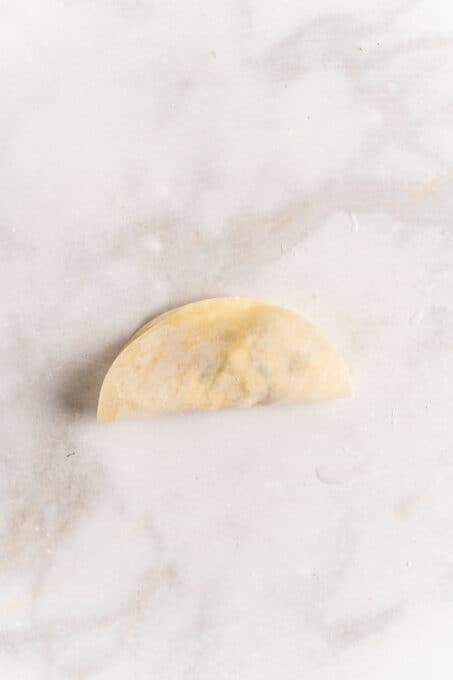
Fold the wrapper in half.
- Fold the dumplings. Wet the edges of the wrapper with water using a brush or your fingertips, then fold it over so the middle meets, creating a half-moon shape. Use your fingers to pinch the edges sealed, adding a frill if you’d like.
Cook the Potstickers
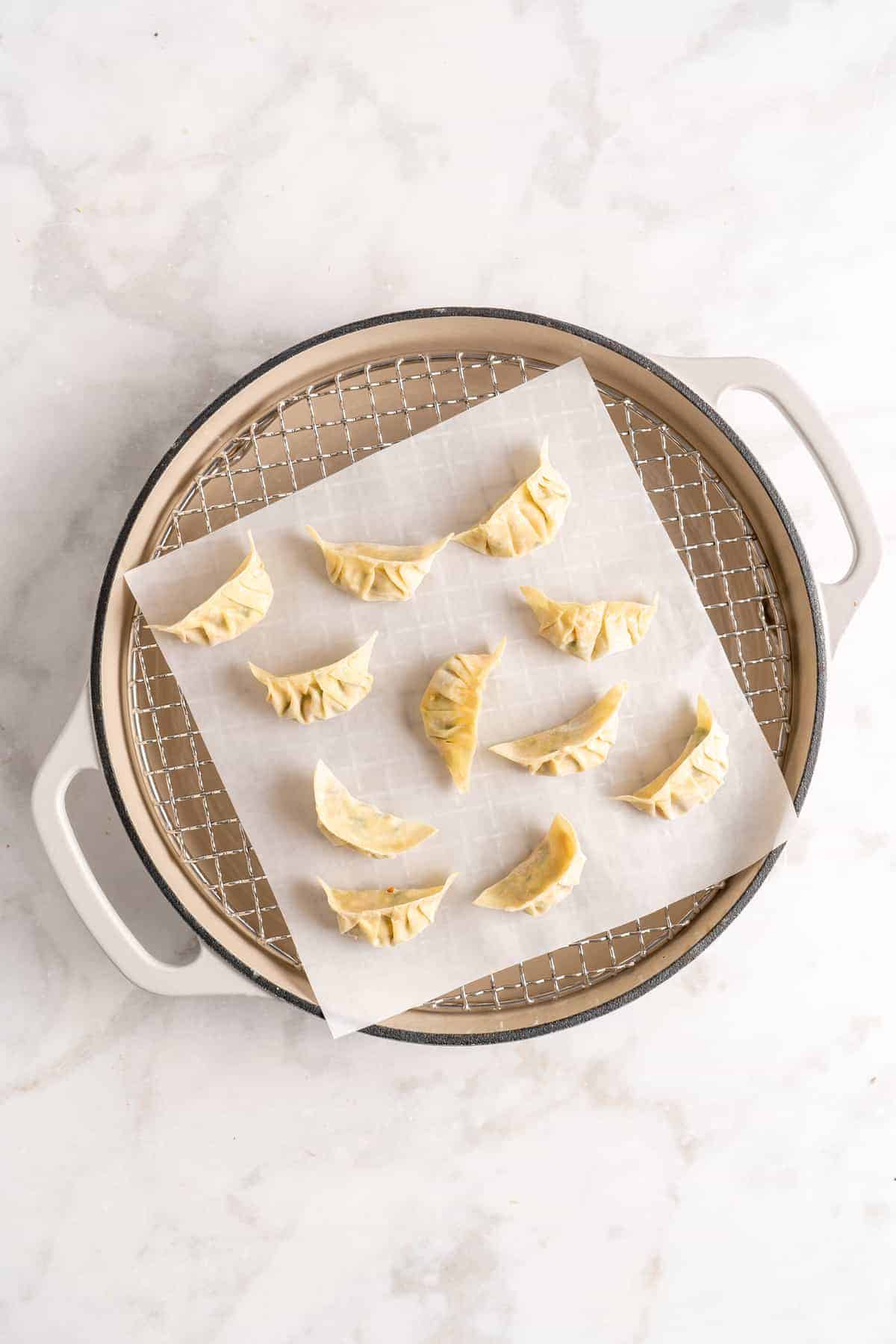
Traditionally, potstickers are fried and steamed in the same pan (resulting in the name “potsticker”). However, for simplicity’s sake, I skip the frying step in this recipe. You can steam your dumplings using a specialty bamboo steamer if you have one. Once your potstickers are in the steamer, steam them for 10 minutes until tender.
Otherwise, you can make a steamer by adding boiling water to a pan. Place a cookie sheet lined with parchment paper over the water, and arrange the dumplings on top. Cover the potstickers with foil, and steam.
Serve With the Dipping Sauce
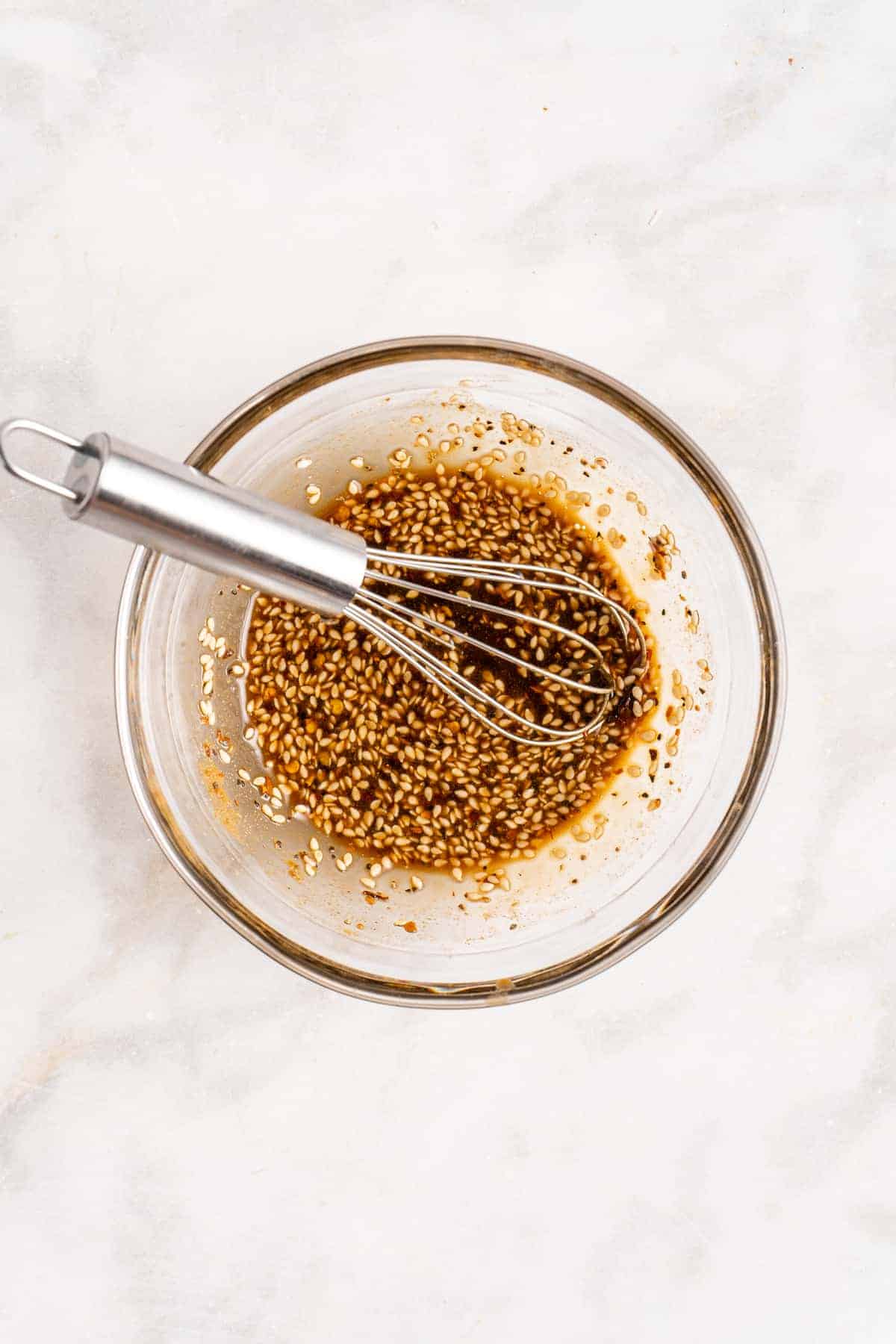
Make the ginger sauce.
- Make the sauce. Whisk together all of the sauce ingredients in a small bowl.
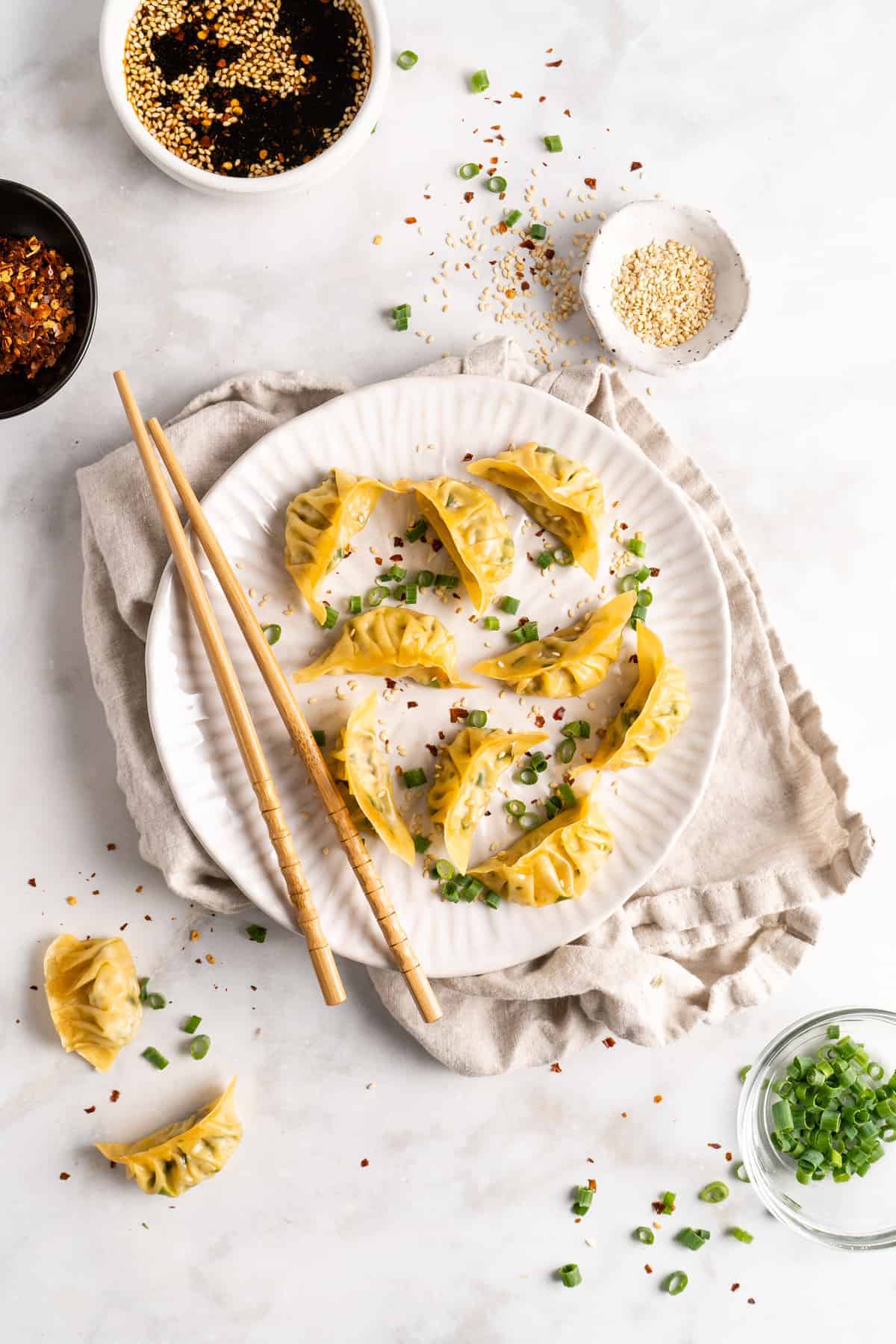
- Serve . Serve the steamed dumplings with the dipping sauce and additional sesame seeds and sliced green onions for garnish.
Tips for Success
- Square vs. Round wonton wrappers. If you can’t find round wonton wrappers, you can use square ones. Fold them into triangles, then fold the two far corners together to seal them.
- Seal the dumplings tight. Make sure to wet the edges of the wrappers and pinch the dumplings tightly closed. Otherwise, they may split open while they steam.
- Pan-frying. If you prefer dumplings that are crispy, you can pan-fry them in oil instead of steaming.
- Traditional method. Or, cook them the traditional way, and add the potstickers to the oiled pan, and then pour water into the pan and place the lid on top to let them steam.
More Serving Suggestions
Serve these potstickers as part of a full Chinese-inspired feast, with fried rice, edamame salad , or sesame noodles on the side. For a main, try homemade vegan moo goo gai pan , chow fun noodles , or crispy General Tso’s cauliflower . I also love this easy air fryer orange tofu on a weeknight! As something special for dessert, try homemade Chinese tangulu .
How to Store Leftovers
- Refrigerate. If you have leftover dumplings, you can place them in an airtight storage container and refrigerate for 3 to 4 days.
- Reheat. Warm them up by putting them back in the steamer or by microwaving. To keep the potstickers from drying up in the microwave, you can place a damp paper towel over them.
- Freeze. You can freeze potstickers in an even layer on a parchment-lined baking sheet; once they’re frozen through, place them in an airtight storage container or freezer bag. Reheat them by steaming them or in the microwave, as directed above.
More Asian-Inspired Recipes
- Ramen Noodle Salad
- Korean Gochujang Tofu Rice Bowls
- Fresh Summer Rolls
- Spicy Ramen
- Vegan Katsu Curry
- Tempeh Stir-Fry
Ingredients
- 12 circular wonton wrappers
- 1/2 carrot , grated
- 3/4 cup baby swiss chard , chopped
- 3 teaspoon chopped green onion or two stalks
- 2 teaspoon freshly minced ginger
- 1 clove garlic , chopped finely
- 8 ounces tofu , pressed for 30 minutes
- 1/4 teaspoon ground black pepper
- 1 teaspoon liquid aminos , or soy sauce
- 1 teaspoon sesame oil
- 1/2 teaspoon rice wine vinegar
- pinch salt
Sweet Ginger Sauce:
- 2 teaspoons maple syrup or agave nectar
- 1.5 tablespoons soy sauce
- 1/2 tablespoon sesame seeds
- 1 teaspoon ground ginger
- 1/4 teaspoon red pepper flakes
- 1/4 teaspoon ground black pepper
- Chopped scallions , for garnish
- sesame seeds , for garnish
Instructions
- Before starting, thaw the wonton wrappers for a few minutes.
- Mix the carrot, green onions, ginger, garlic and tofu in a medium sized bowl and mix together. Add the pepper, liquid aminos, sesame oil and rice wine vinegar into the mixture and stir everything together.
- To arrange the dumplings, fill each wonton wrapper with a bit less than a tablespoon of filling right in the middle. wet the edges with water (you can use your fingers) and fold over so that the middle meets, creating a half moon or crescent shape. Using your finger, pinch the edges to seal, adding a frill if you want. It helps to add a bit more water on your fingers if it isn’t pressing together.
- Steam dumplings for 10 minutes in a bamboo steamer or a makeshift steamer (a bit of boiling water in a pan, a cookie sheet over it, parchment paper on the cookie sheet, the dumplings on the sheet and cover with foil to keep steam in!).
- Remove and serve with sweet ginger sauce.
Sweet Ginger Sauce
- Whisk all the ingredients together and add garnishes (if desired).
